Friday, July 4, 2014

U.S. Air Force Academy - 7/01/14

The USAFA was established in 1954 north of Colorado Springs, CO.  The 2014 first year cadets total approximately 1200 students. It is an active military facility and is focused on producing the next military leaders for the Air Force and U.S. in general. Many distinguished individuals are alumni and many are combat veterans.

Access to the Academy is based on the security level as determined by Homeland Security and can change without notice. Entry for the public is via the North Gate only. Photo ID is required and the guard checked the rear of our Mini Cooper.  Also, backpacks or large purses taken into the Visitor Center are subject to search.

Our visit began at the Visitor Center where a map is provided outlining the self-guided tour and the areas of the facility that is open to the public. A 17-minute video can be seen in the Visitor Center theatre that documents the four-year journey a cadet will experience - very well done. There are exhibits and a gift shop there as well.

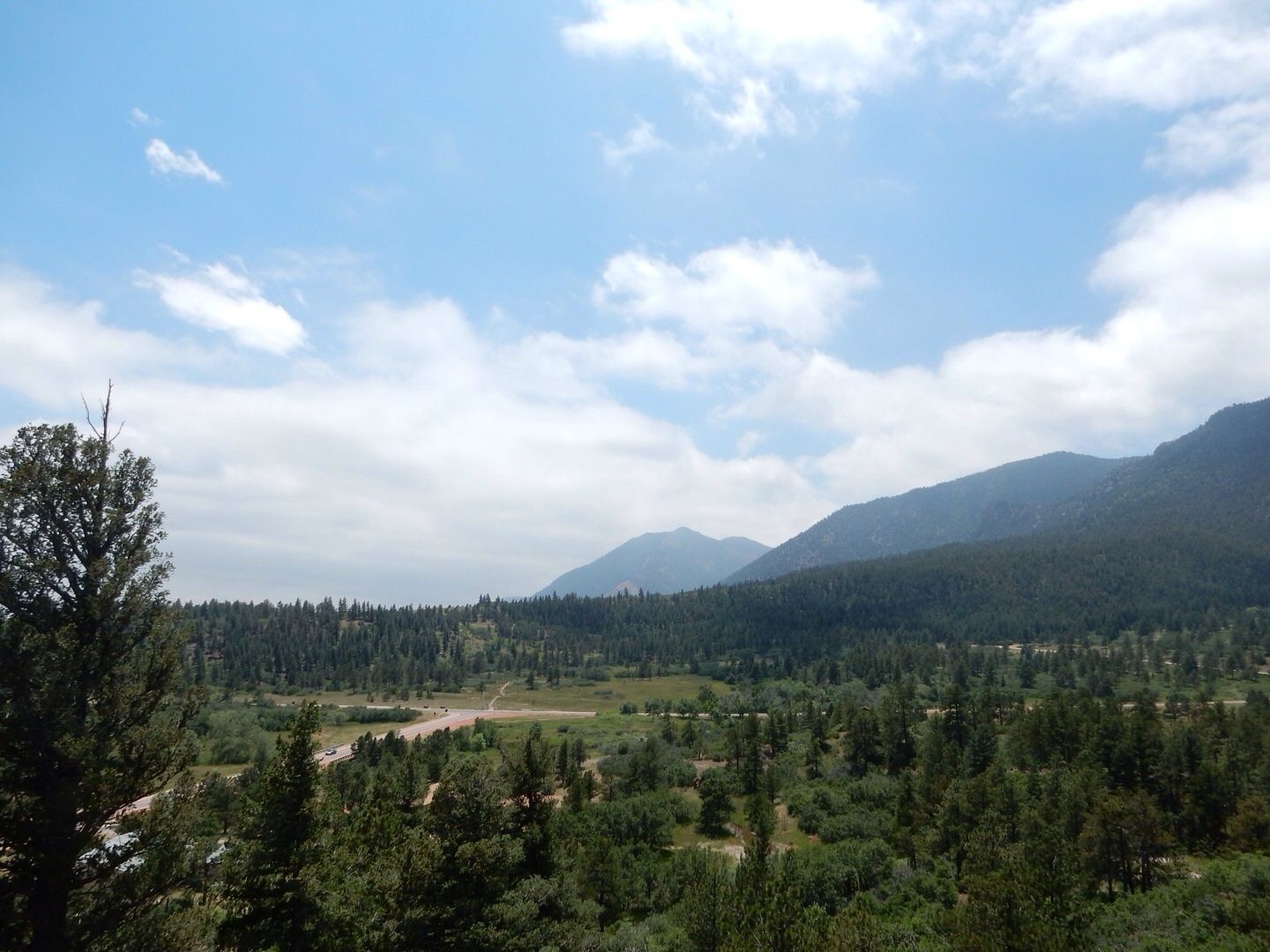
View from the Visitor Center.

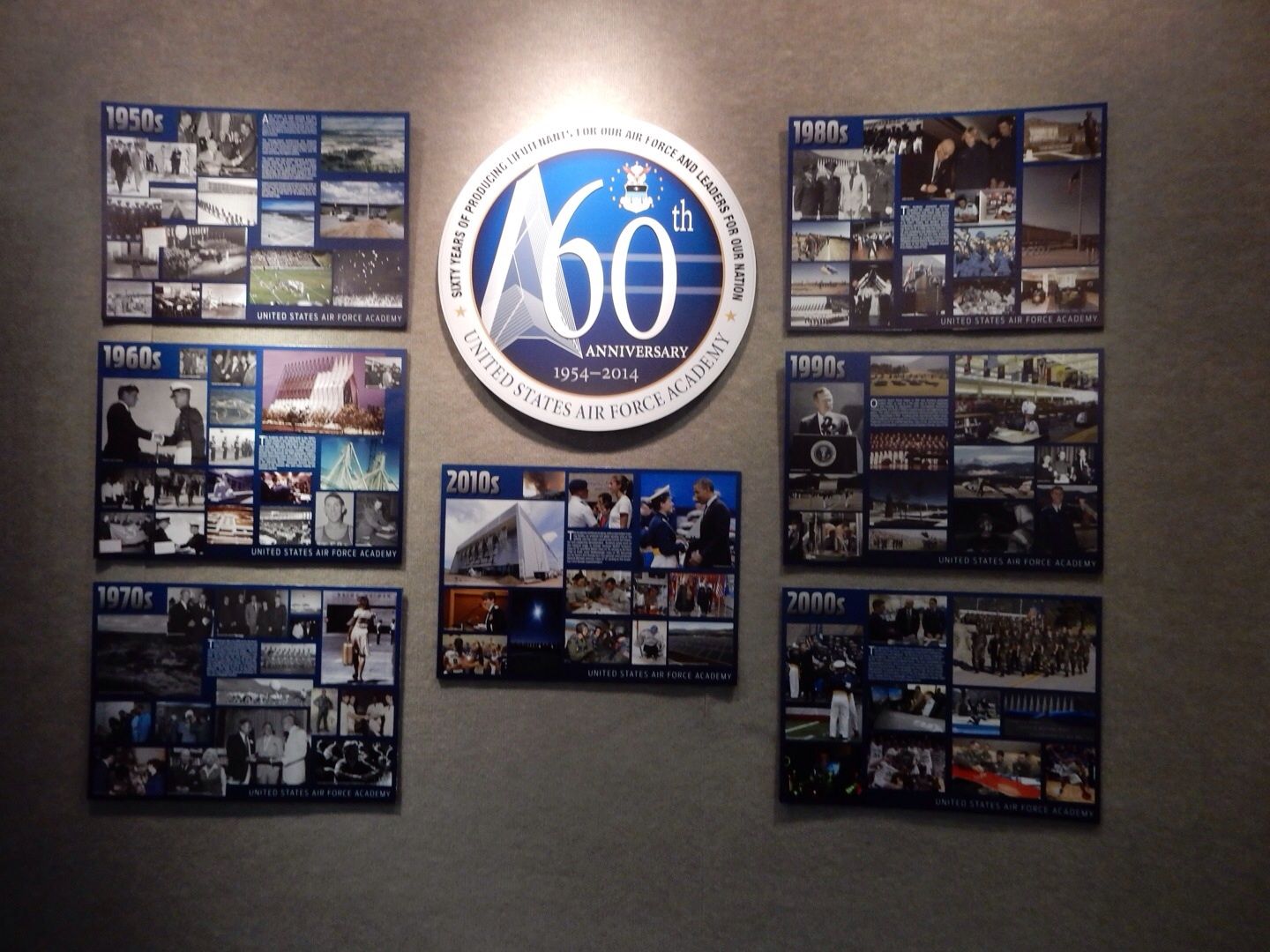
60th Anniversary exhibit.

The Cadet Chapel is one of the most distinctive buildings in the country and is about 1/3 mile walk from the Visitor Center.  It also provides a great view of the of the Cadet Area.
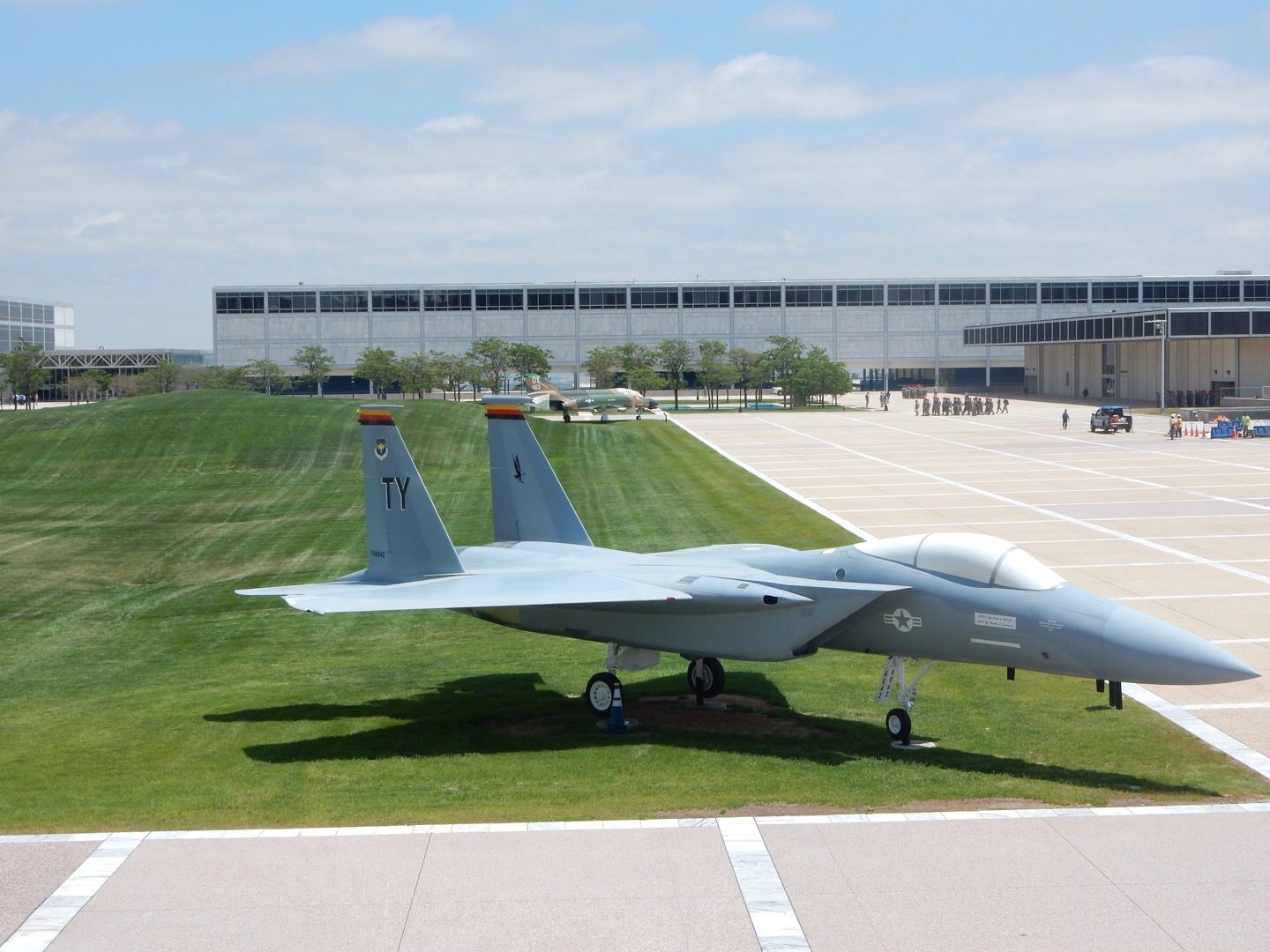

Students entering the Academy in the fall complete the USAF equivalent of basic training.  See below (in red hats).
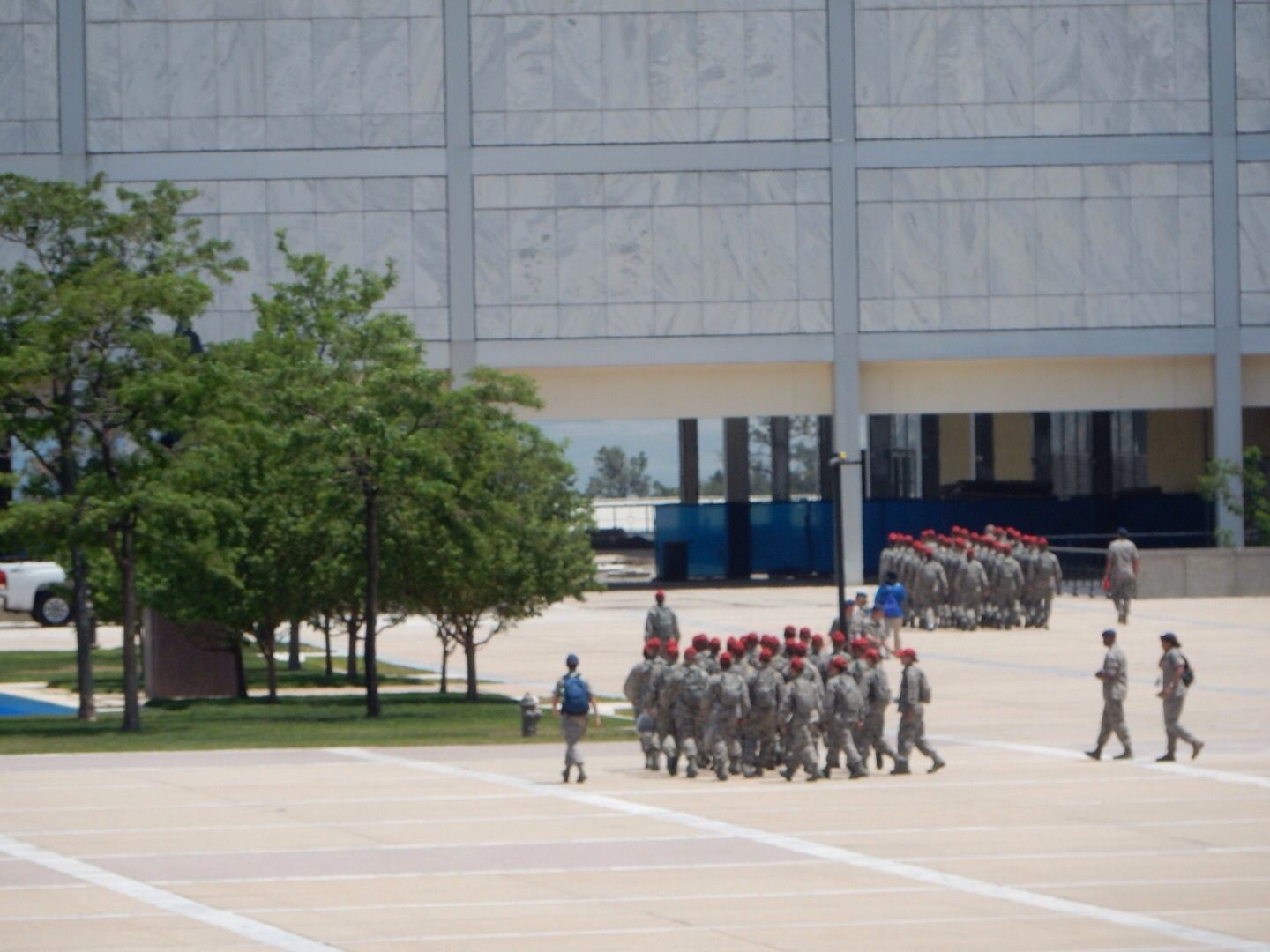
Cadet housing.

The Chapel has multiple areas of worship based on your religious convictions. All of them are housed in this beautiful building.
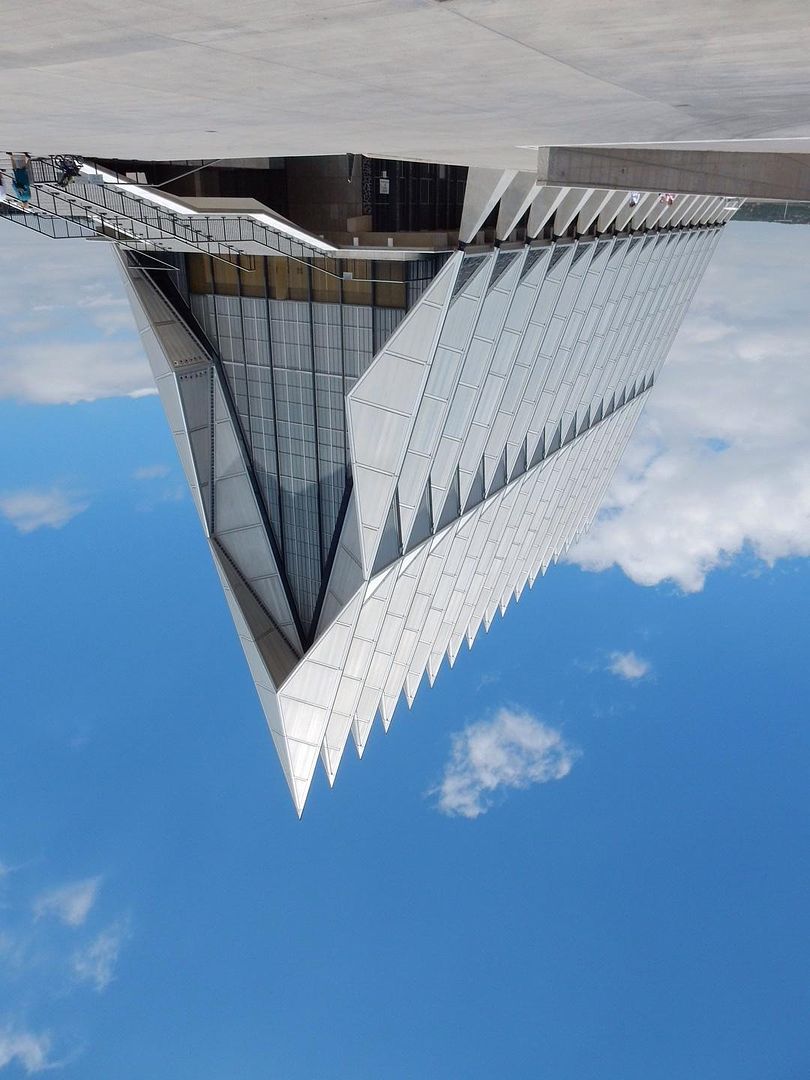
The largest is the Protestant Chapel...and it is stunning.

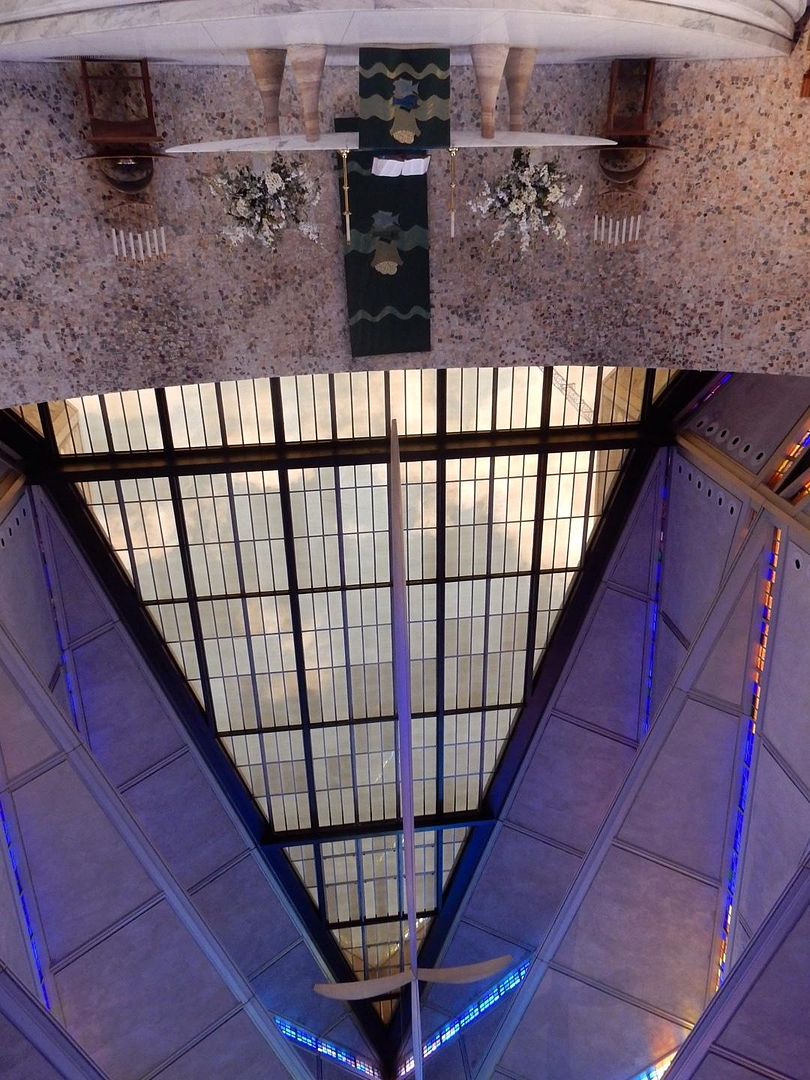

A very impressive pipe organ is in the balcony at the rear of the chapel.


On the floor below is the Catholic Chapel.
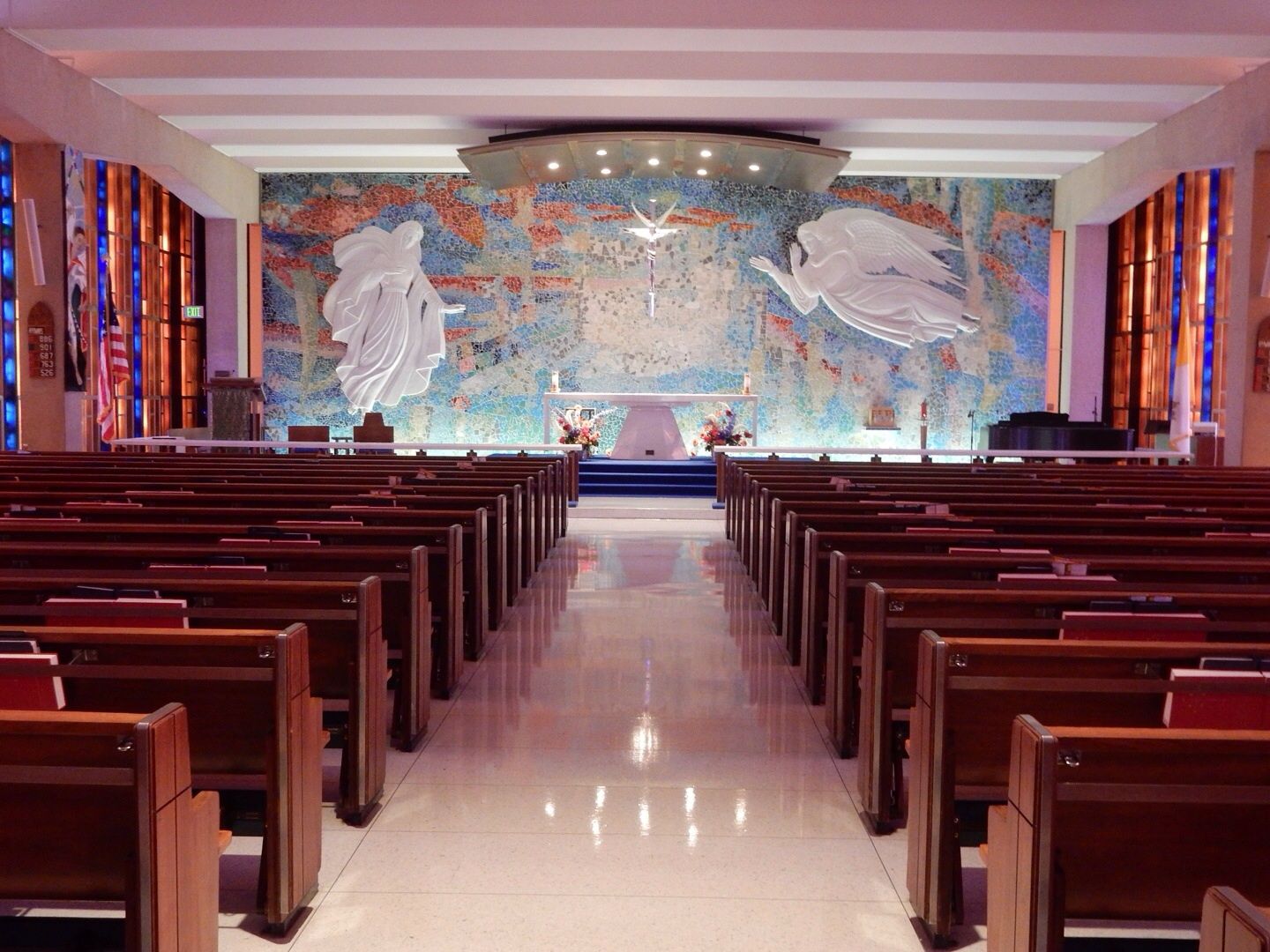

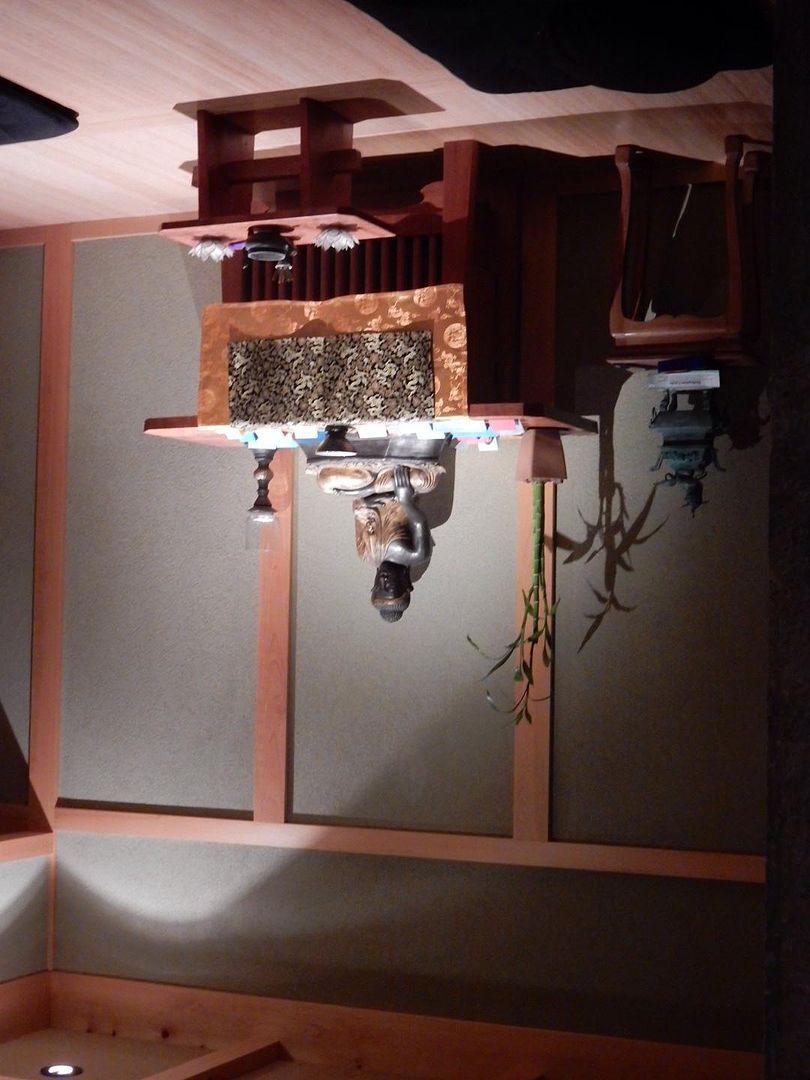
There is a chapel to be used by Jewish Cadets as well as a Buddhist sanctuary both on the floor below the Catholic Chapel. Be sure to see all of them if you visit.

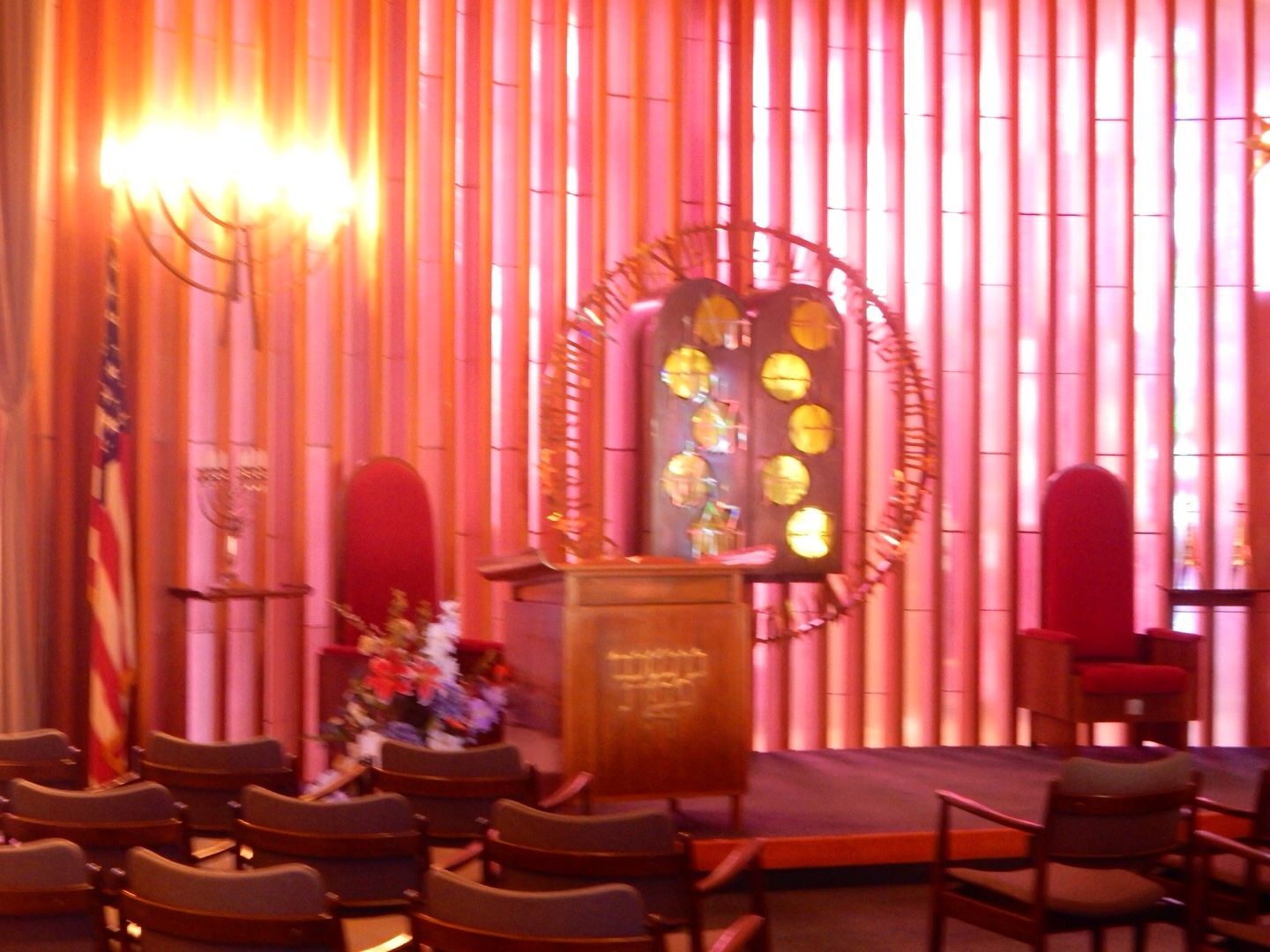
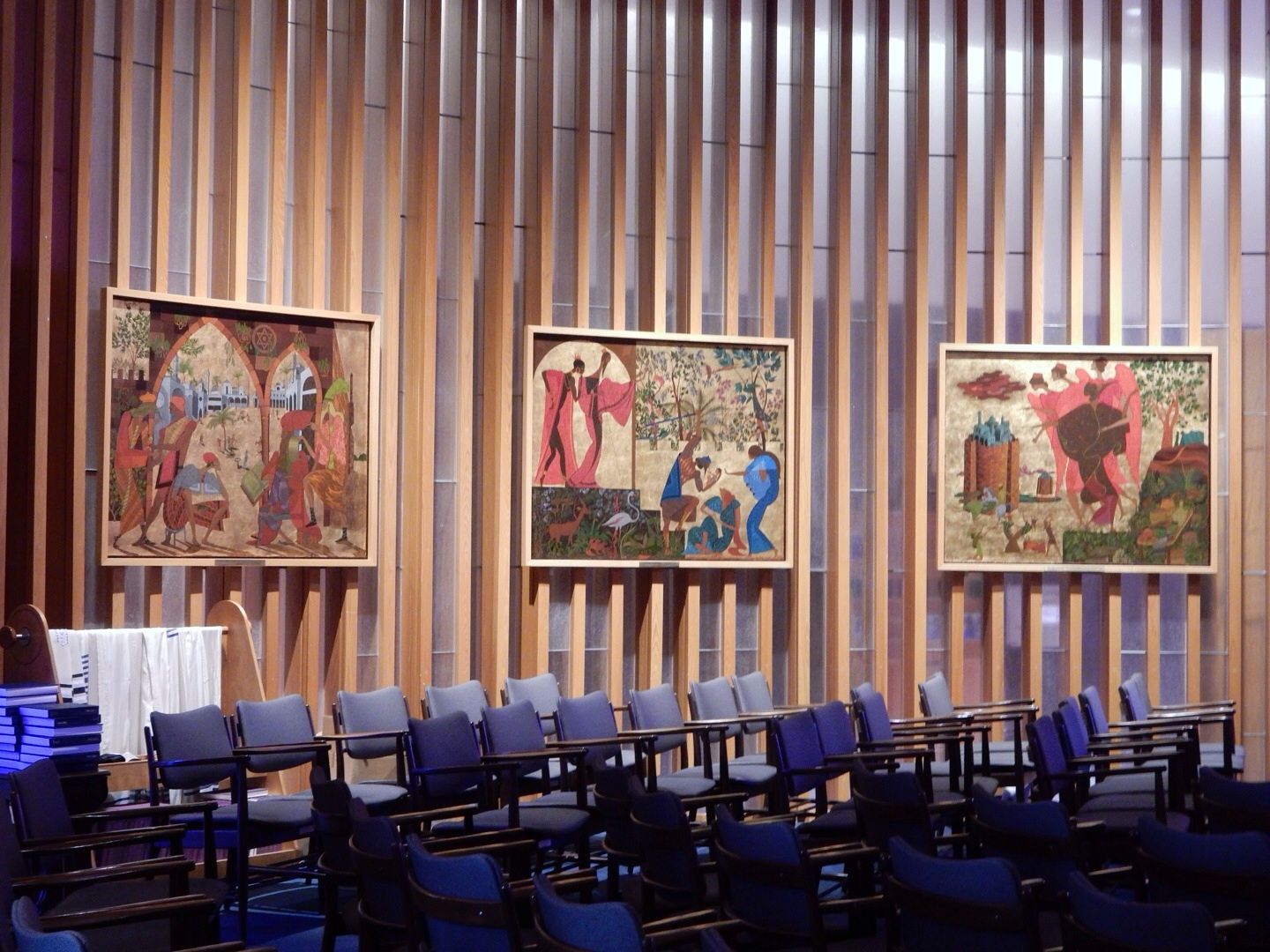
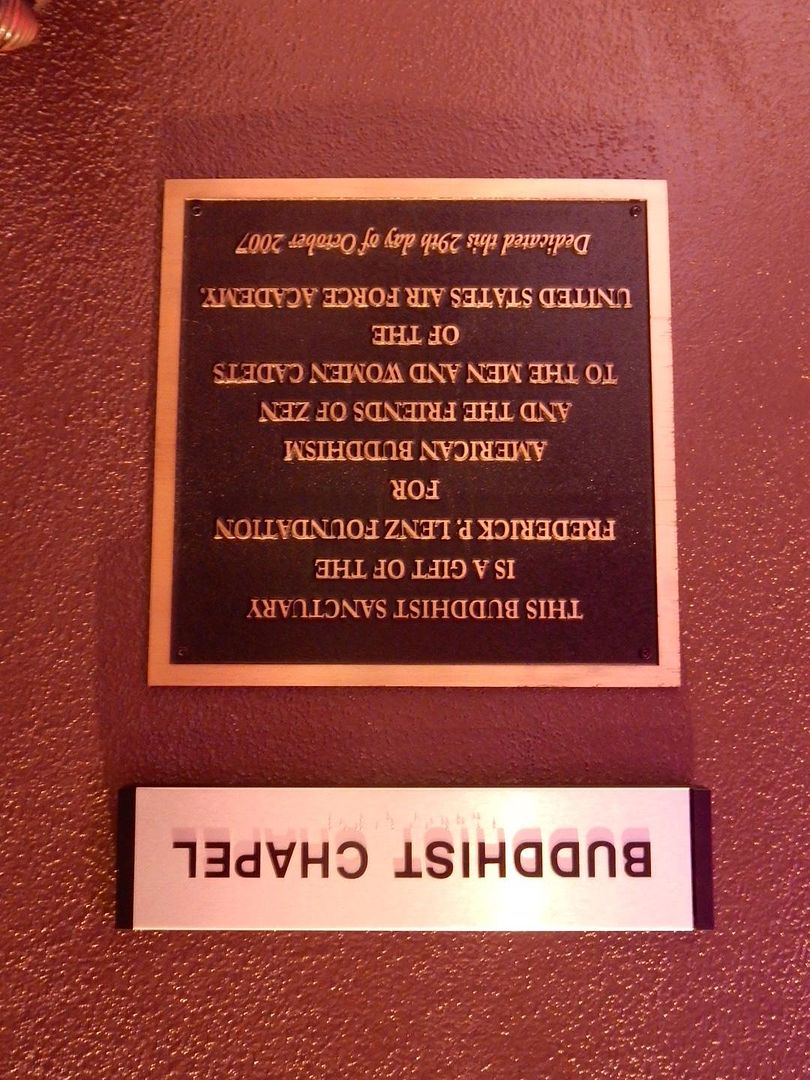
Buddhist Sanctuary.


There was also a Muslim area that was not open when we visited.

We continued on the self-guided tour in our vehicle that included:
  • Doolittle Hall - exhibits and gift shop
  • Falcon Stadium - used for football games and graduation; built in 1962; seats approximately 46.500
  • Cadet Field House/Athletic Center - academy sports hall of fame display.
  • Several overlooks to view Academic, Athletic, and Chapel settings.
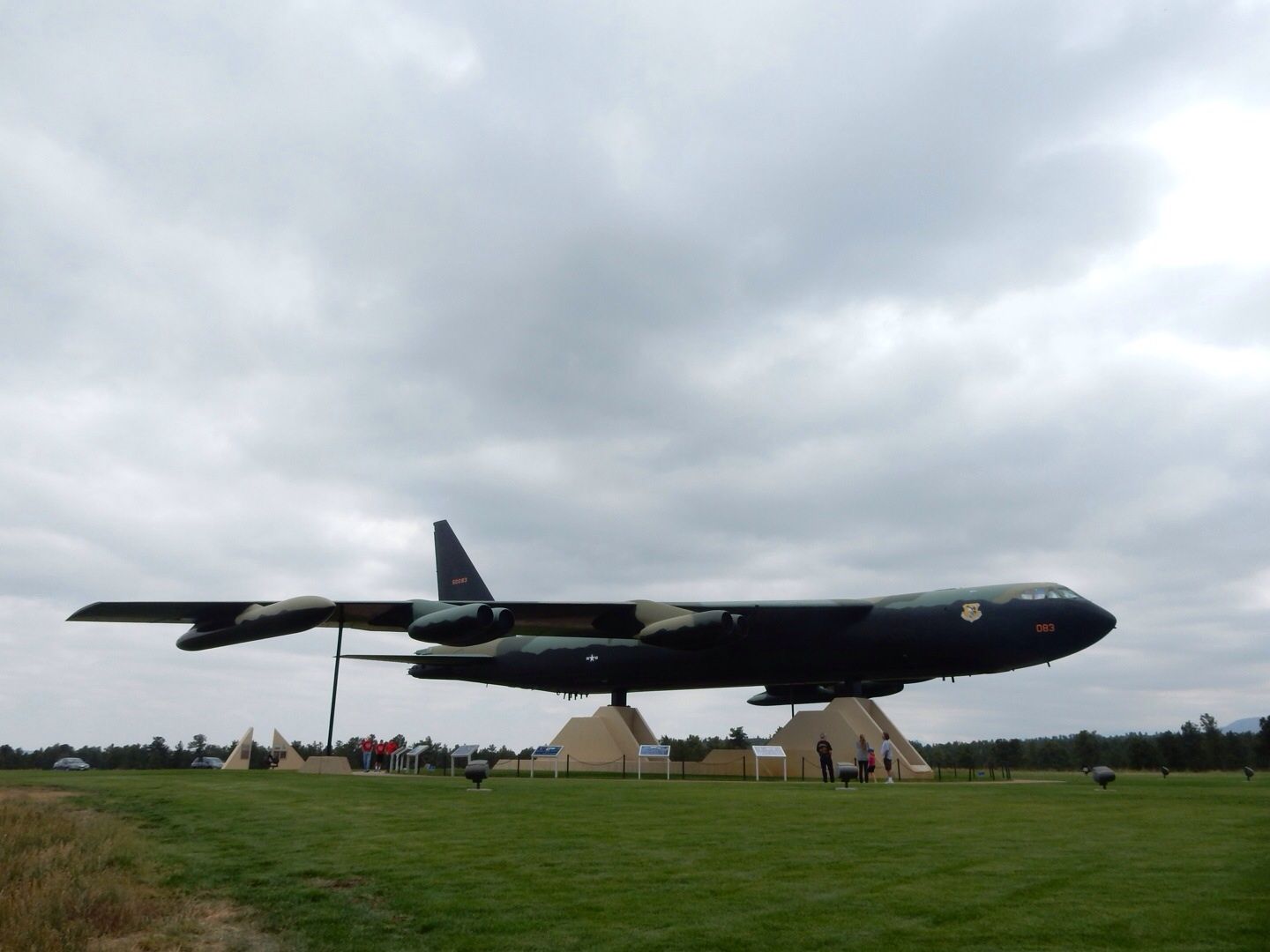
  • B-52 Display
The B-52 bomber has been the backbone of America's manned bomber force for more than half a century.  It was amazing to see this aircraft in person. Some specifications:
  • Delivered 1956 and retired 1983
  • Wingspan 185'
  • Length 156'
  • Maximum weight 450,000 lbs (including bomb load of 60,000 lbs)
  • Speed 650 mph
  • Ceiling 55,000'
  • Total fuel capacity 44,500 gallons
  • Un-refueled range 6,000 miles
  • Crew members - 6
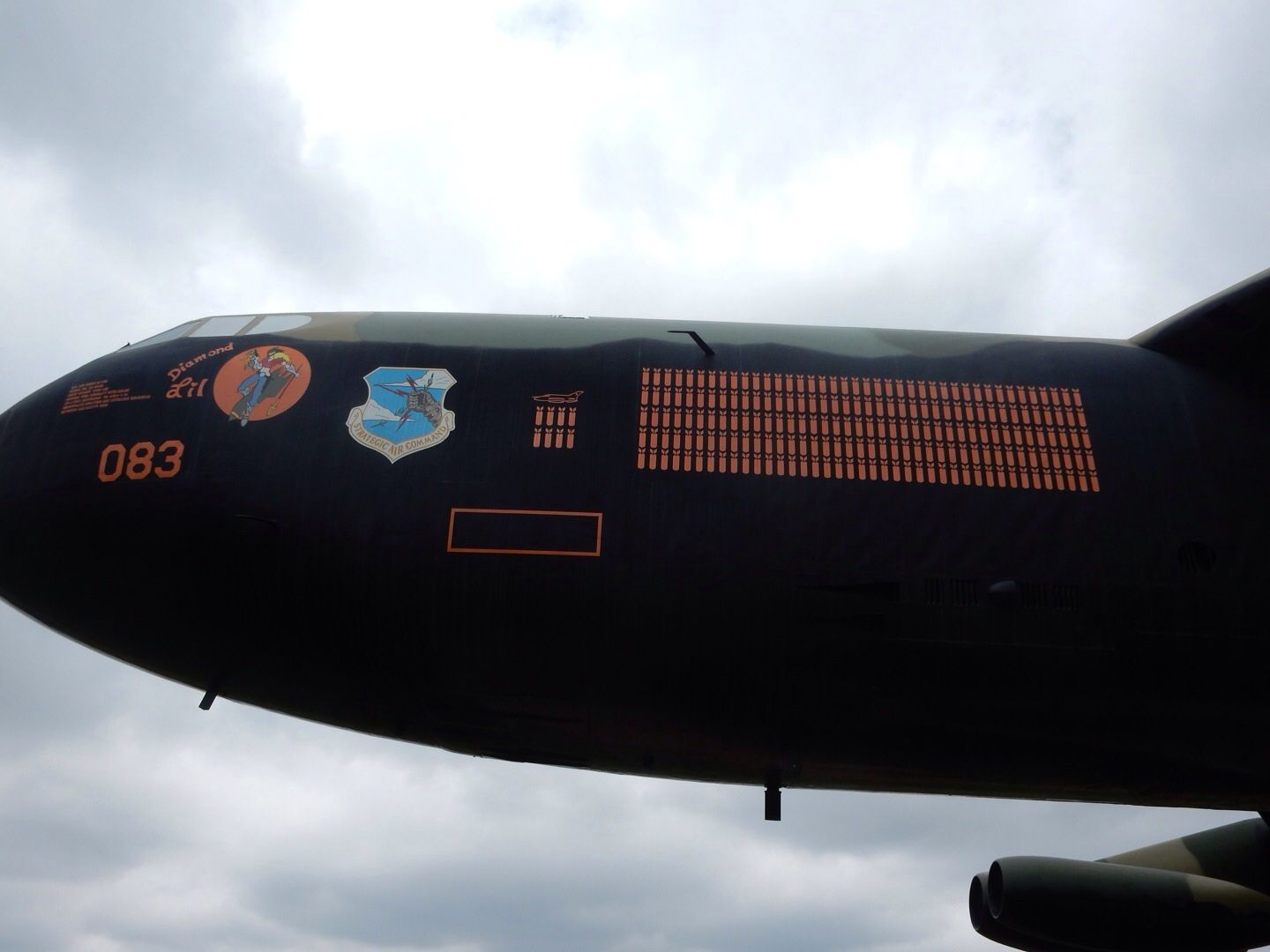
This is the B-52 Stratofortress, "Diamond L'il."  It is one of two B-52s credited with a mig kill during the Vietnam war.


Between 1965 and 1973, B-52s flew over 125,00 combat missions over Southeast Asia. More recently, during Desert Storm 31% of the bombs dropped were carried by B-52s. This aircraft continues to be in the inventory of our military.

The Chapel and this aircraft were the highlights of our visit. There is no fee to visit the USAFA.

Website: www.usaf.af.mil//
Wednesday, July 2, 2014

The Carriage Museum - 6/30/14

The Carriage Museum houses the Spencer and Julie Penrose collection of unique carriages, race cars, automobiles, and other historically significant items. Their lifetime collection includes 31 horse-drawn carriages five motorized carriers (including three Pikes Peak Auto Hill Climb race cars), and Mrs. Penrose's 1928 Cadillac limousine. Also on exhibit are saddles, muskets and rifles dating from the Civil War and before, and several rare Native American ceremonial garments.

This 1841 Brougham was used in the inauguration of William H. Harrison, ninth president of the U.S,, on March 4, 1841. It was valued at $500 st the time. The same day Harrison rode his horse down Pennsylvania Avenue, subsequently caught pneumonia, and died a month later. It had tufted wine-silk ceiling and black leather upholstery.


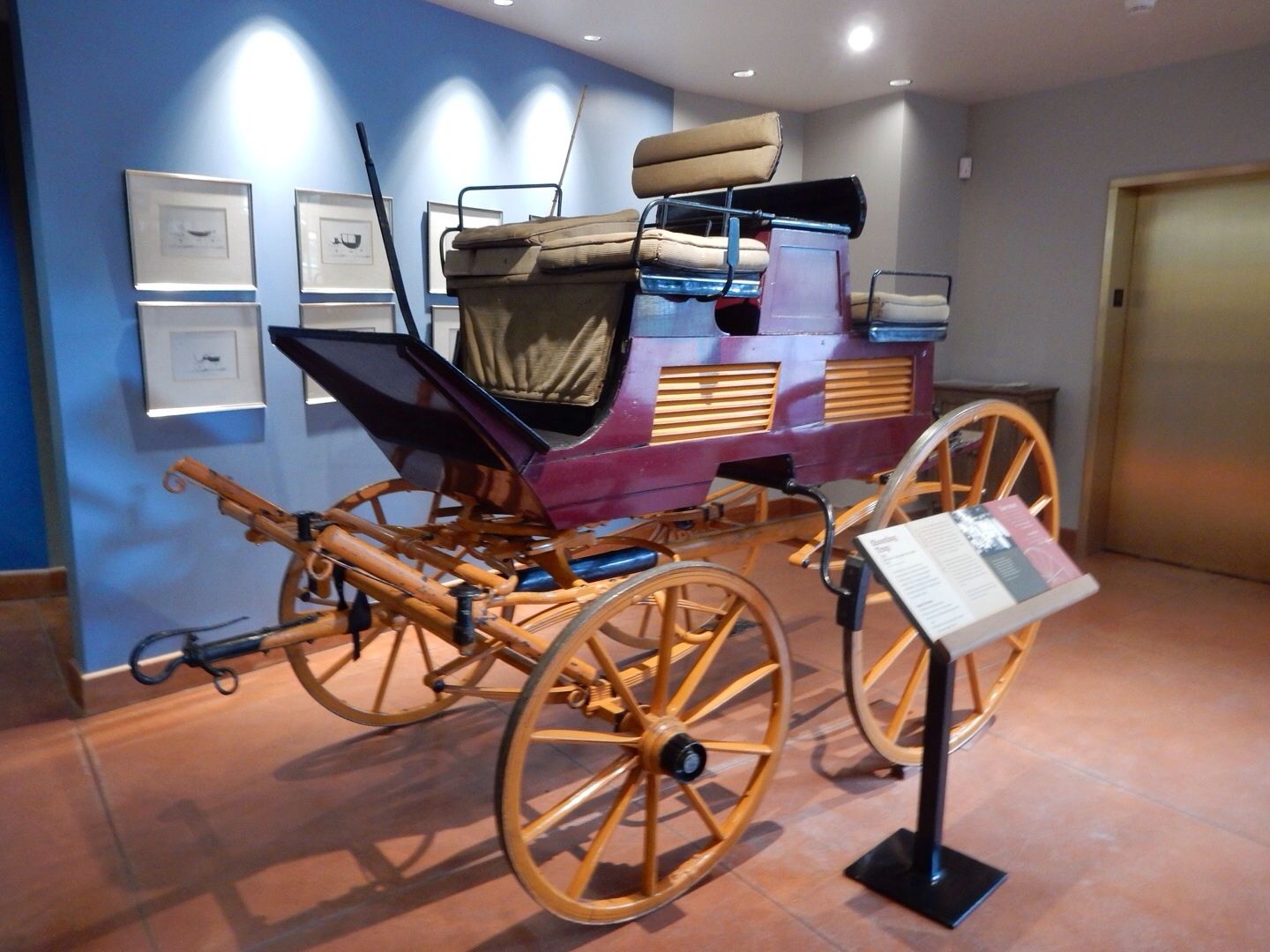
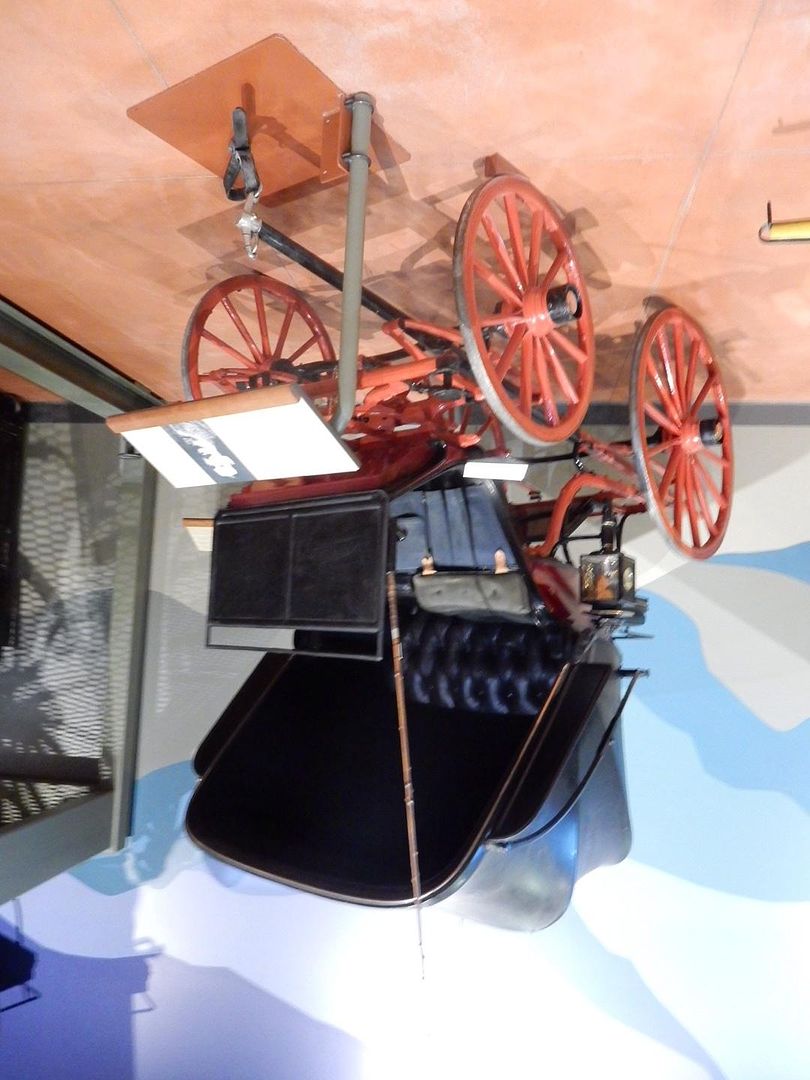
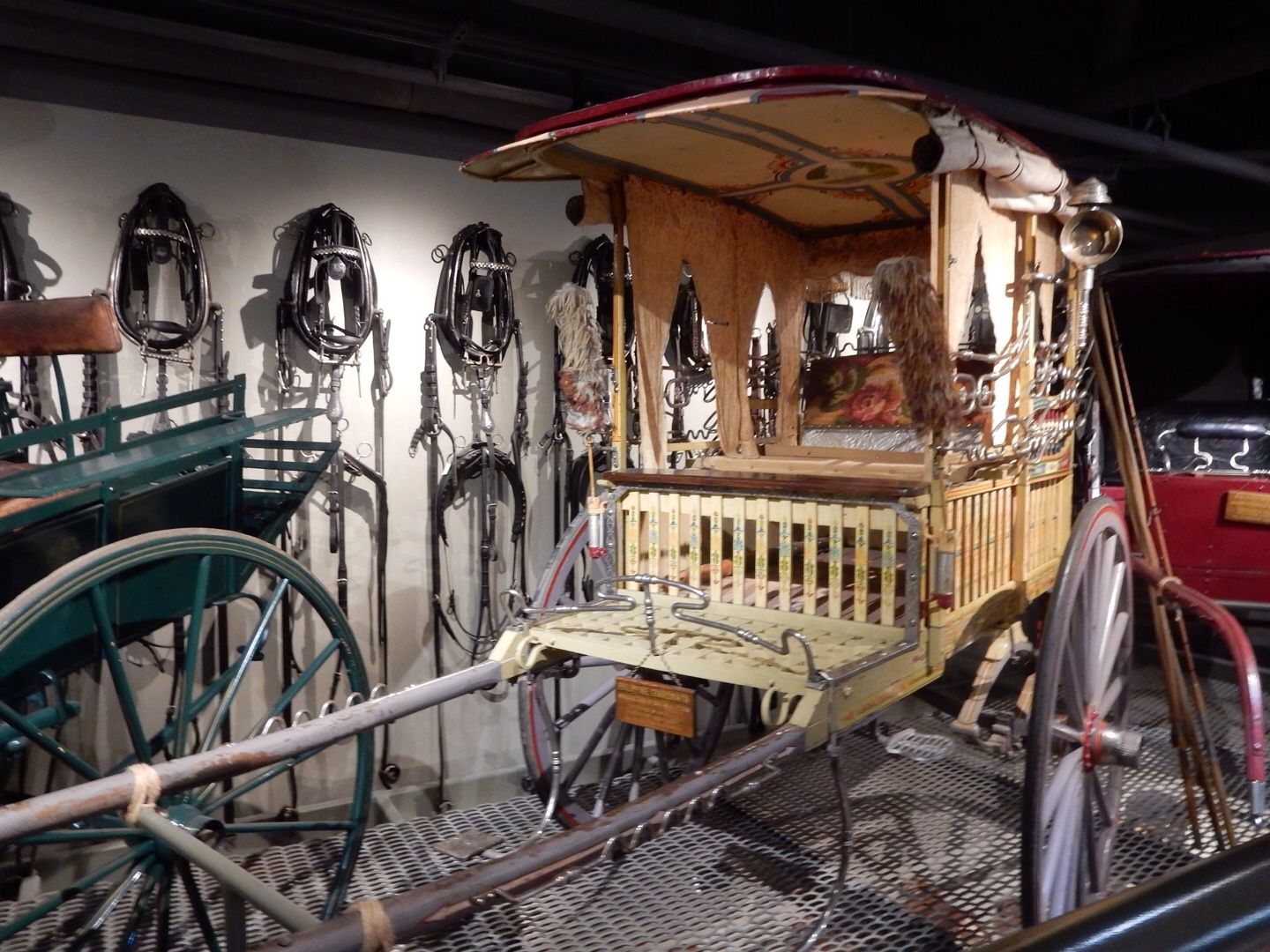
Known as a shooting trap, this carriage was used for hunting and accommodated hunting dogs under the seats (the louvered wood is to provide ventilation for the dogs). It was owned by Horace K. Devereaux (a football star of Princeton, class of 1880) who remained a lifelong friend to Penrose. He is buried at the Will Rogers Shrine of the Sun.


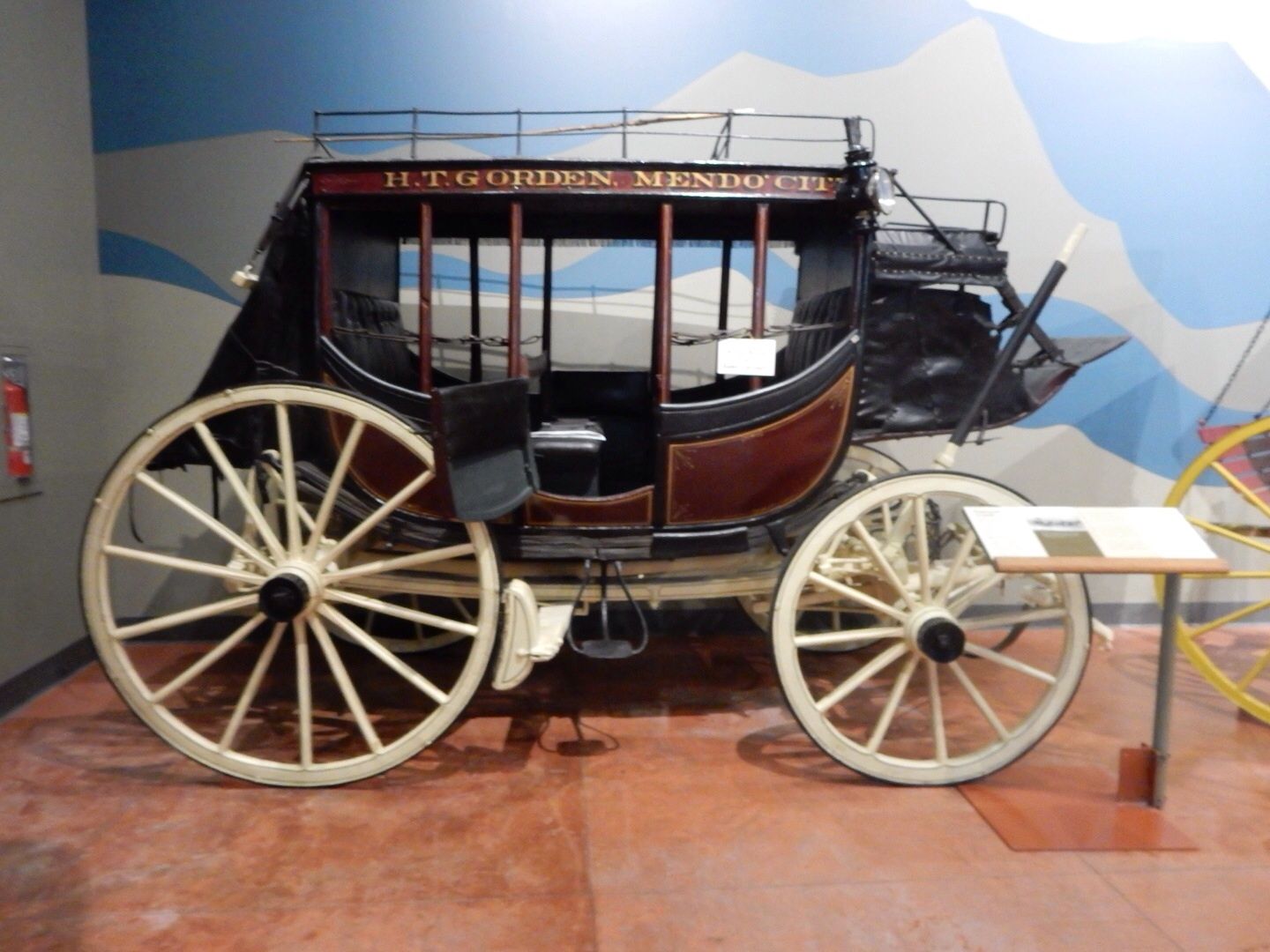
Stage coach, 1866. Passengers did not expect a comfortable journey!


Gentleman's Phaeton, 1896, very popular with wealthy American men.


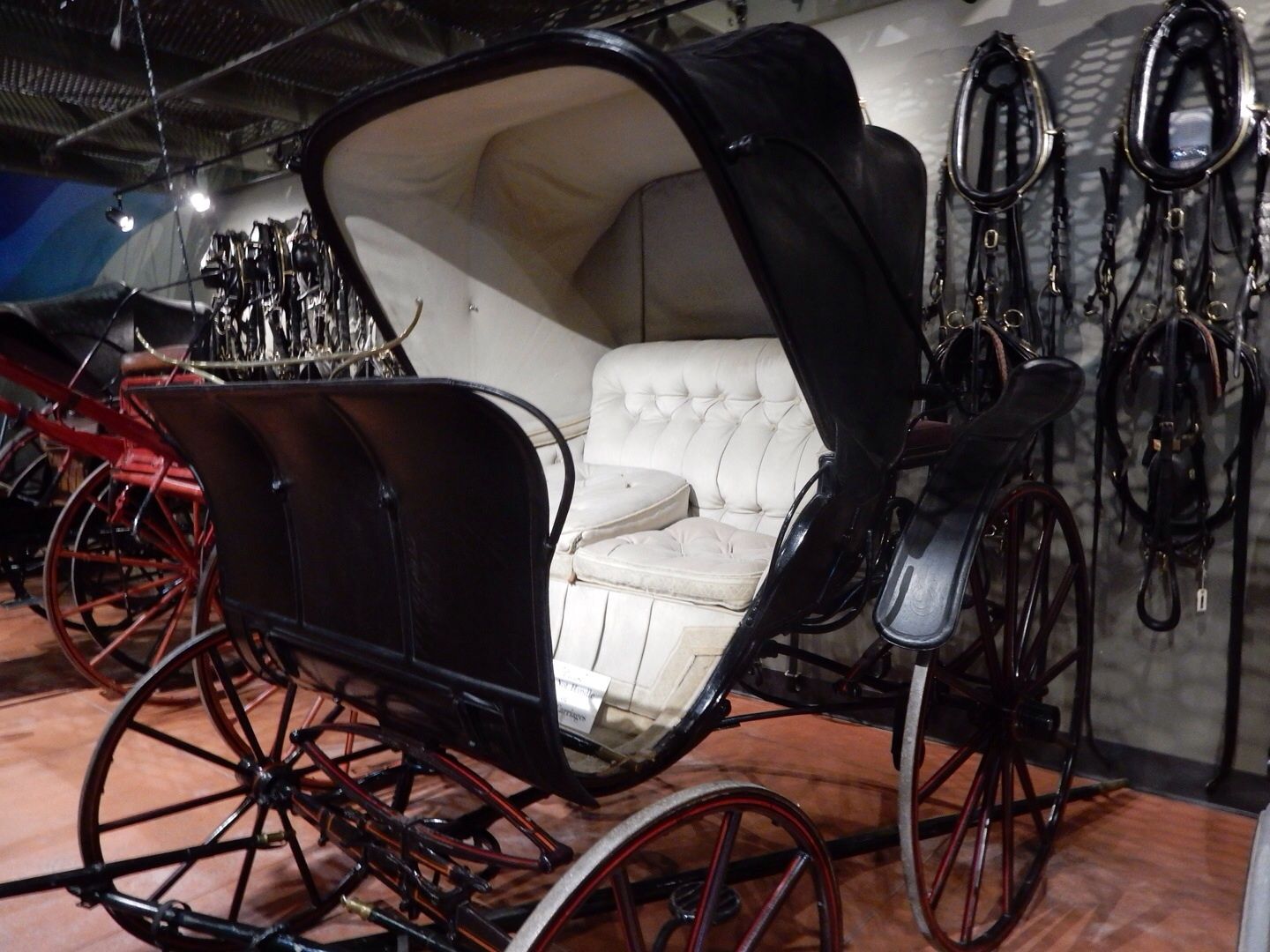
Ladies Phaeton, 1893, also popular with wealthy American women. A rumble seat was in the rear to provide a seat for a groom.


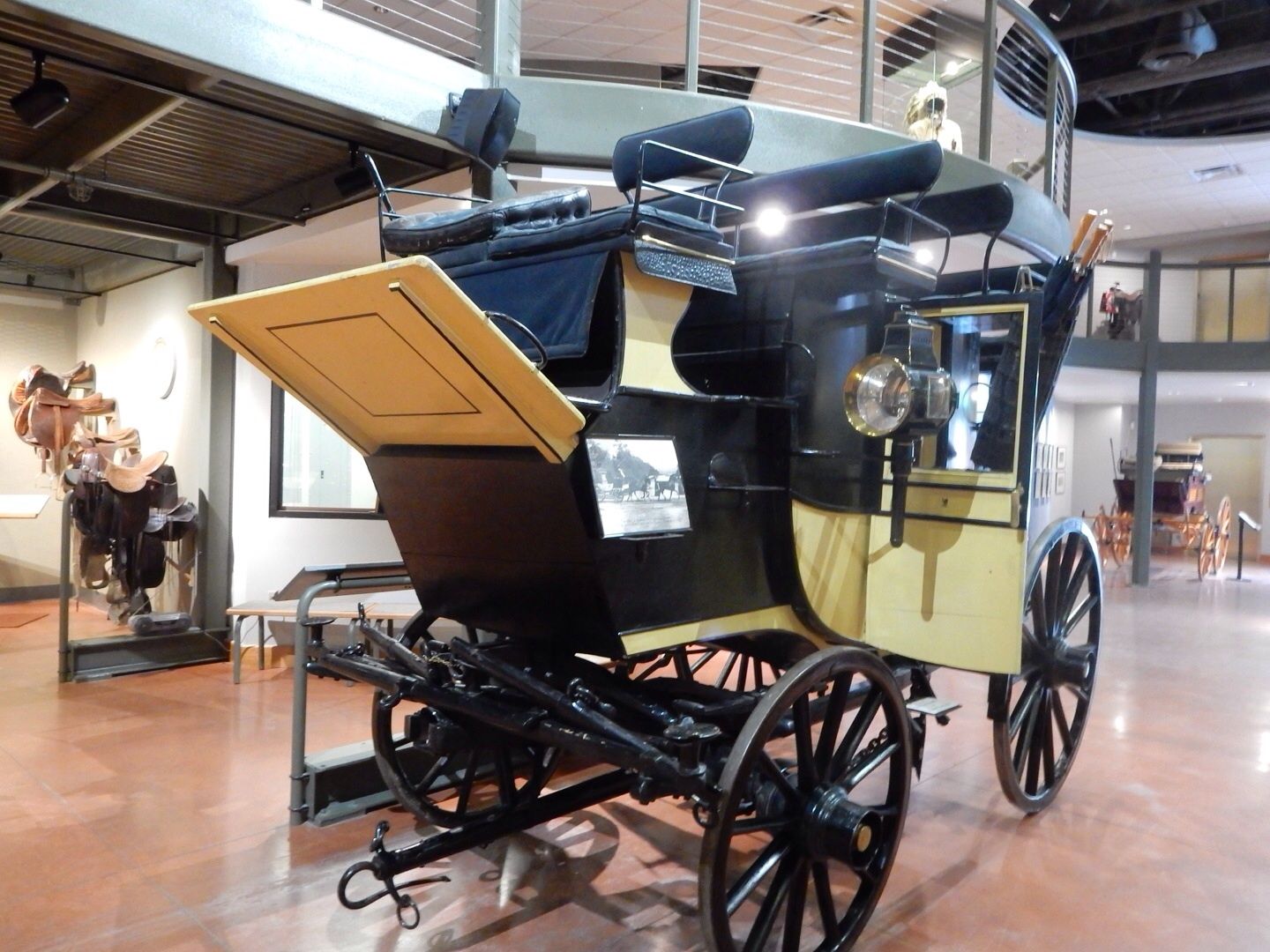
Gentleman's Drag, 1890. This carriage was designed to carry 18 passengers!


Rare Carromata, 1935, usually drawn by one pony. This one was used to transport guests from the Penrose home to the beach on their property in Hawaii.

Saddle collection.

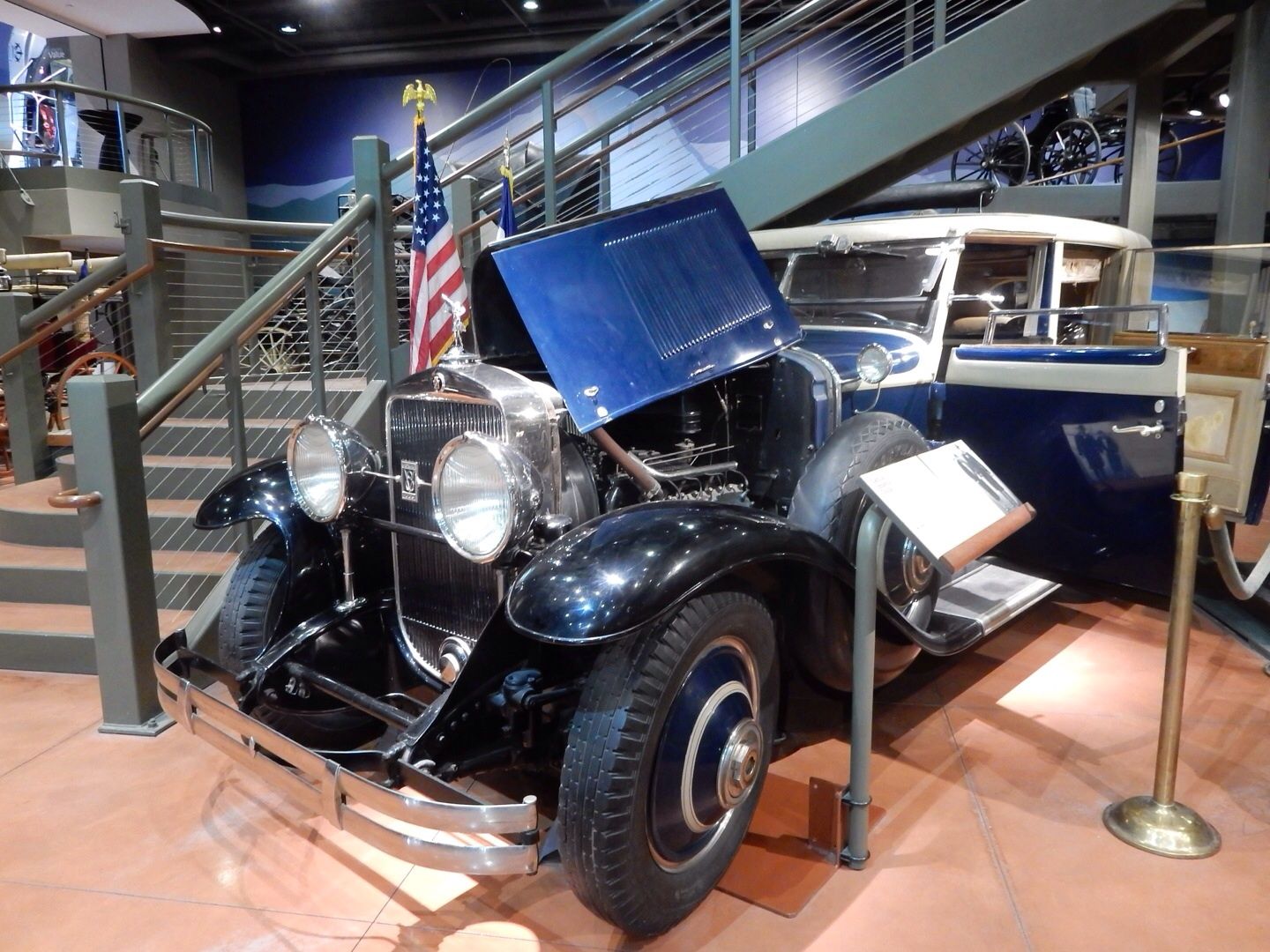
This 1928 V-8 Cadillac was an anniversary present to Julie from her husband.


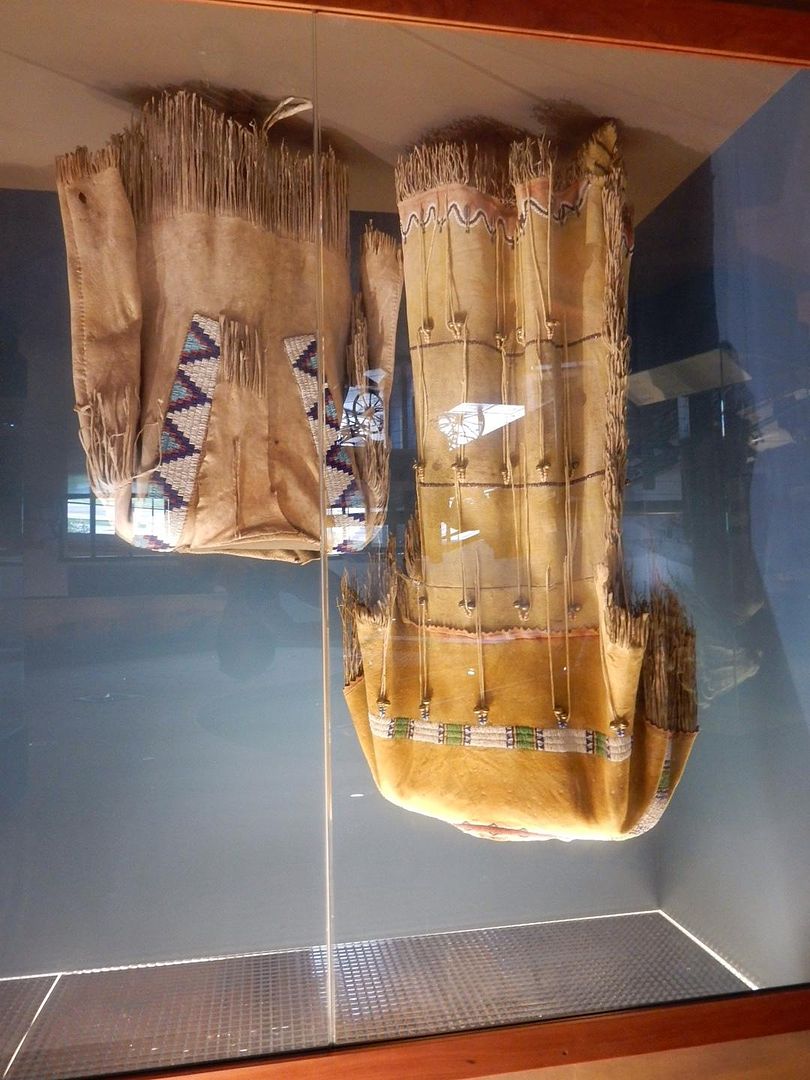
Native American garments. Dress with beadwork and bells (Cheyenne). Boy's fringed and beaded shirt (Ute).

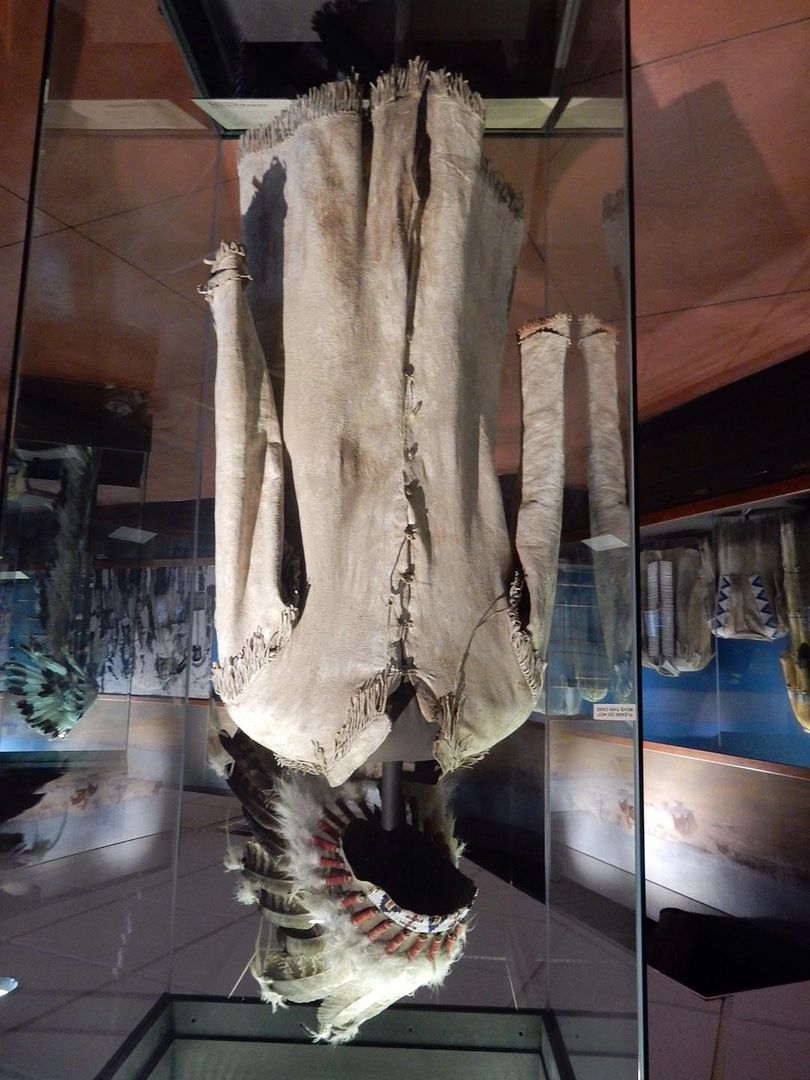
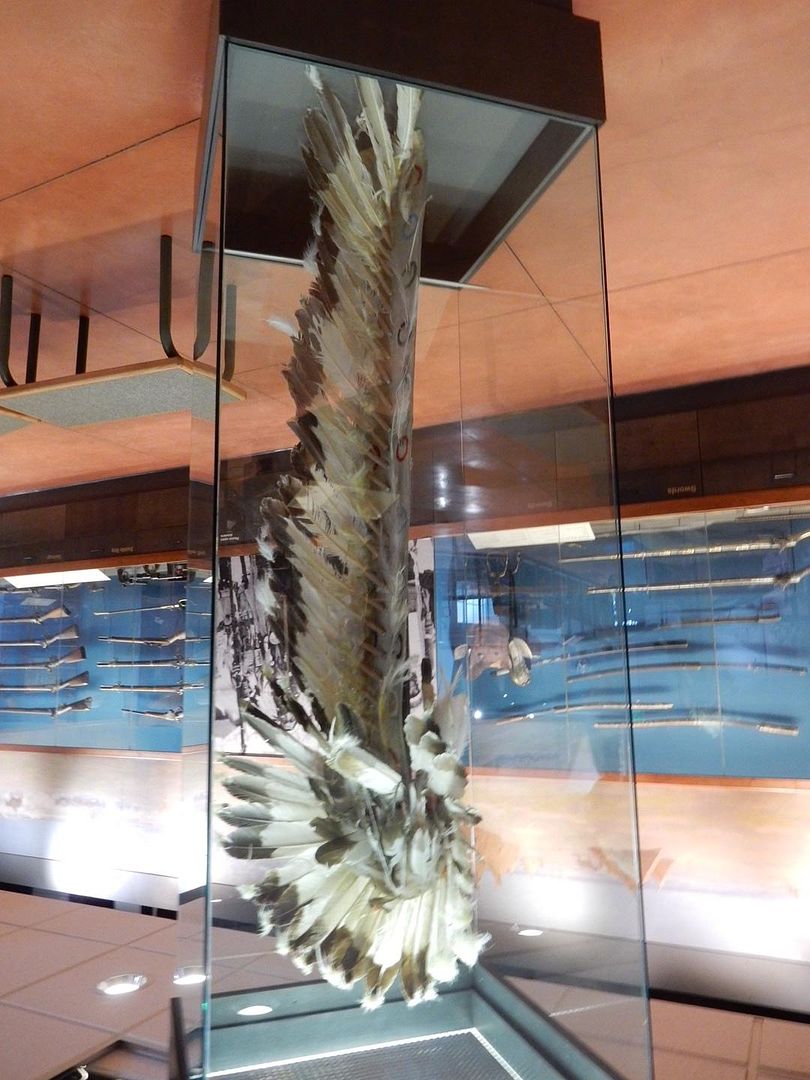
Penrose was initiated into the Sioux tribe in 1921 and given the name of White Eagle by Chief Iron Bull of the Ogala Sioux. Below is a photo of chieftain garment and headdress presented to him.


Iron Bull's, feather headdress made of young golden eagle feathers and rabbit fur ear drops. 


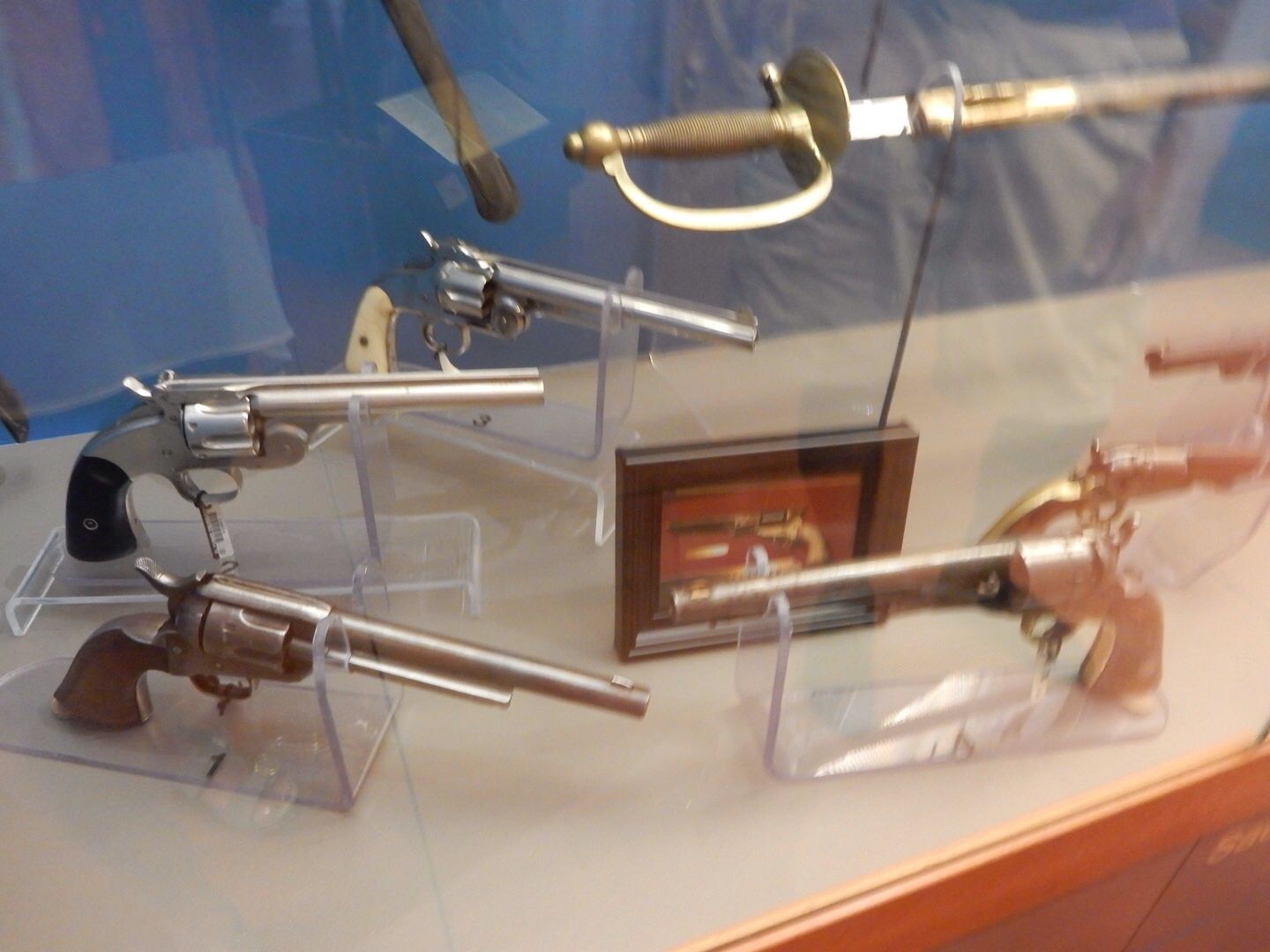
Penrose's Colt handgun collection.


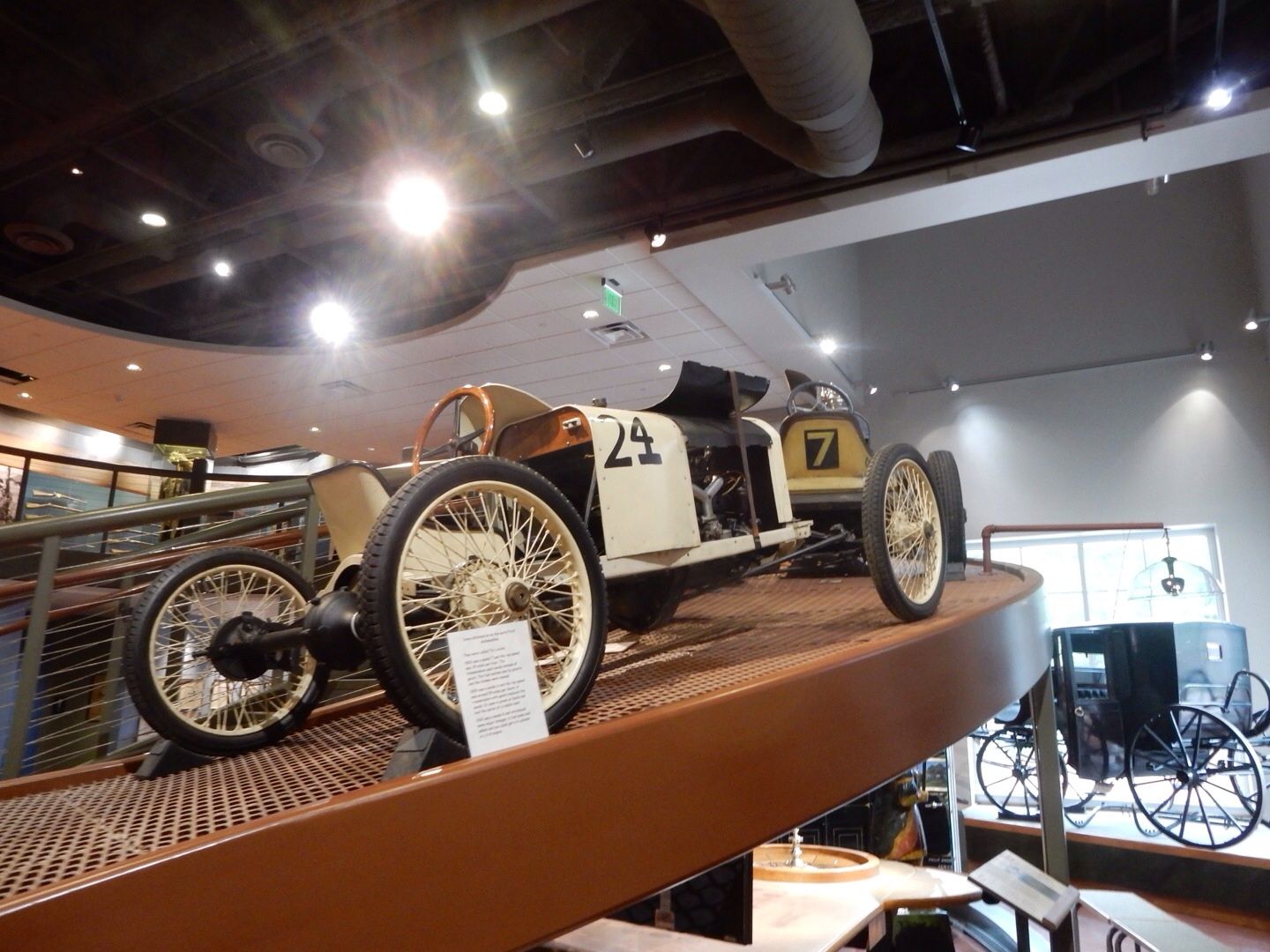
Just this month the Race to the Clouds wing of the Carriage Museum was opened that features the history of the famous annual Pikes Peak race to the summit. Penrose funded the development of the Pikes Peak Highway and the race began in 1916. It has been held annually except during the years of WW I, the first year of the Great Depression, and WW II since.

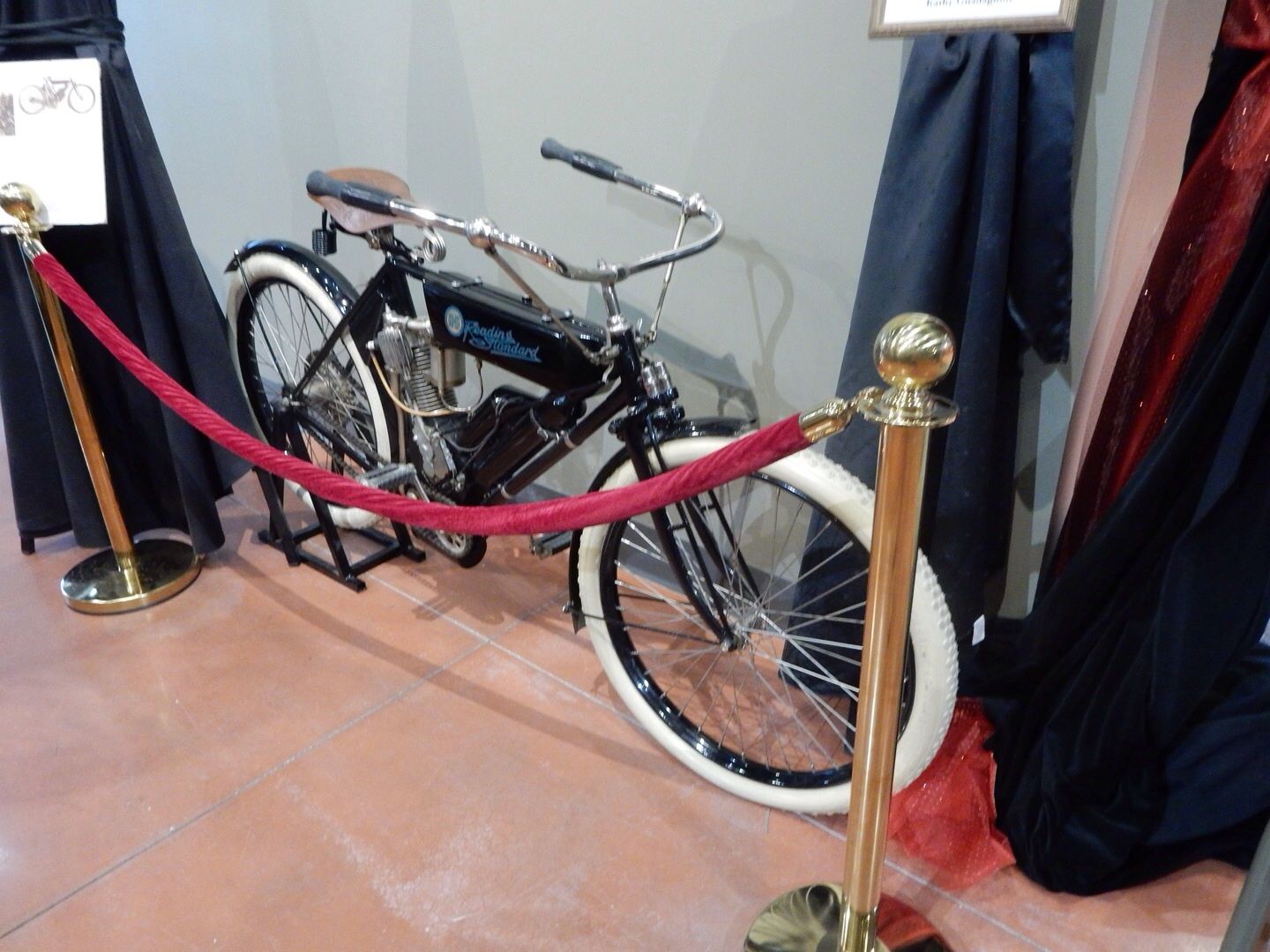
First motor vehicle to reach the top of Pikes Peak (in 1906) was this R-S Motor Bicycle.


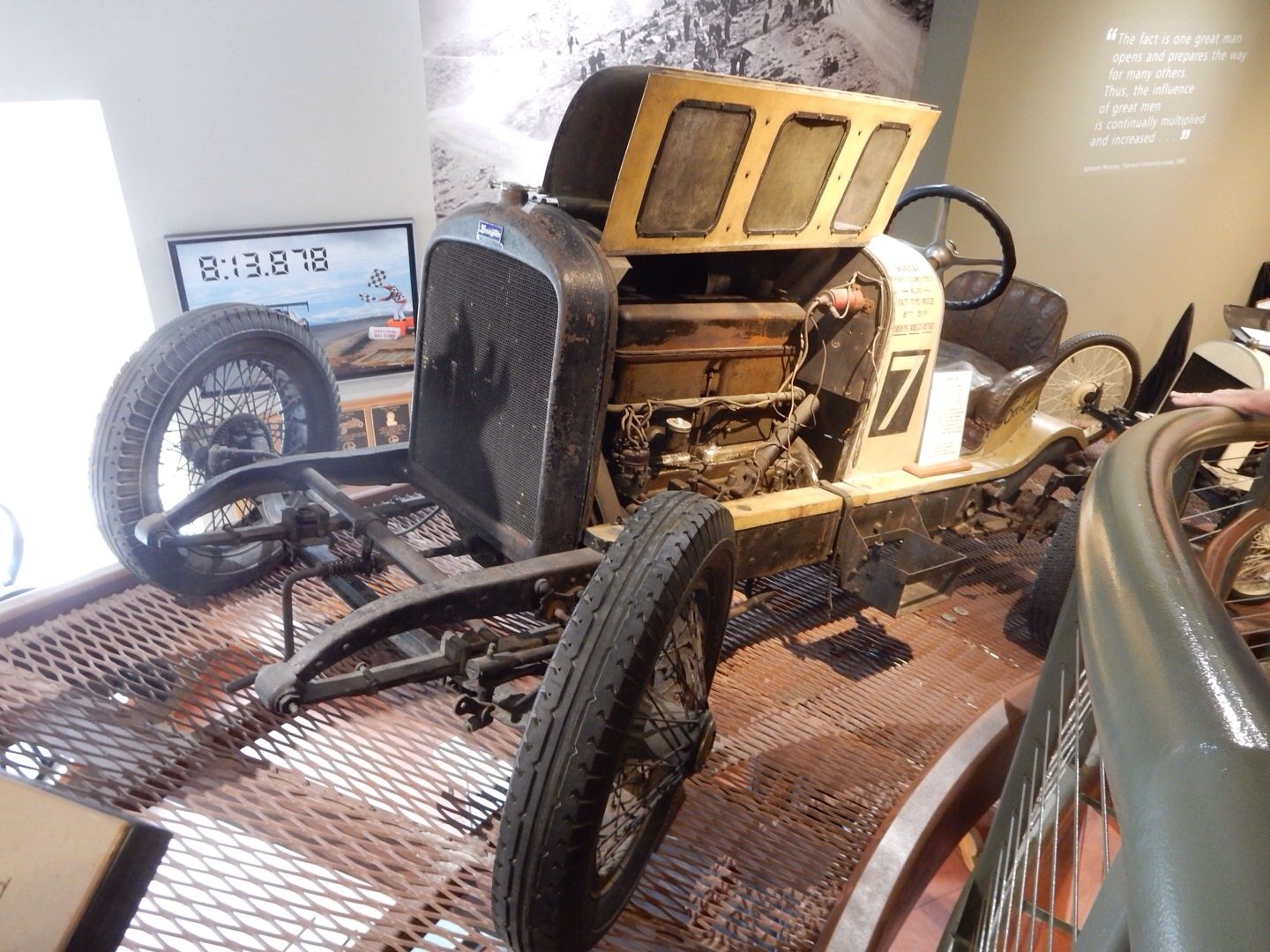
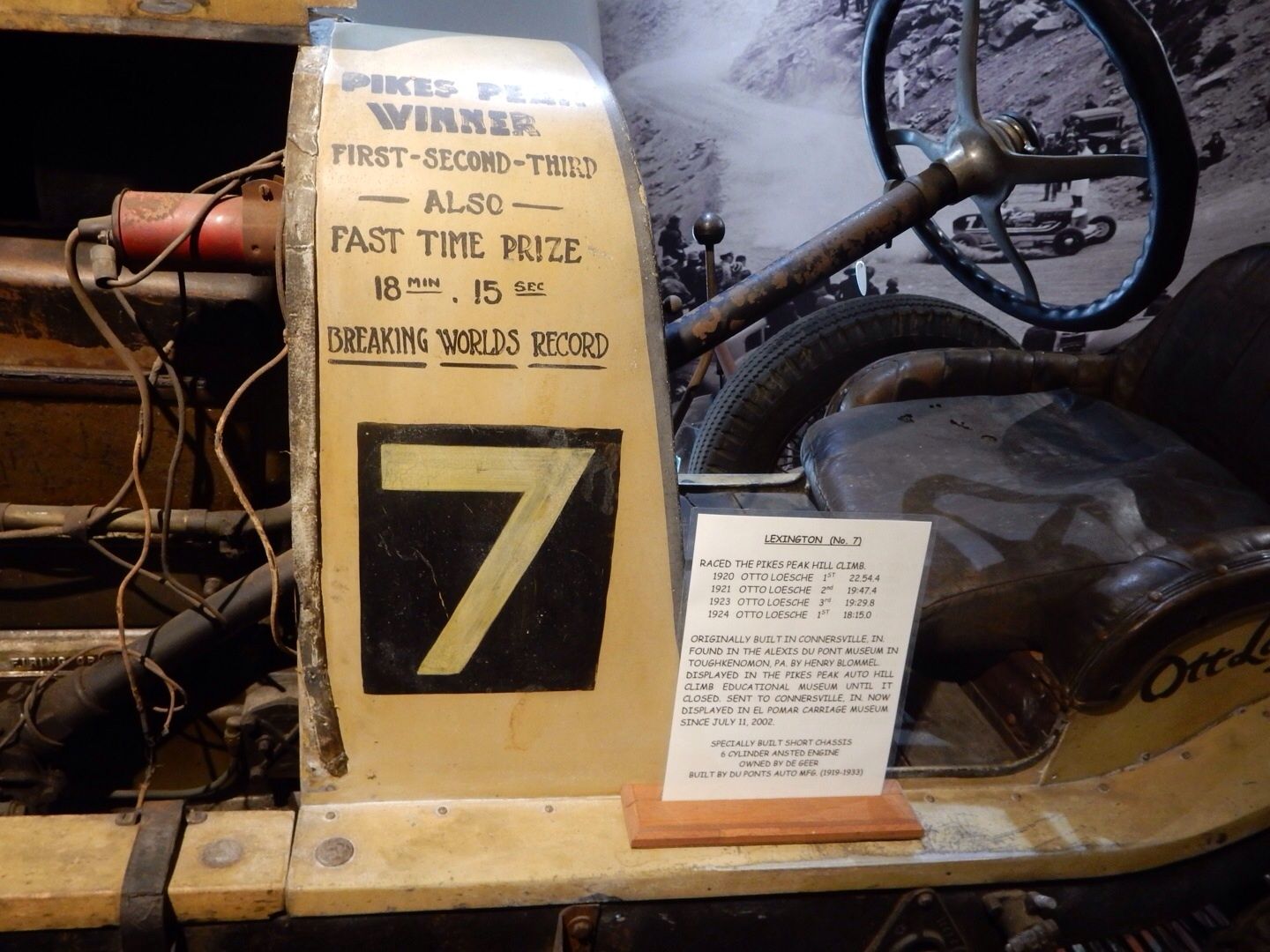
Lexington Minute Man Special - won in 1920 and 1924.


This modified1917 Ford Model T pickup raced to victory in 1922 driven by Noel Bollock.


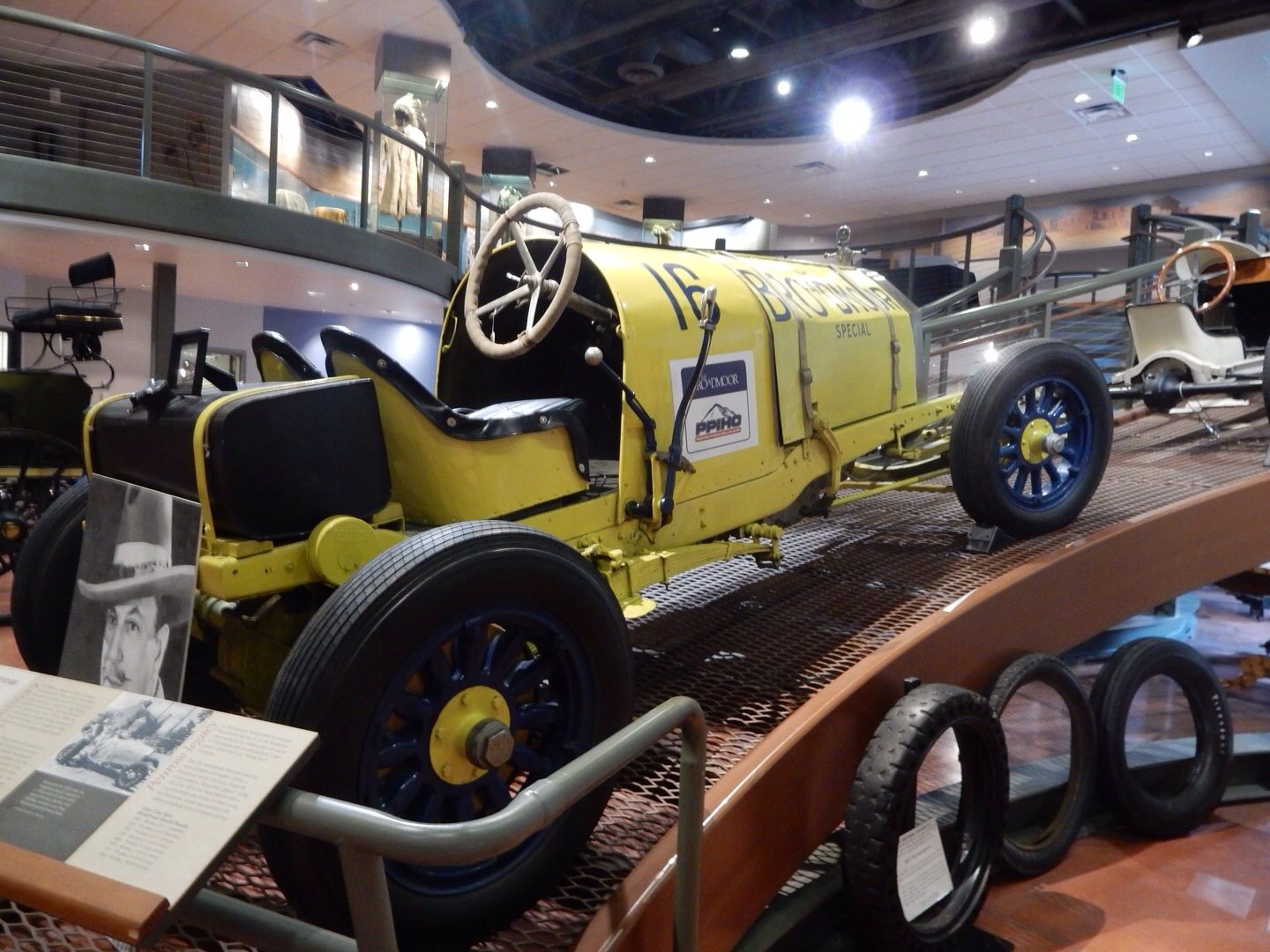
This vehicle, "Yellow Devil," was modified from a 1918 Pierce Arrow seven-passenger touring car. It raced between 1922 to 1932 with a best finish of 4th.


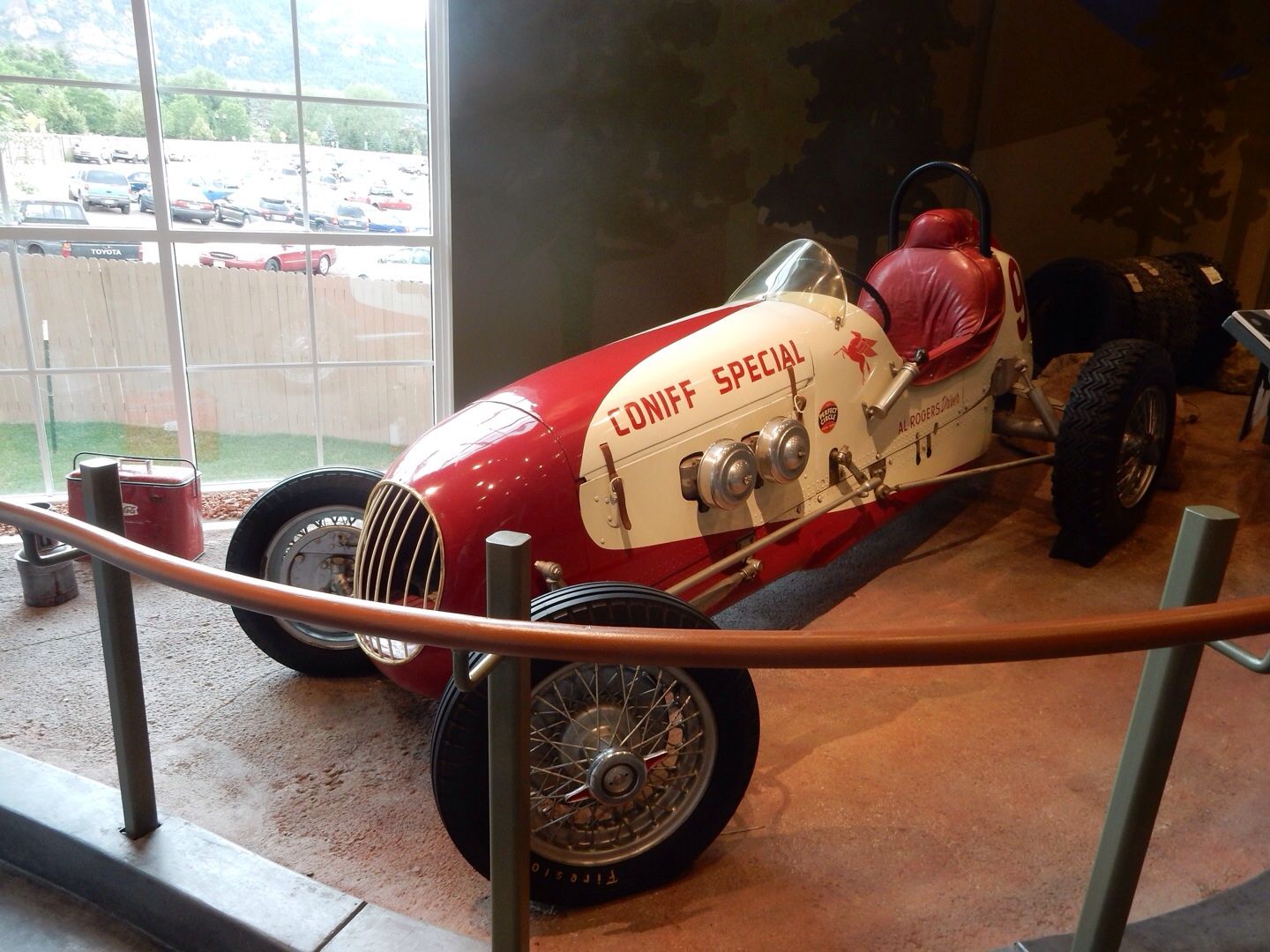
Raced by Al Rogers 15 times with 4 wins, his car was designed and built by Colorado Spring resident, Joe Coniff.

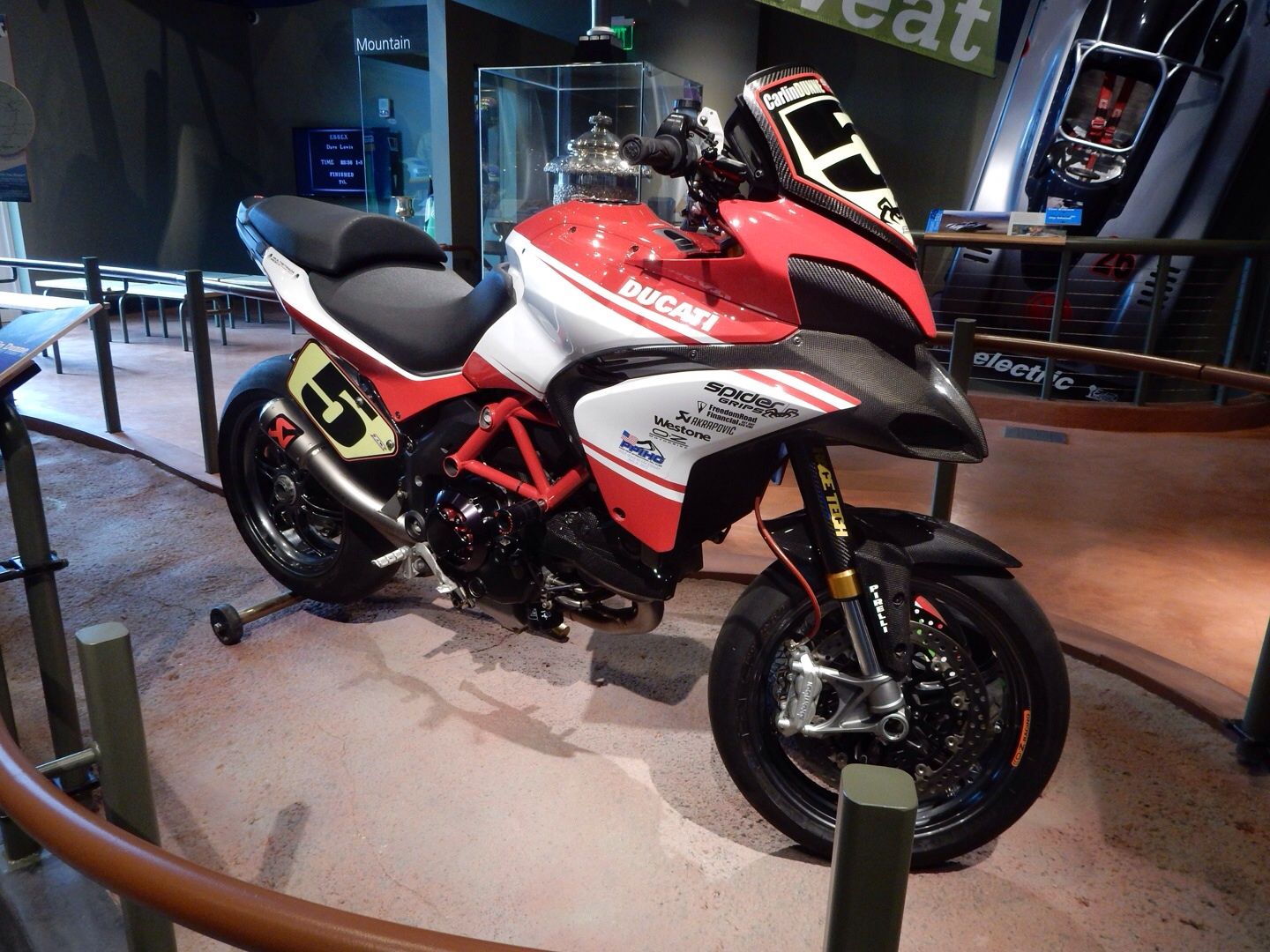
This Ducati is the first motorcycle to reach the summit in under 10 minutes, ridden by Carlin Dunne.


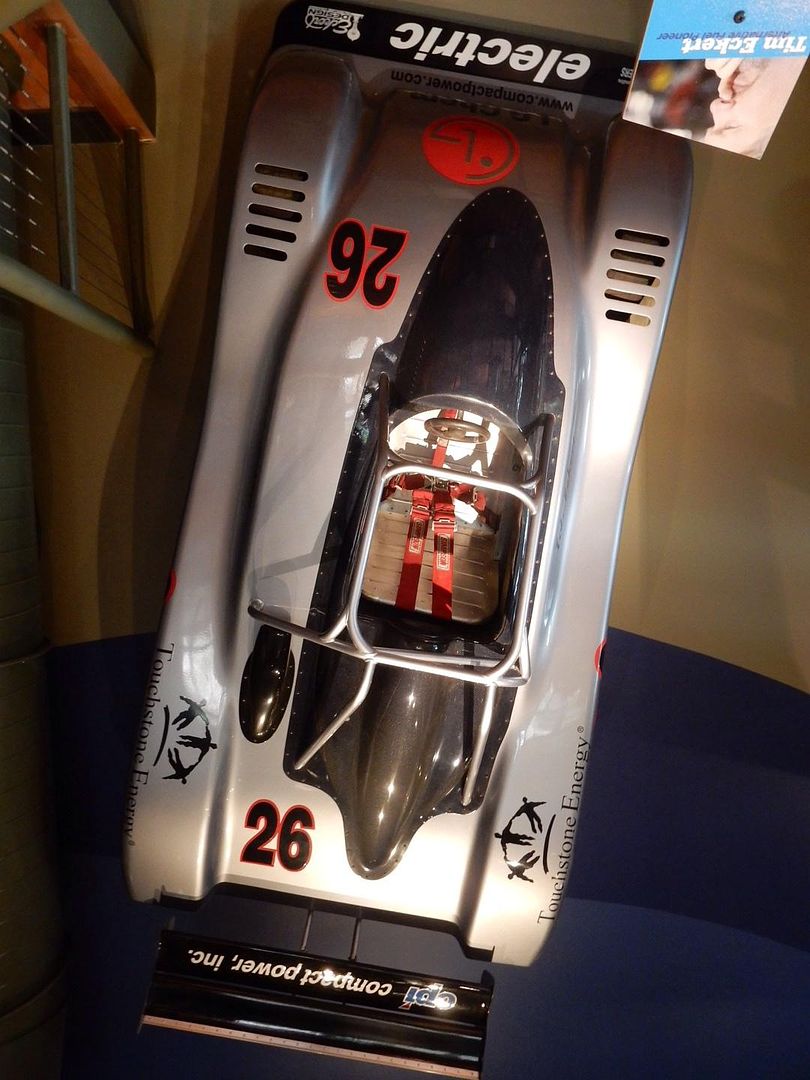
Compact Power ER2 electric car designed and driven by Tim Eckert won in 2002 for his class posting the fastest time ever for an alternative fuel vehicle.


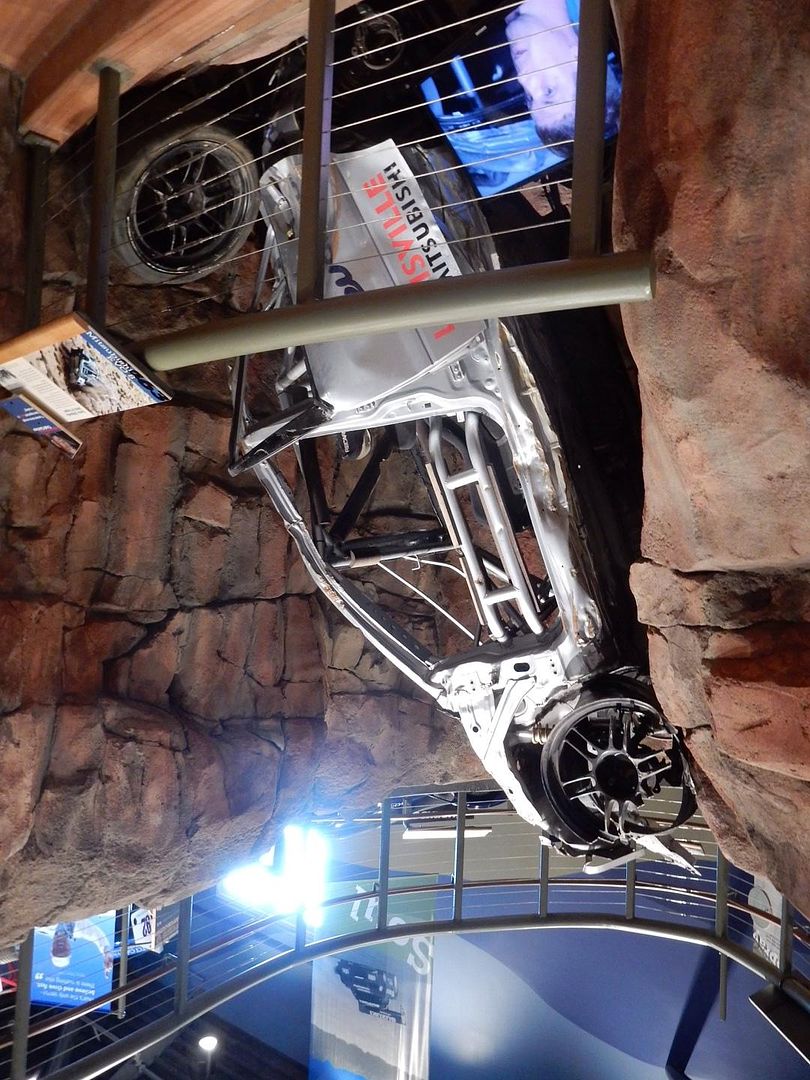
2012 crash by Jeremy Foley in Mitsubishi EVO 8.  He and his partner survived due to the safety features of the vehicle.

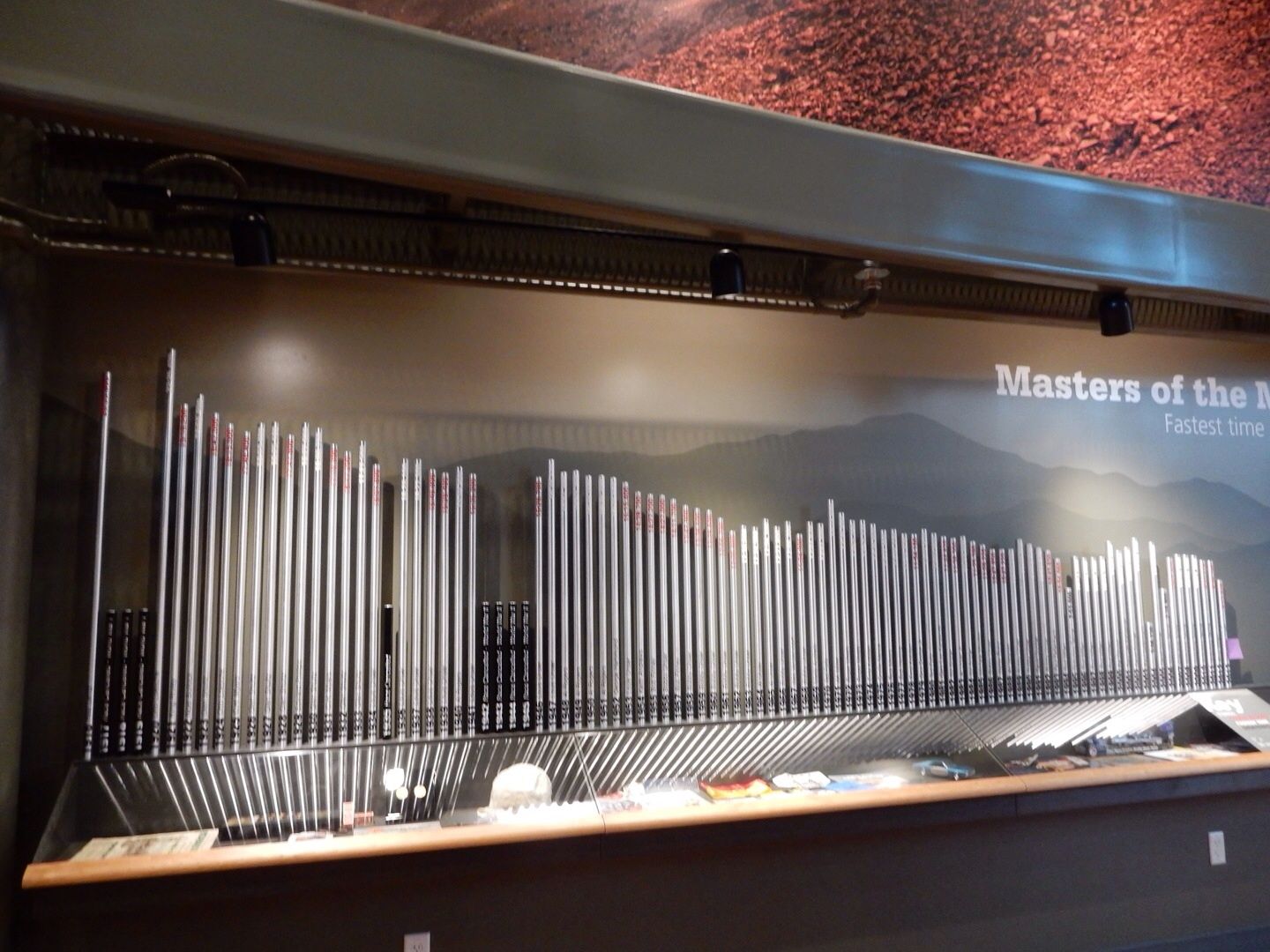
Exhibit of winners and their times since 1916. Initially times were approximately 20 minutes; today they are below 9 minutes.  Engineering, tire technology, and the paving of the highway have factored into the improved times.


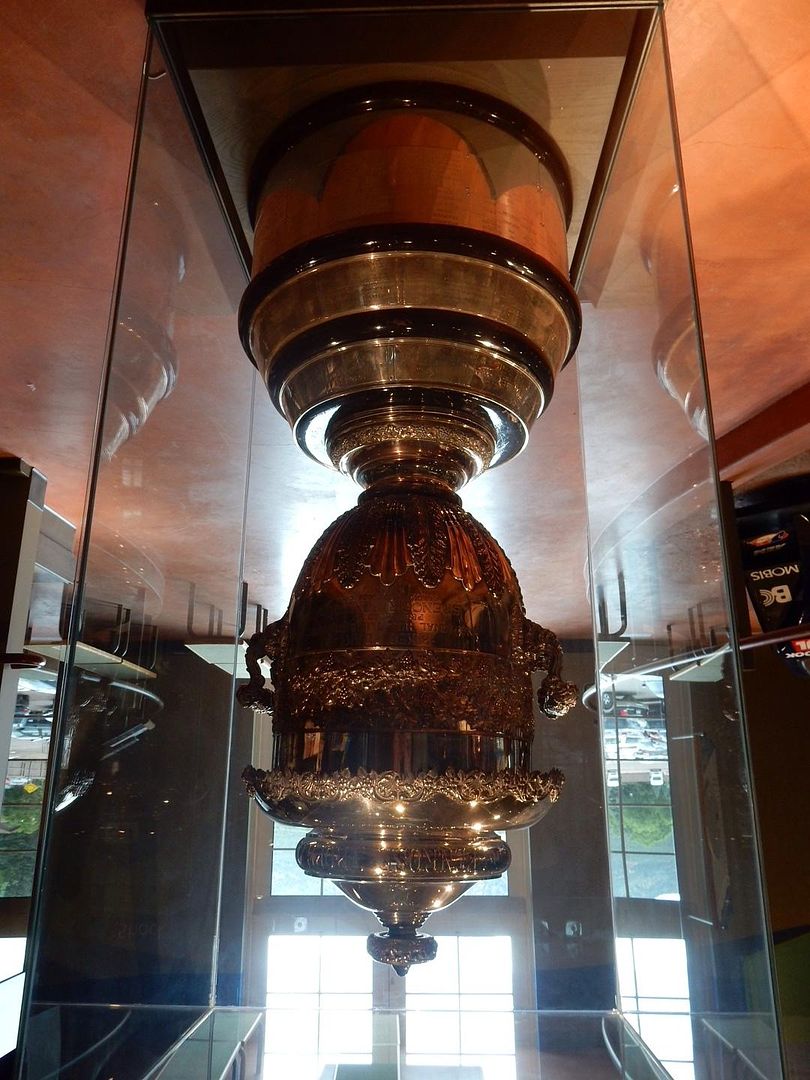
The trophy made by Bailey, Banks, and Biddle for Penrose.


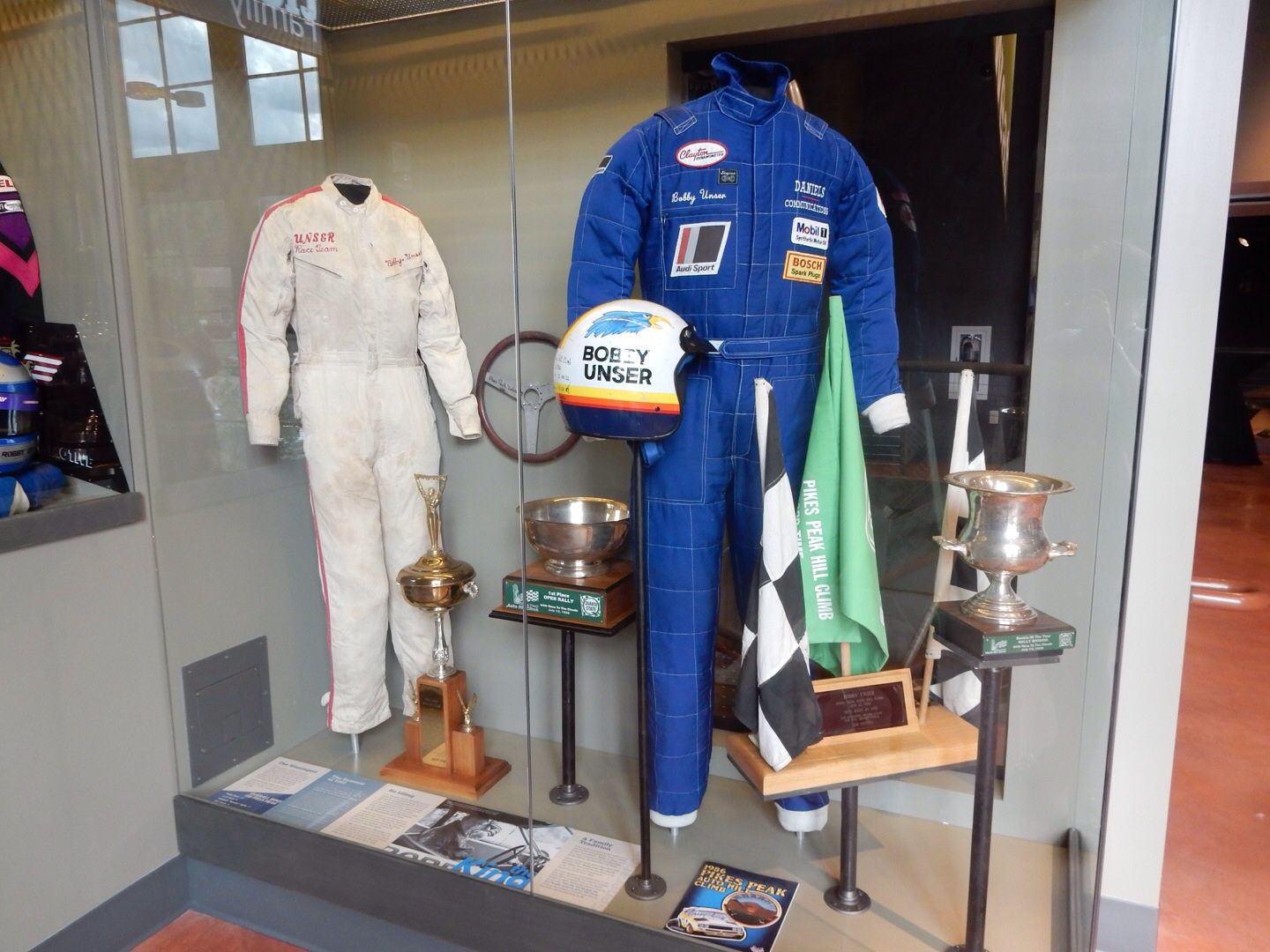
The winningest family of the race - the Unsers; Louis, Al, and Bobby.


This Carriage Museum is funded and managed by the Penrose El Pomar Foundation. Admission is free and it is located at the Broadmoor Hotel complex. We were very pleasantly surprised by the extent of the collection on display. After our visit, we walked to one of the many Broadmoor bar/restaurants for a snack and cocktails.

Website: www.thebroadmoorblog.com/tag/carriage-museum/

Tuesday, July 1, 2014

Will Rogers Shrine of the Sun - 6/30/14

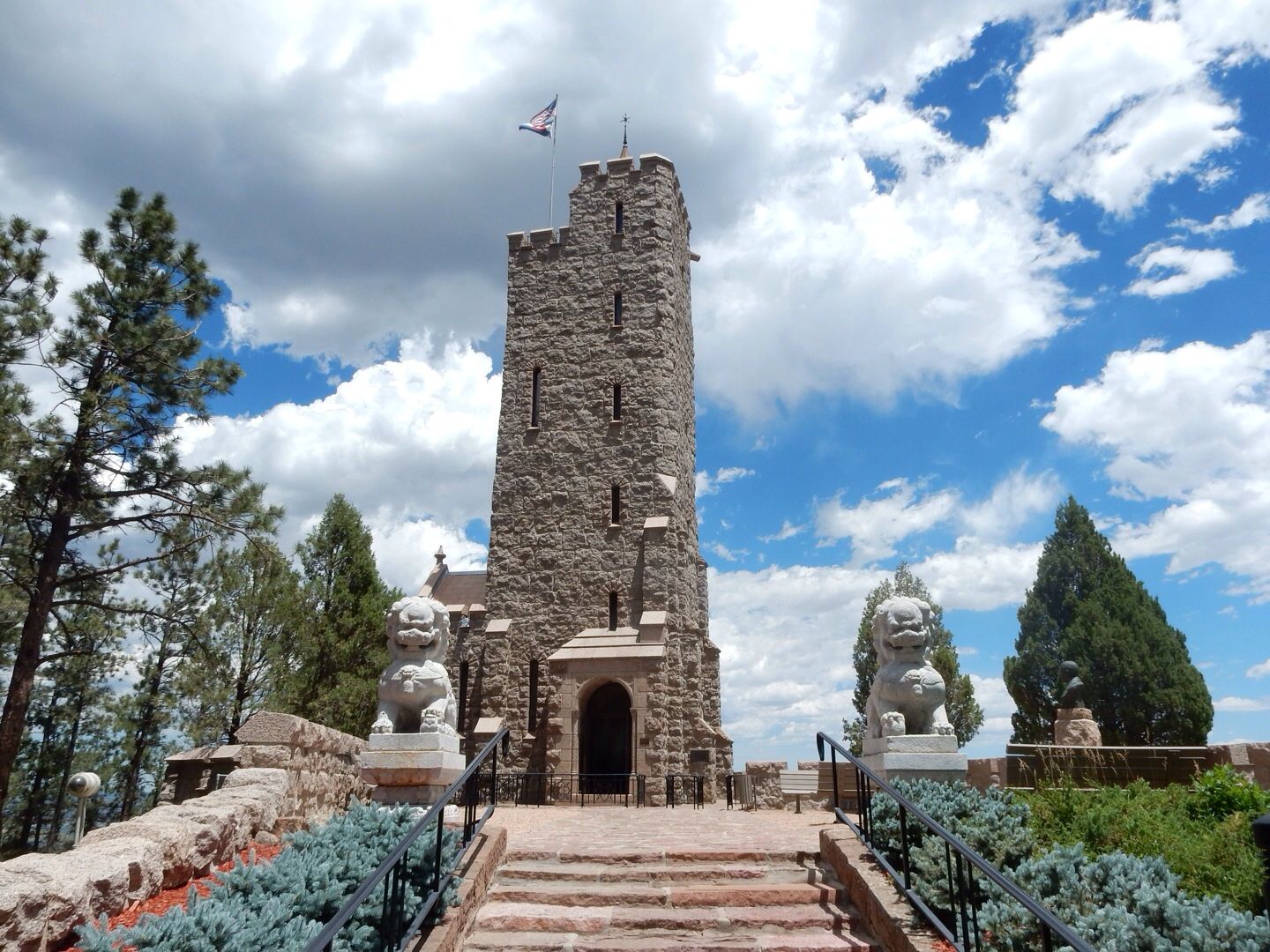
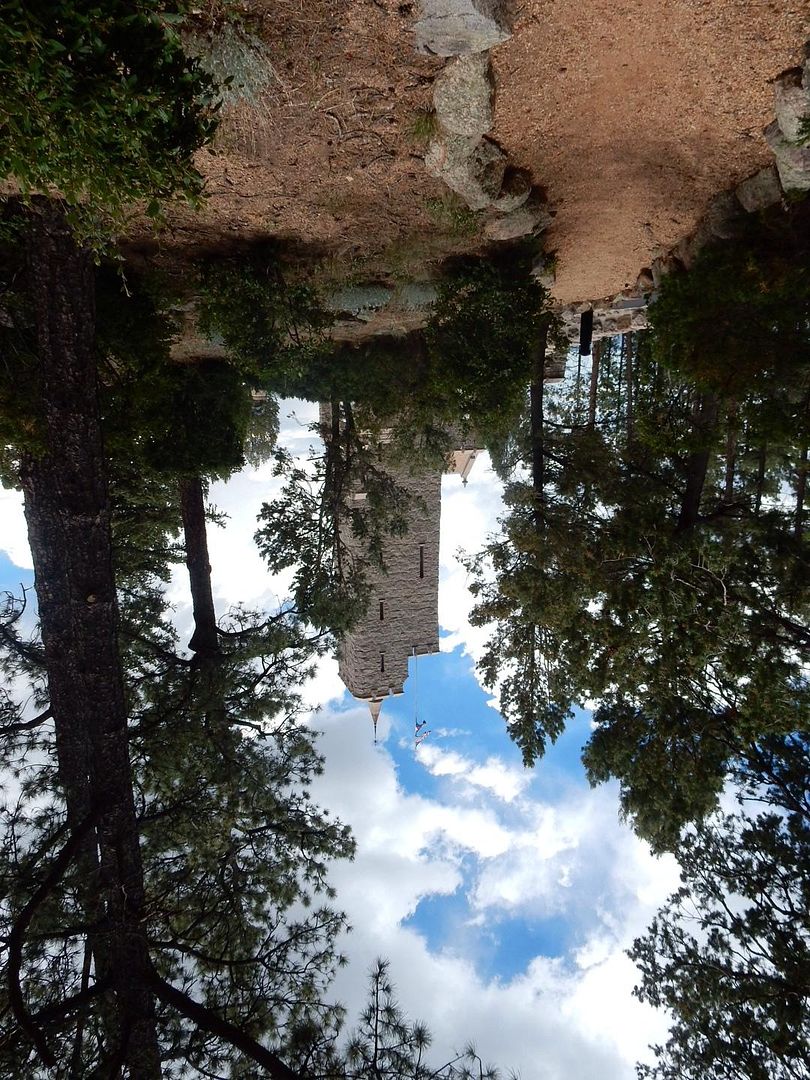
This shrine is a majestic tribute to Will Rogers, a very close personal friend of Spencer and Julie Penrose. Chimes ring out over the plains on the quarter hour from 8 am to 9 pm daily. It is said they can be heard for five miles!

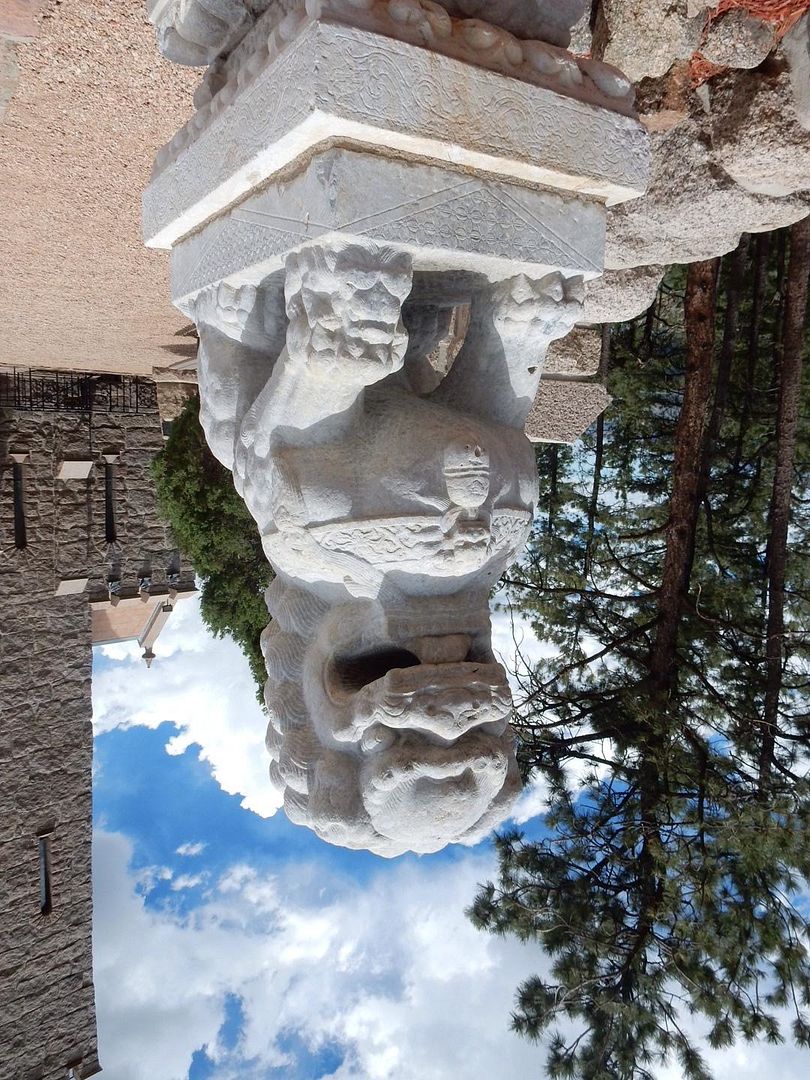
Fu Lion (2 at entrance)

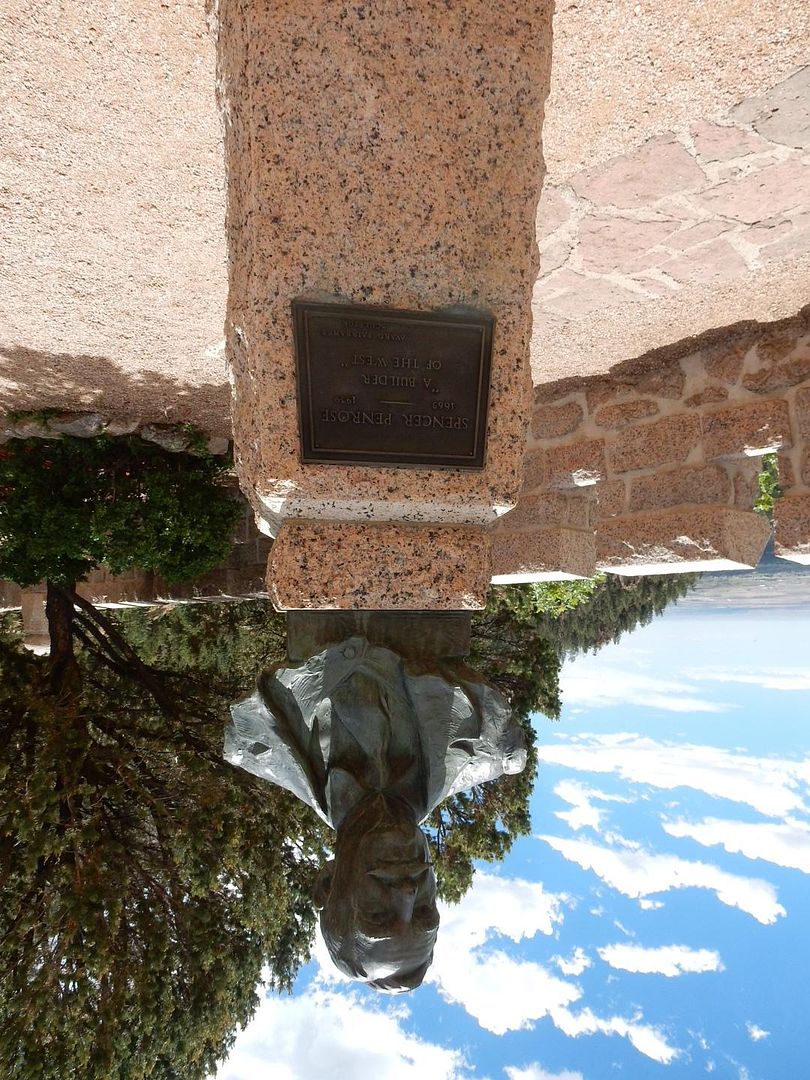
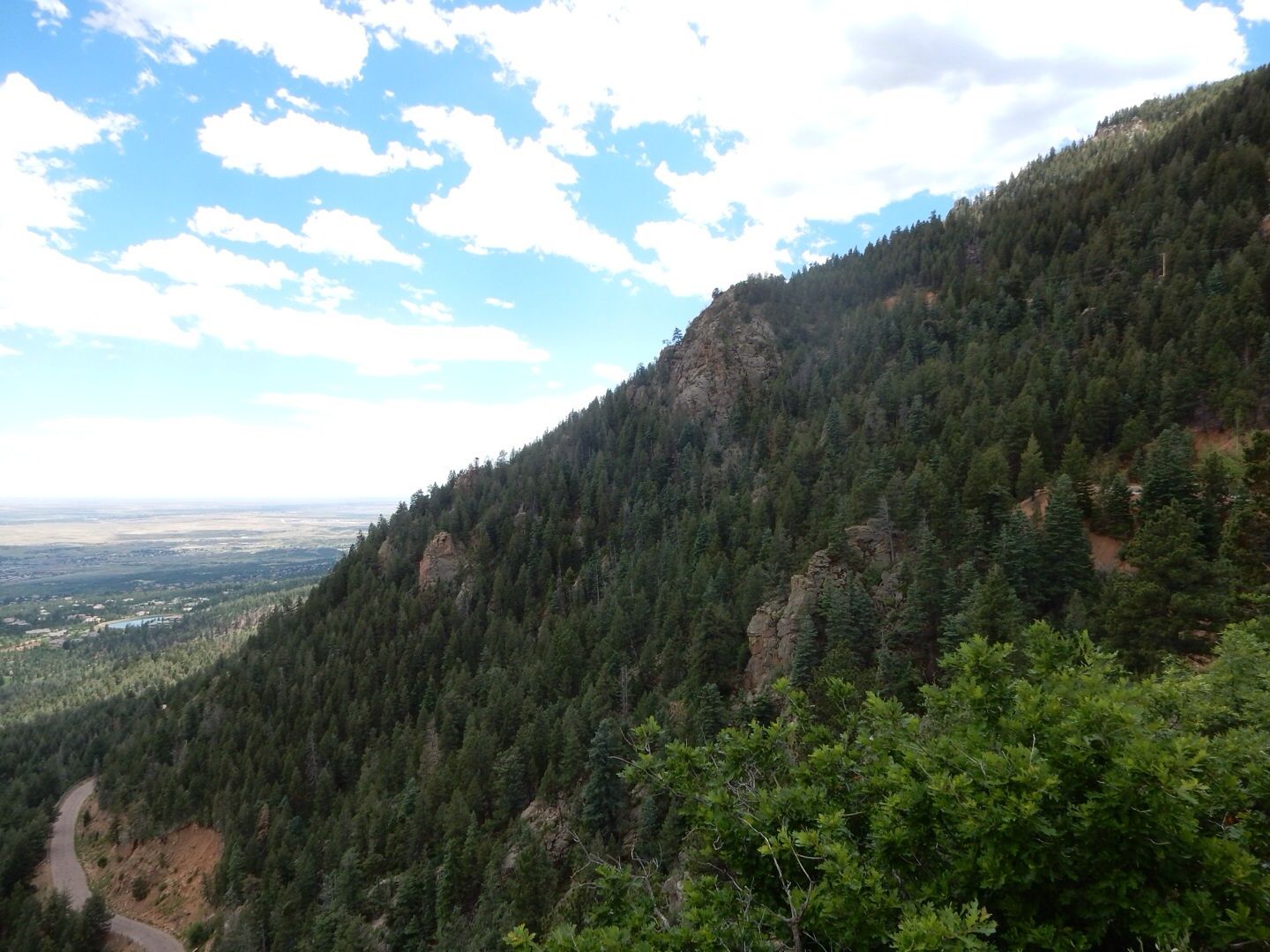
The tower was originally designed as the burial place for Spencer and Julie Penrose (and their cremated remains are buried here along with those of two close personal friends). Situated high on Cheyenne Mountain above the Cheyenne Mountain Zoo (founded by Spencer Penrose in 1926 to house his exotic animals), access to the shrine is via a winding mountain road with hairpin turns that passes through the zoo. Below is a bust of Penrose located near the entrance to the tower.


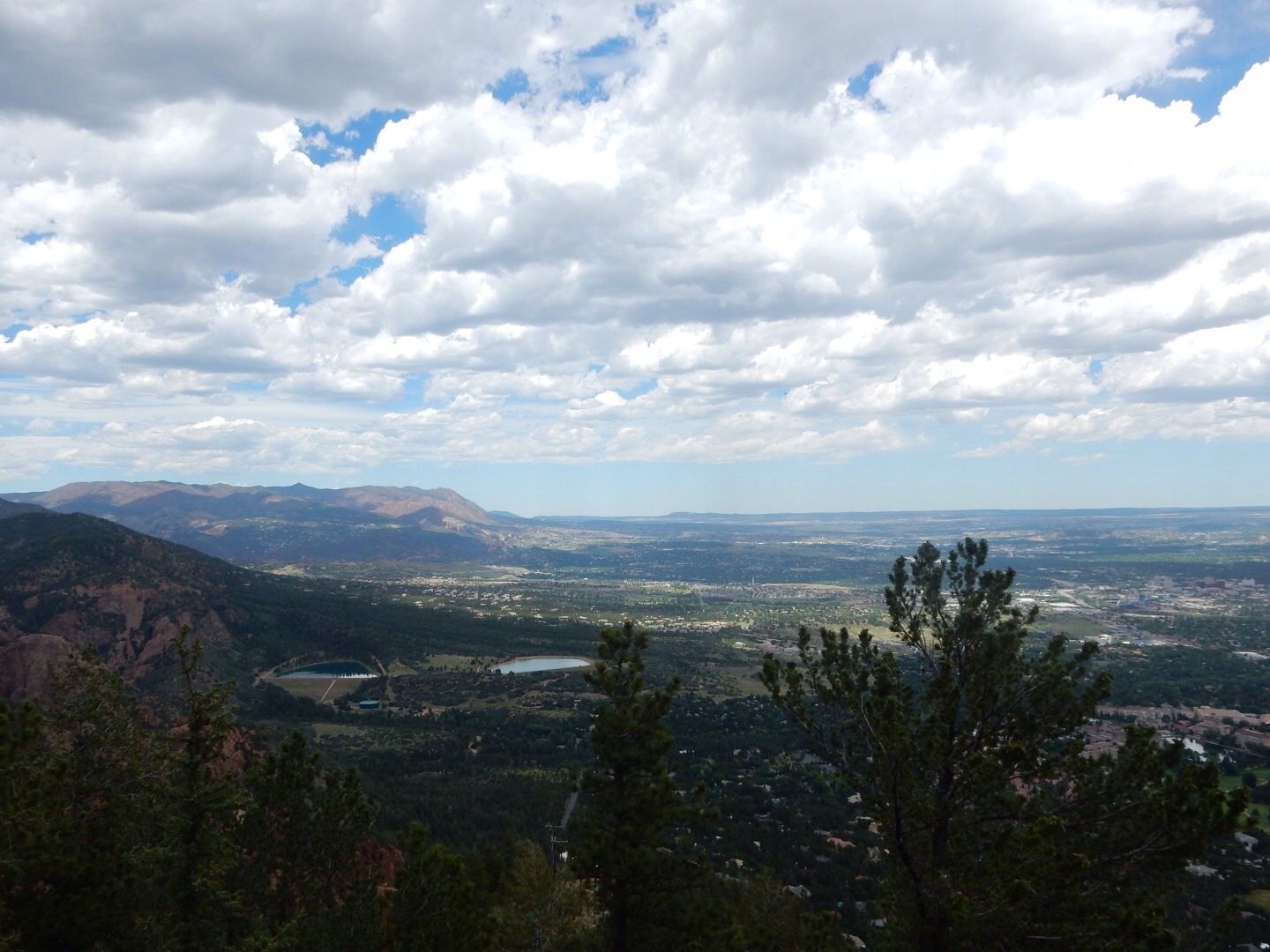
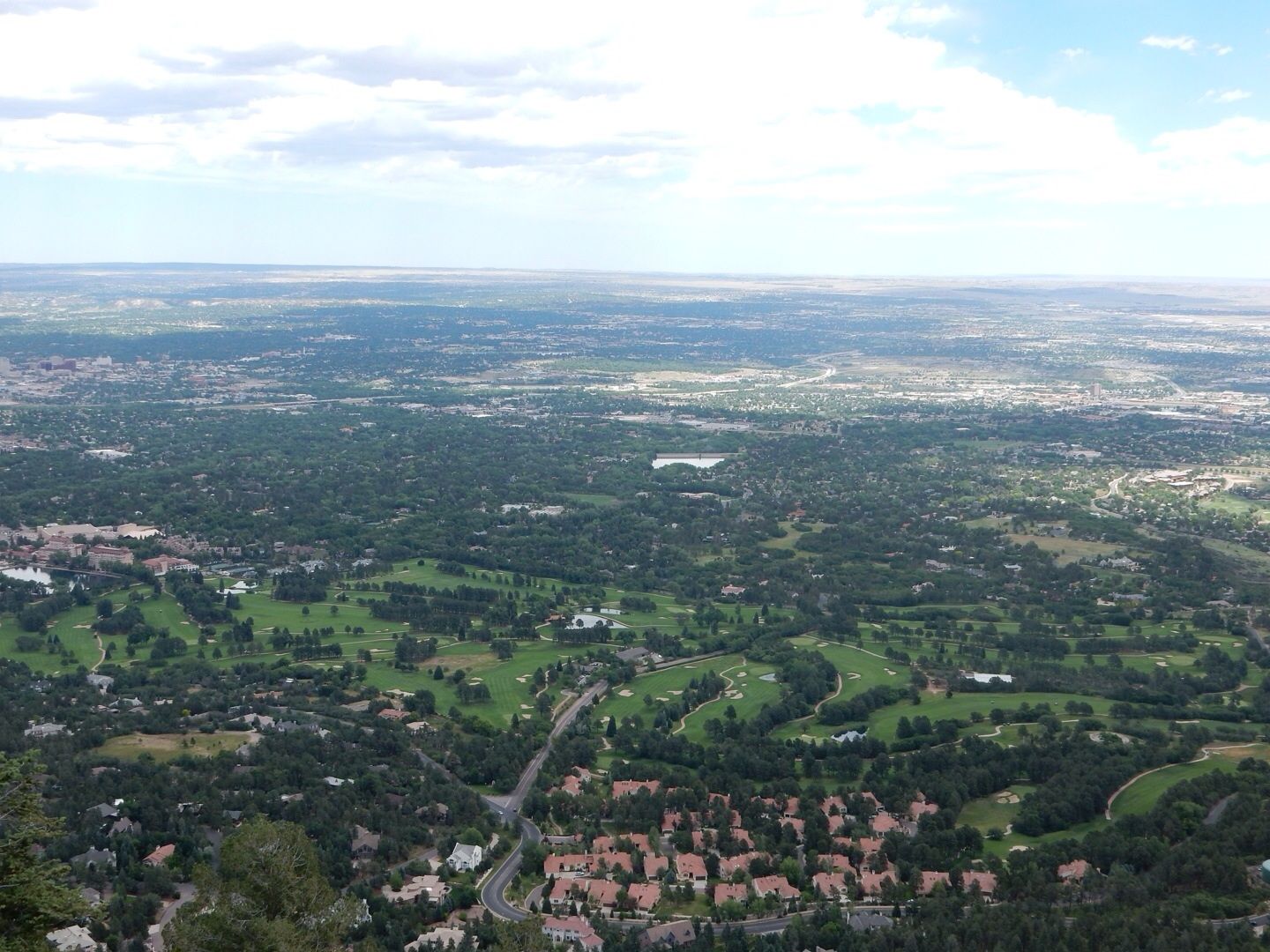
Views of Colorado Springs from the base of the shrine are fabulous.

Cheyenne Mountain.
Broadmoor Golf Course.

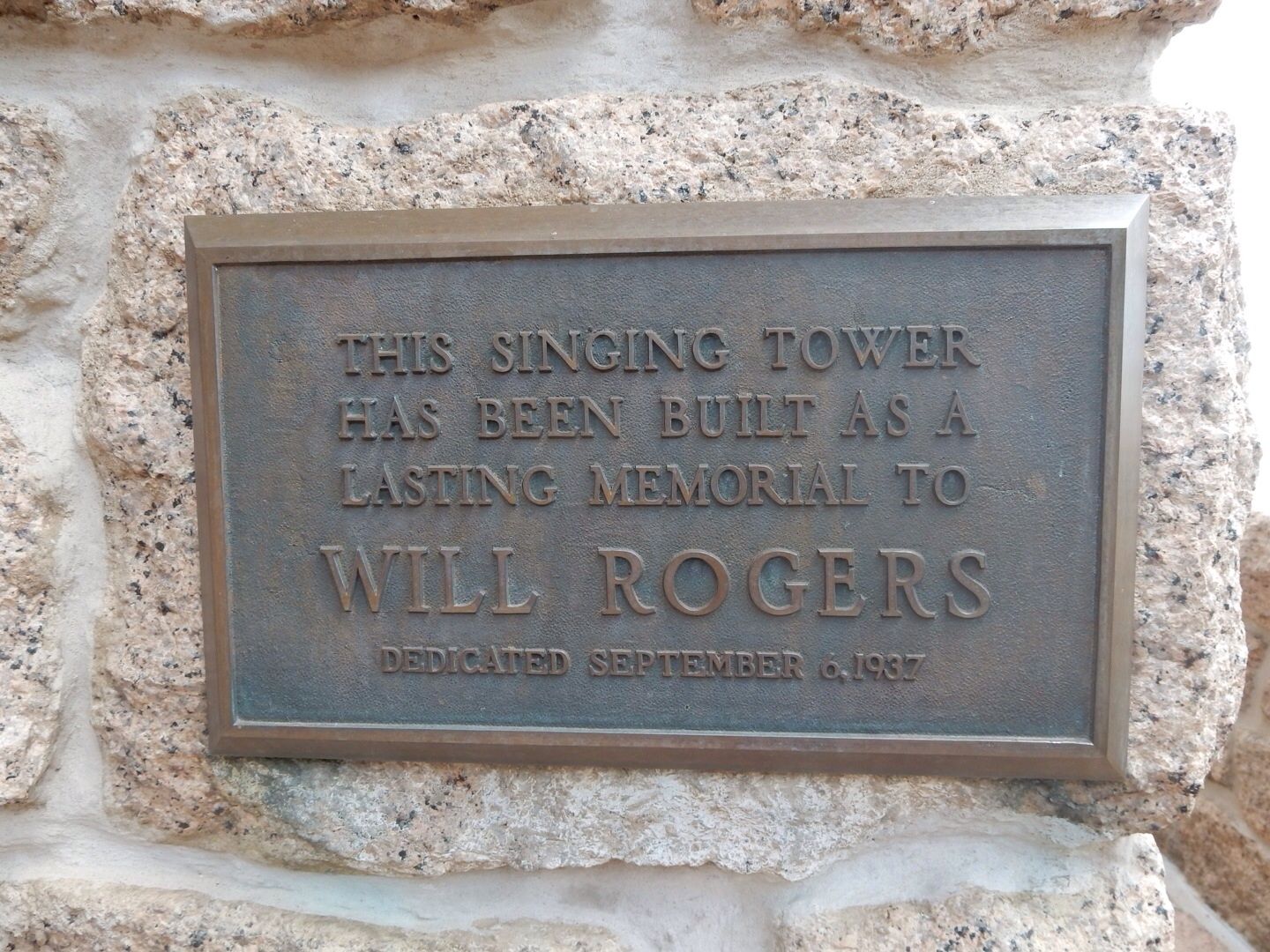
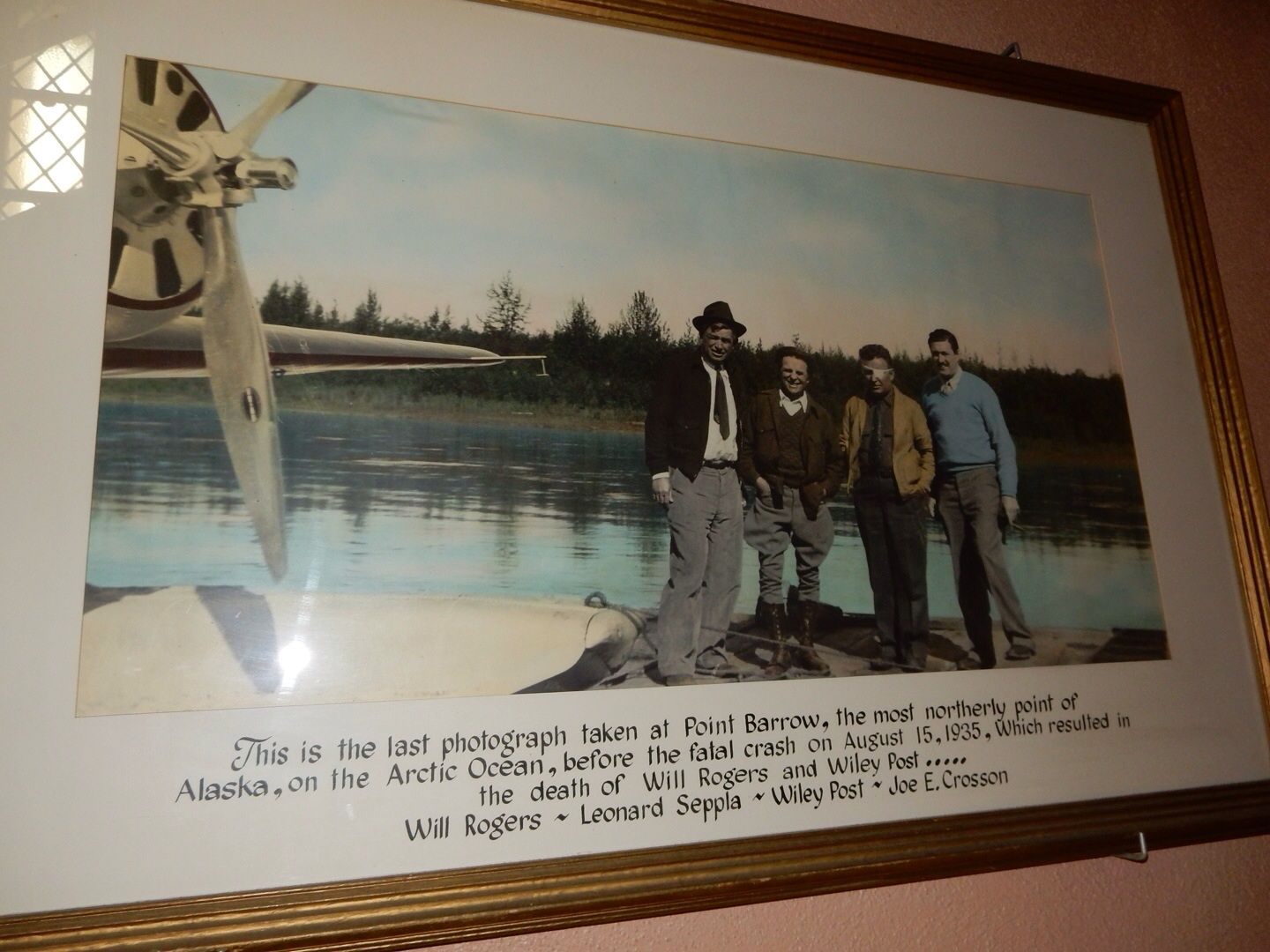
It was built from 1934-1937 using the the pink-gray granite indigenous to the area. No name had yet been determined for the tower until after Will Rogers' tragic death in an airplane crash in Point Barrow, Alaska in 1935. Penrose decided to honor Rogers and dedicated the tower to him in September of 1937.  No wood or nails were used in the construction of the tower (window frames are made of metal). 
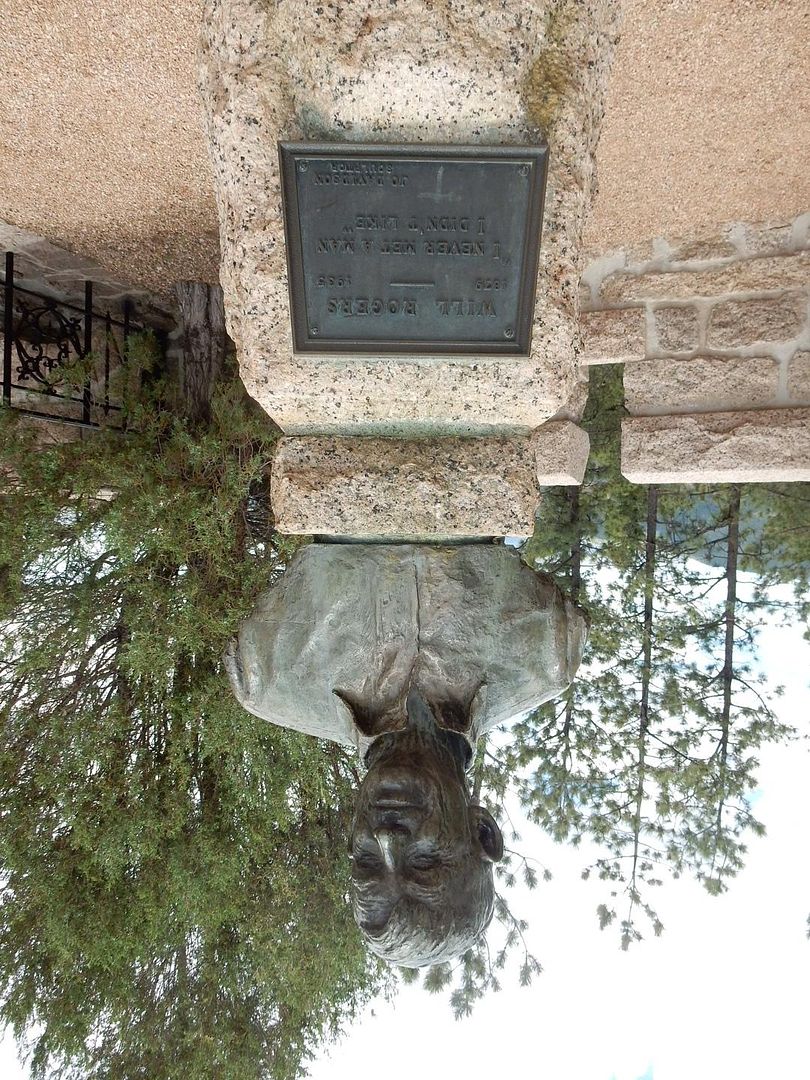
Bust of Will Rogers.
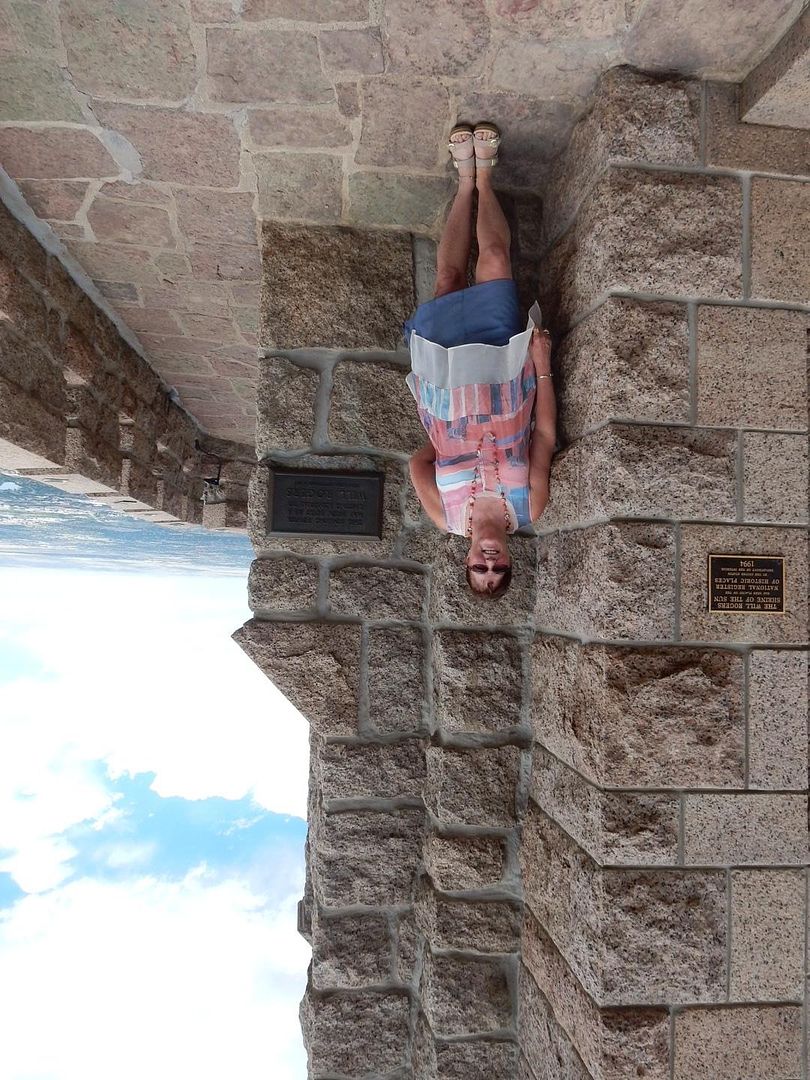
Me...
And John...

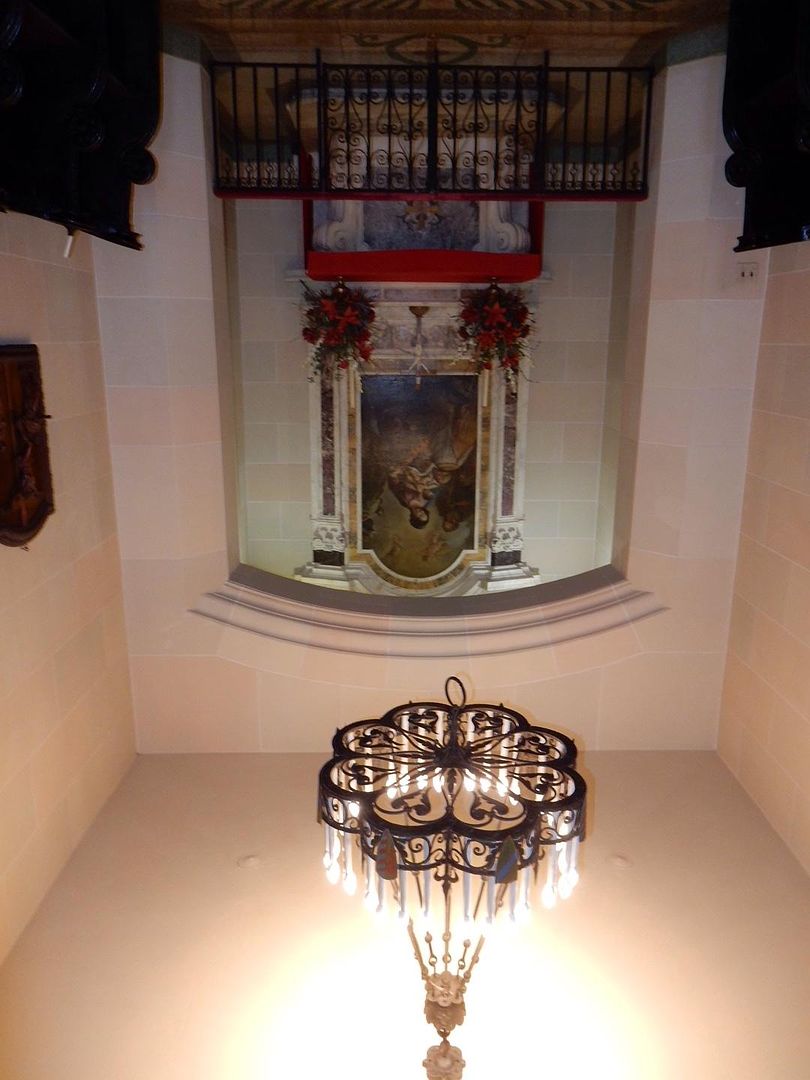
On the lower level of the 100' tower is a beautiful chapel where the remains of Spencer Penrose (1939) and Julie Penrose (1959) are interred. Also, two of their close friends, Harry Leonard and Horace Devereaux are buried in the chapel as well.


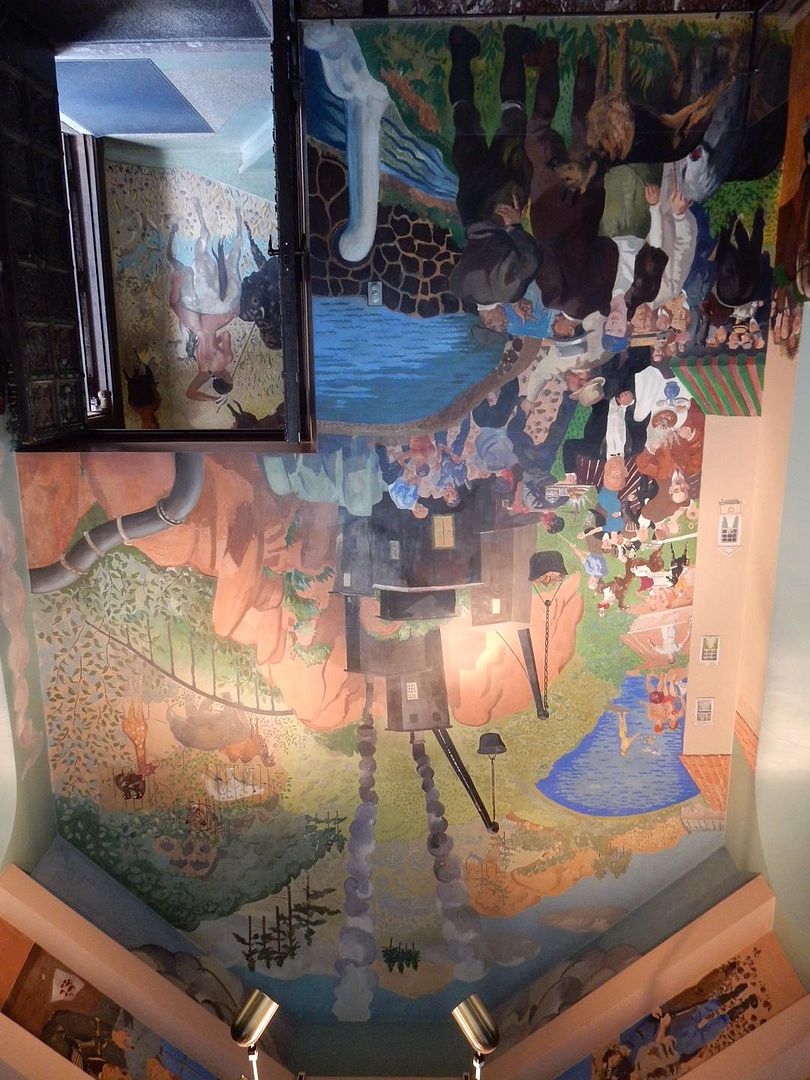
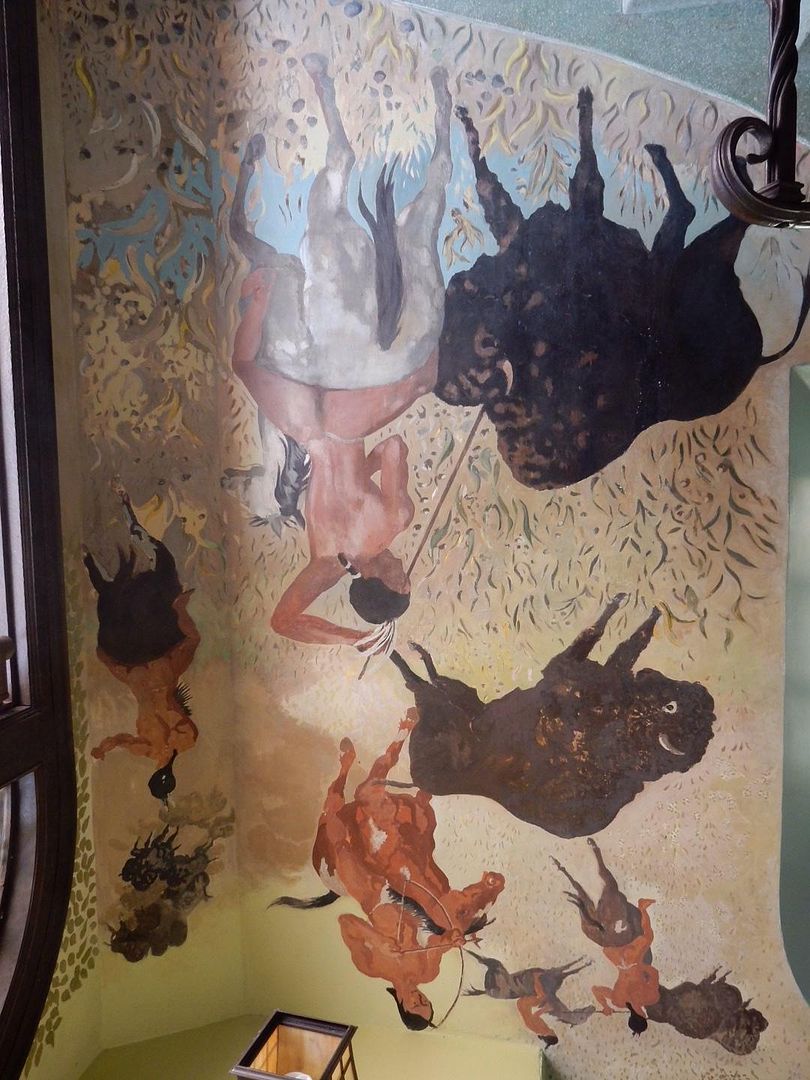
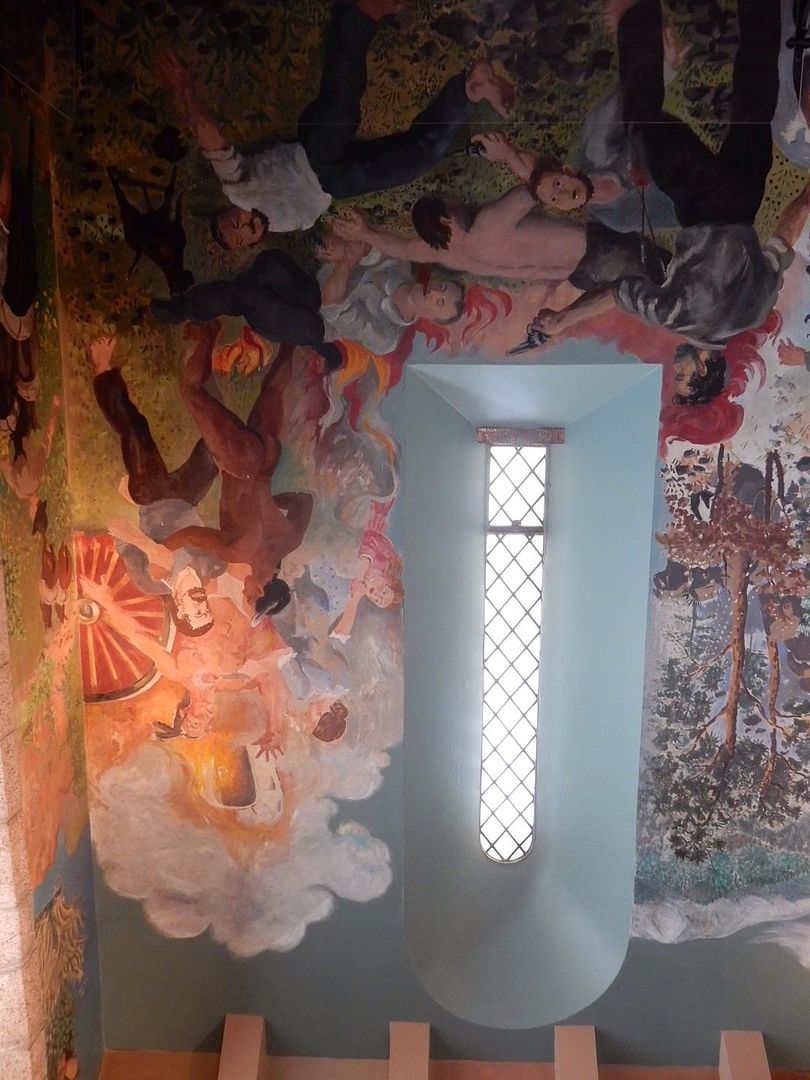
Upon entering the tower, a room to the right known as the Historical Room has murals painted by New Mexico artist, Randall Davey, of historical aspects of the Pikes Peak region.  


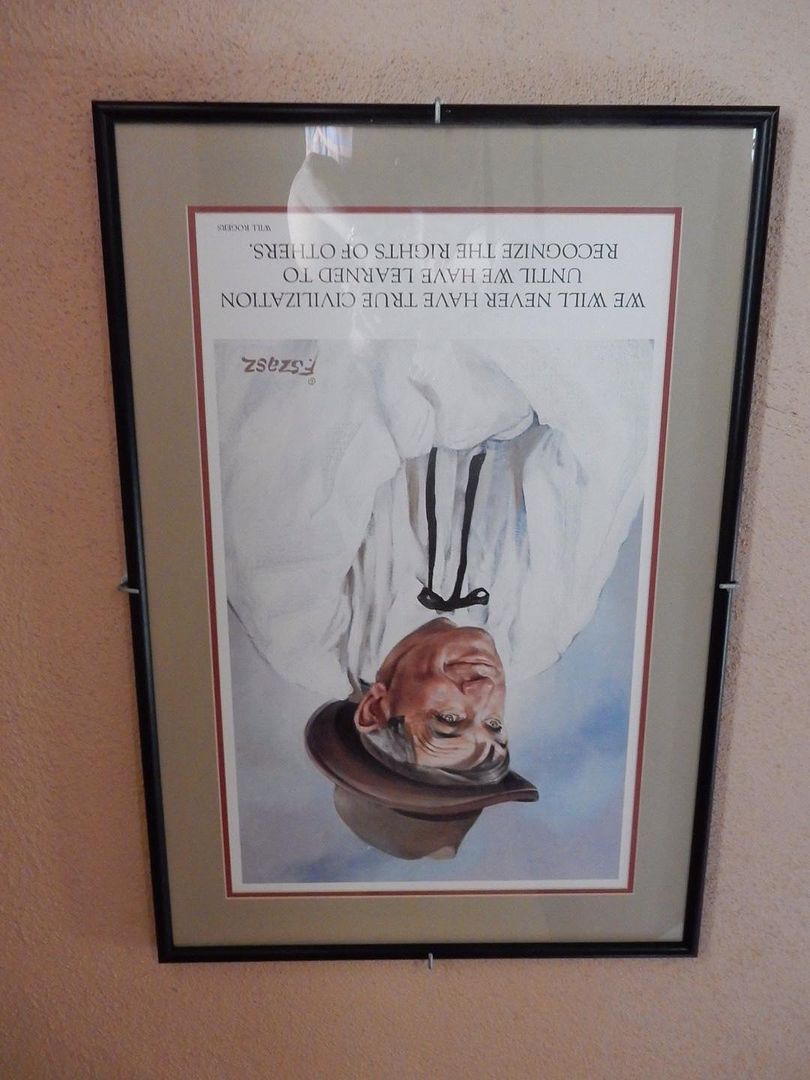
Rooms on the upper three levels contain photos of Will Rogers' life and career.


Don't miss the path through the garden for a final view of the shrine.


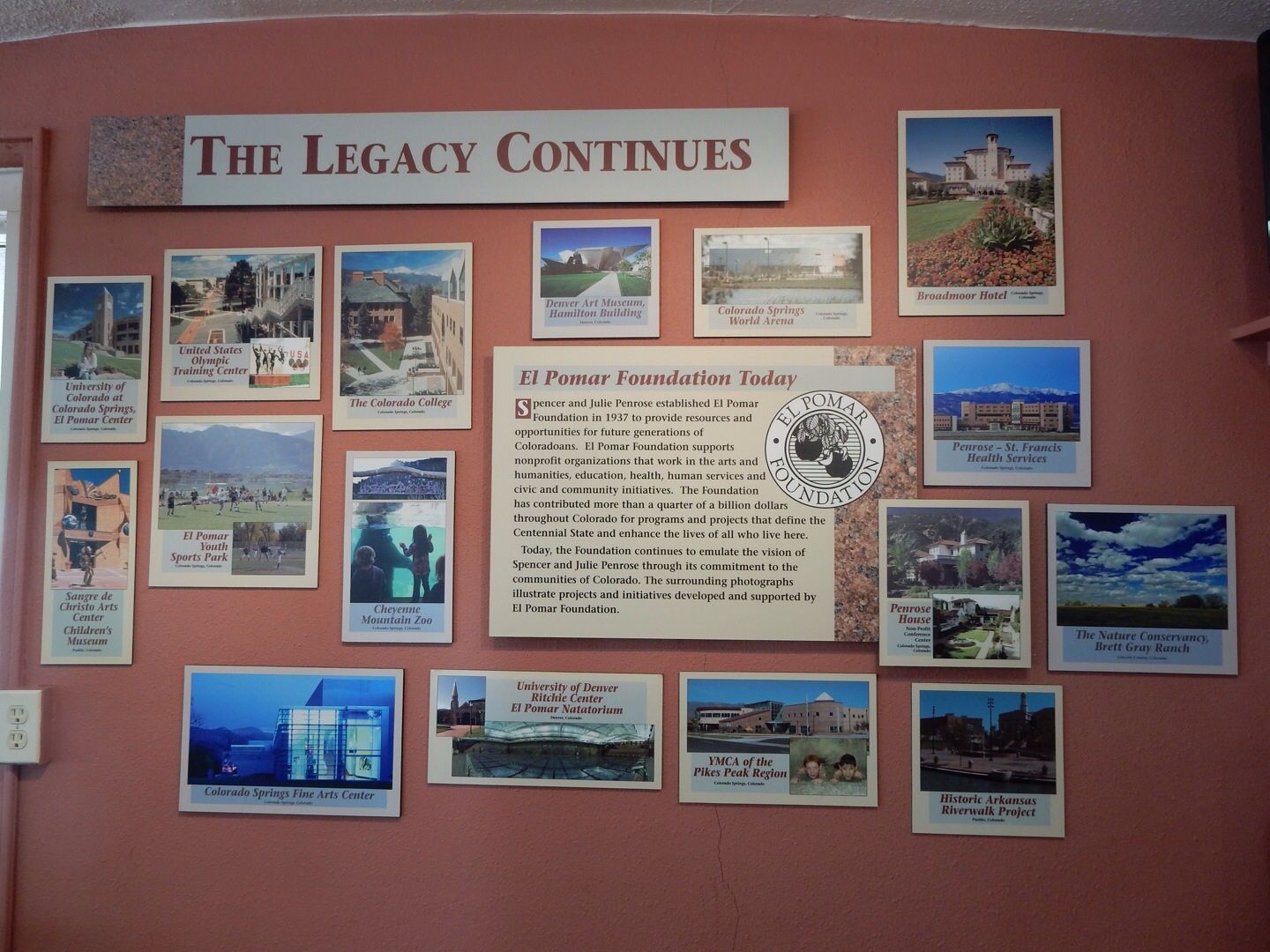
An educational center provides the history of Spencer Penrose and his wife Julie McMillan Penrose. Very successful at the mining business, they established a philanthropic organization in 1937, the El Pomar Foundation, that continues with their generous contributions and support to a wide array of community initiatives.

To access the shrine, you must pay the admission fee for the zoo. Most people see both the Cheyenne Mountain Zoo and this site on the same day. We did not realize this, but were able to visit the Will Rogers Shrine of the Sun on a subsequent day at no cost by showing our receipt to the zoo. Also, the access road to the shrine closes at 4:00 pm.

I am so glad that we got to see this impressive structure 2,000' above Colorado Springs (8,000' above sea level).