Tuesday, July 29, 2014

D.C. Booth Historic National Fish Hatchery - 7/29/14

Trout are not native to the Black Hills, something we learned today at this historic fish hatchery in Spearfish, SD. When we reached Spearfish after driving the Scenic Highway through the Spearfish Canyon, we discovered this gem.

The D.C. Booth Fish Hatchery is one of 70 hatcheries founded by the U.S. Fish and Wildlife Service and was opened in 1896. The purpose of the hatchery was to introduce and establish a trout population in the Black Hills of South Dakota and Wyoming.

The first set of trout eggs (100,000 black spotted) arrived here in 1899 after the hatchery building, raceways, ice house, and rearing ponds were completed. This hatchery is still in operation today after being closed in 1983 and then re-opened in 1989. It currently spawns and releases 20,000-30,000 trout per year. It also serves as a fishing archive for the other hatcheries that were once in existence in the U.S. with approximately 150,000 visitors per year.

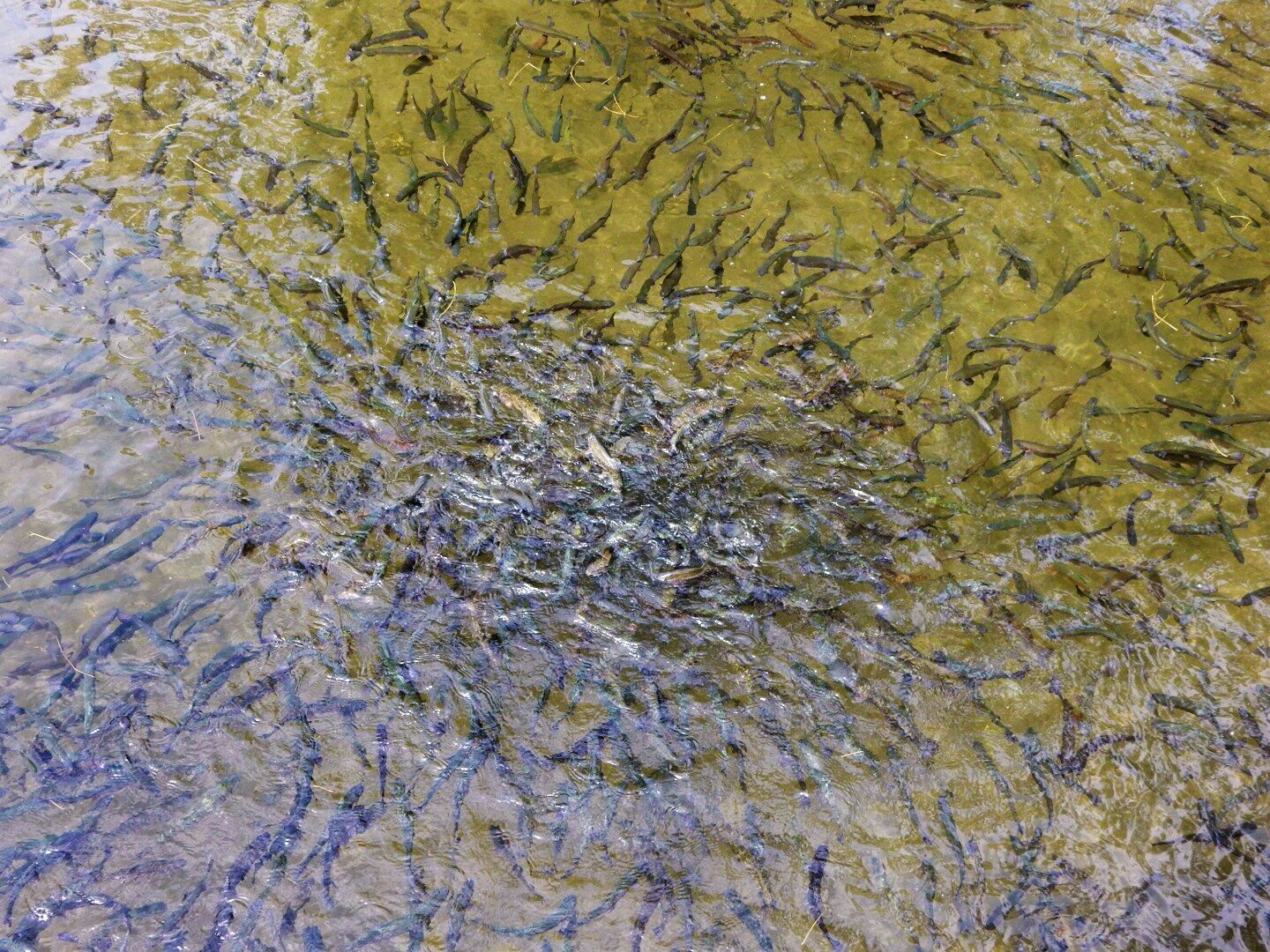
The fish ponds: upon arrival at the site there is large pond where small trout can be fed (food provided by the hatchery). It's amazing to see these little fellows go after the food with so many in one pond. Hope you can see all of the small trout in this photo.

Feeding frenzy.
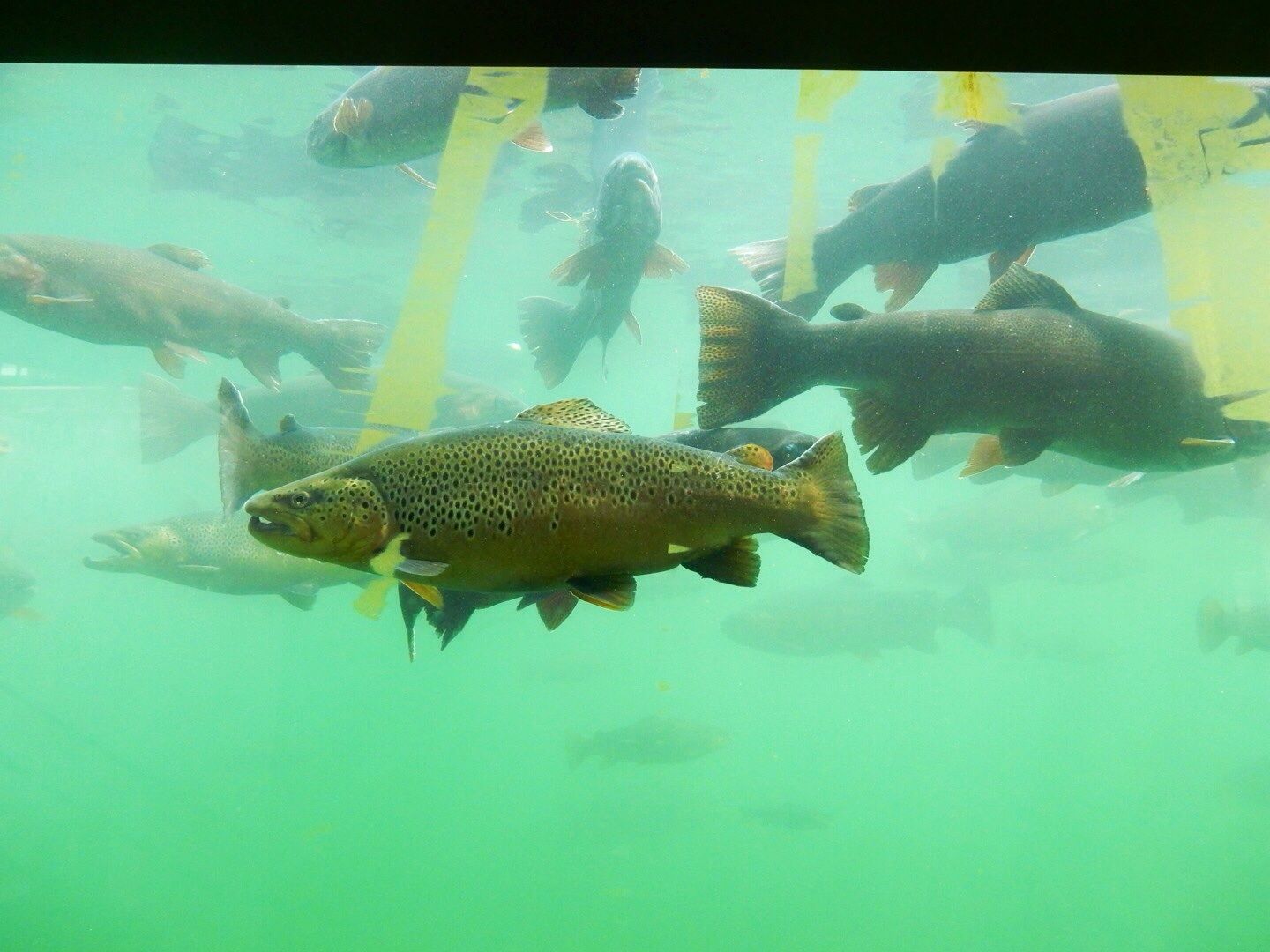
Underwater viewing of the "big fish" in a separate pond.


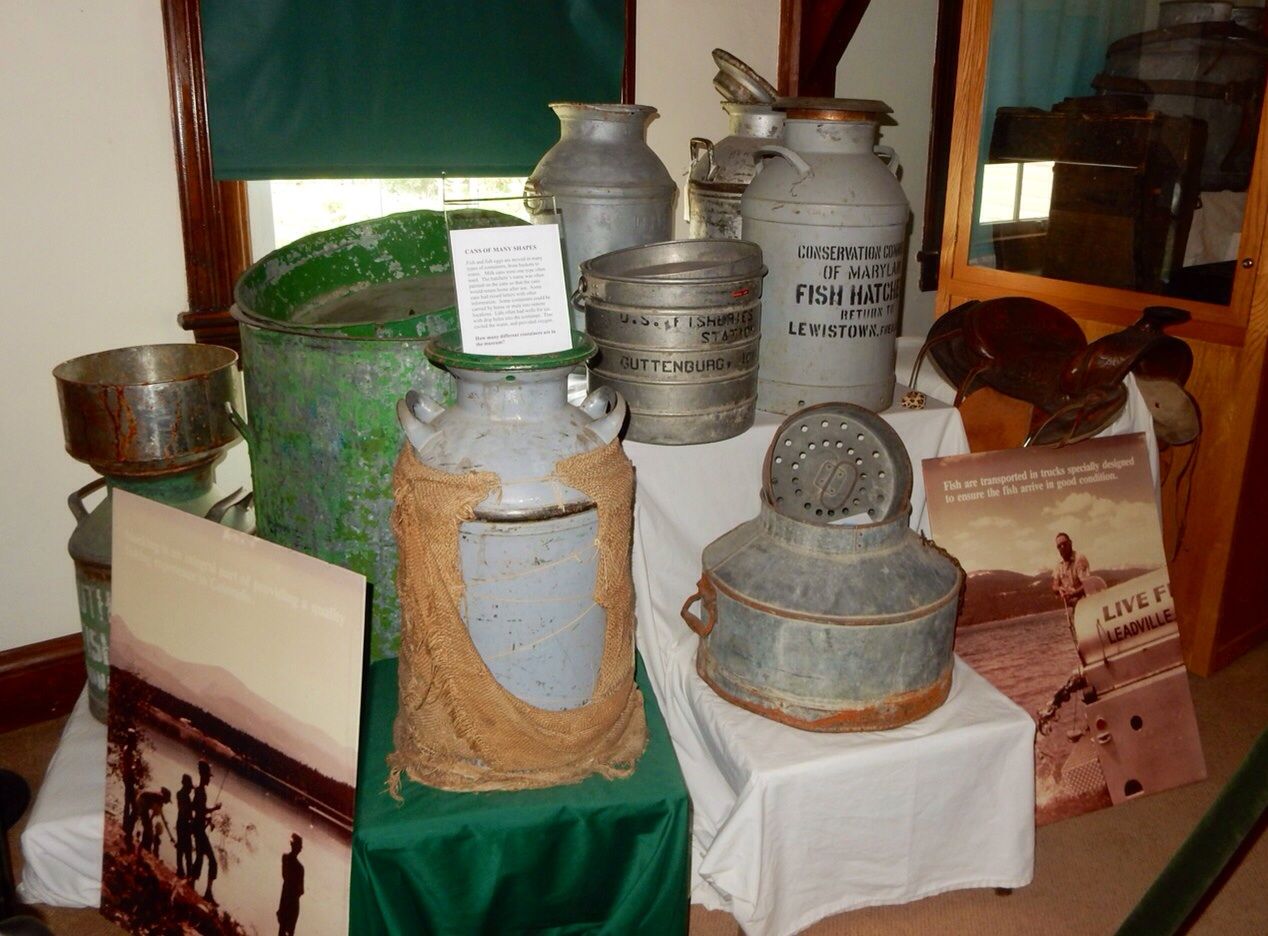
The Von Bayer Museum of Fisheries History preserves the heritage of American fisheries and workers. The containers used to transport fish.

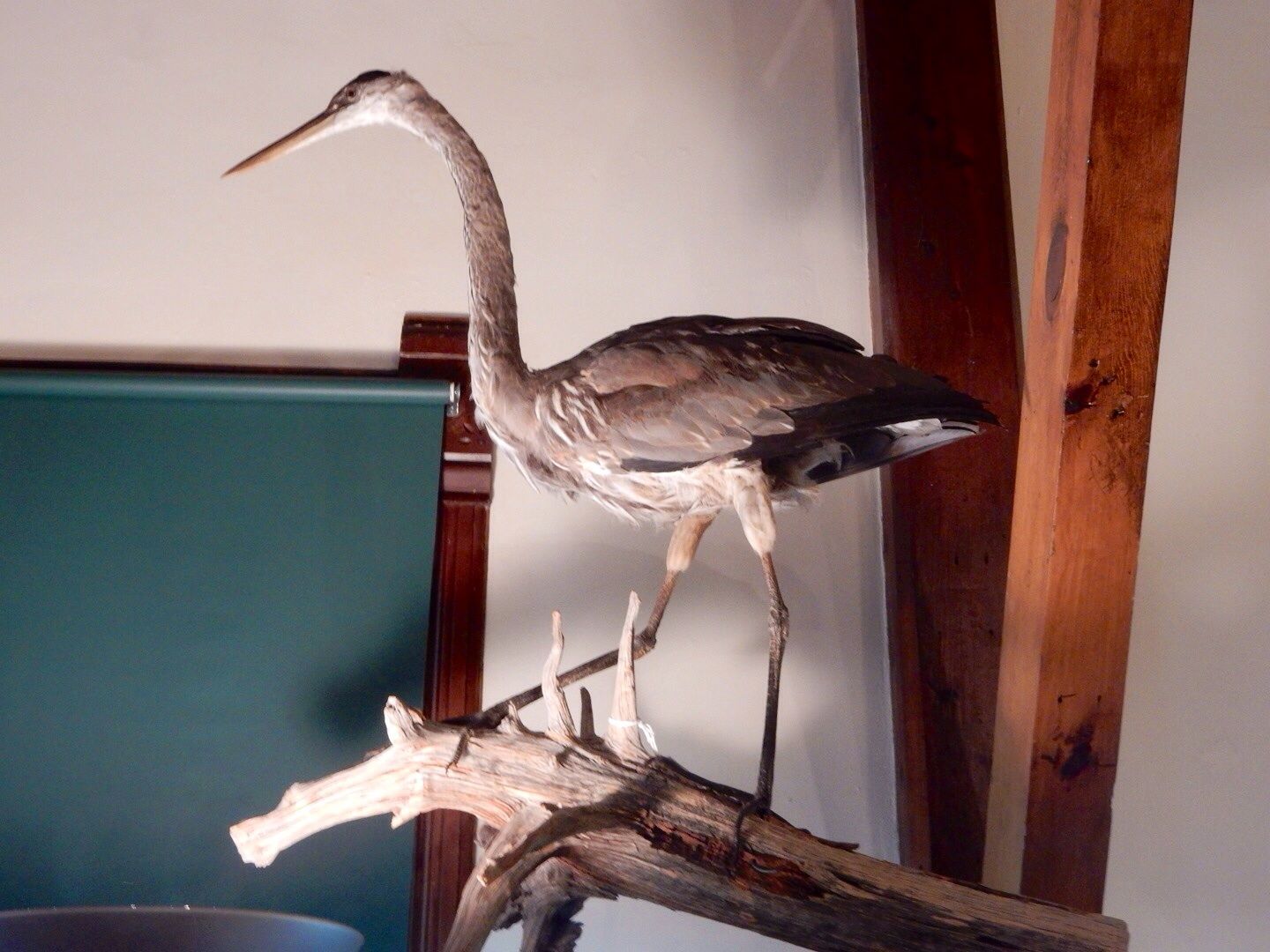
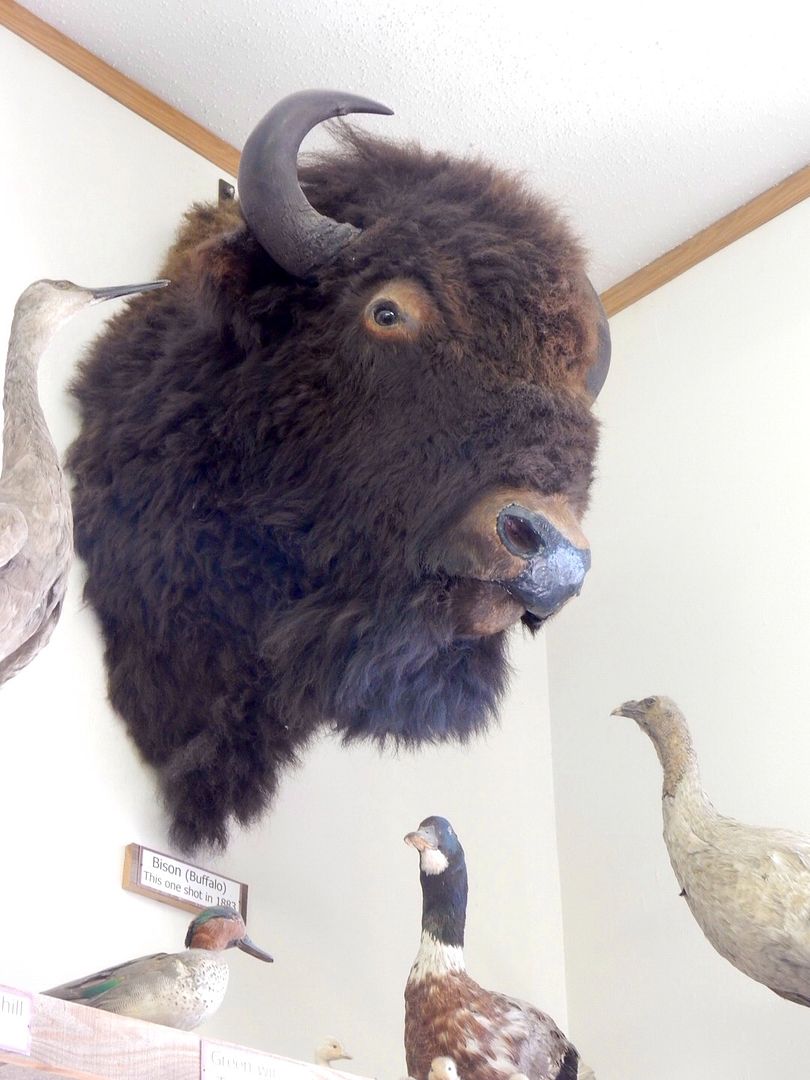
Mounted specimen.

Model of "Fish Cars" to transport fish.
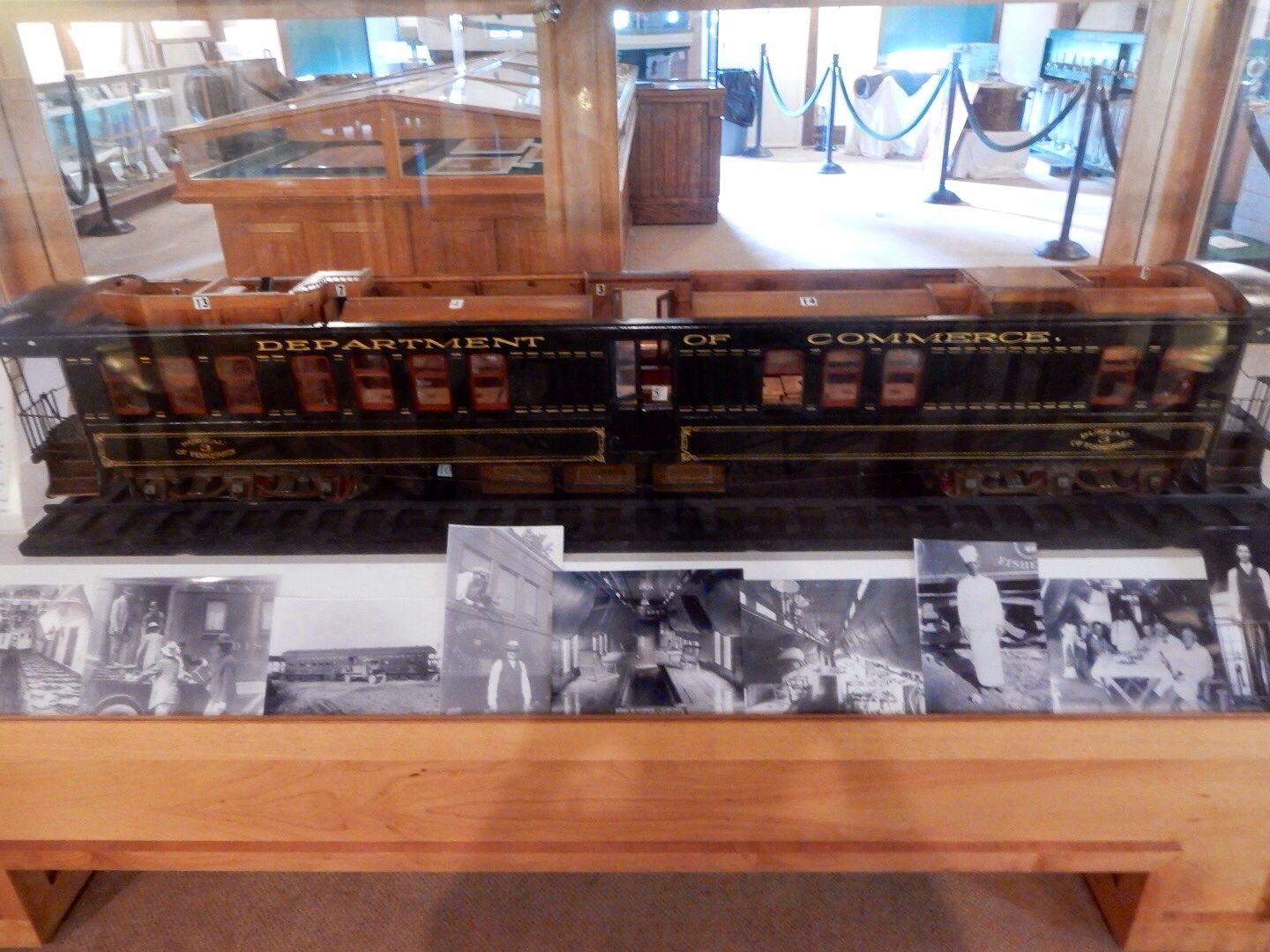

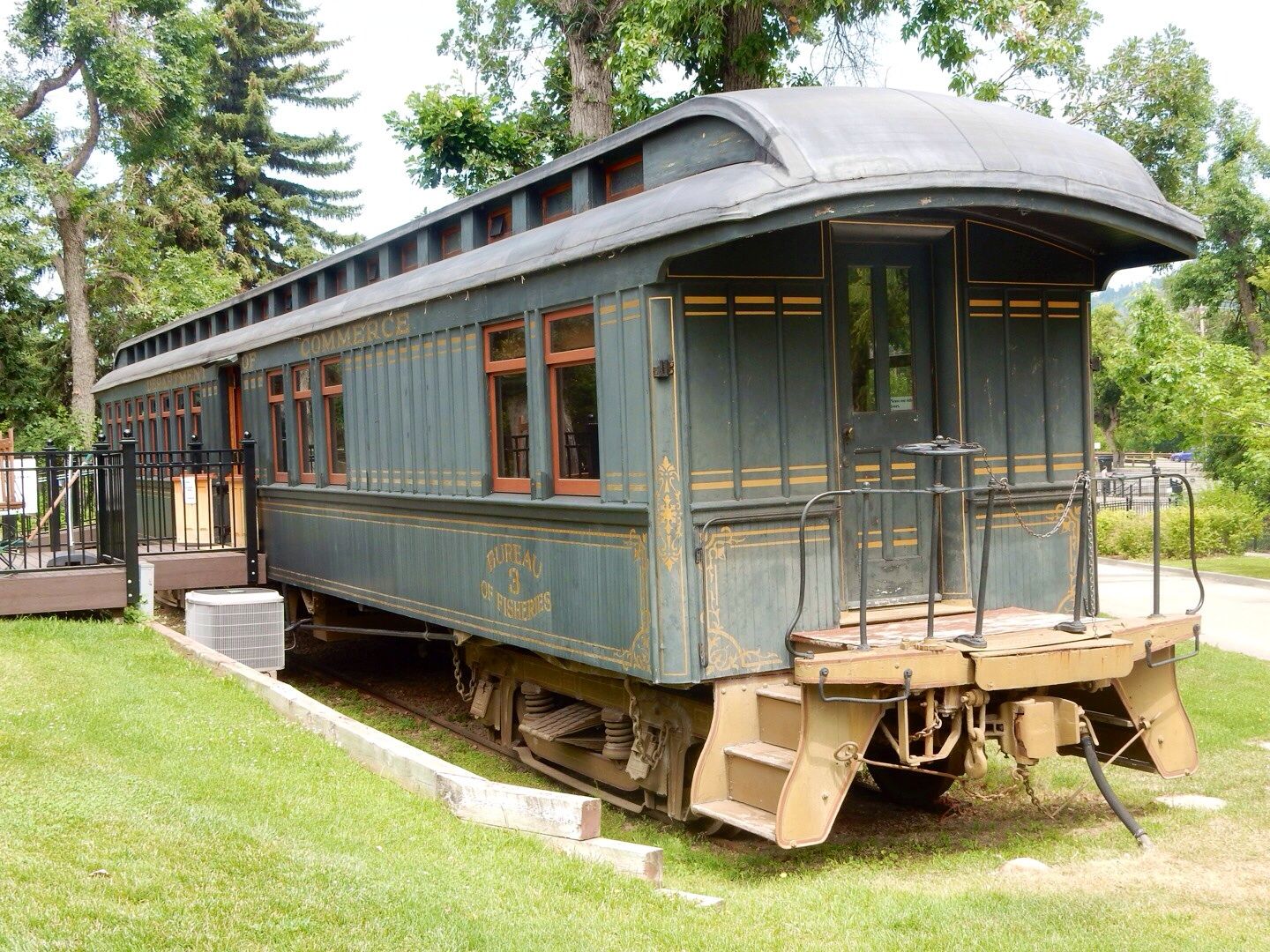
During the "Fish Car Era," 10 specially-designed railcars were built and by 1920, fish cars had carried over 72 billion fish across 2 million miles of railroad track. D.C. Booth displays the only fishery railcar in the country. They were instrumental to the success of the hatchery program for 66 years. Typically a crew of 5 were aboard; the captain, the cook, and three "messengers."

Note the storage area for the fish on the left and the fold-down bunk (upper right) for the crew.
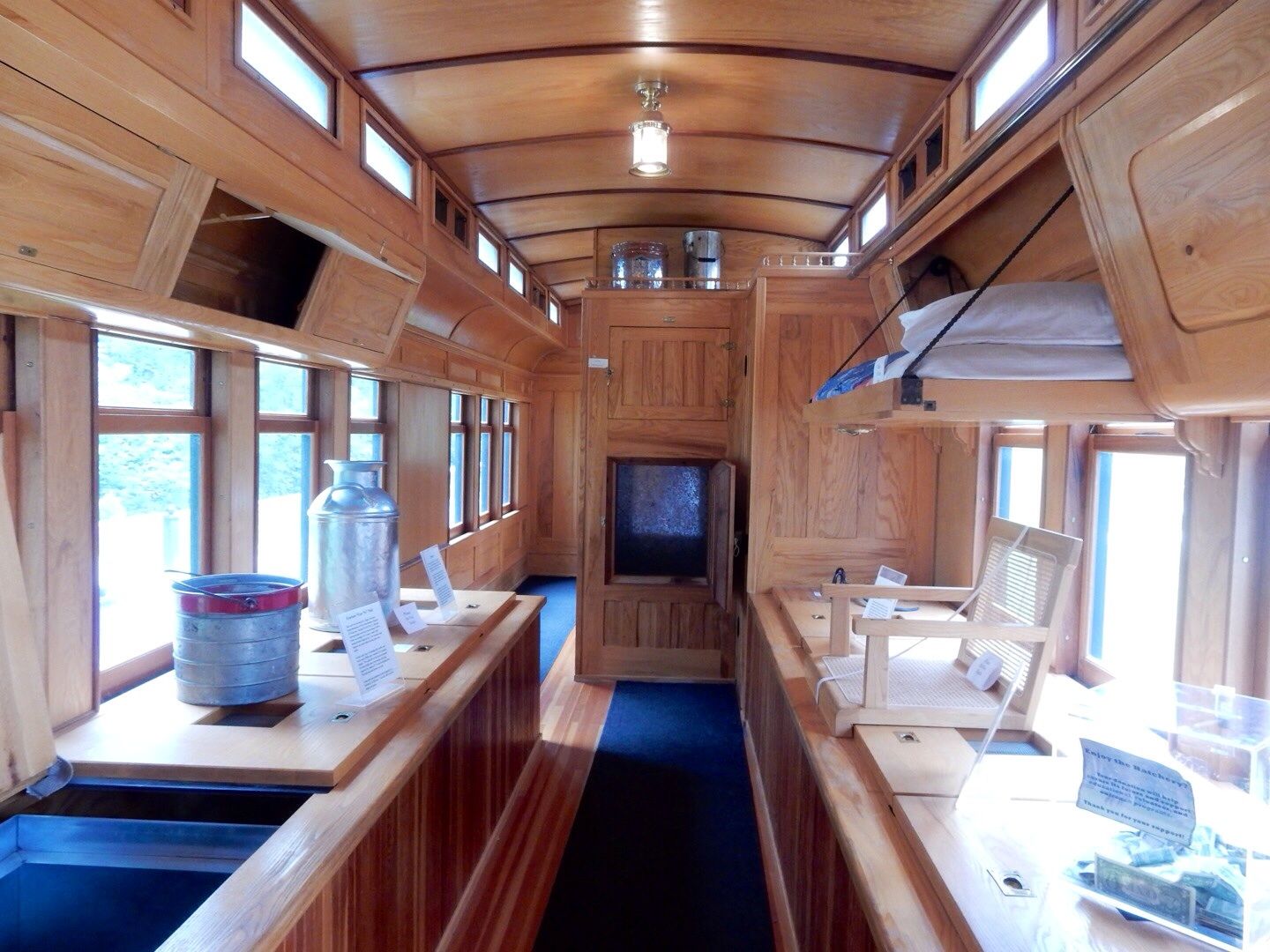
The kitchen.

Captain's quarters that also included a fold-down bunk.

Railcar exterior.

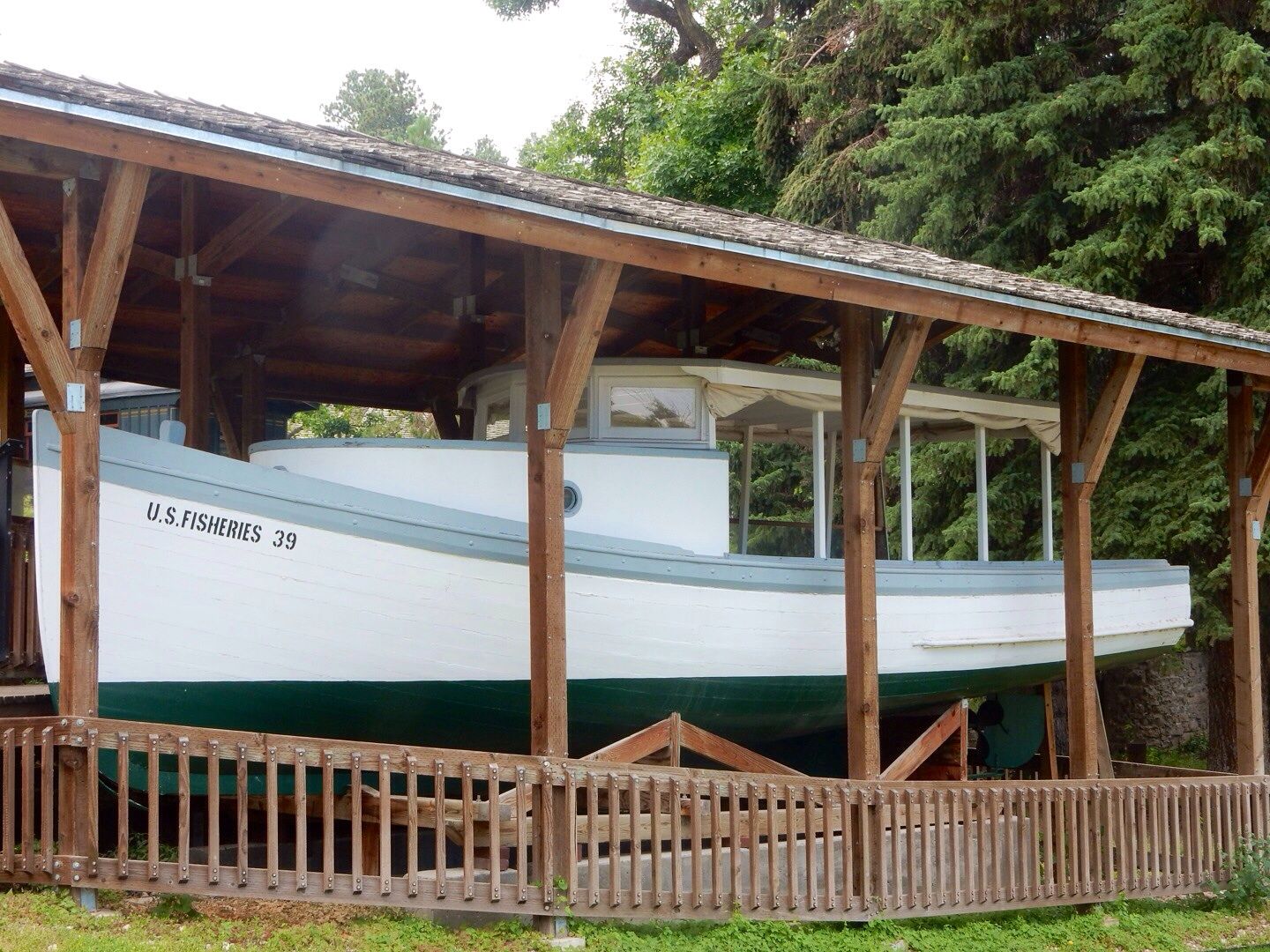
U.S. Fisheries Boat #39 (a wooden "Great Lakes" cabin cruiser) was used by early workers who went to Yellowstone National Park to collect trout eggs to be brought back to this hatchery.
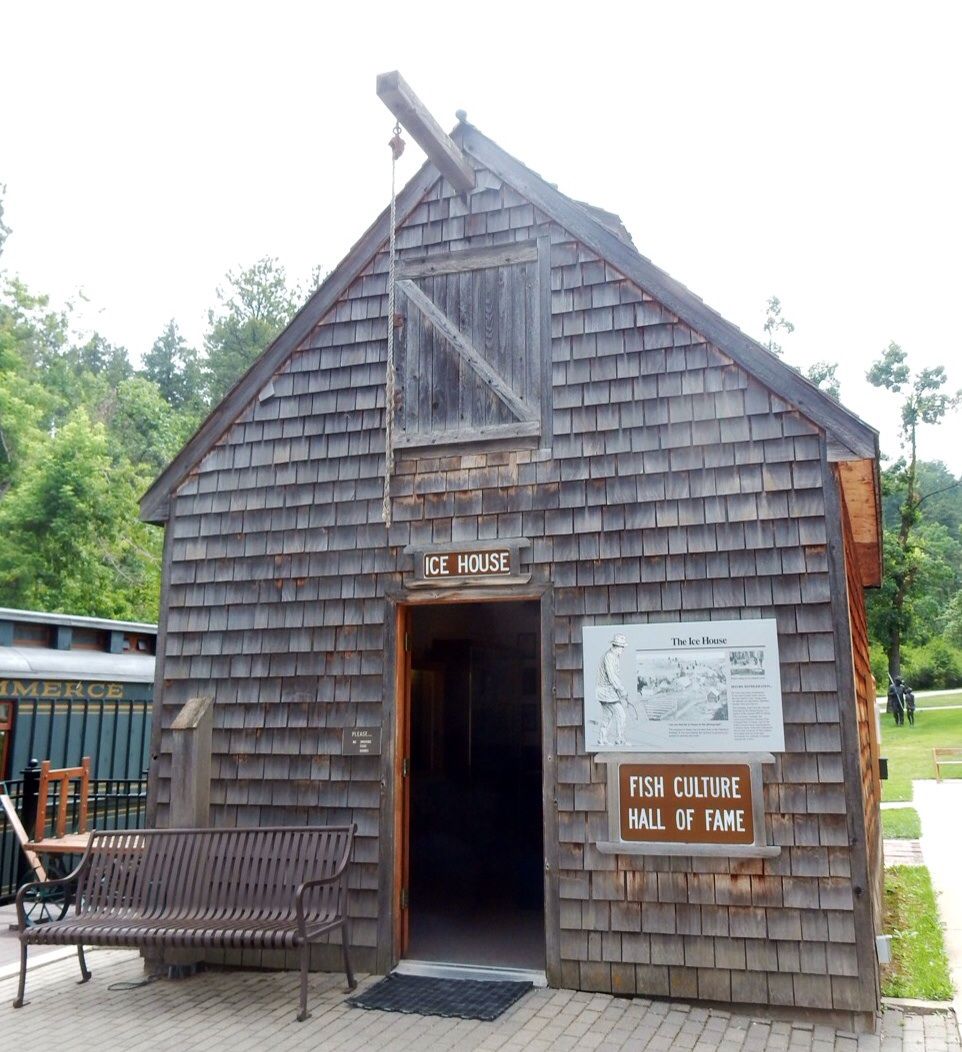
The Ice House.

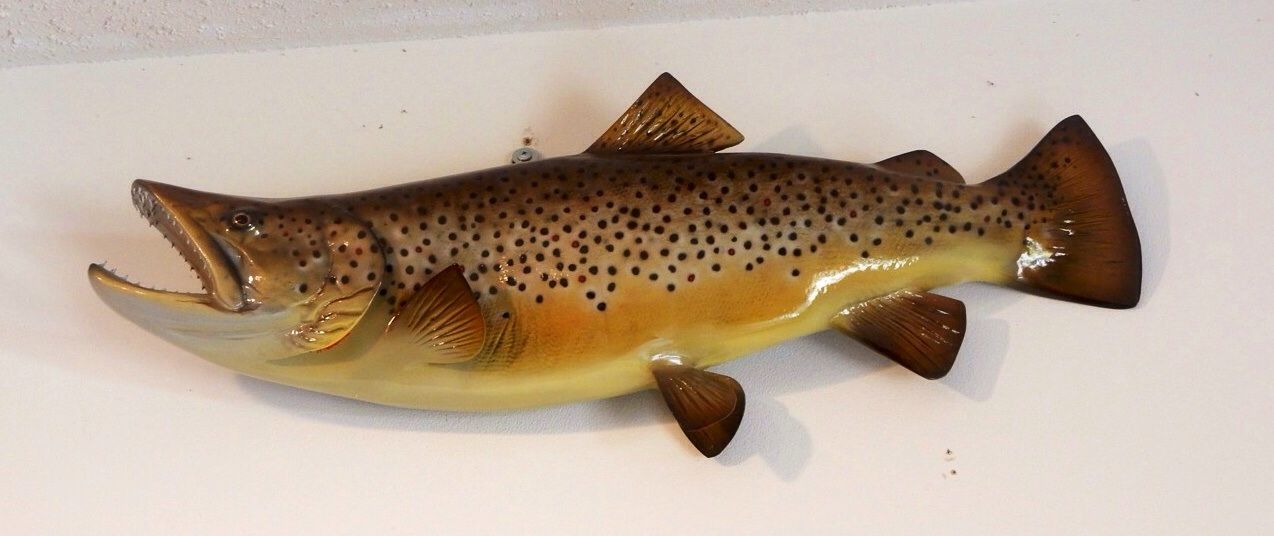
A real catch on display in the Ice House (along with many others).

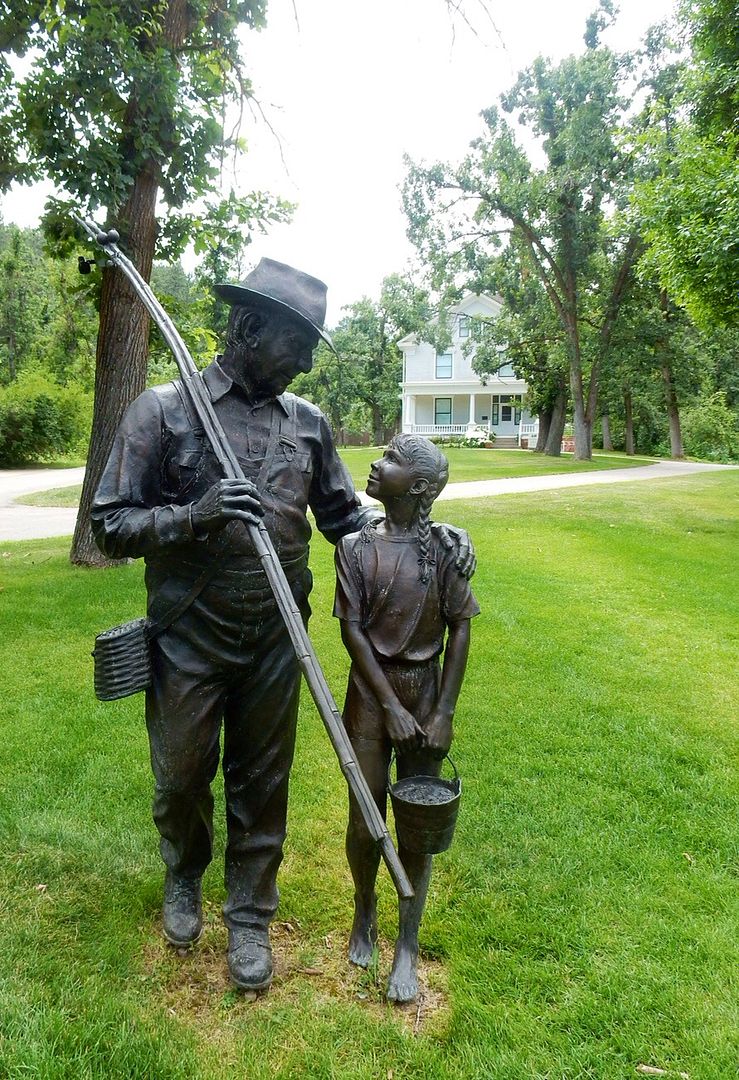
I loved these two sculptures, both by James Michael Maher.  The first is named Spring Stocking.
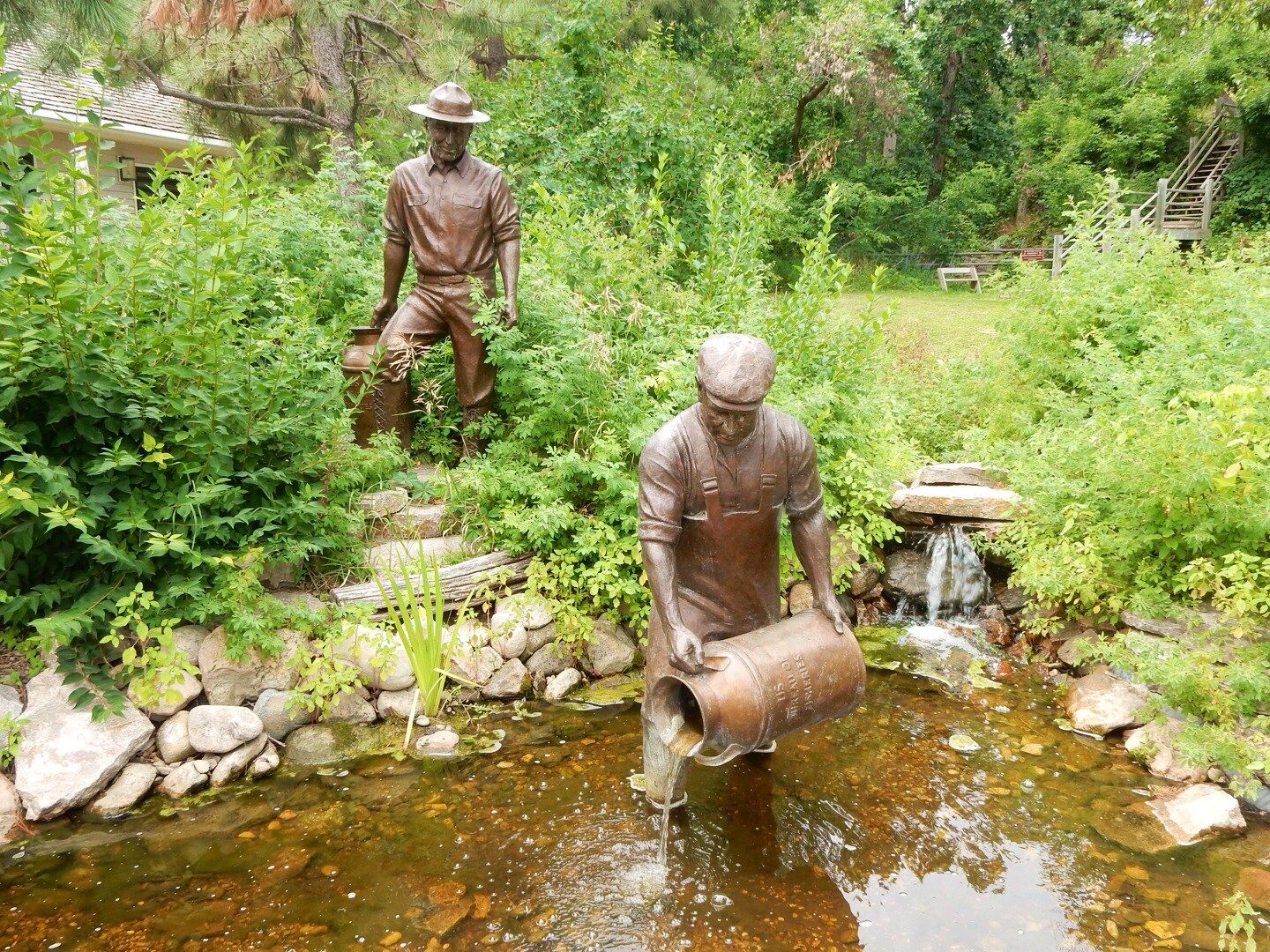
Generations.

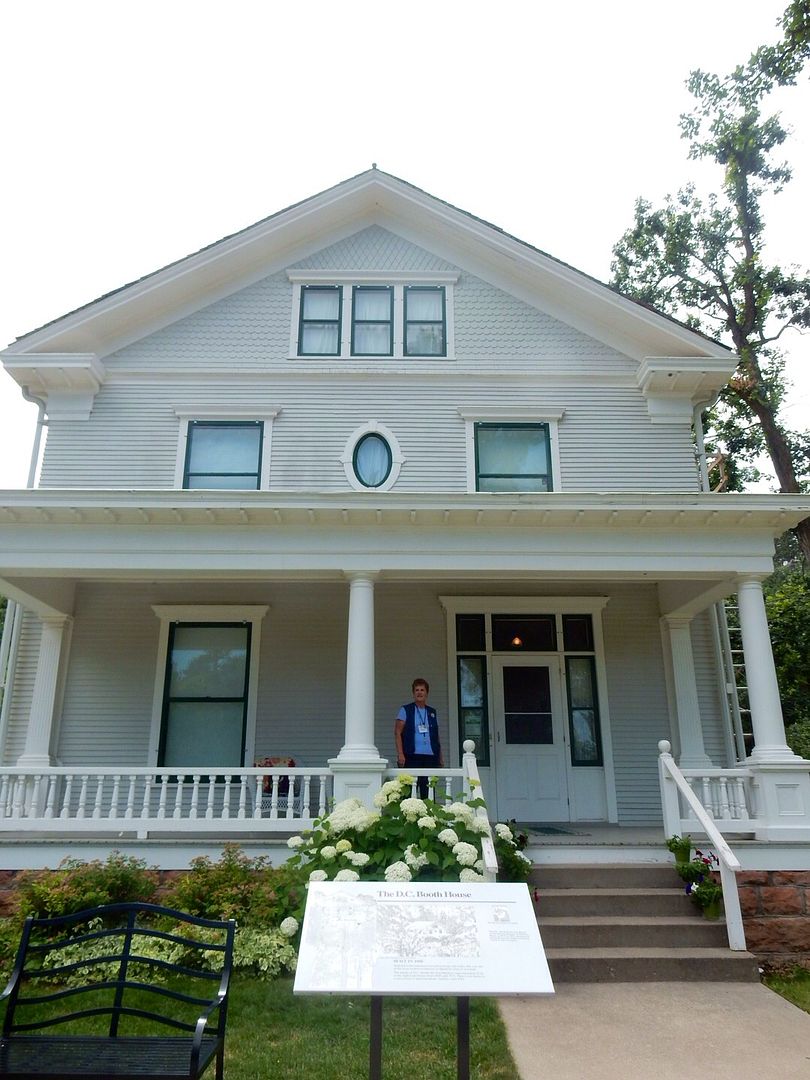
The Booth House was built for the first superintendent in 1905 and is open for guided tours in the summer.
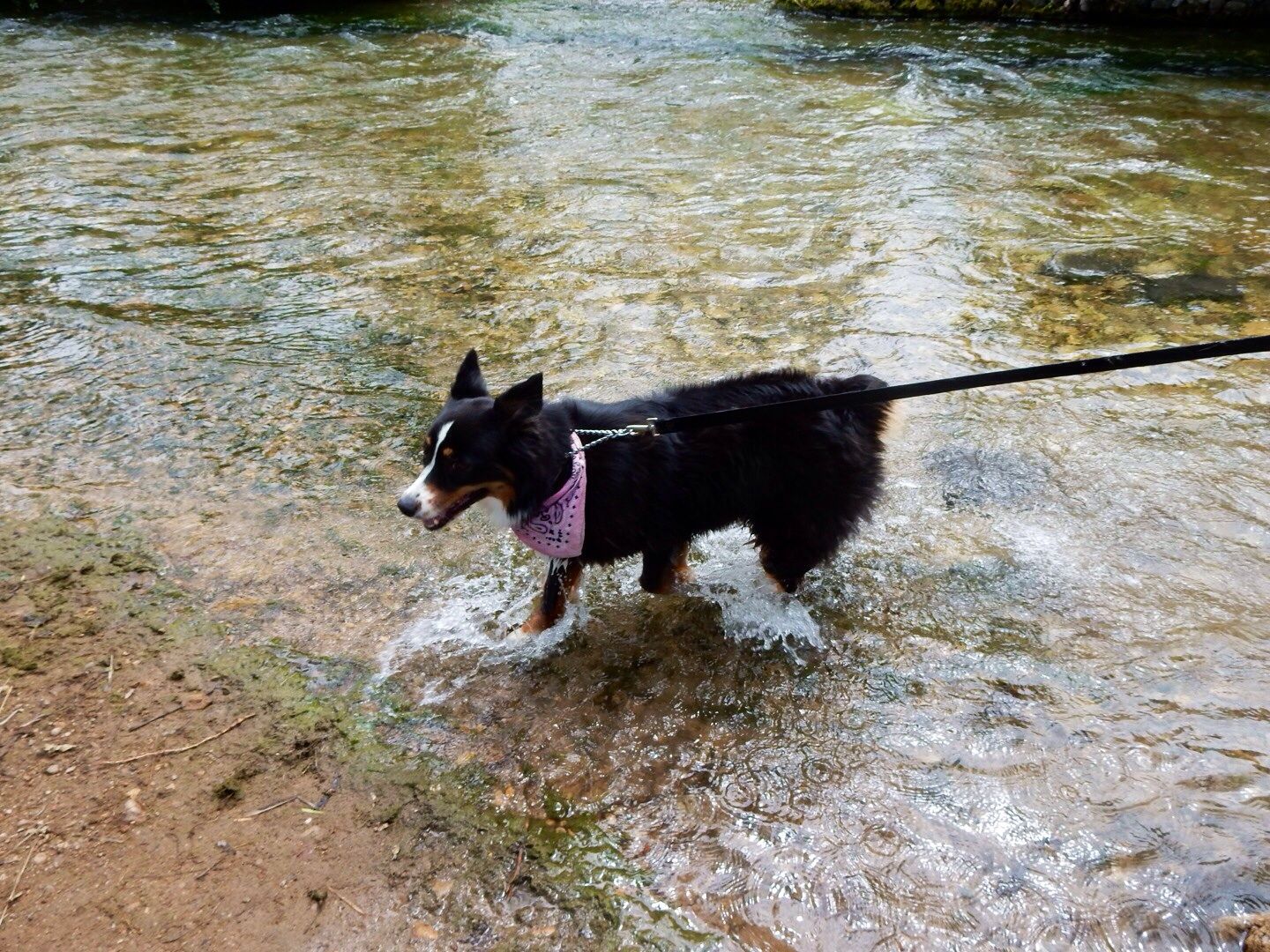
Following our visit of the hatchery, we had a picnic lunch in the park next to it. Sadie, after waiting in the car for us, enjoyed a nice swim in the Spearfish Creek.

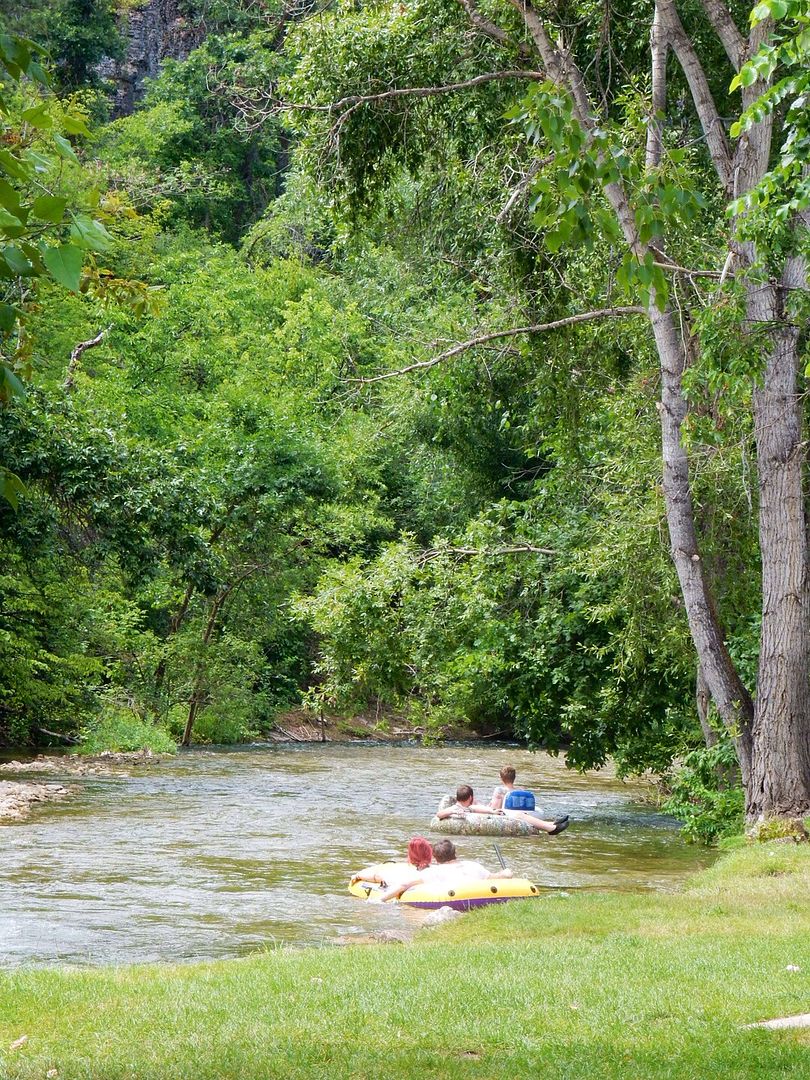
As we were packing up to leave, these kids came floating by in tubes (and they reported that the water was very cold!)
Admission is free. Pets are allowed on the grounds but not, of course, in the buildings. This place was an unexpected treat! Highly recommend if you are in the area.

Website:  www.dcboothfishhatchery.org

Gordon Stockade (Custer State Park) - 7/28/14

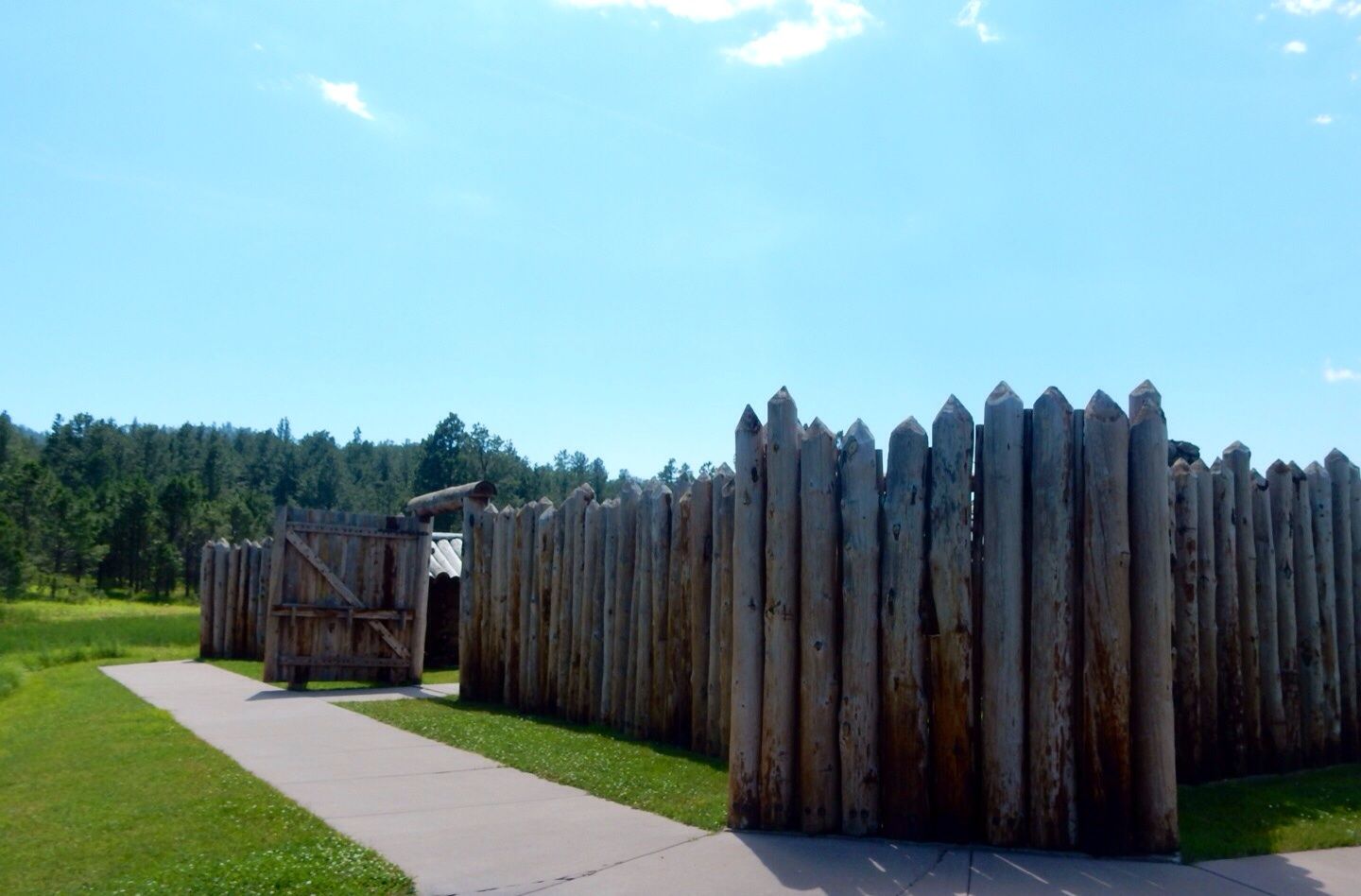
Curious after seeing this structure on the side of the road close to where we are staying, we stopped in for a quick visit.
Background:
  • Per the 1868 Treat of Fort Laramie, the Black Hills region belonged to the Oglala Sioux and settlement by settlers was not allowed.
  • In 1874, an expedition led by Lt. Colonel Gorge A Custer discovered gold in the Black Hills.
  • A group of gold seekers from Sioux City, Iowa, journeyed to this location in 1875 to seek their fortunes.
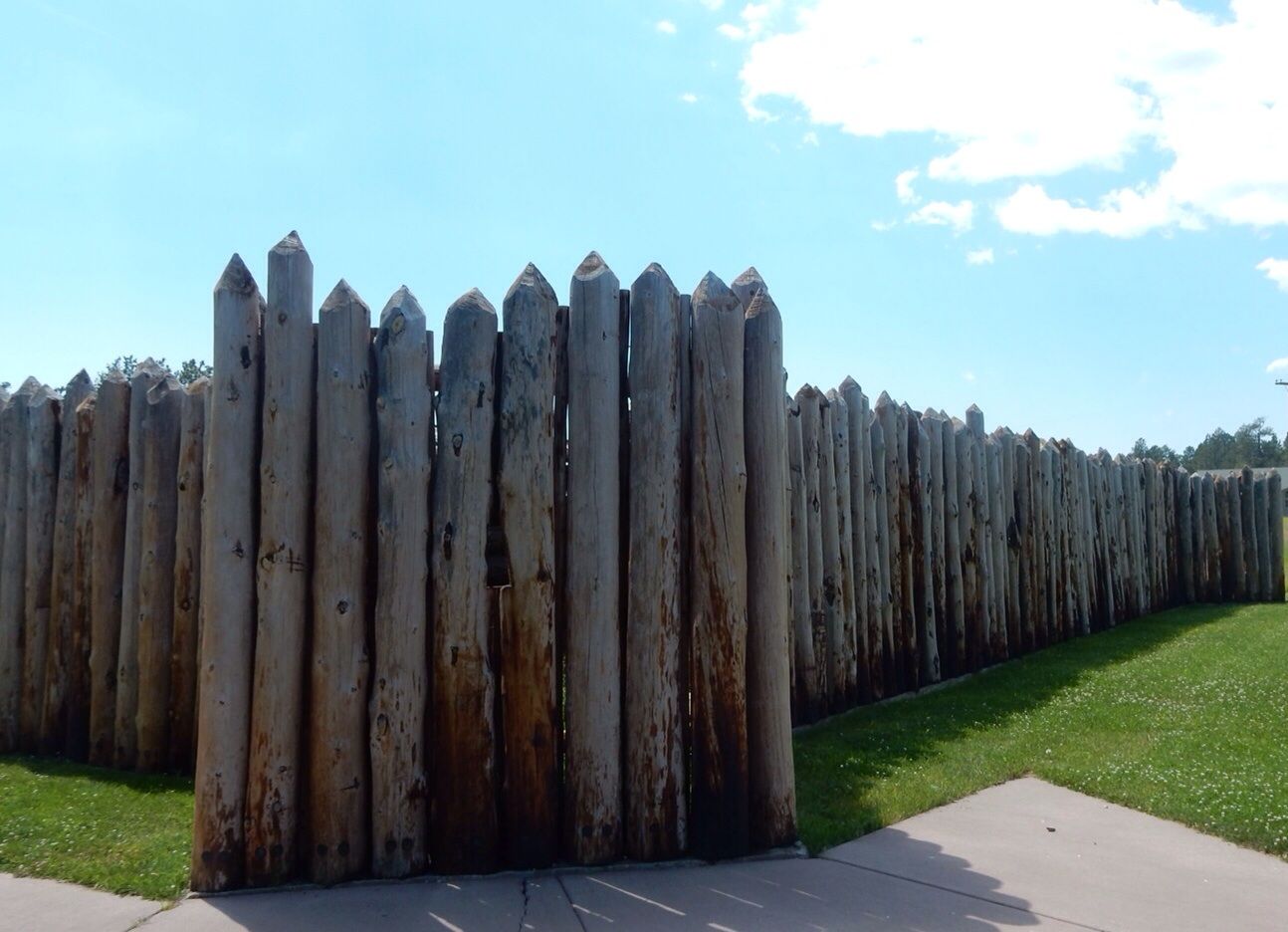
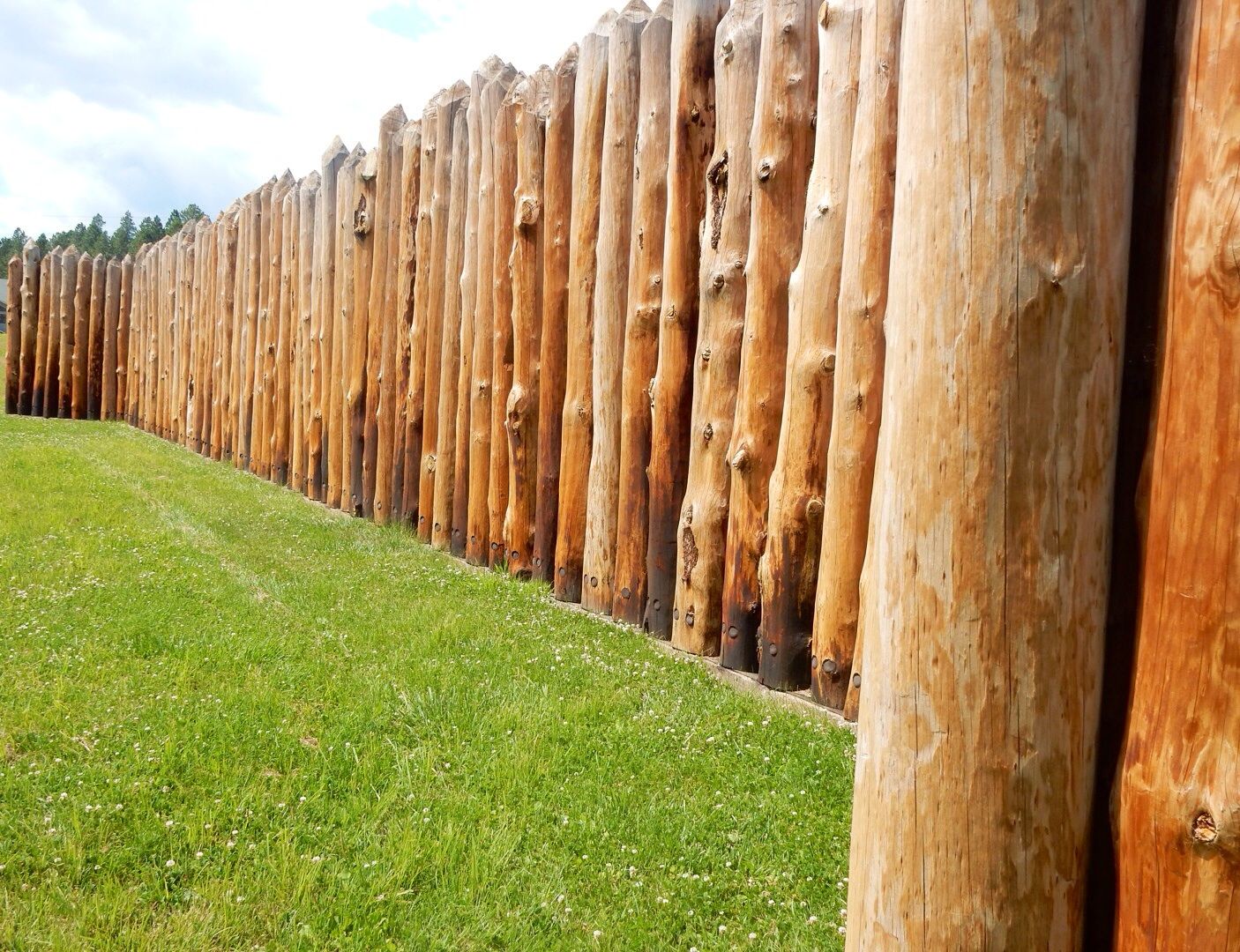
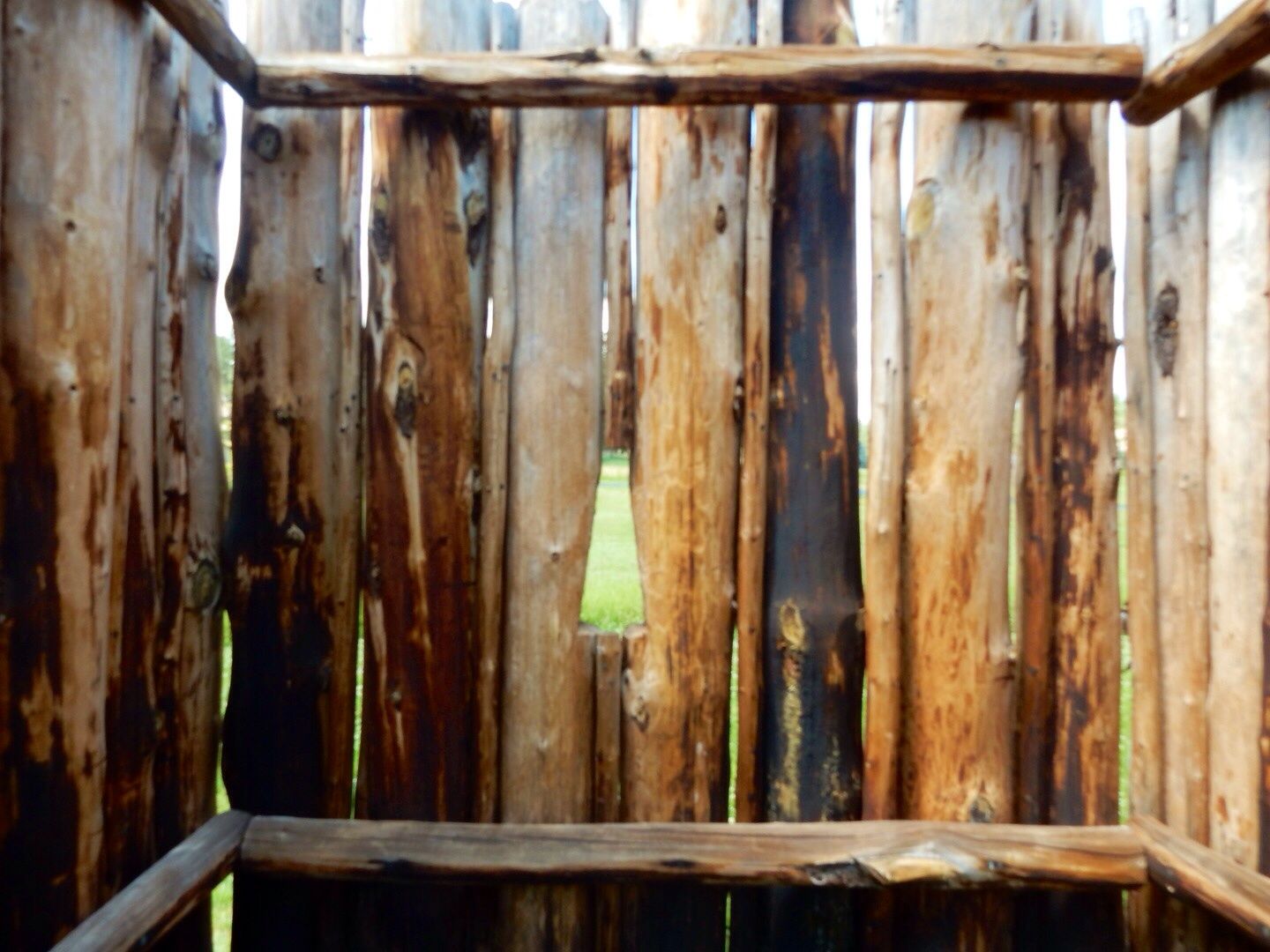
  • To protect themselves from Lakota attacks, the Gordon Party built a log fortress on the banks of French Creek (where they panned for gold).
The structure has been reconstructed three times (1925, 1941, and in the 1990s), all to the same configuration as the original.  


Notches found in each of the four corners for your rifle to protect the stockade from attack.

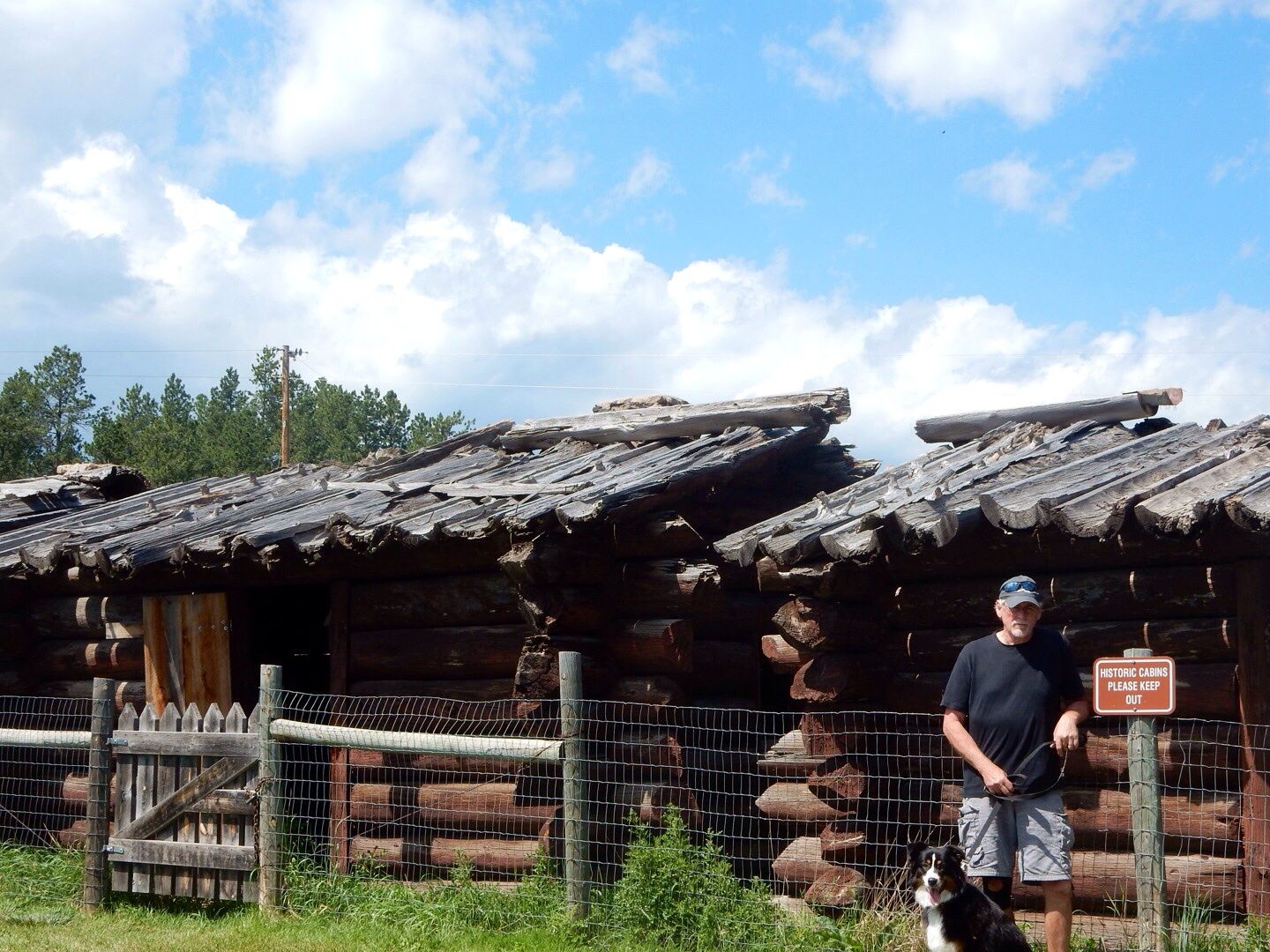
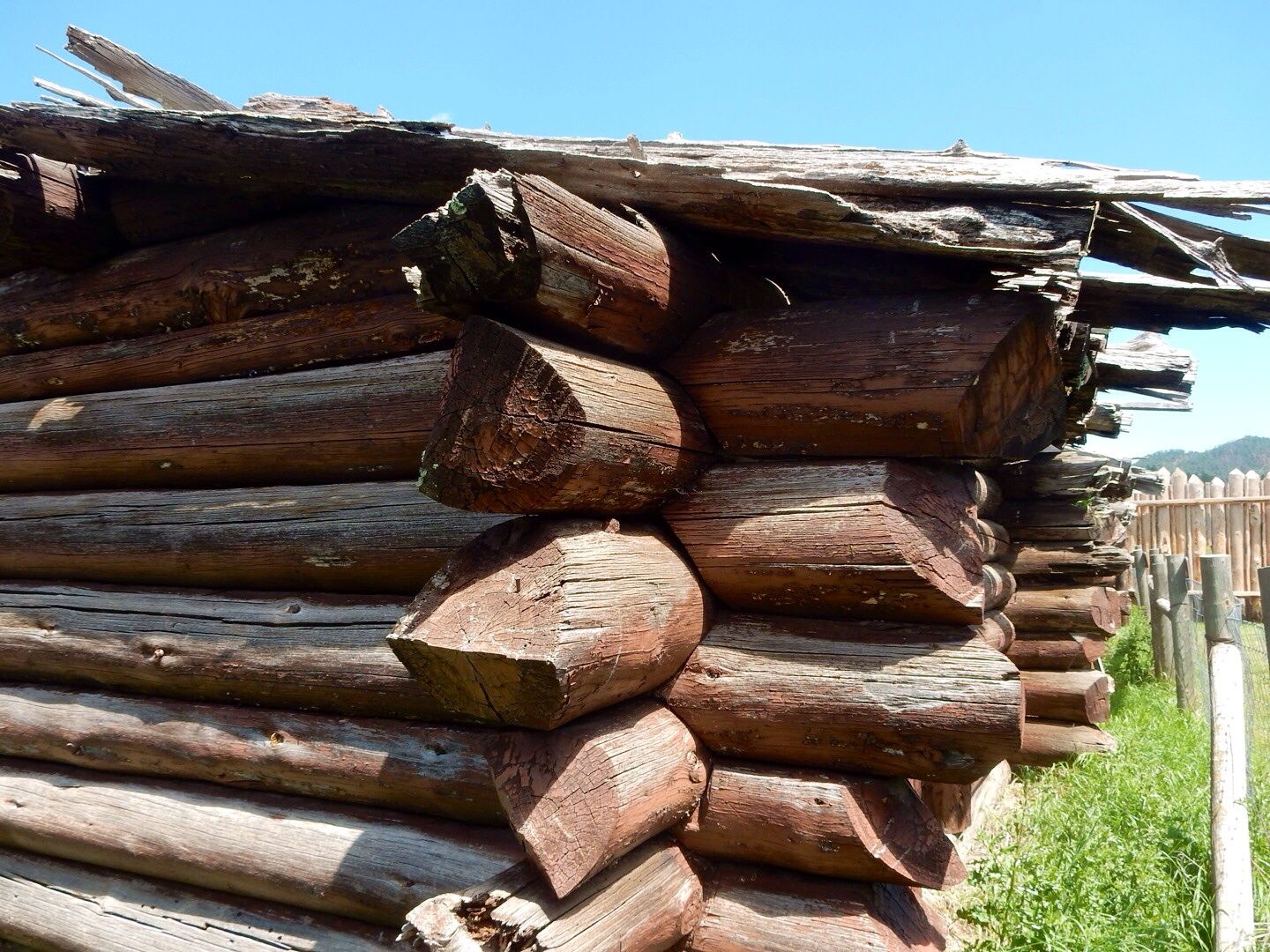
Partially original cabins.


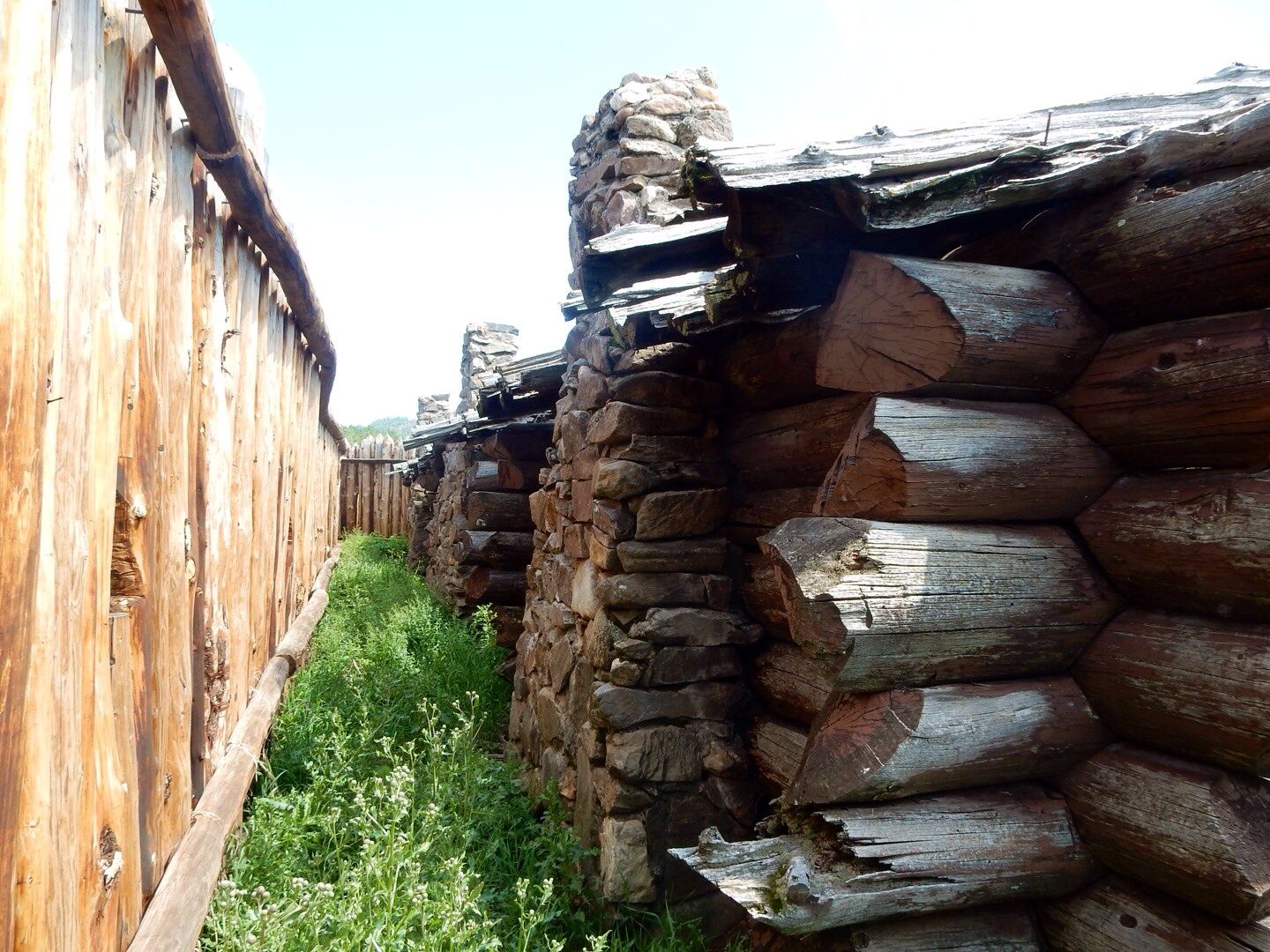
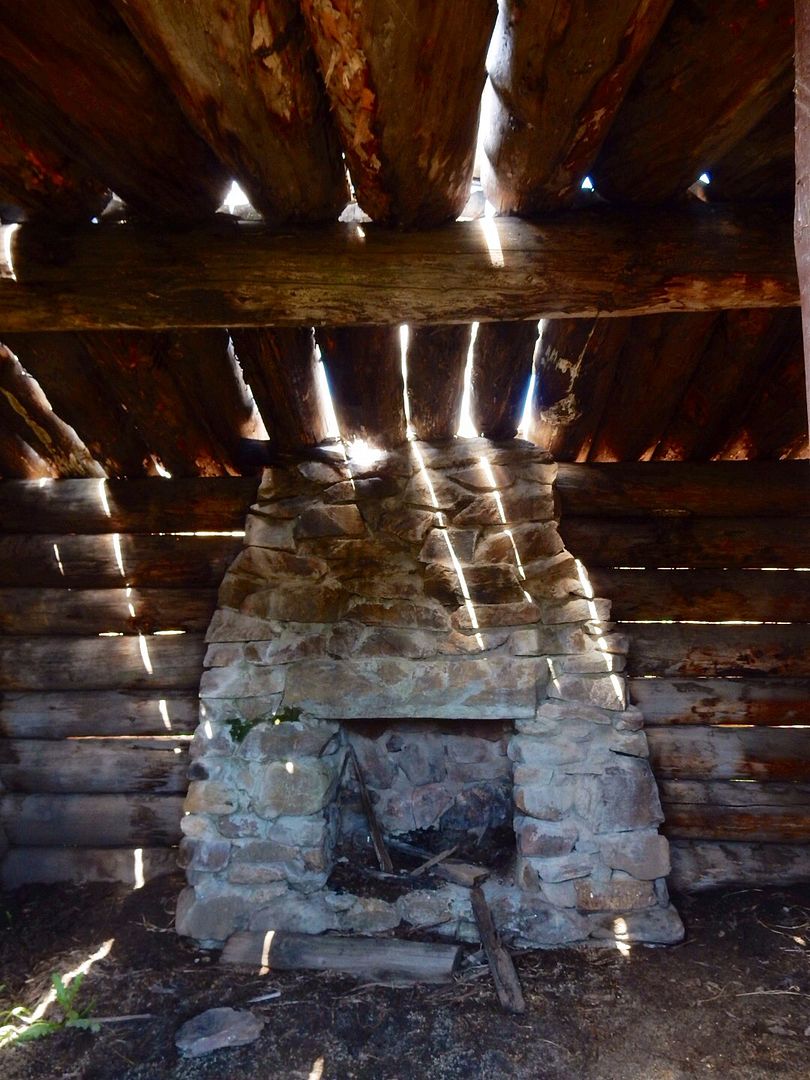
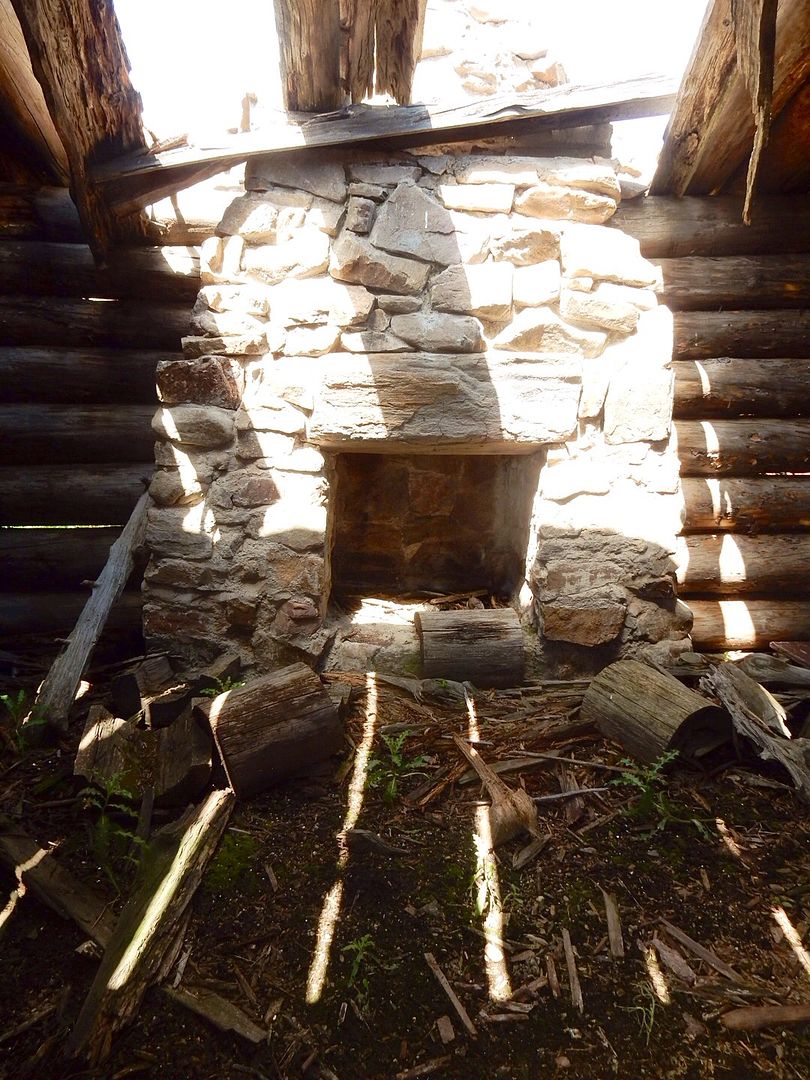
Fireplaces from two of the original cabins.


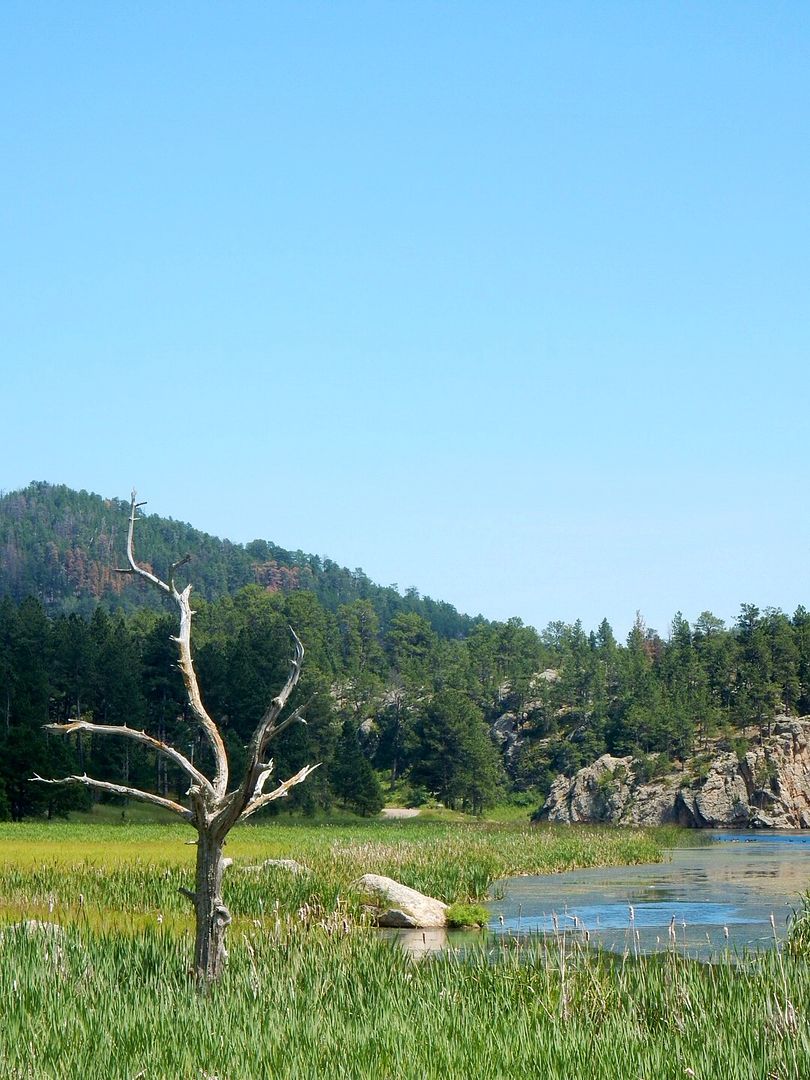
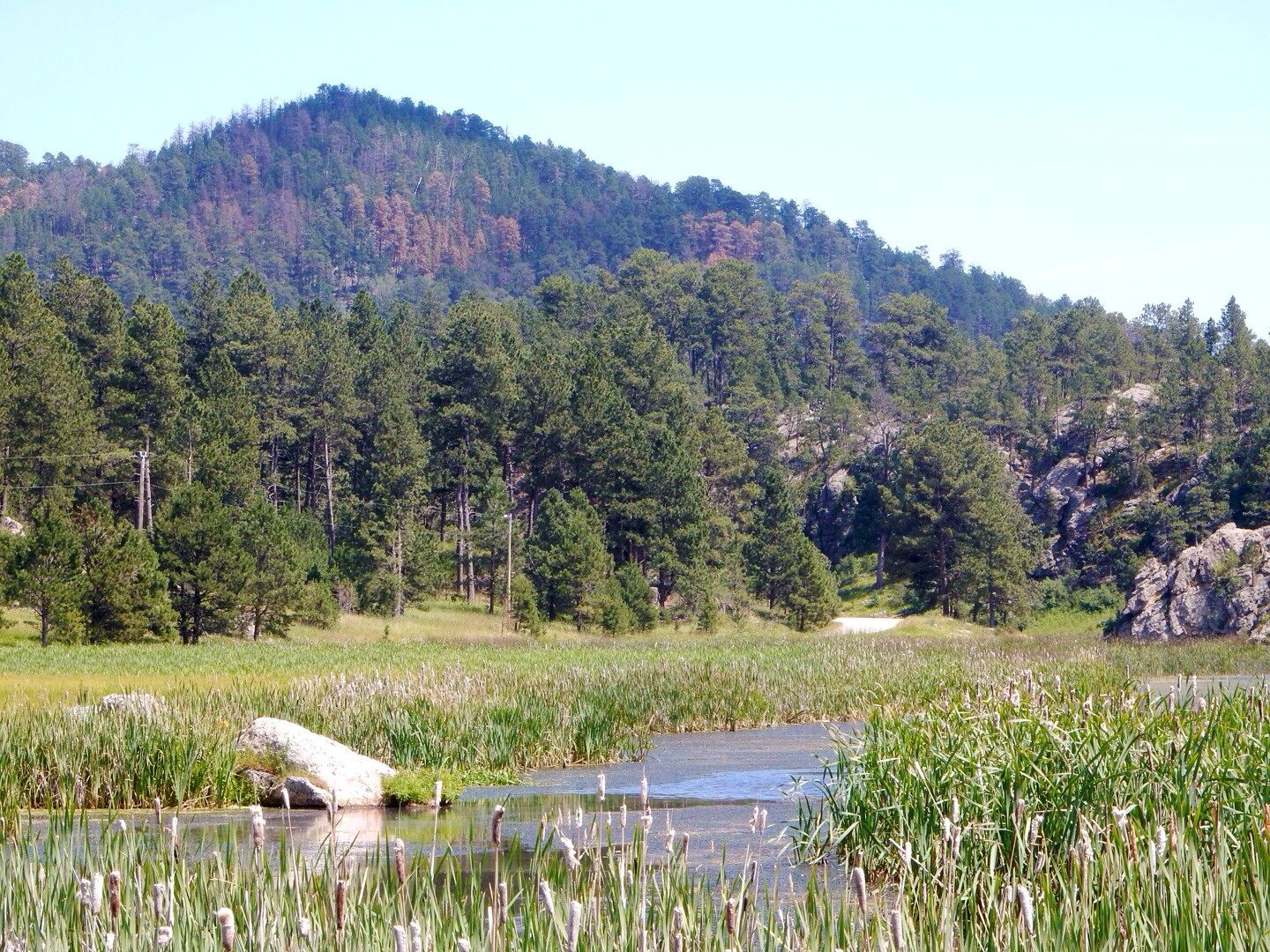
View of French Creek (behind the stockade) where the party panned for gold.


What happened to them?
  • The Gordon Party's stay lasted only 5 months and was not very profitable. 
  • They were removed from the area by the US Calvary.  
  • Afterwards, however, fortune seekers came in droves in search of gold. 
  • The Army was unable to halt the invasion of 10,000 illegal settlers in the Black Hills in just two years following the evacuation of the Gordon Party.
Admission is free and is a quick stop if you're a history buff. It is also pet-friendly (which, of course, is important to us!)

Website: www.gfp.sd.gov 

Custer, SD - 7/28/14

Where we are staying is about three miles from the town of Custer, South Dakota (population 2,000 in 2010). Of course, we have done some shopping, eating, and walking about town. Today, however, we visited the 1881 Custer County Courthouse Museum to learn more about the history of this town. We have come to appreciate and really enjoy the small local museums we have come across in our travels.

Some general background:
  • Custer is the oldest town established by European Americans in the Black Hills of South Dakota and Wyoming.
  • The Black Hills were the historical territory of the Lakota Sioux and within the area designated when the Great Sioux Reservation was created in the Treaty of Fort Laramie in 1868. 
  • Gold was found here during the 1874 Black Hills Expedition, led by Lt. Colonel George Armstroing Custer, which initiated the Black Hills Gold Rush.
  • In 1877, the US Government forced the Sioux to cede much of the land promised to them in the Fort Laramie treaty and opened the land for purchase and settlement. 
  • The town was originally named Stonewall (for Stonewall Jackson), but was subsequently changed to Custer.
First, here are some photos from around town.

i

These buffalo on are every corner along the Main Street of Custer. Each is painted by a different artist with unique images on each side. Here are a couple I found interesting (and beautiful!).


Liked this random piece of art in town.


First National Bank of Dakota Territory.


1881 Custer County Courthouse. The building was in use from 1881 to 1974. It has been collecting and displaying the county's history since. The bricks used to construct the building were kilned nearby. It was built in the Dakota Territory eight years before South Dakota became a state.


Different exhibits of the museum are featured in each room of the building. The Nature and American Indian room has antique taxidermy of a wide array of indigenous animals. Lakota Sioux cultural artifacts are also displayed.

Custer Expedition Room. Photo of rifle used by Custer to hunt antelope (pronghorns), his shoulder epaulets, and a first edition of his book, My Life on the Plains, Other artifacts and photos an be found in the room as well.

The Ranch Room featuring tools, barbed wire collection, antique saddles and tack.

Bear coat.
Buffalo coat and gloves.
School House room circa 1880.

The court room.

And holding cell in the basement for those on trial.


The location behind the courthouse of where the only legal hanging occurred (lynchings occurred elsewhere,  however).

The General Store...ladies shoes.


Authentic Dakota Territory Stagecoach ... doesn't look too comfy.


Carriage house - Model T truck.


Housed in a hand-hewn log building is printing equipment from Custer's 1879 continuously operated newspaper. This is a Washington Hand Press used in 1890 that could turn out 300 impressions per hour.

Oldest building in the Black Hills ... known as the Flick Cabin. Built in 1875, it served as a residence and military headquarters. Today it is furnished as a pioneer cabin.


Admission to the museum was $6/adults; $5/seniors. Be sure to see all three floors of the courthouse as well as the artifacts out back and Flick House across the street.

Website:  www.1881courthousemuseum.com

Monday, July 28, 2014

Badlands National Park - 727/14


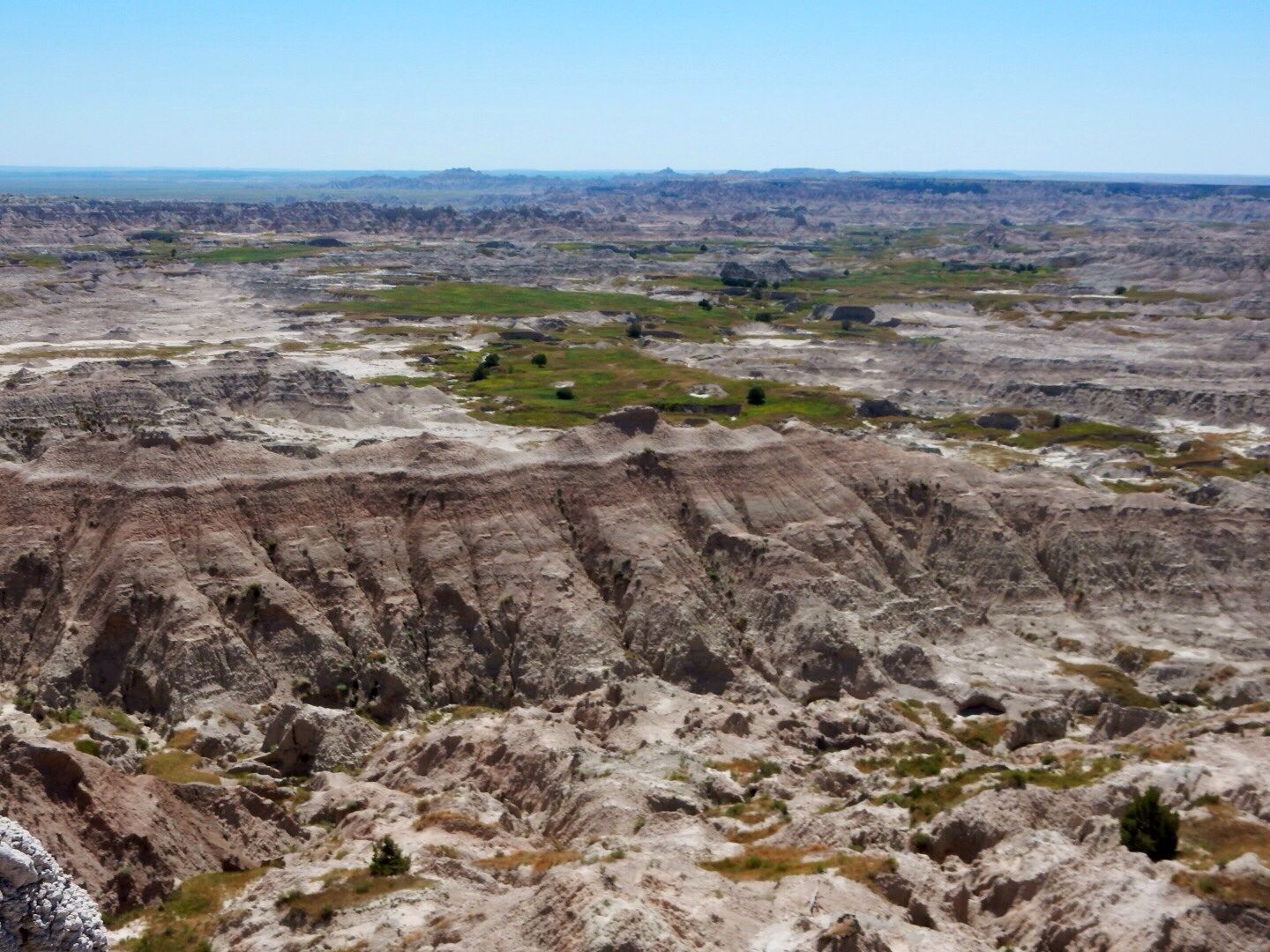
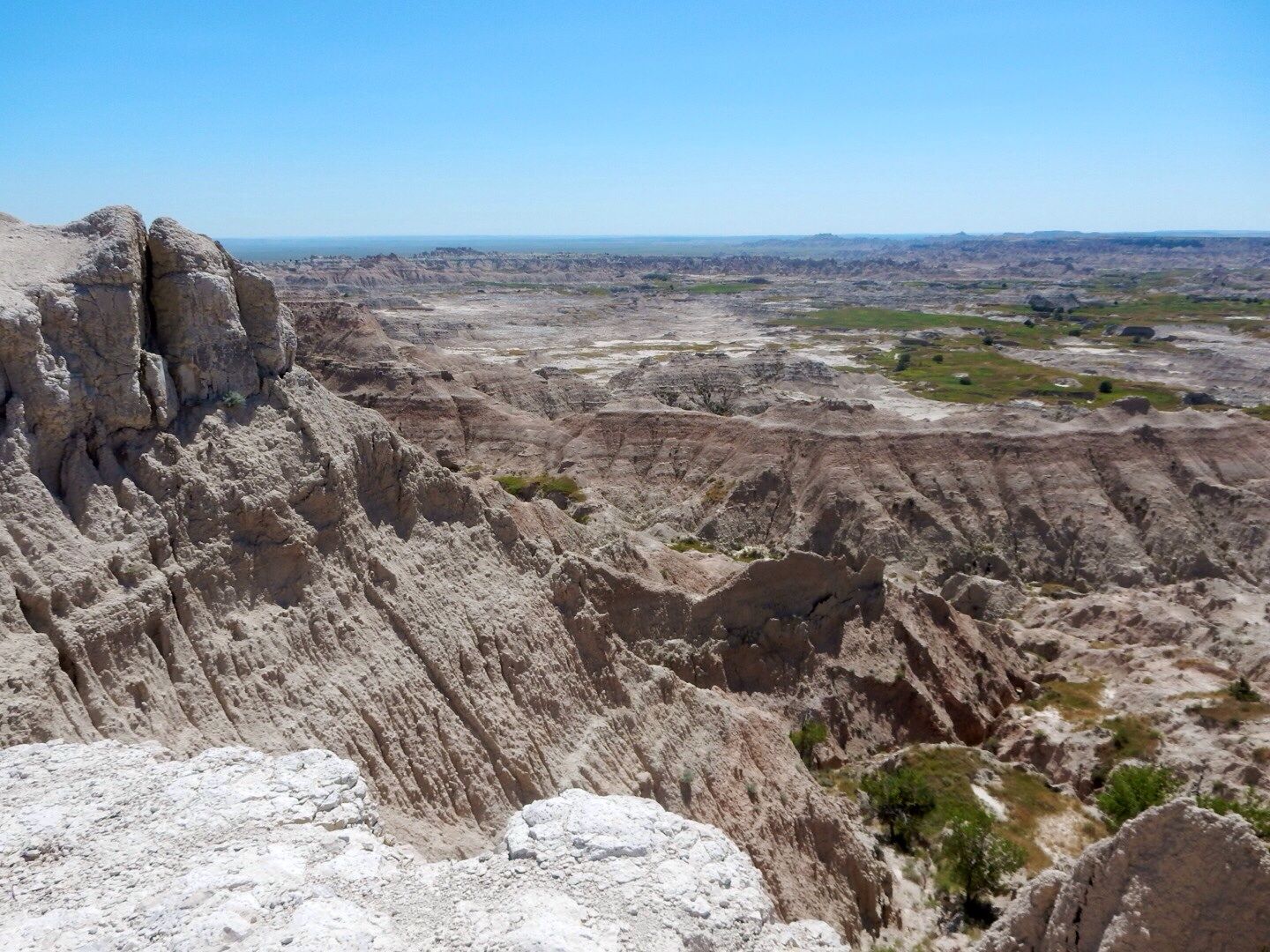
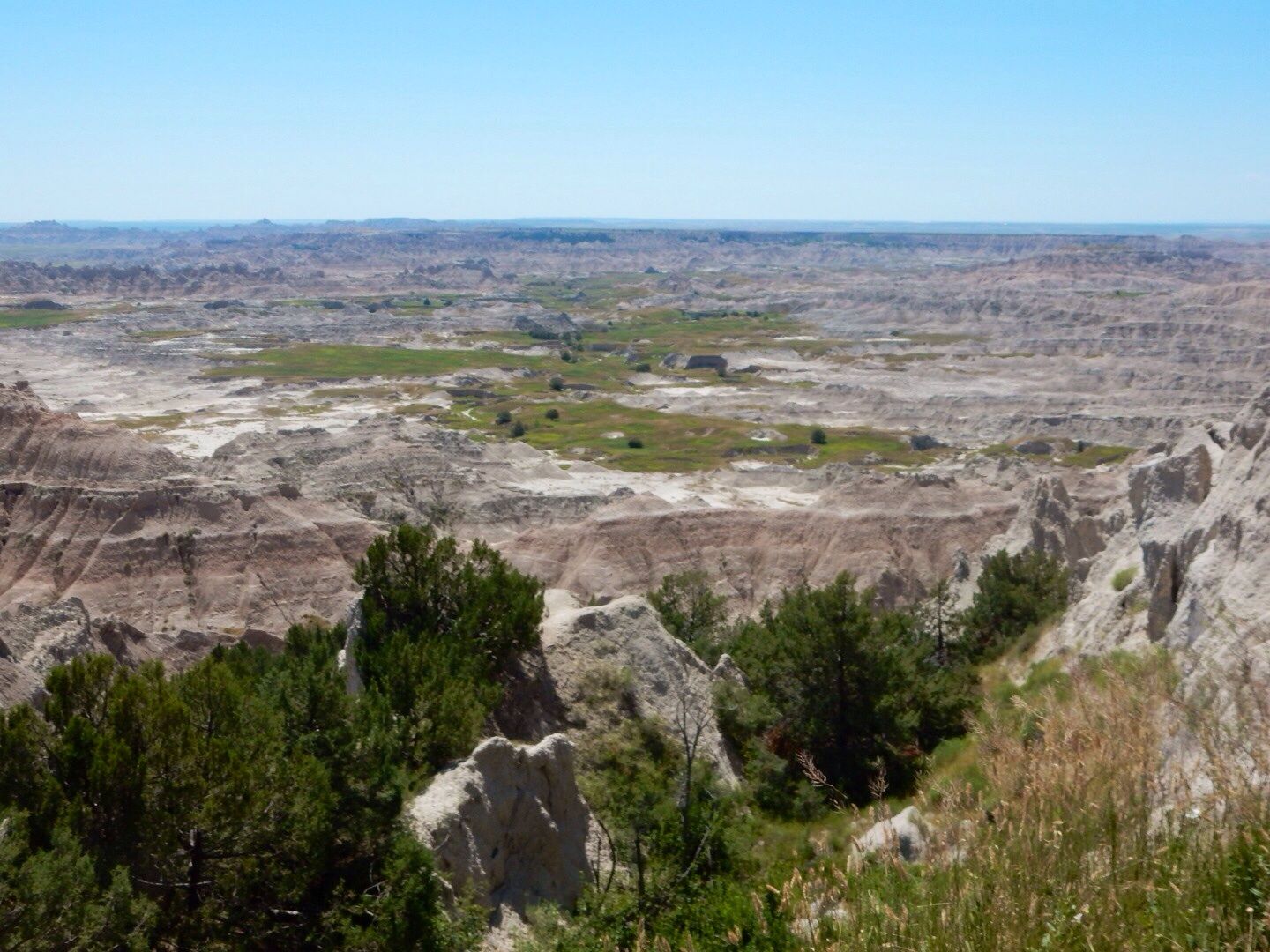
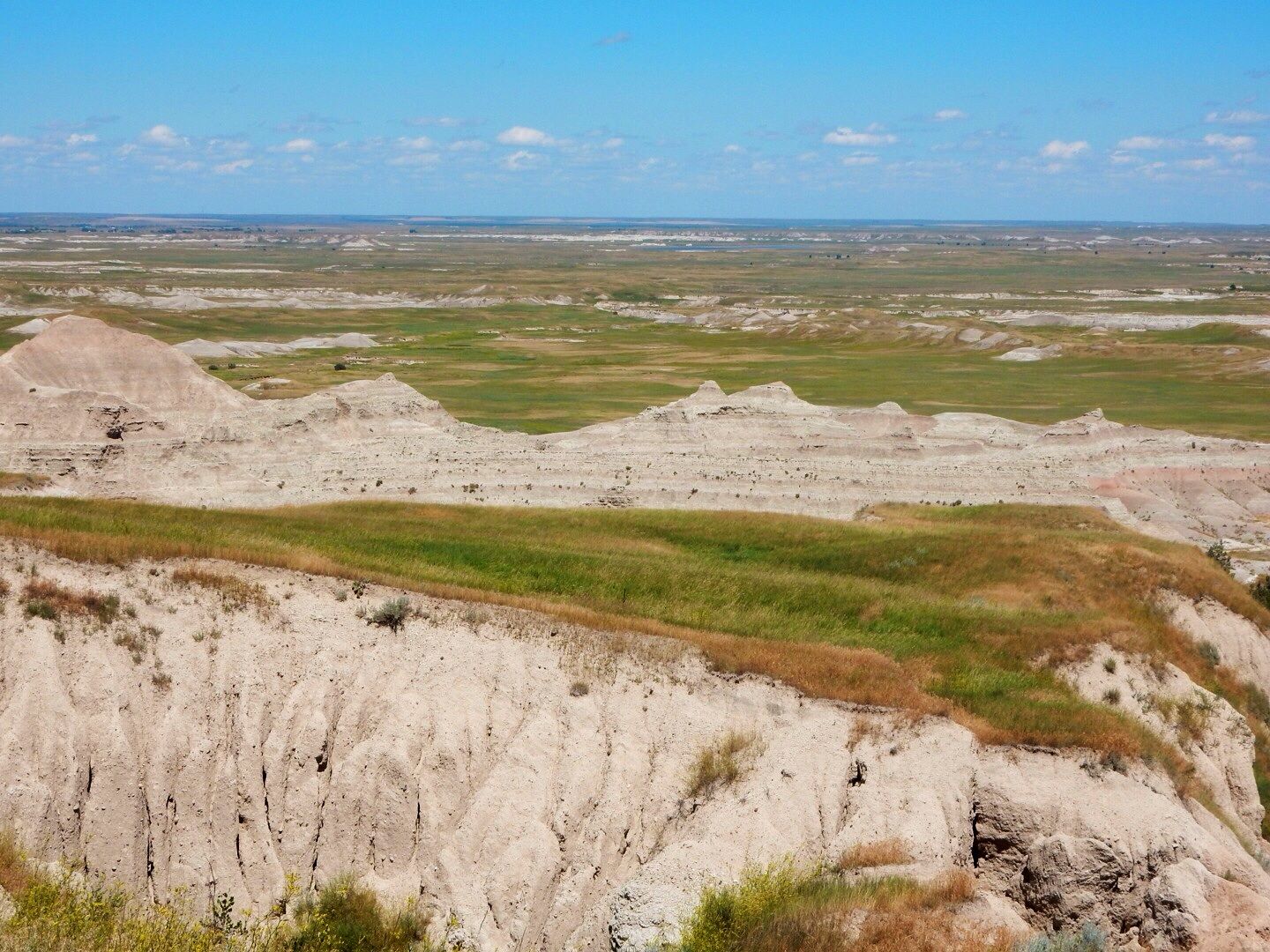
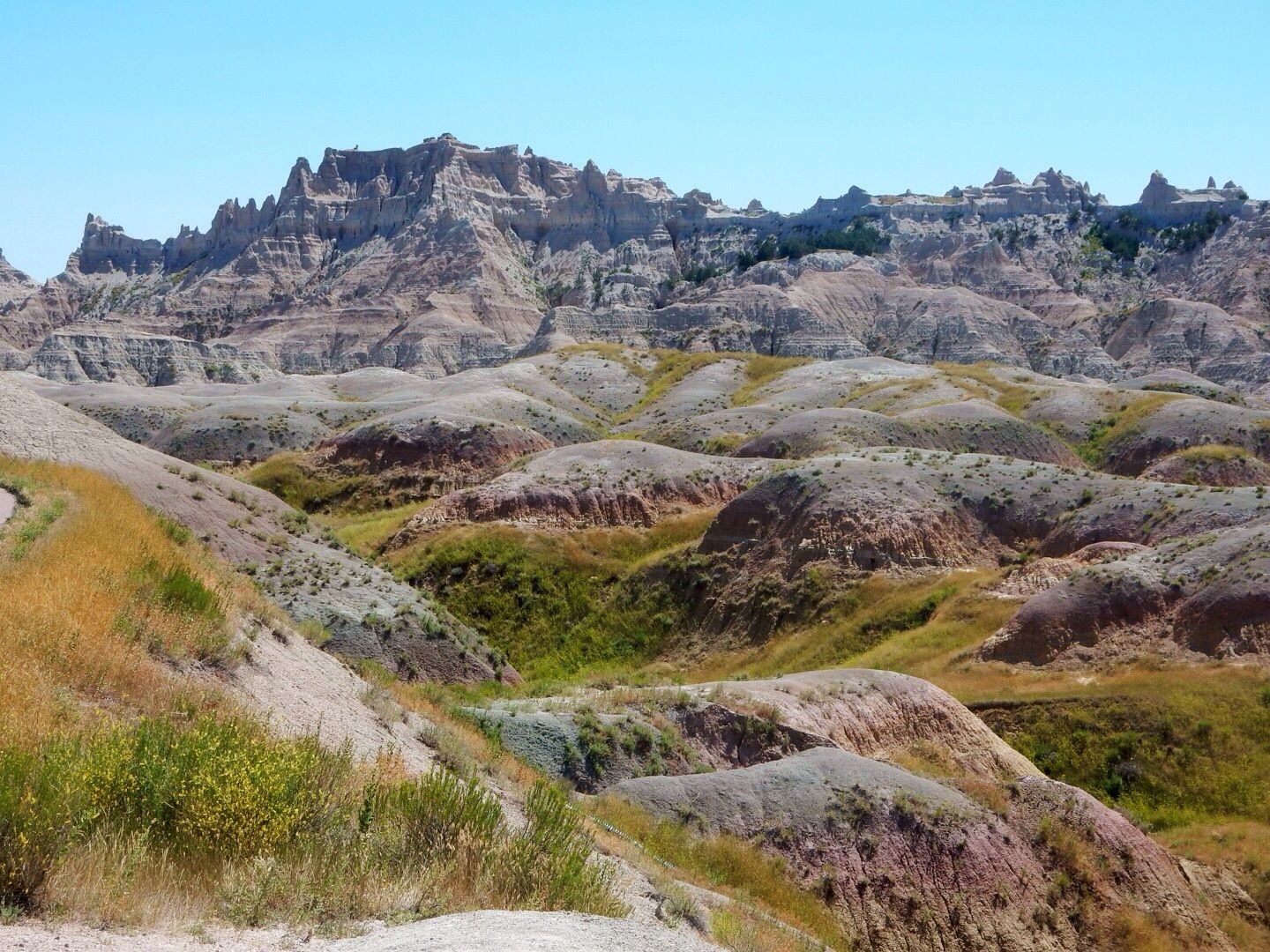
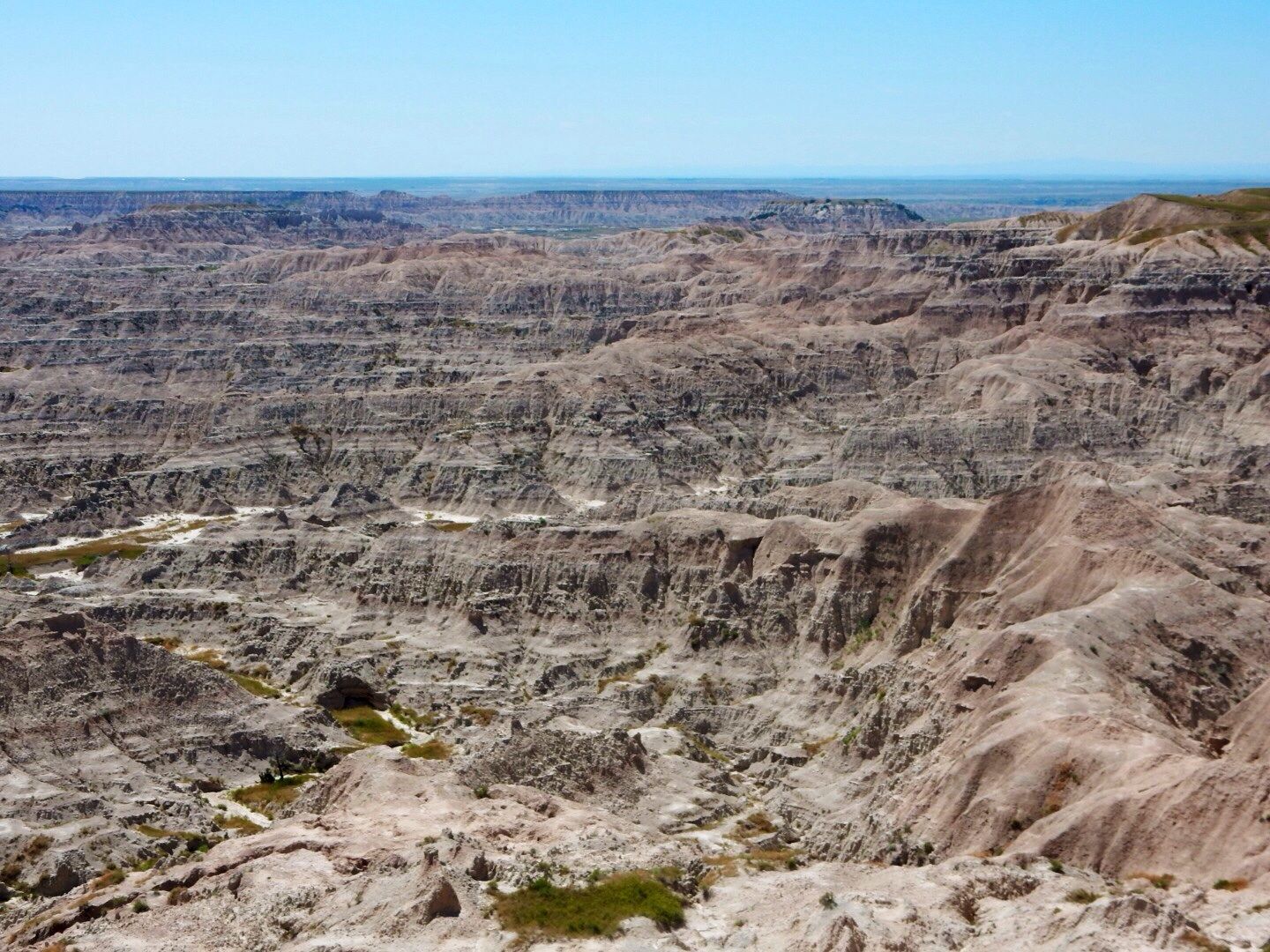
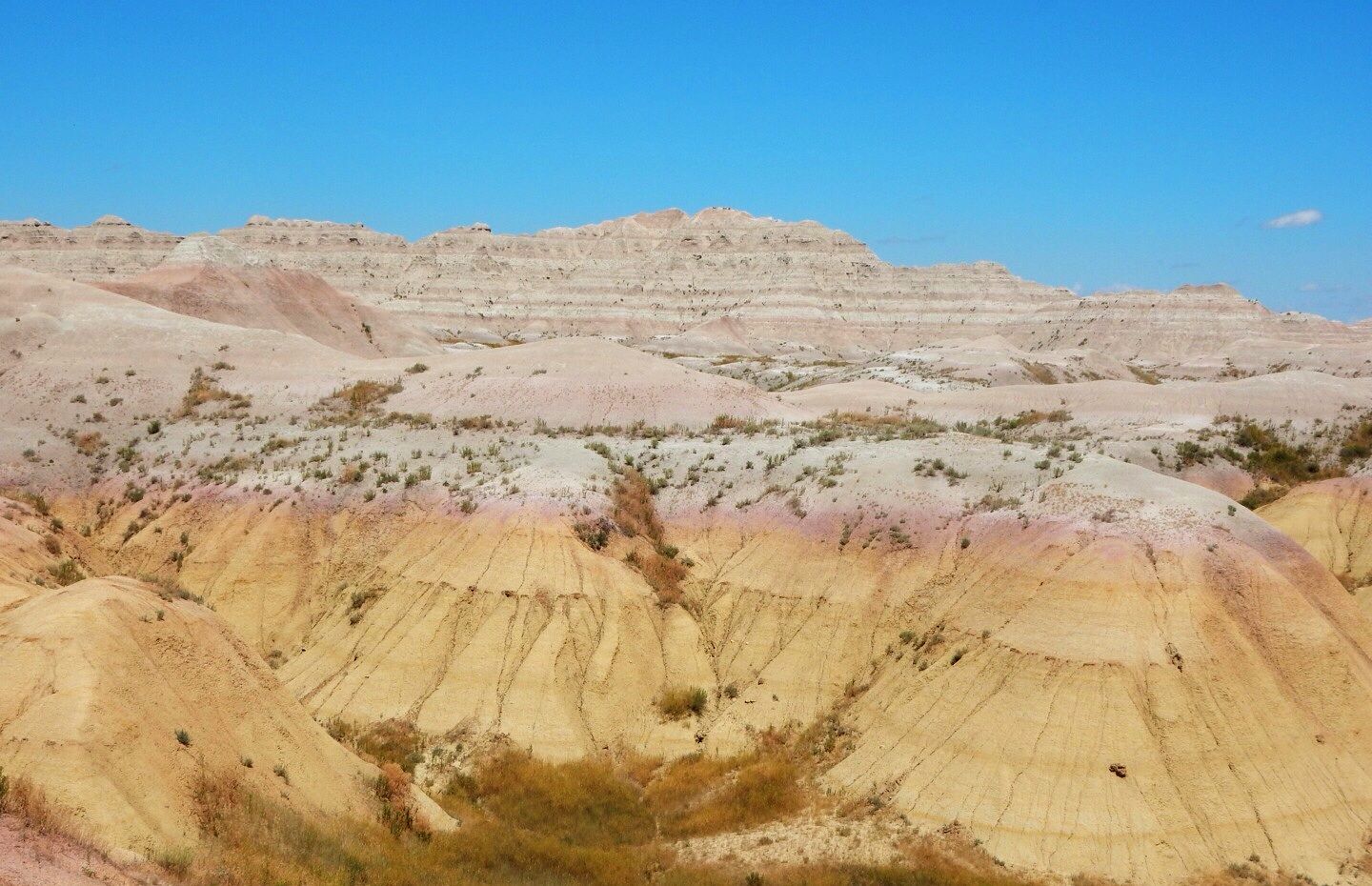
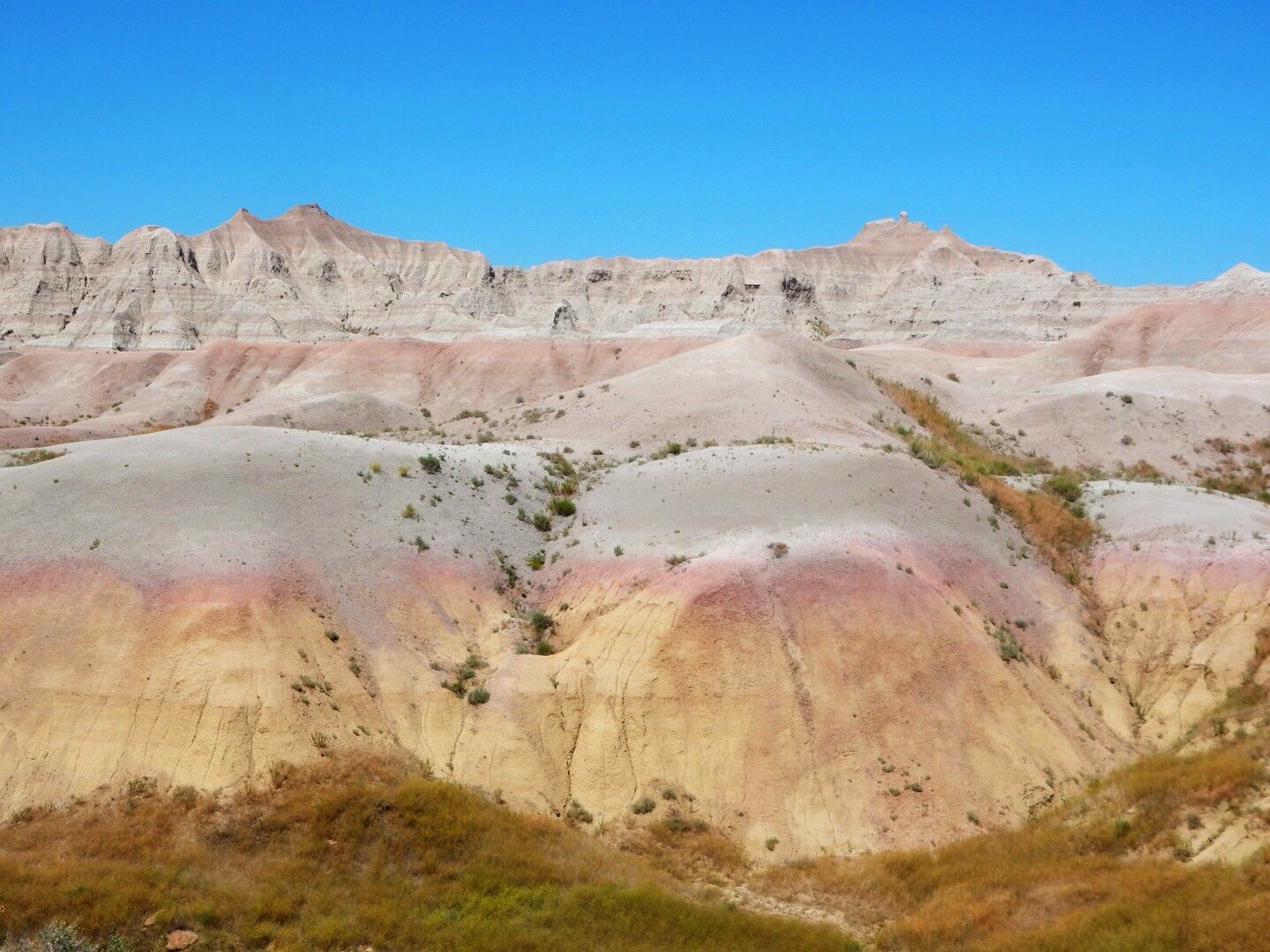
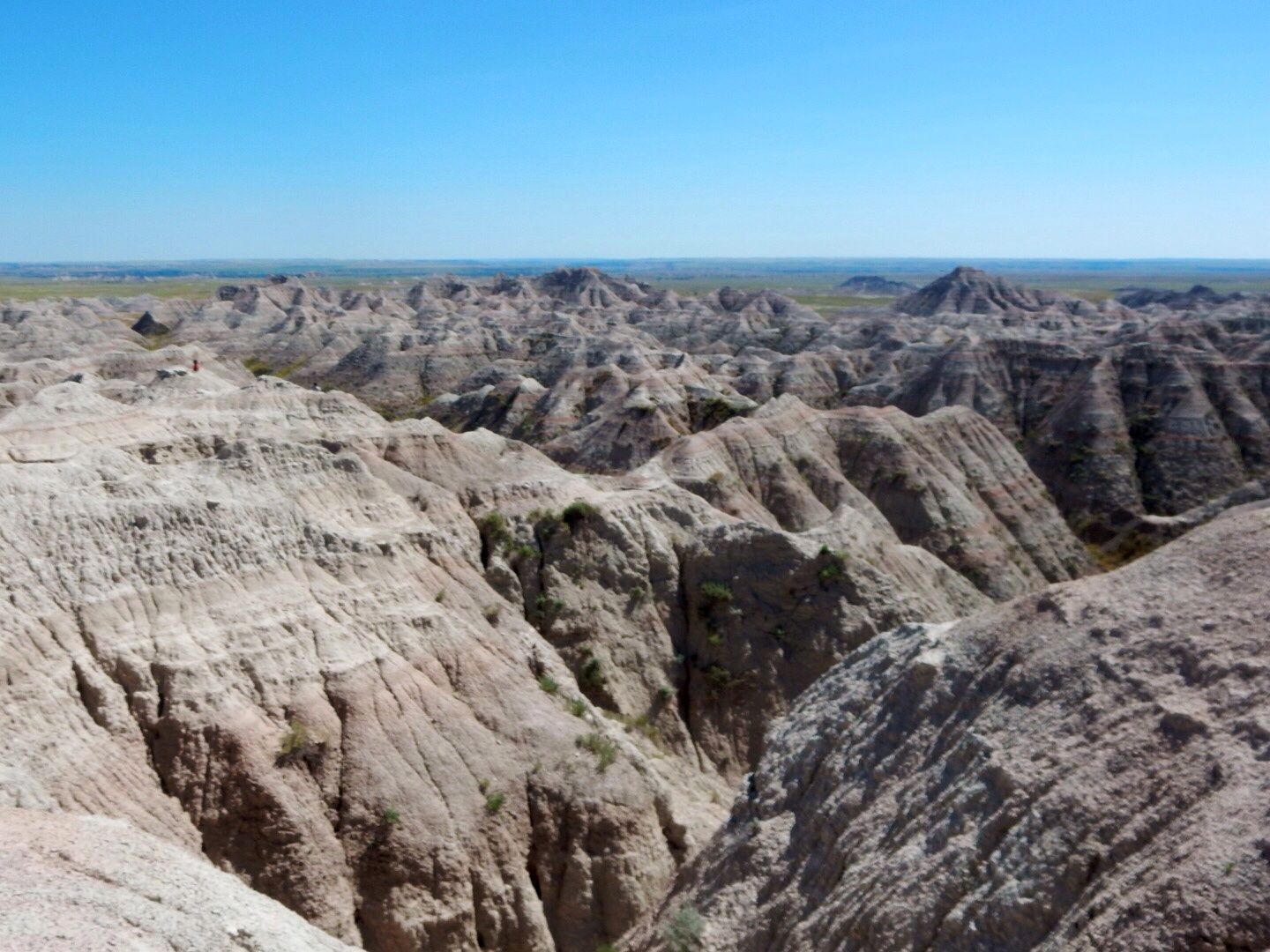
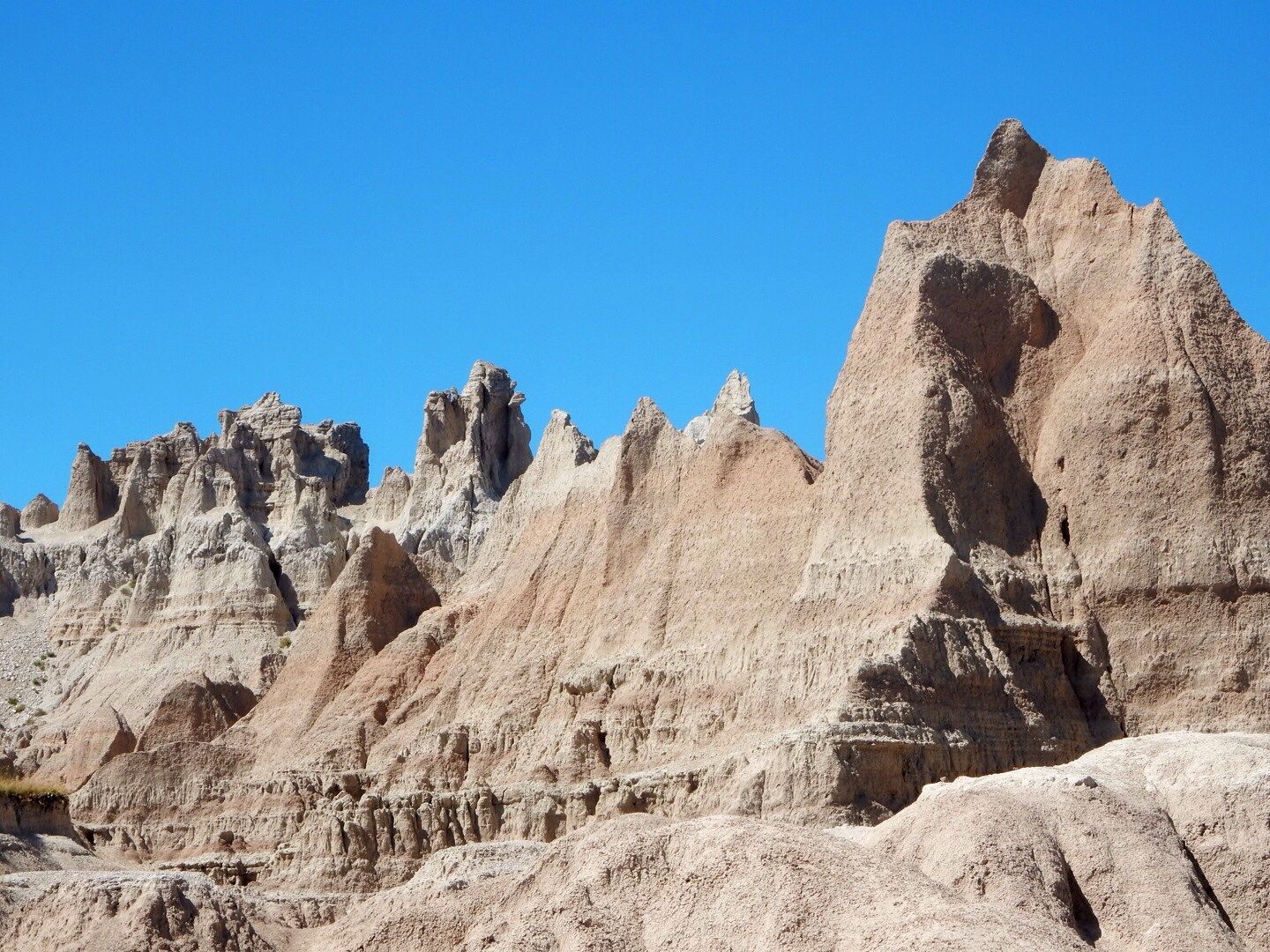
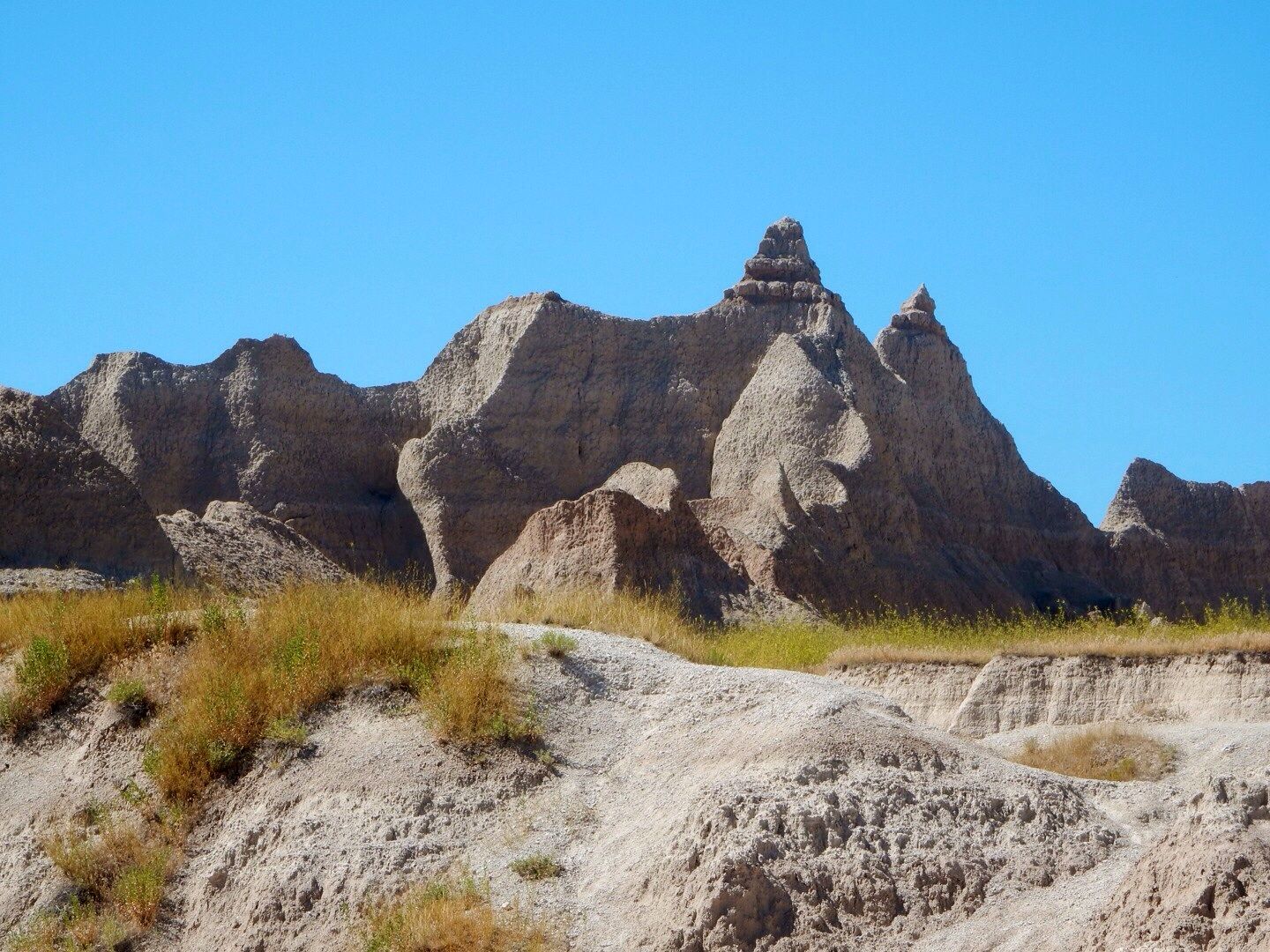
A huge natural barrier 100-miles long runs through the plains of South Dakota, called the Badlands Wall. It's characterized by jagged peaks, rugged cliffs, and tortuous gullies formed by the force of water that has been carving away at the cliffs for the past half million years. It continues to erode away an inch (or more in some places) each year.

The origin of the name? The Lakota called this place mako sica translated as "land bad." The French trappers that arrived in the early 1800s called the area les mauvaises terres a traverser also meaning "bad lands."

Hundreds of fossilized bones have been found (and continue to be discovered) in this area that was once an inland ocean and then a swampy marsh. Today, bison, pronghorn, bighorn sheep, and prairie dogs live in the park. We saw bison and pronghorns in the distance, and, of course, many prairie dogs as there is a huge town very close to the road

Approximately a million visitors come to the park annually to view the wonders of the landscape and the beauty of the animals.

In 1939 this area became a national park. In 1976 the South (Stronghold) Unit, land owned by the Oglala and of their most sacred places, was acquired and is now preserved. The final Ghost Dance took place on Stronghold Table in 1890 a few weeks before 150 Lakota were massacred at Wounded Knee (which is 25 miles south).

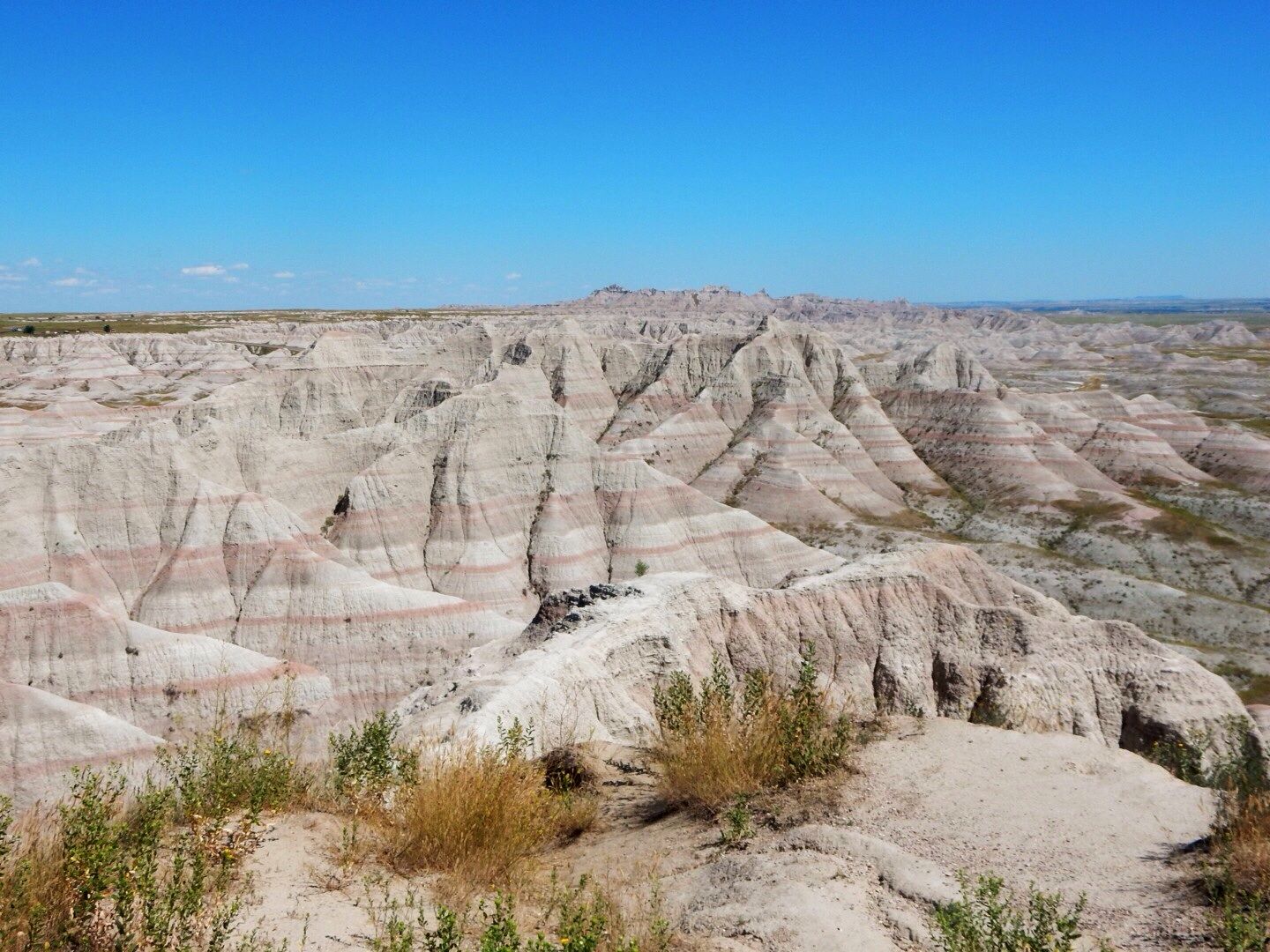
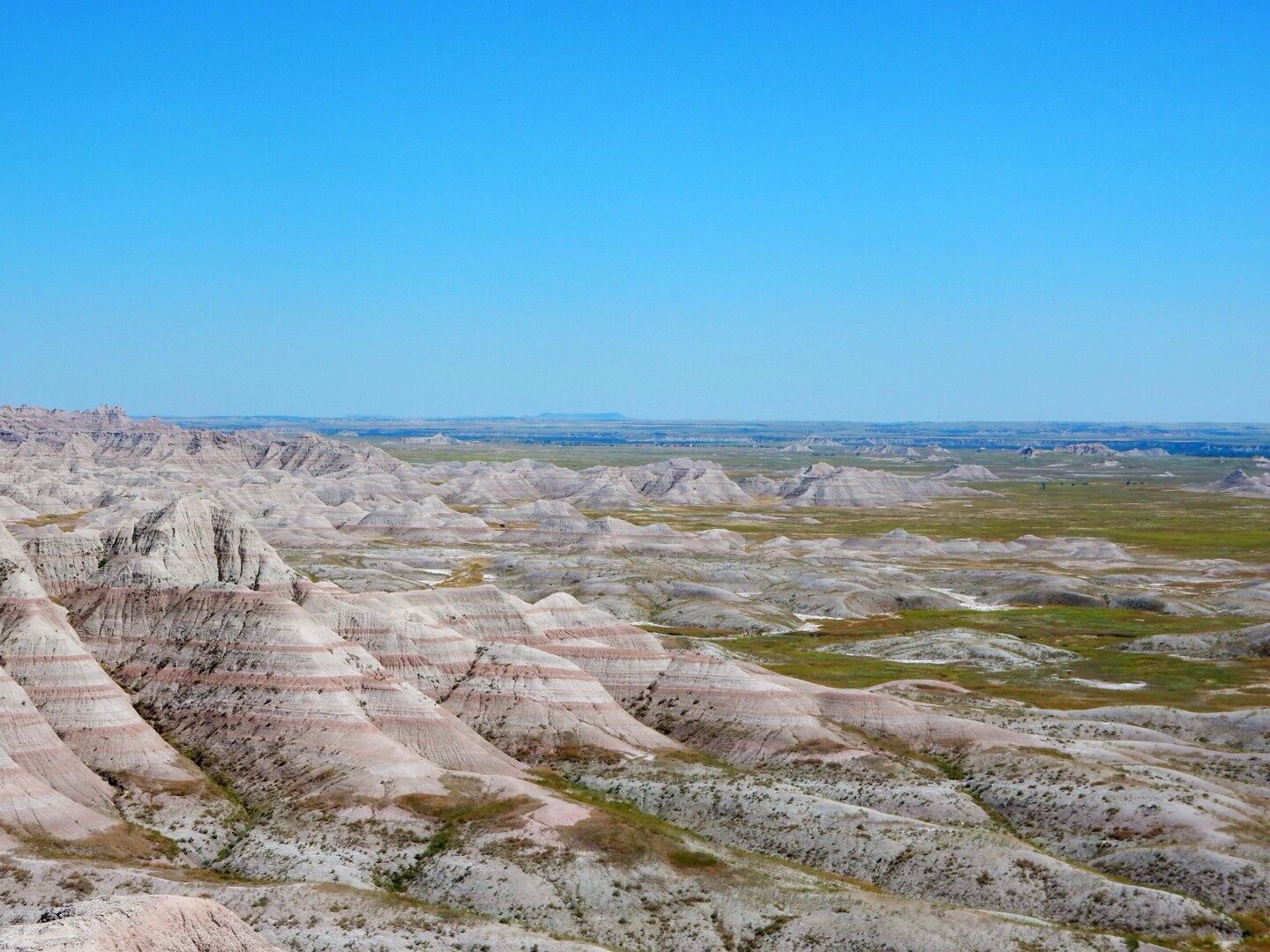
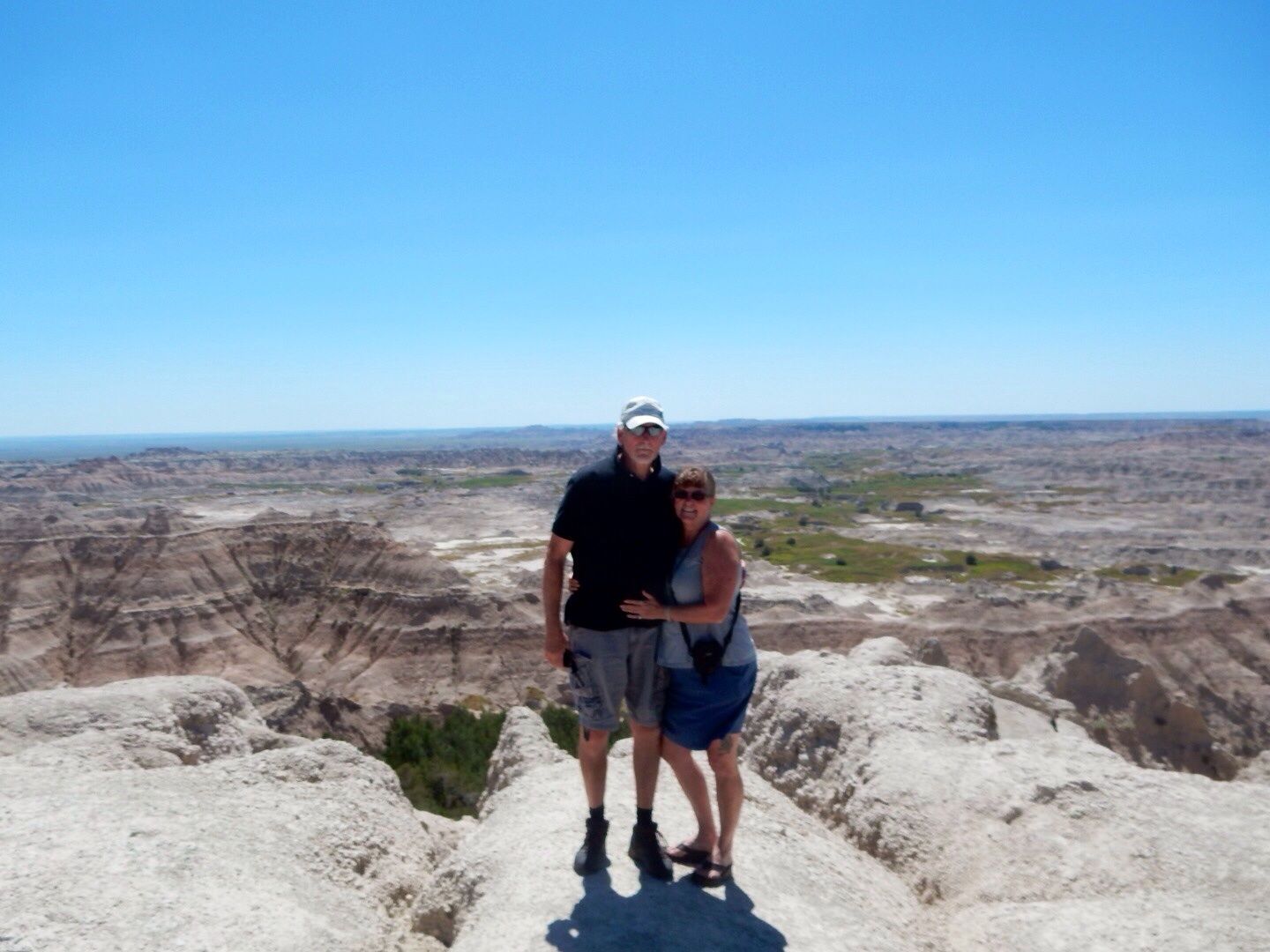
We drove the Badlands Loop, a 30-mile highway, that provides incredible views of the classic Badlands landscape. We entered at the Northeast Entrance off of SD 240 and the first overlook, Badlands Wilderness Overlook, is a "must see."  Honestly, it took my breath away!


We continued along the Badlands Loop road stopping at a number of overlooks along the way.


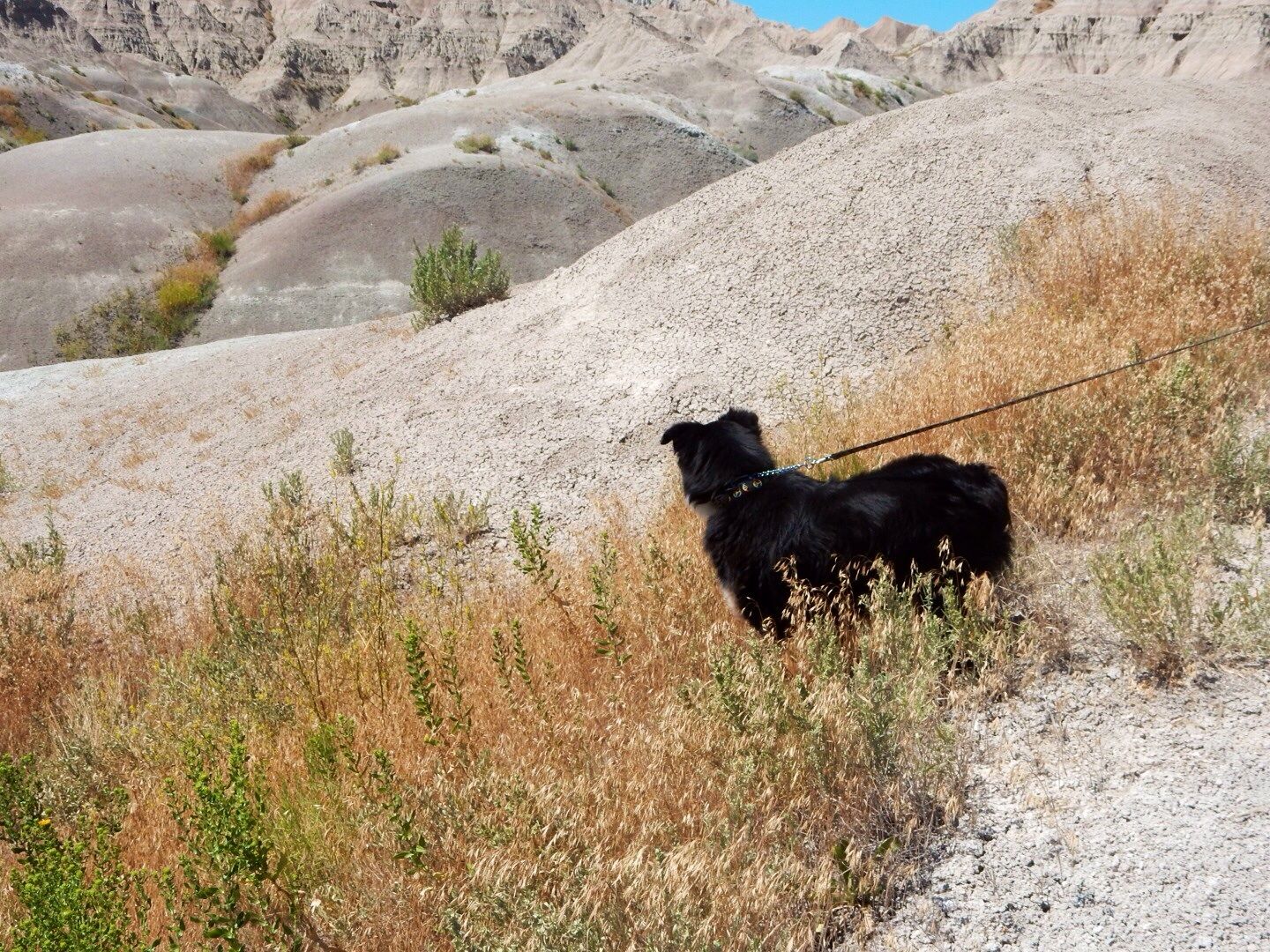
Sadie liked it too!
Loved this view.

Yellow (and pink) mounds through Dillon Pass.


Homestead Overlook.

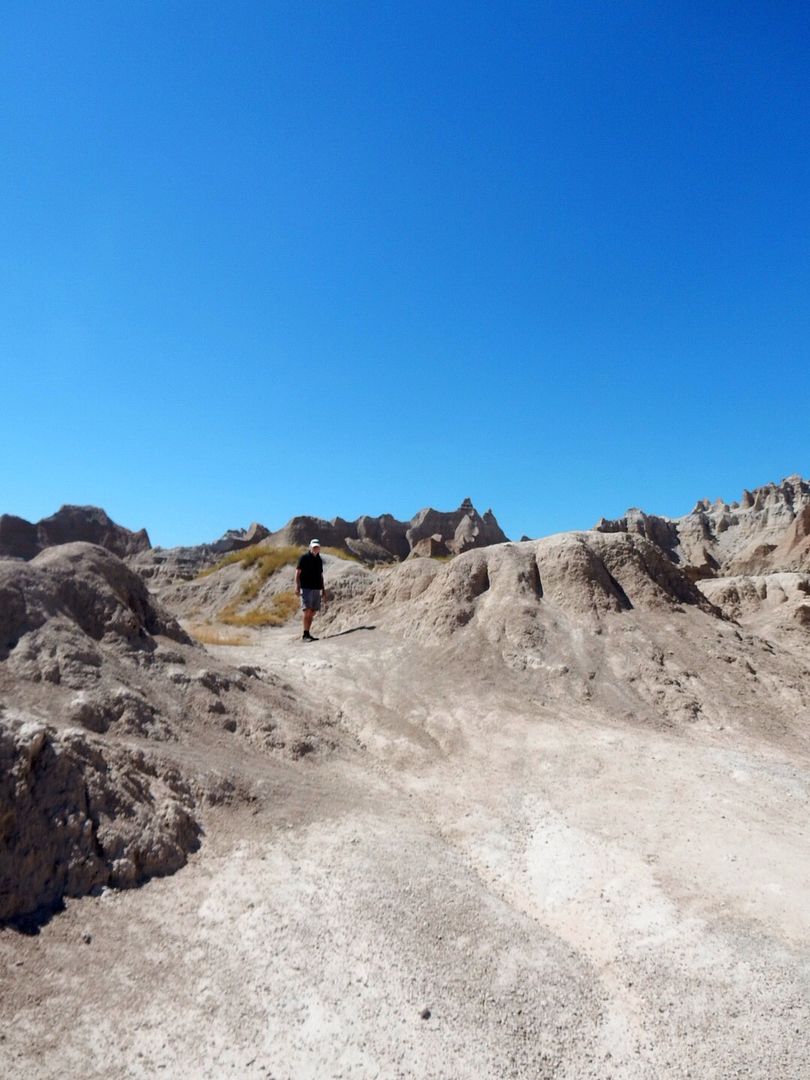
The Fossil Exhibit trail has interesting exhibits of nautical and ancient vertebrae. This is a stop where we saw kids and adults alike climbing all over the small peaks and sandy soil.


John did some off-trail exploring here. Thankfully, no rattlesnake encounters.

Door Trail

Loved how the layers of rock are so clearly visible in this area.


Be sure to check out the Visitor Center. Video presentation and numerous exhibits of the geology of the area and the fossils found in the park can be seen here.


After hearing about this place my entire life, it was awesome to see this landscape in person. There are two campgrounds in the park and overnight backpacking is permitted. Also, there are various ranger-led activities such as nature walks/hikes, evening (star gazing) programs, and fossil demonstrations.

Admission is $15/car. Of course, we have John's Senior Pass ($10 for life) that gets us in for free. It was about 100 miles each way from where we are staying near Custer, but absolutely worth it. This place, like Rocky Mountain National Park or the Grand Canyon, needs to be seen in person. The photos do not do it justice.

Website:  www.nps.gov/badl