Wednesday, February 24, 2021

Gates Pass...Sunset and Moonrise, 1/06/2020

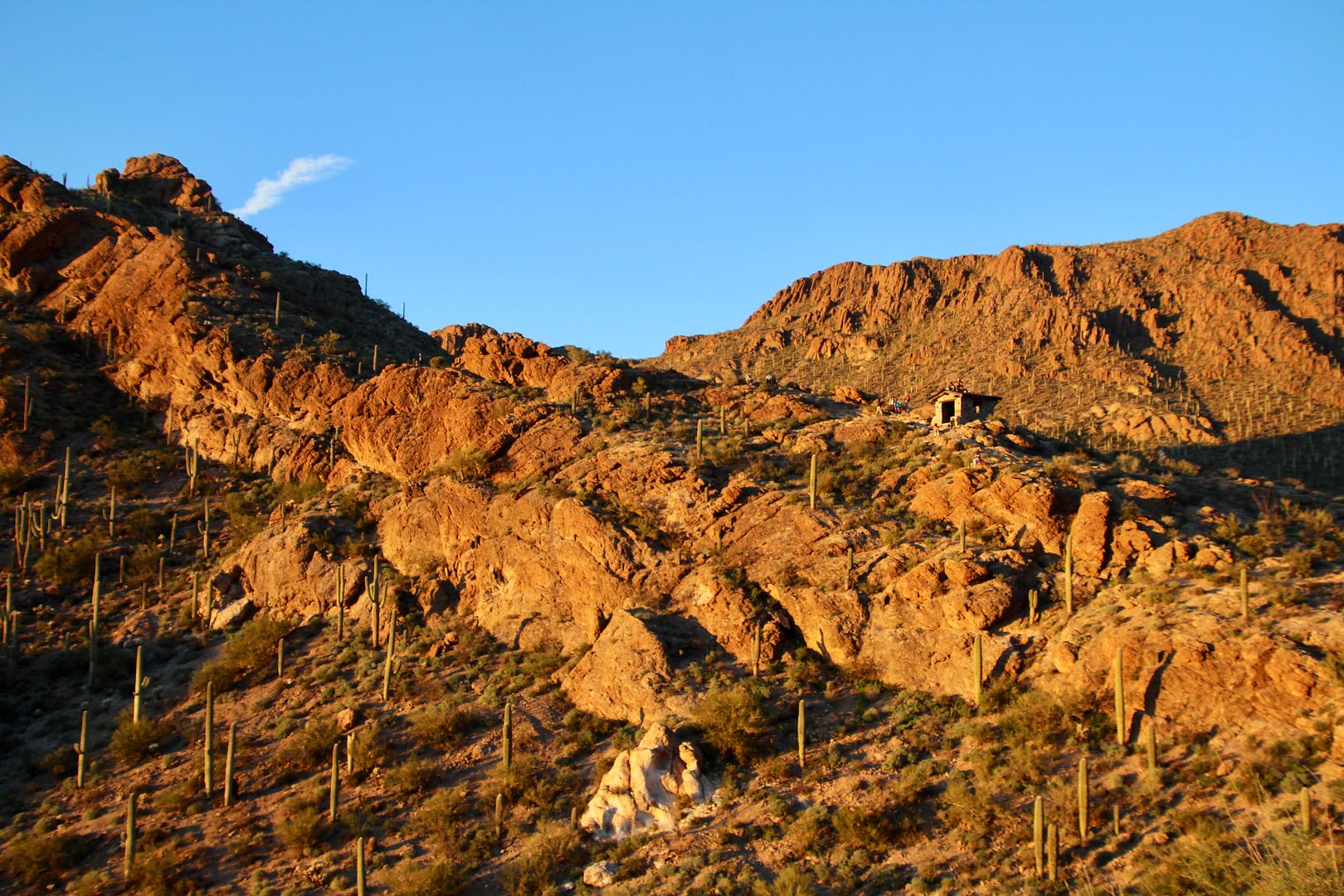
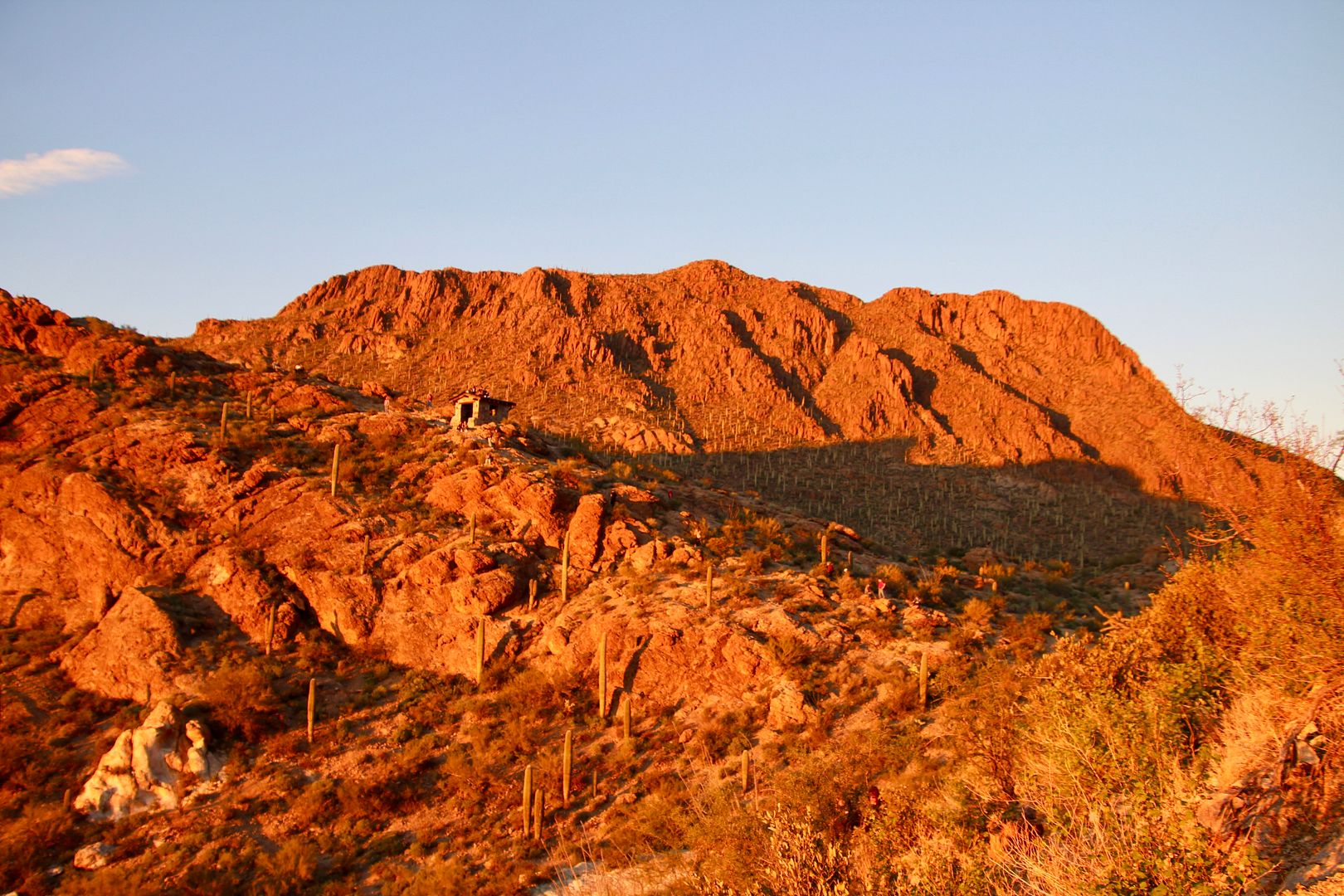
Gates Pass is a favorite location to view the sunset in Tucson. We have been here several times, but it is always worth another visit. The beautiful orange hues of the mountains emerge as the sun sets. 

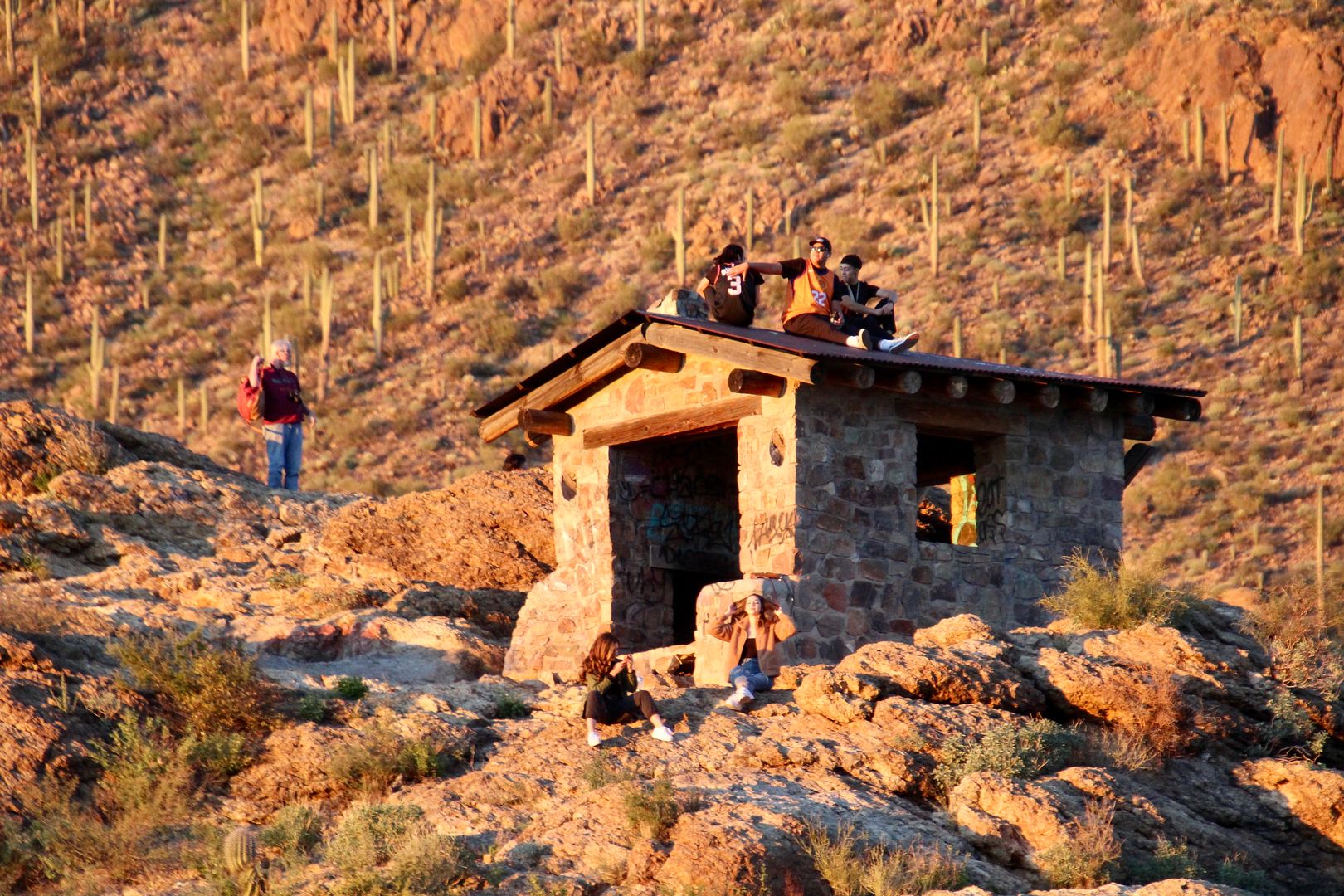
If you look closely at the previous photo, you will see this structure (built by the Civilian Conservation Corps in the 1930s) where some have gathered to watch the sunset

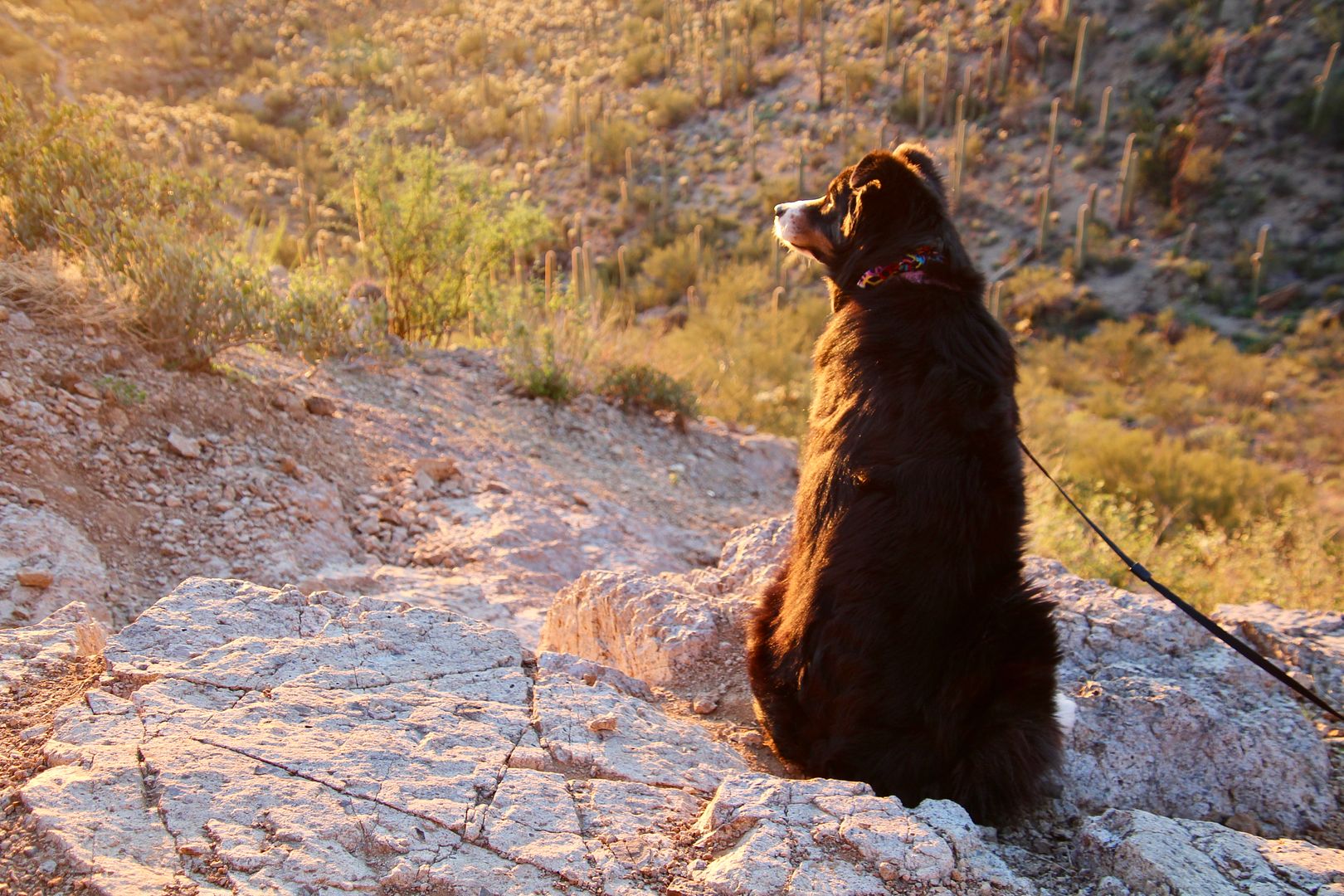
And the sun begins to set to the west.  And I believe our girl, Sadie, was as mesmerized by the beauty of the moment as we were. 


The orange hues intensify until the sun goes down.


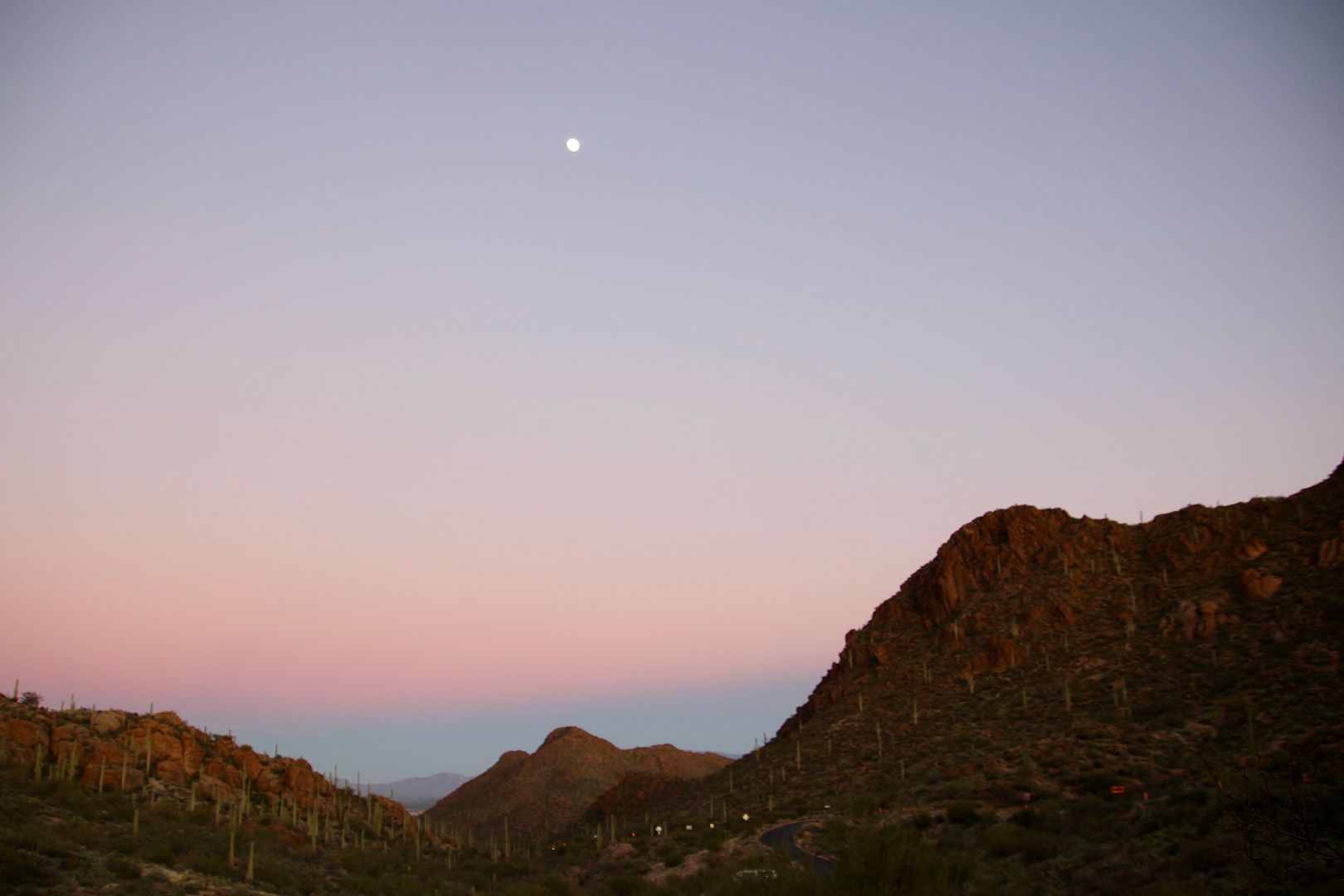
The view to the east from our perch in the mountain pass was yet another color palette...loved the pink and blue!


Once the sun goes down, it can get pretty chilly here in the winter months. Bring a jacket!


Tuesday, February 23, 2021

Visiting Reid Park Zoo, 1/05/2020

I have a love/hate relationship with all zoos. I really do love seeing and learning about these unusual, and often endangered, animals, but I hate that they are imprisoned. The conservation efforts by this and most other zoos is really important, I believe, to our planet. 


Reid Park Zoo was founded in 1967 by Gene Reid, the parks and recreation director of Tucson at the time. Friends, Liz and Mike, accompanied us on this visit. Our first stop was at the giraffes habitat. Liz had fun feeding Denver. Check out that long black tongue she has! You can purchase romaine lettuce to feed them. 


The median lifespan for giraffes is 19 years, and Denver is an amazing 32 years old! She is the 2nd oldest giraffe in the giraffe Species Survival Plan (an international zoo and conservation organization). 


The Chilean flamingoes here feed on shrimp, mollusks, and brine flies. They stand on one leg to conserve warmth in their bodies.  But studies also show that it appears to just be a comfortable resting position for them. Their bright colors are always beautiful.


These Aldabra tortoises are the second largest land tortoise and are indigenous to the Aldabra islands off the coast of Africa. 


The two grizzly bears at the zoo had begun to rely on humans for food for survival. They were captured and relocated to the zoo to save them from being euthanized. When they hibernate, their heart rate goes from 70 bpm to 10 bpm! The trainers leave treats in the habitat to keep the bears curious and active. 


African elephants are the largest land animals on earth. They eat grasses, fruits, leaves and flowers…on average 350 pounds per day


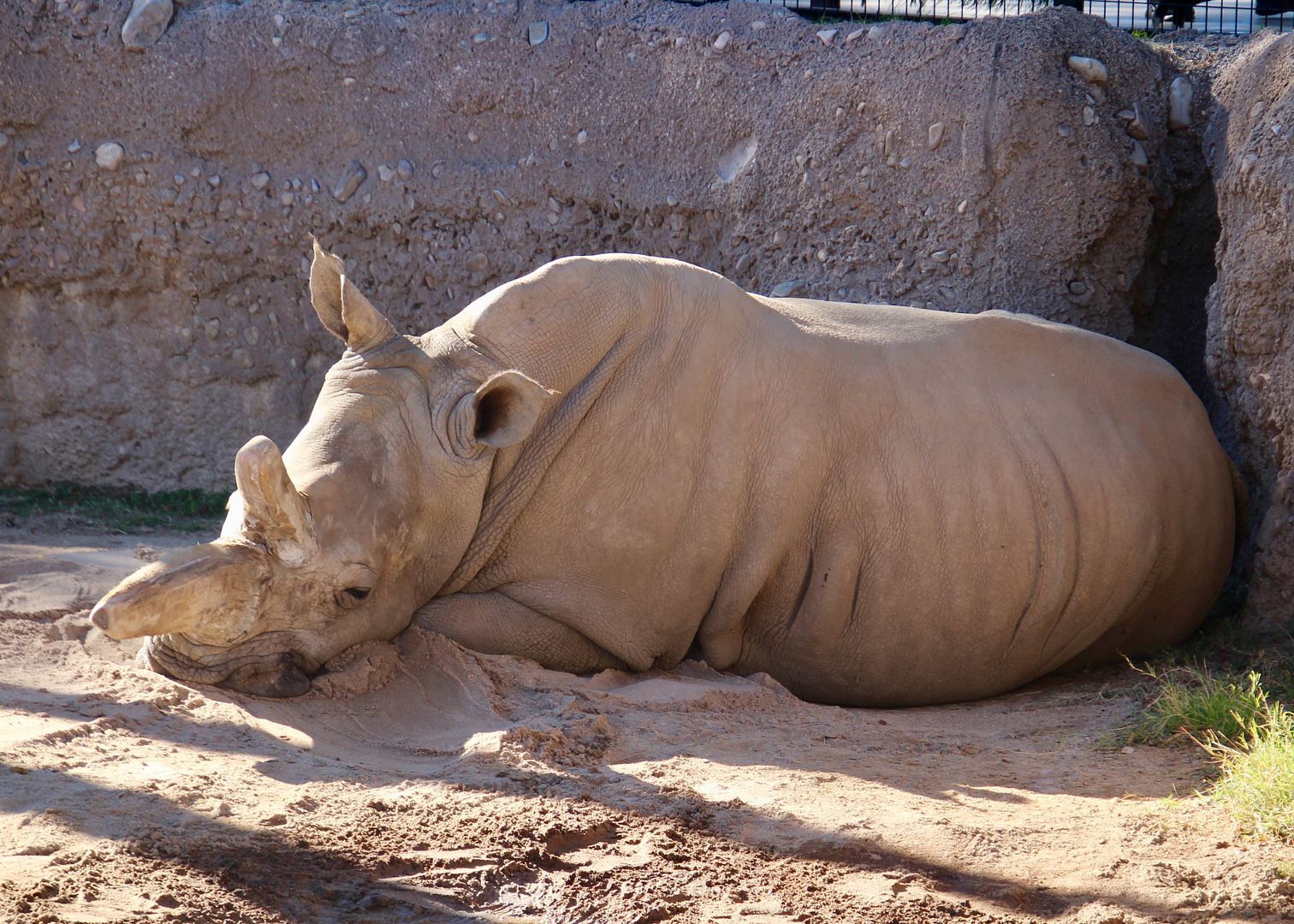
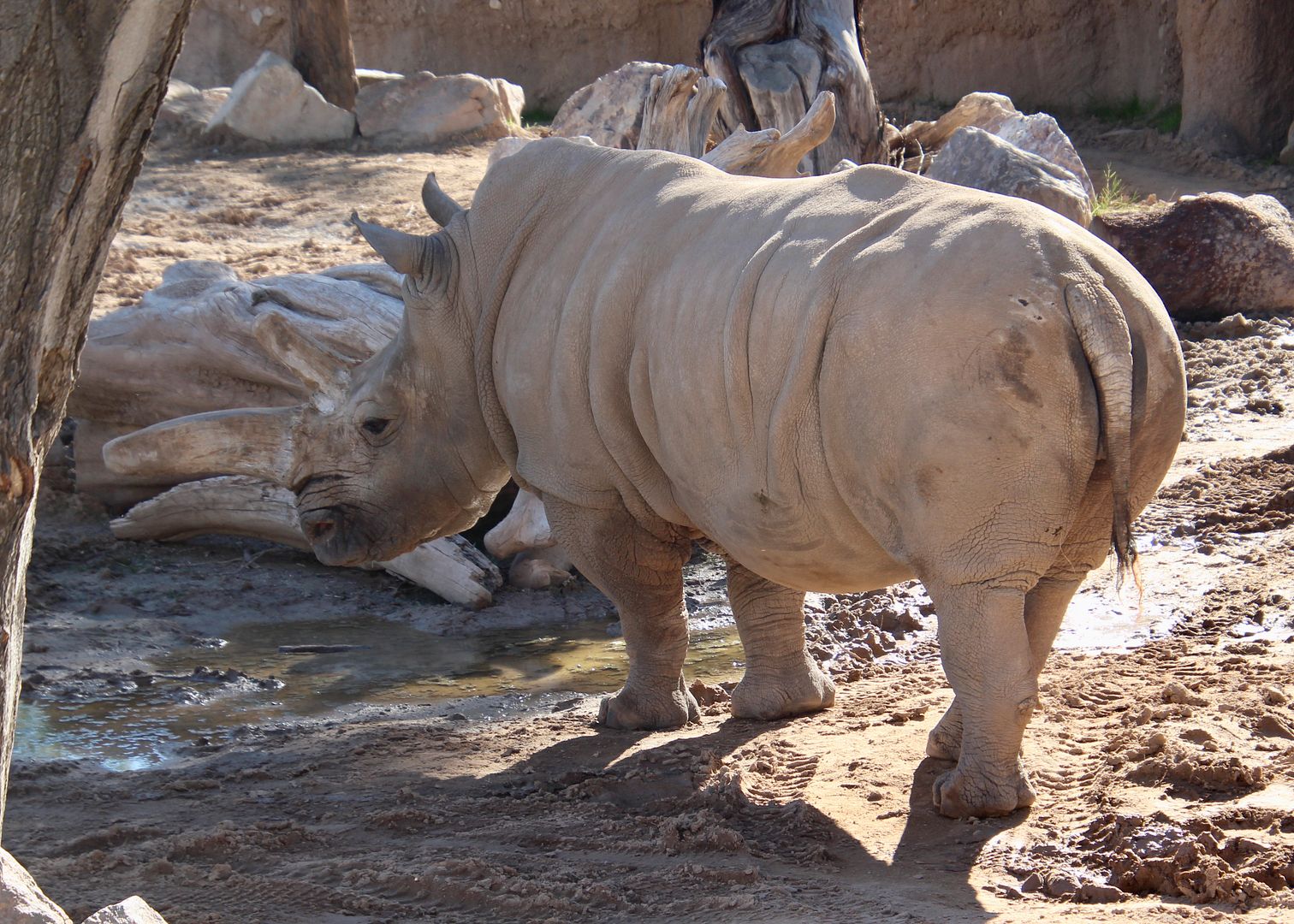
The southern white rhino has a large hump on their neck and shoulders. It is a huge muscle that supports the massive weight of the head and horn.


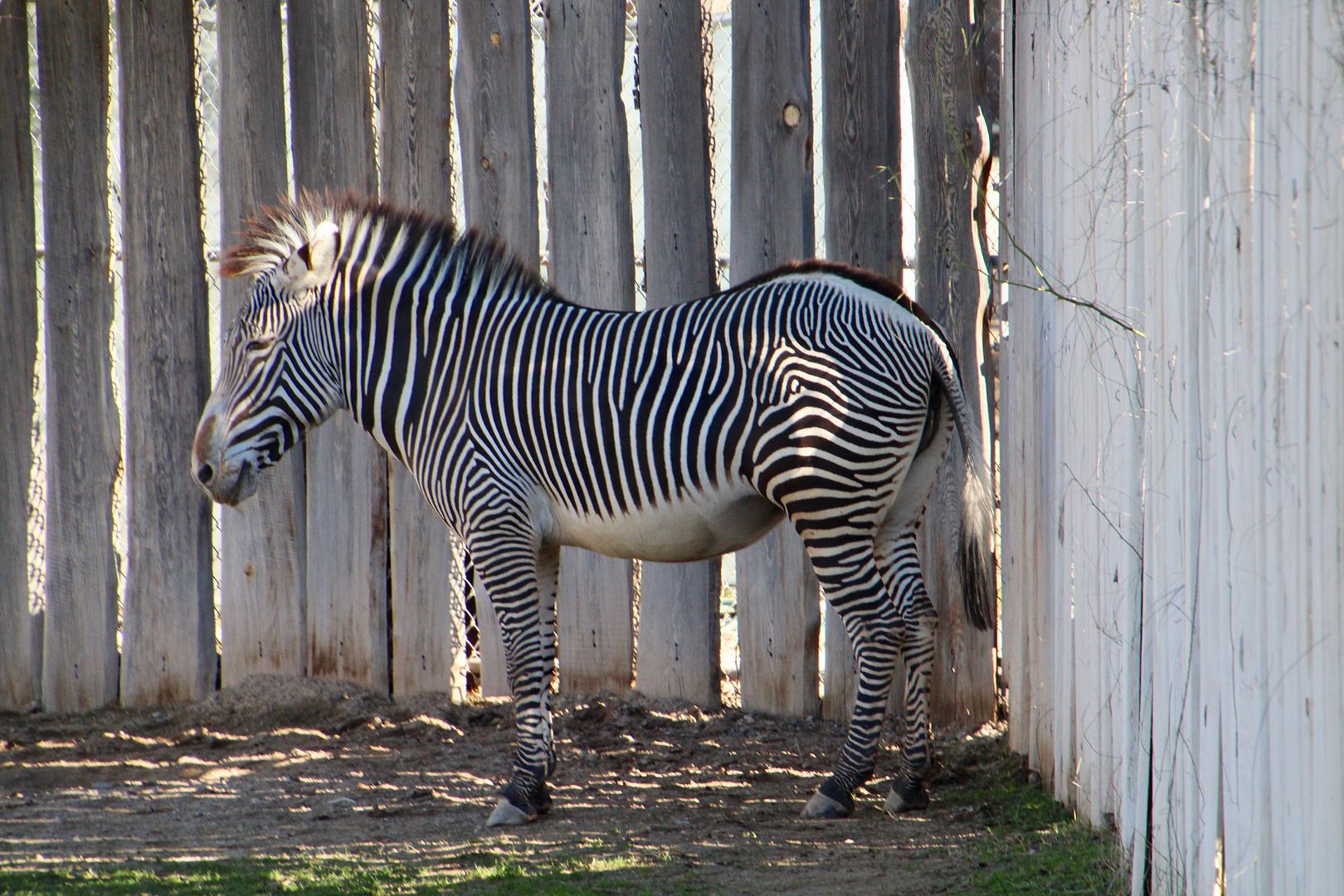
Grevy’s zebra is one of three zebra species and the type they have here. It has the thinnest black stripes, but is the largest of the three. 


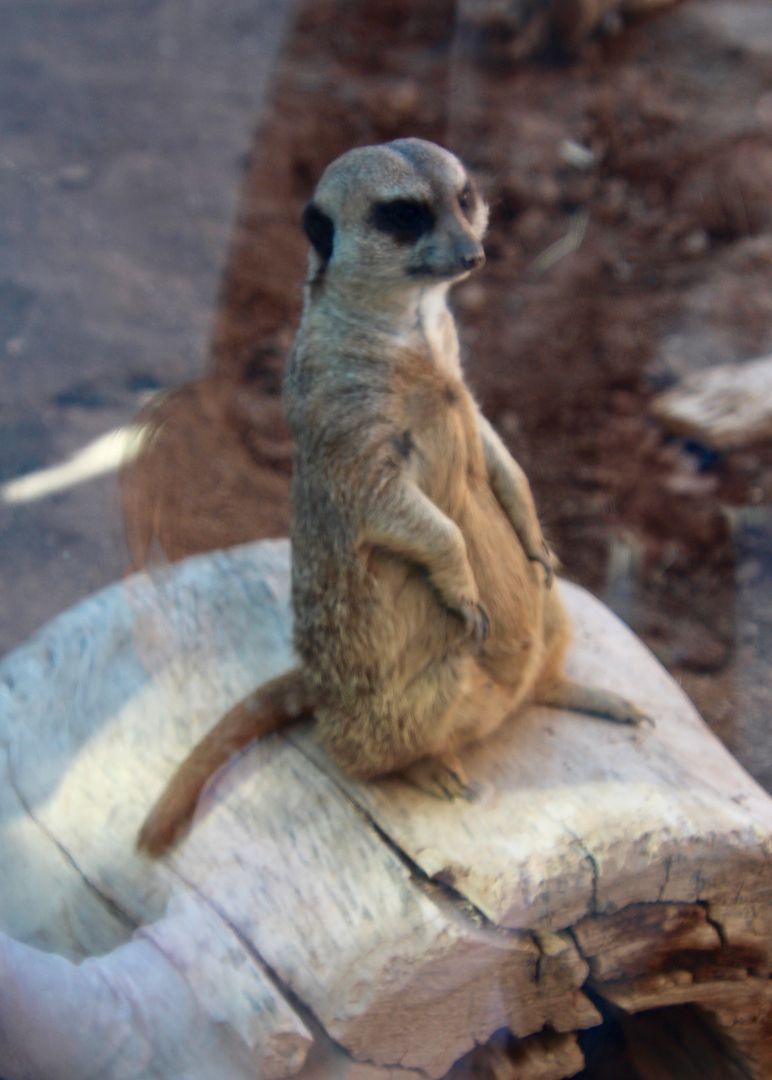
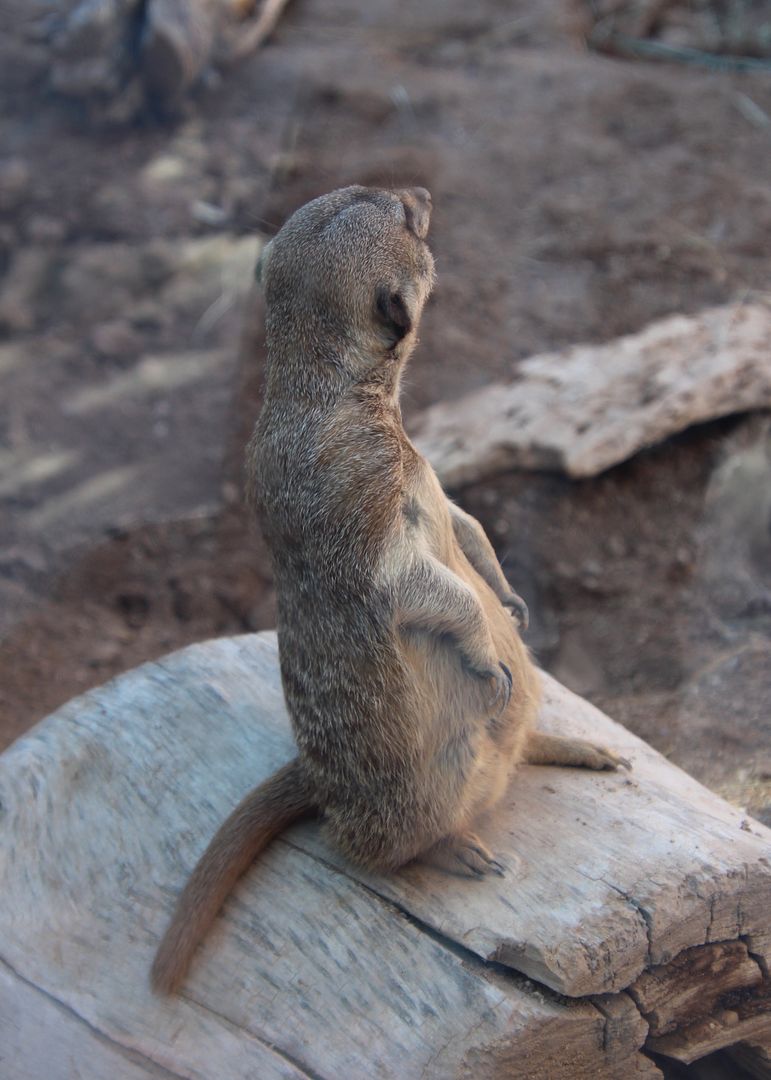
Meerkats are members of the mongoose family. They live in communal habitats with about 15 tunnel entrances in groups of 40 or so. At least one meerkat is always on guard to warn others of danger.


The king of the jungle…the zoo has three African lions, this handsome male and two females. 


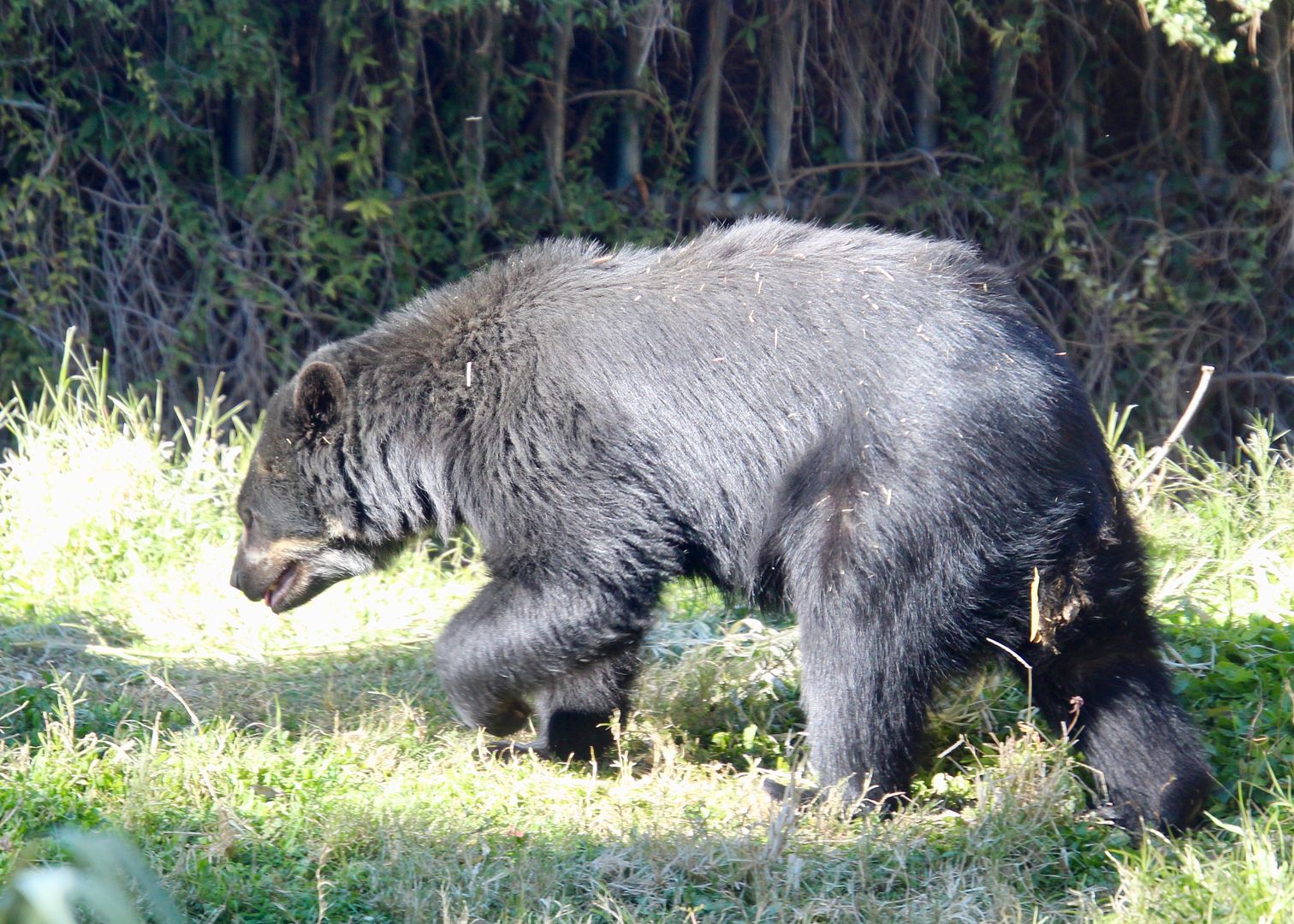
This Andean bear is the only bear species found in South America. They are indigenous to the slopes of the Andes Mountain and have been seen at elevations as high as 14,000’. 


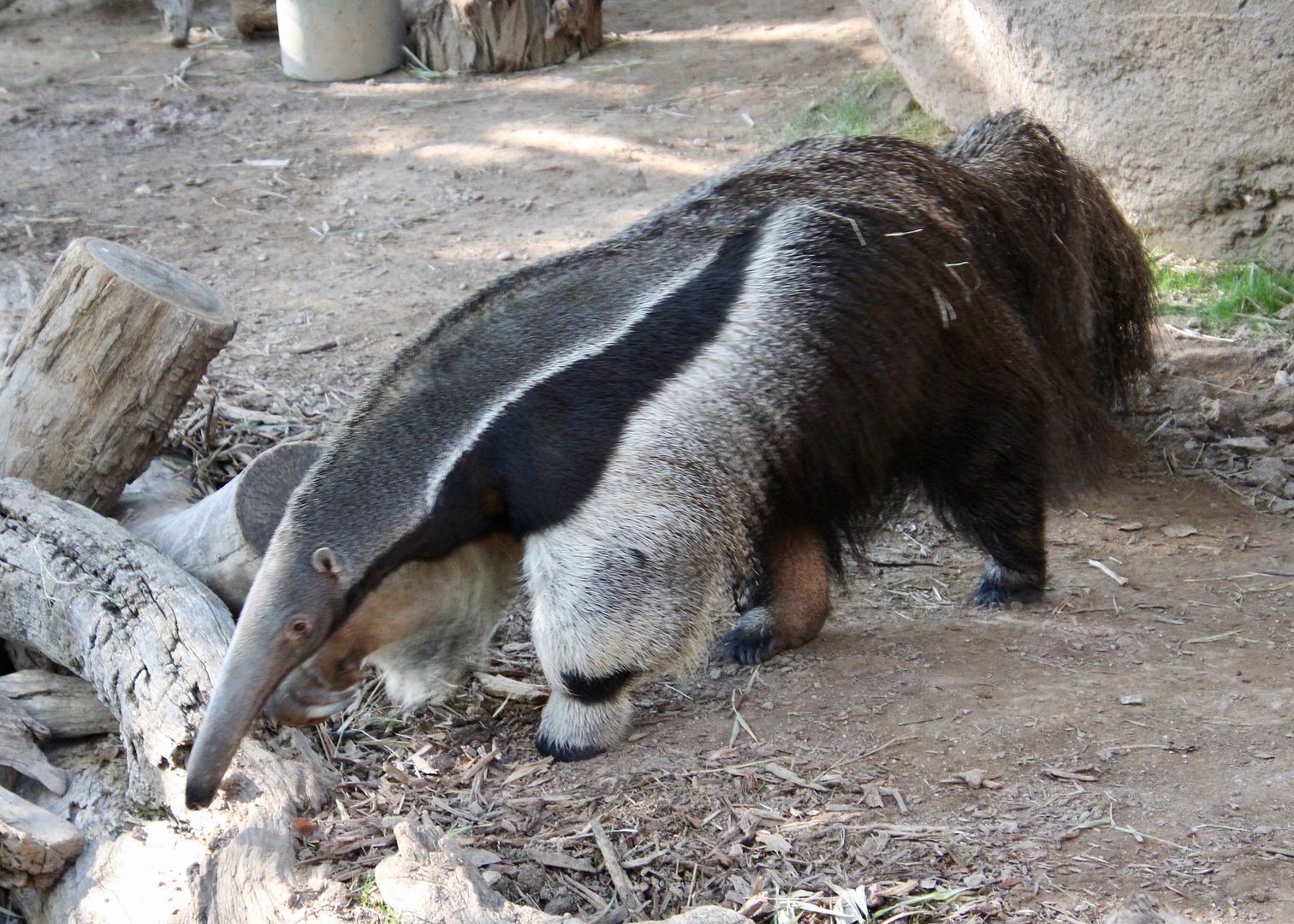
The giant anteaters have such an interesting appearance! With tongues up to 24” long, they use their long claws to expose ants and termites. The sticky saliva on their tongues enable them to slurp up the insects. They walk on their knuckles to keep their claws sharp. With terrible eyesight, they use their sense of smell to find their way. The Reid Park Zoo has had giant anteaters for more than 50 years due to their successful breeding program. 


The capybara is the largest member of the rodent family (and can weigh 77 to 150 pounds). They can hold their breath for up to 5 minutes and will hide in the water to avoid predators. 


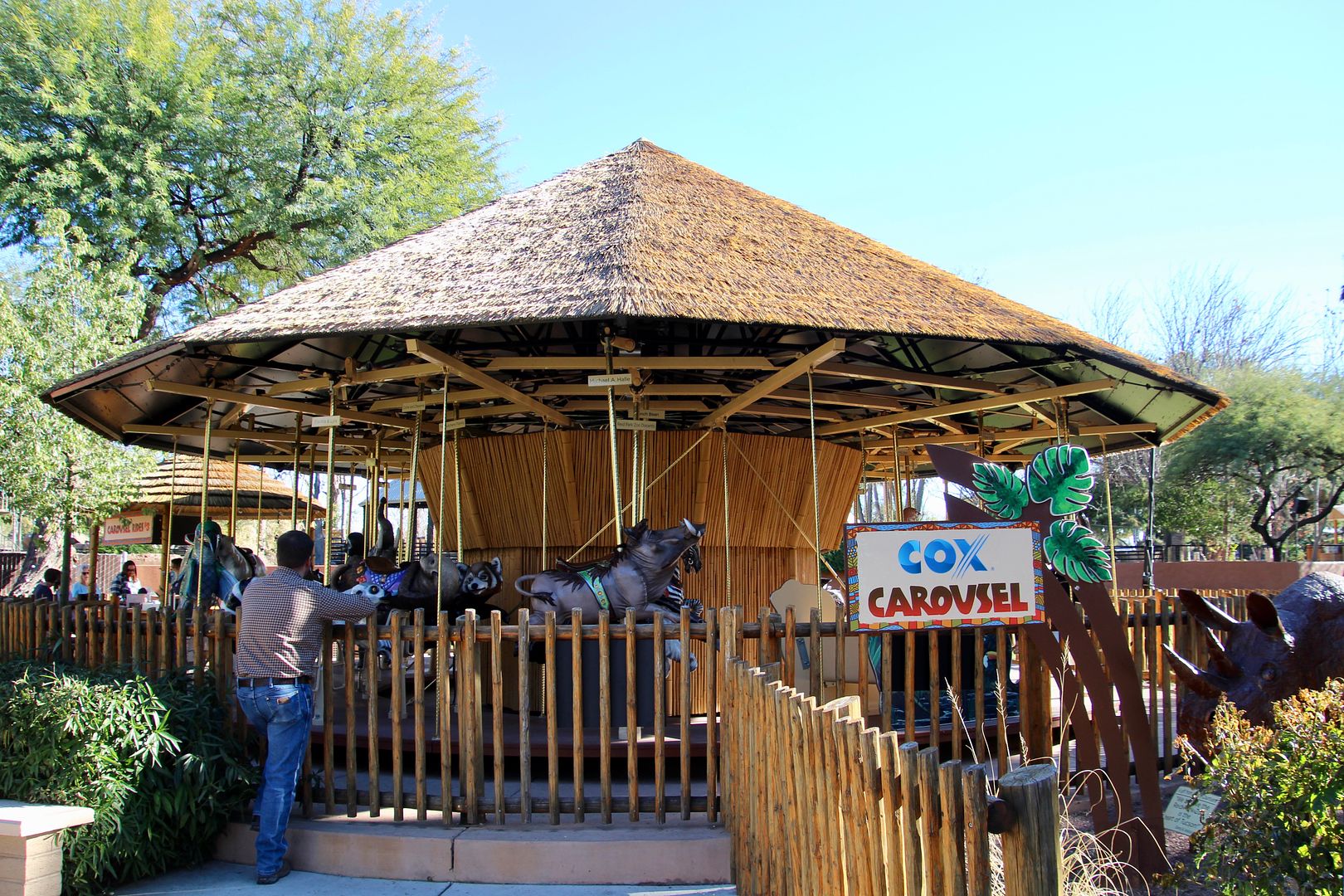
And a carousel for the kids!


There are many more animals to see here. We had visited several years ago when we were last in Tucson, but enjoyed it just as much this time. We have been to many zoos during our travels, and even though this one is not that large, it has nice habitats, great veterinary care, and animal enrichment programs

Admission was $8.50/seniors ($10.50/adults). For additional information about Reid Park Zoo, including hours of operation, zoo map, etc., go to www.reidparkzoo.org


Saturday, February 20, 2021

New Year's Day...a Desert Hike, 1/01/2020

New Year’s Day should be spent in the beautiful outdoors! That’s what our RV lifestyle has taught us. This is our second winter in Tucson, and we have come to love the vibrant life of the desert

So, we went for an afternoon hike into the desert accessible from our site. There are numerous trails here, so we set out on one we had not previously explored.

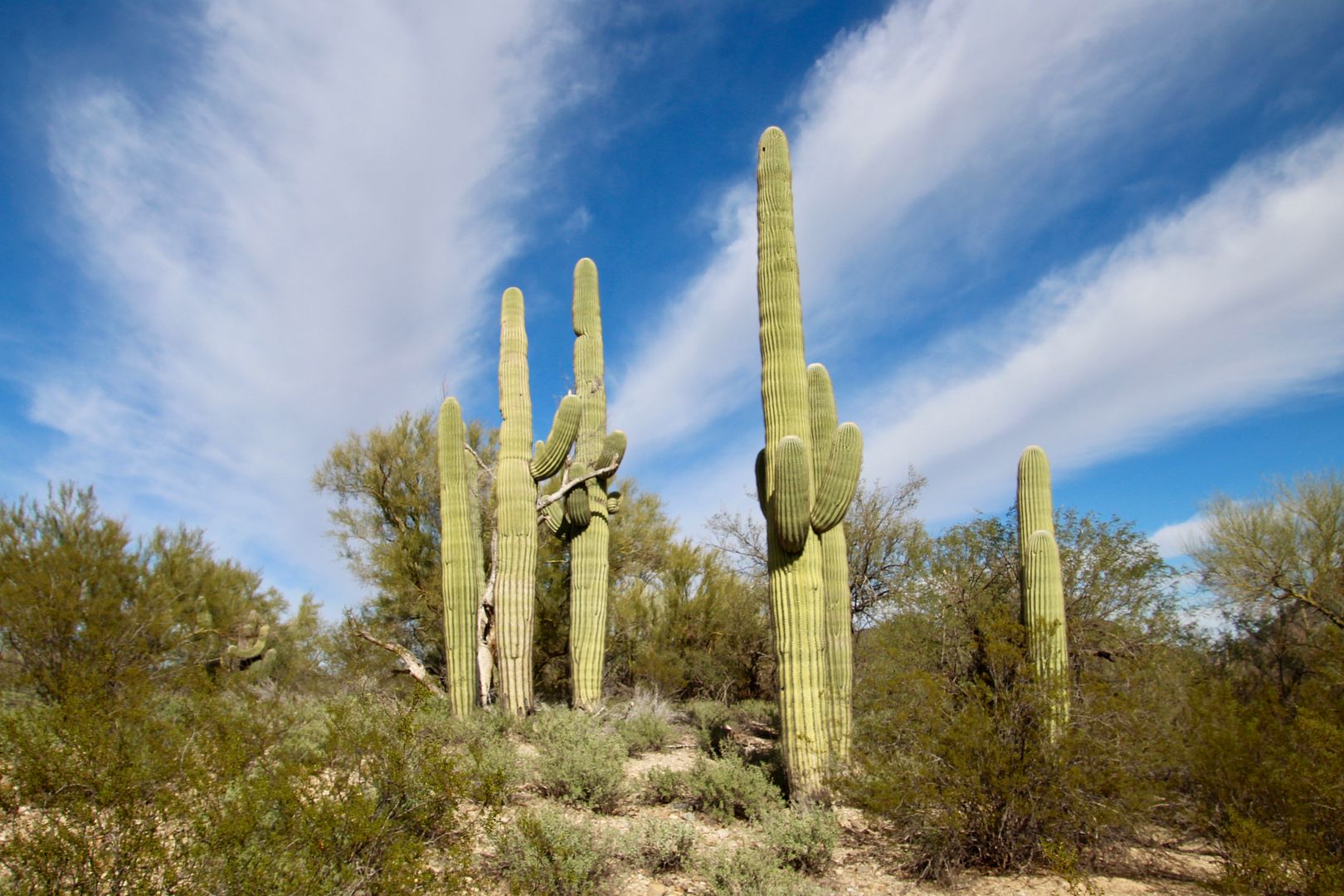
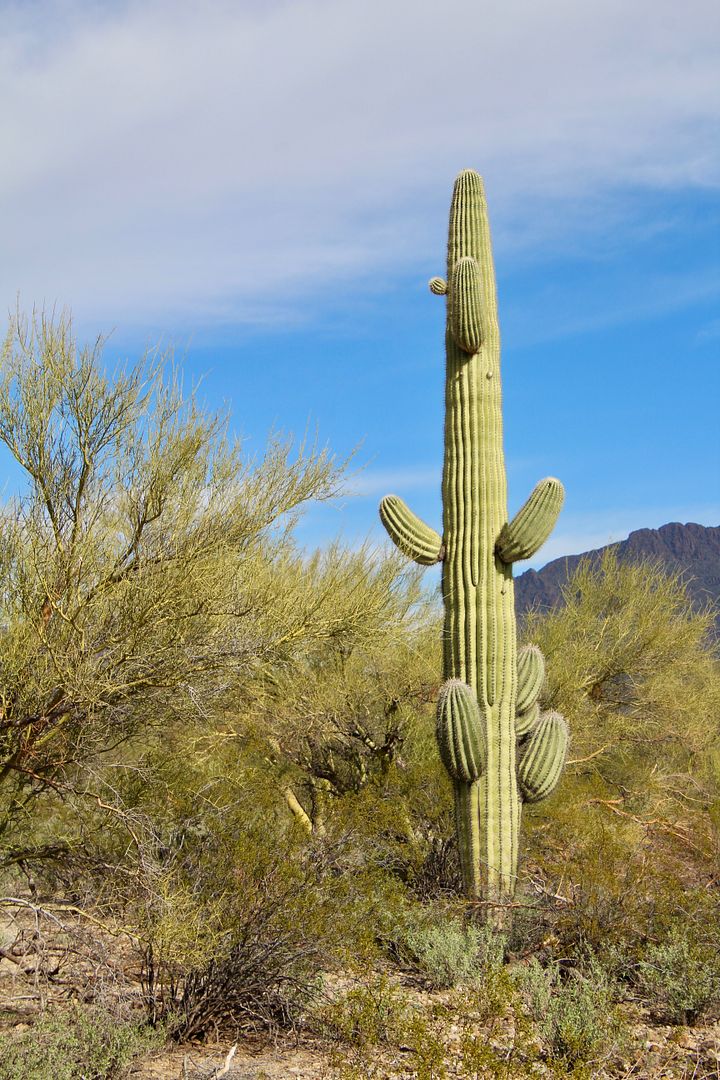
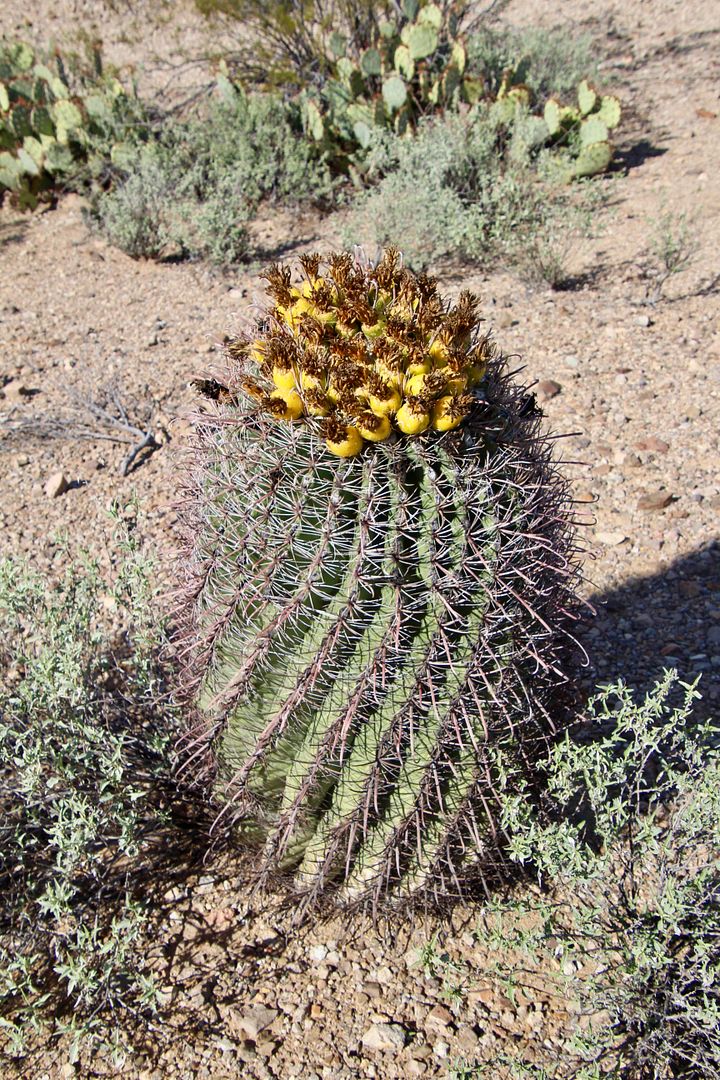
The iconic saguaro cacti dominate the landscape. Each has its own unique appearance and personality. Native American cultures believe they are ancestors, watching over them. I really like that idea! Also shown is a barrel cactus that was full of yellow fruit (eaten by wildlife and a source of nectar for bees). 


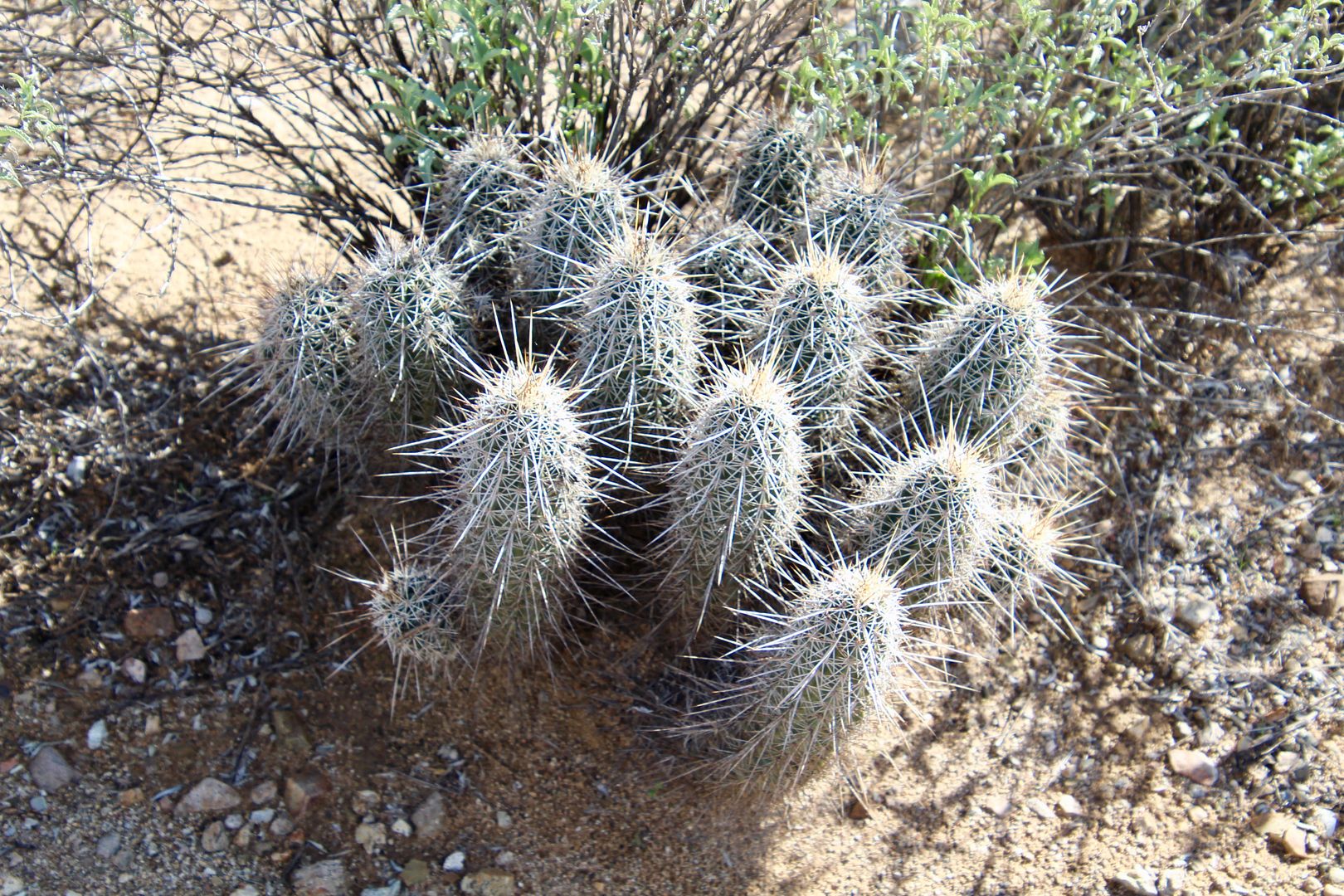
The hedgehog cactus has gorgeous pink blooms in the spring. Right now it looks pretty darn prickly.


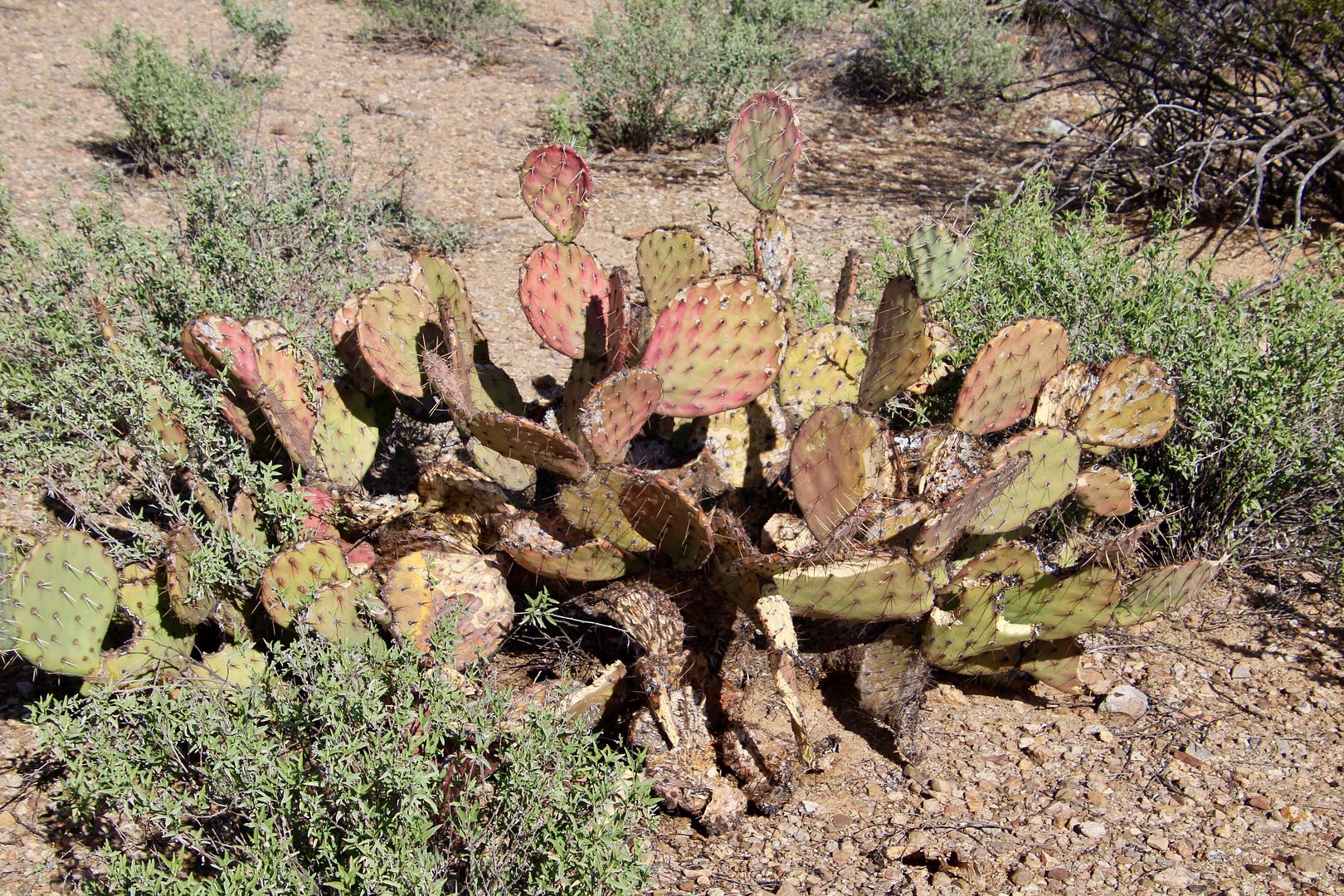
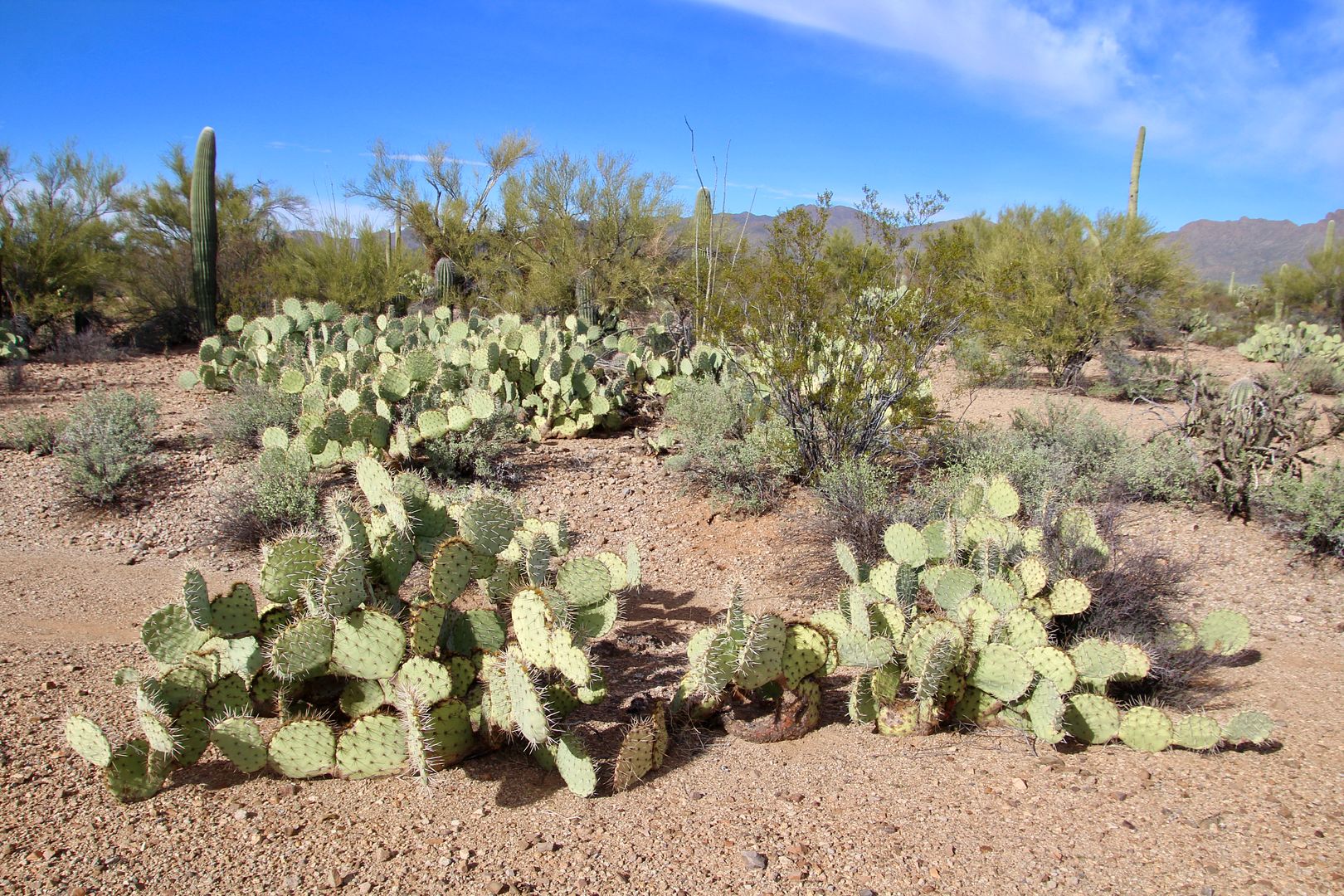
Oh, and speaking of prickly, prickly pears are everywhere here!


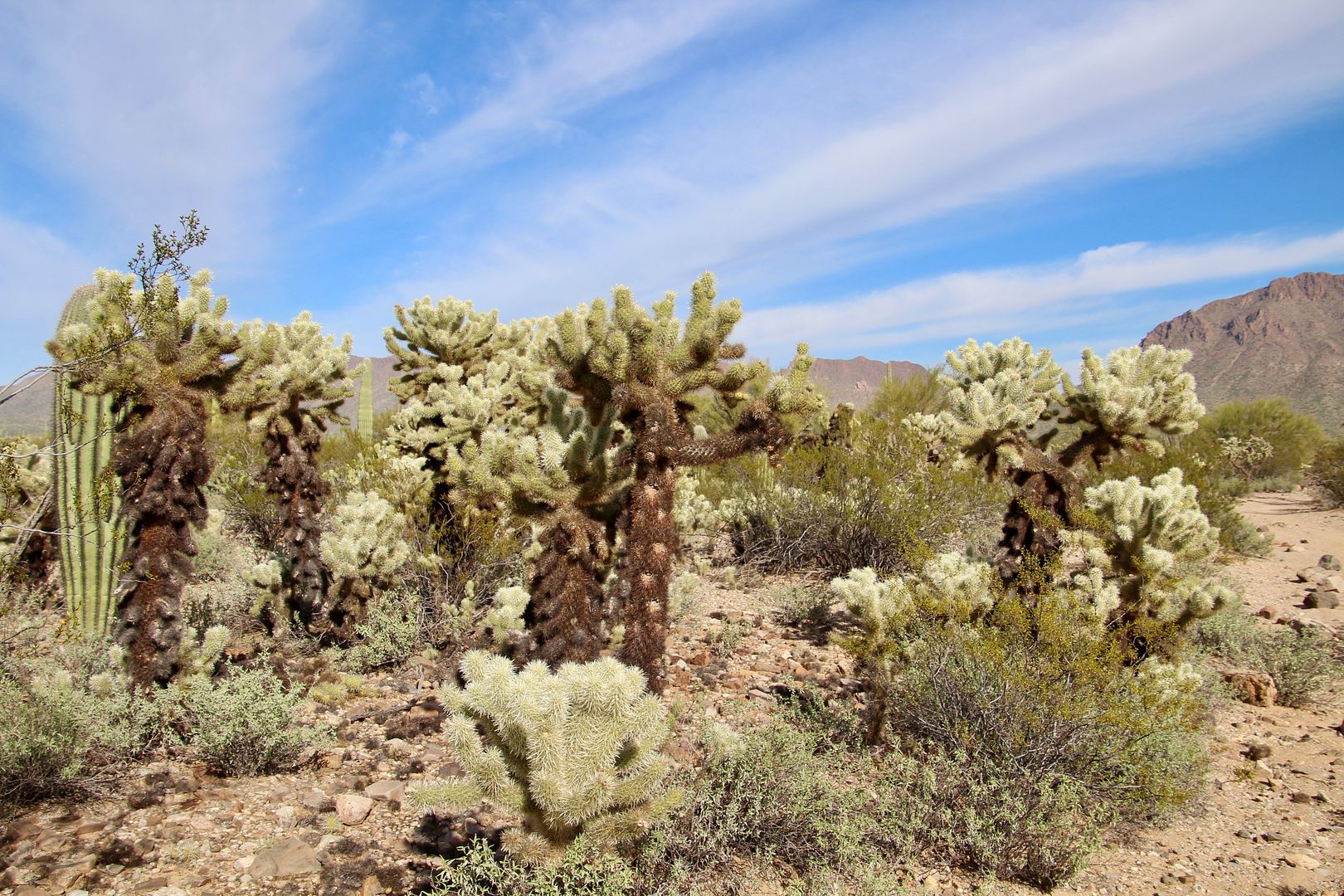
Even our doggie, Sadie, knows to avoid these jumping cholla! They do not actually jump, but somehow they attach themselves to your shoes, clothing, and skin. Ouch!


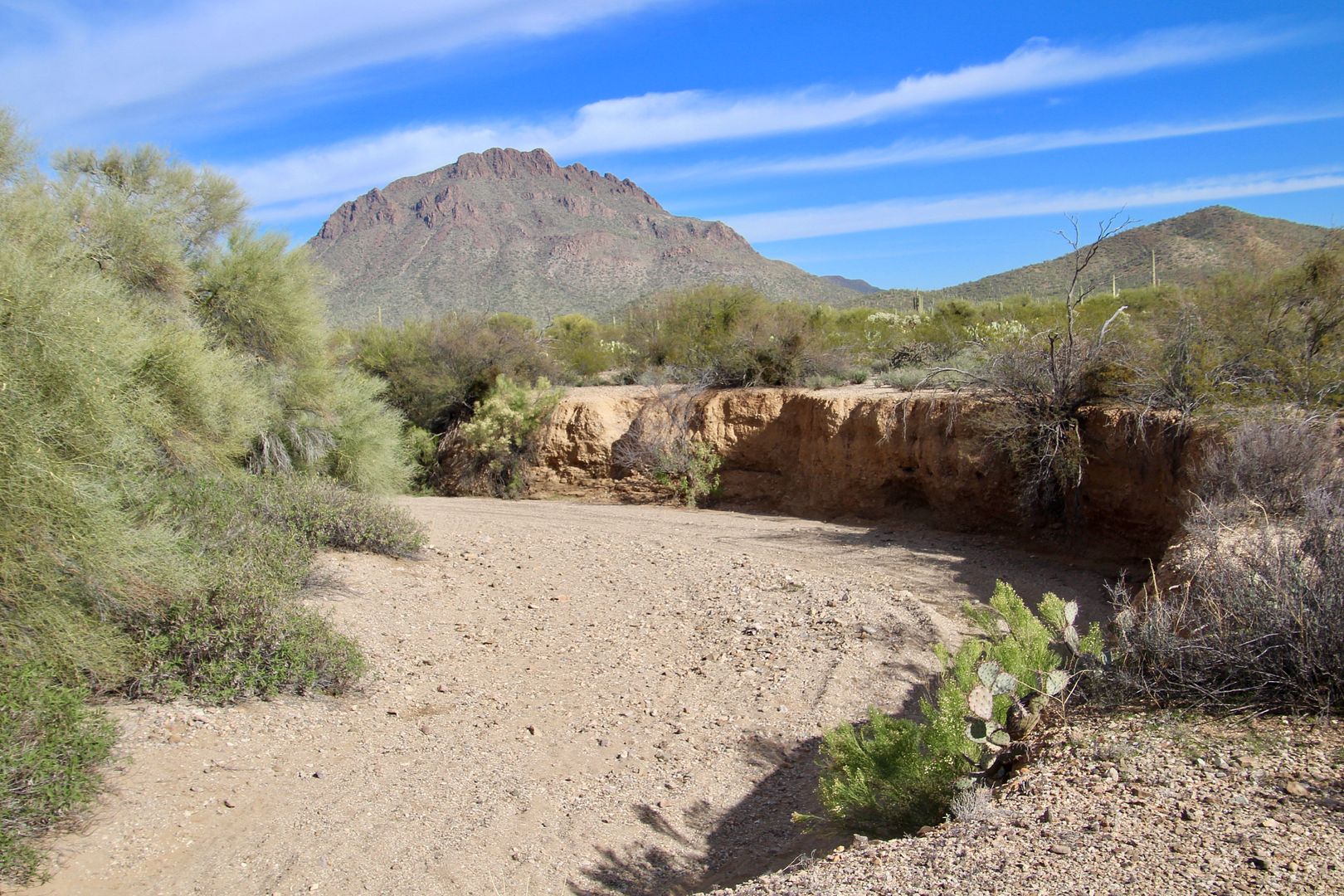
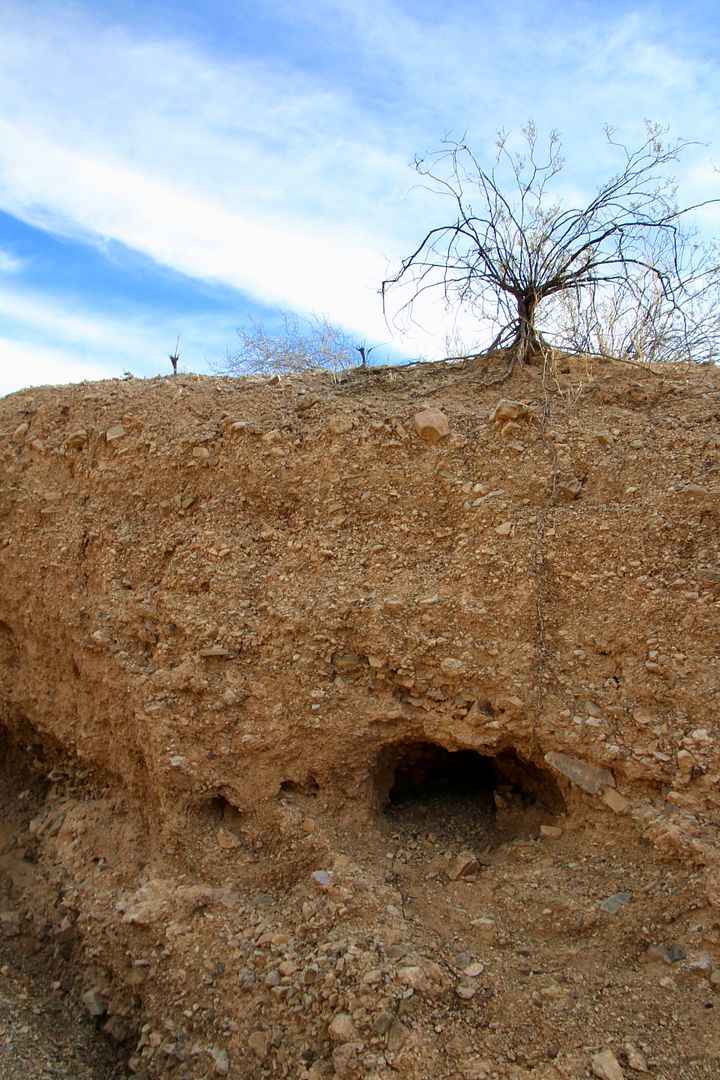
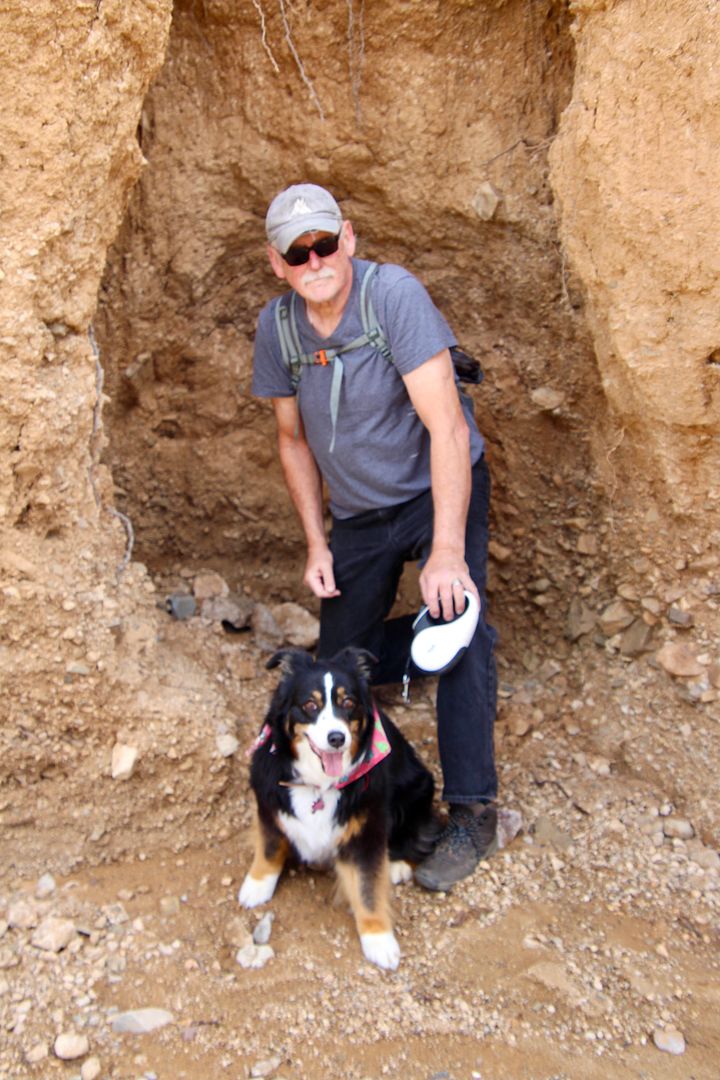
We followed this wash and came upon a coyote den (but did not see any coyote). And, yes, I made John and Sadie pose for the first photo of the 2020. 


So different from our home states (PA and NC), we have both come to love this beautiful landscape. 


2019 Year in Review, 12/31/2019

In previous years, I have provided a more detailed summary of our travels. This year I decided to use our annual Christmas card. This is our 6th Christmas on the road, and we still love our RV lifestyle. But, we do miss seeing family and friends during the holidays.

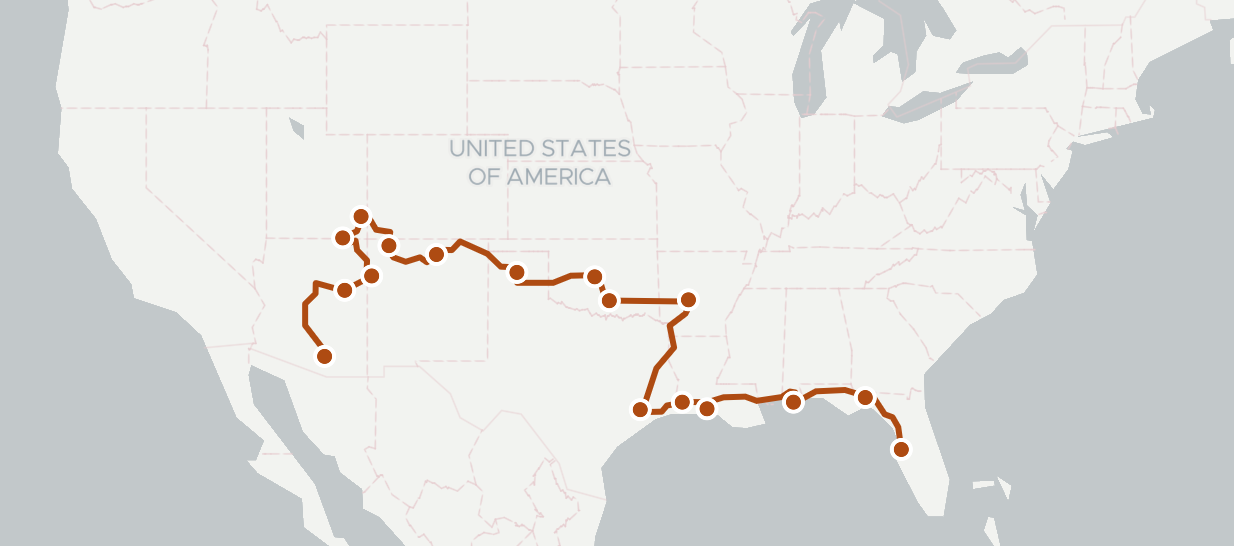
In 2019 we stayed at 17 RV parks and visited 11 states. We drove our Class A Monaco Monarch (RV) approximately 3,500 miles and our Mini Countryman about 20,000 miles


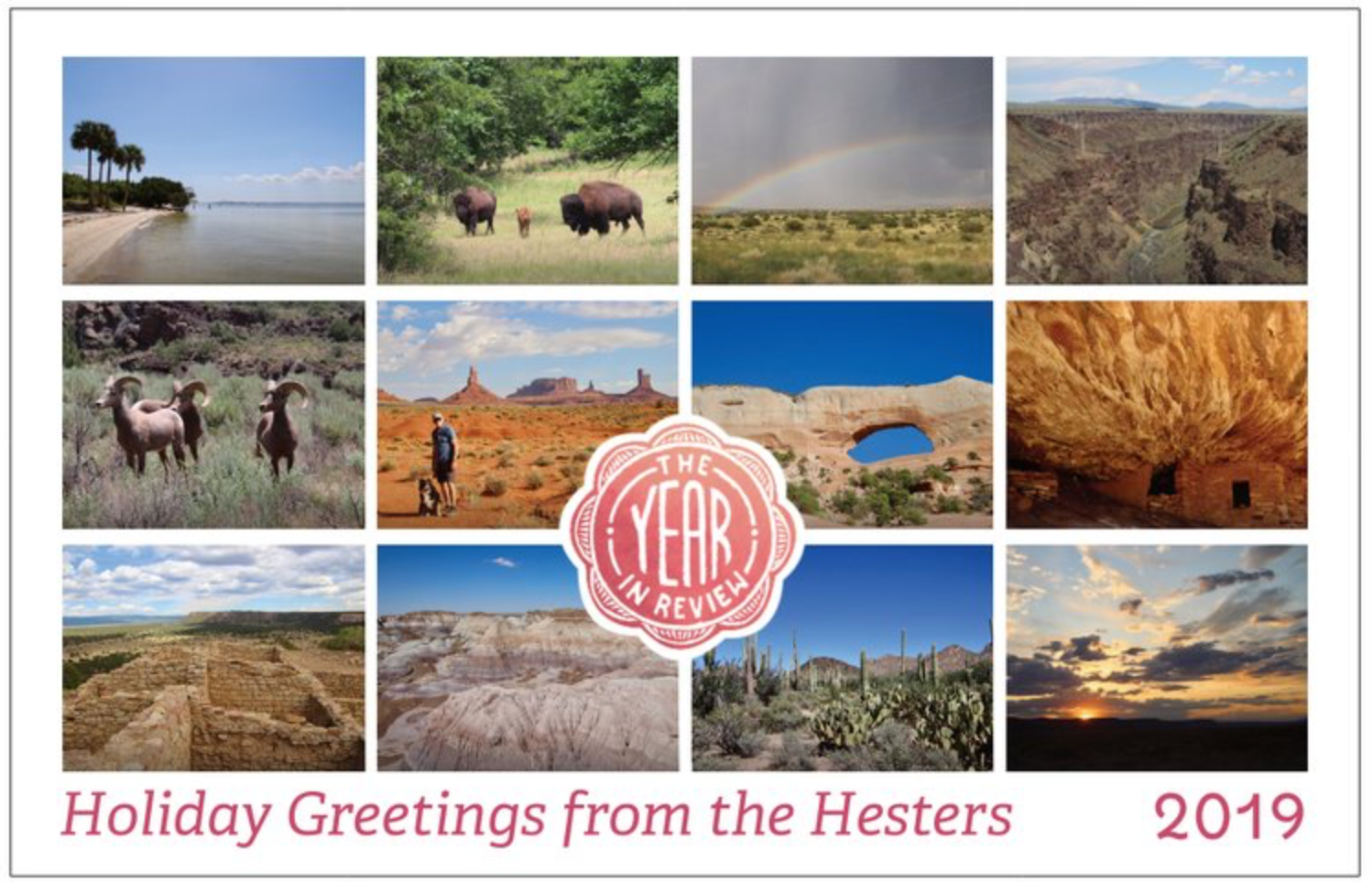
We keep in touch with friends and family all over the country with our annual holiday card. I always select photos from some of our favorite destinations


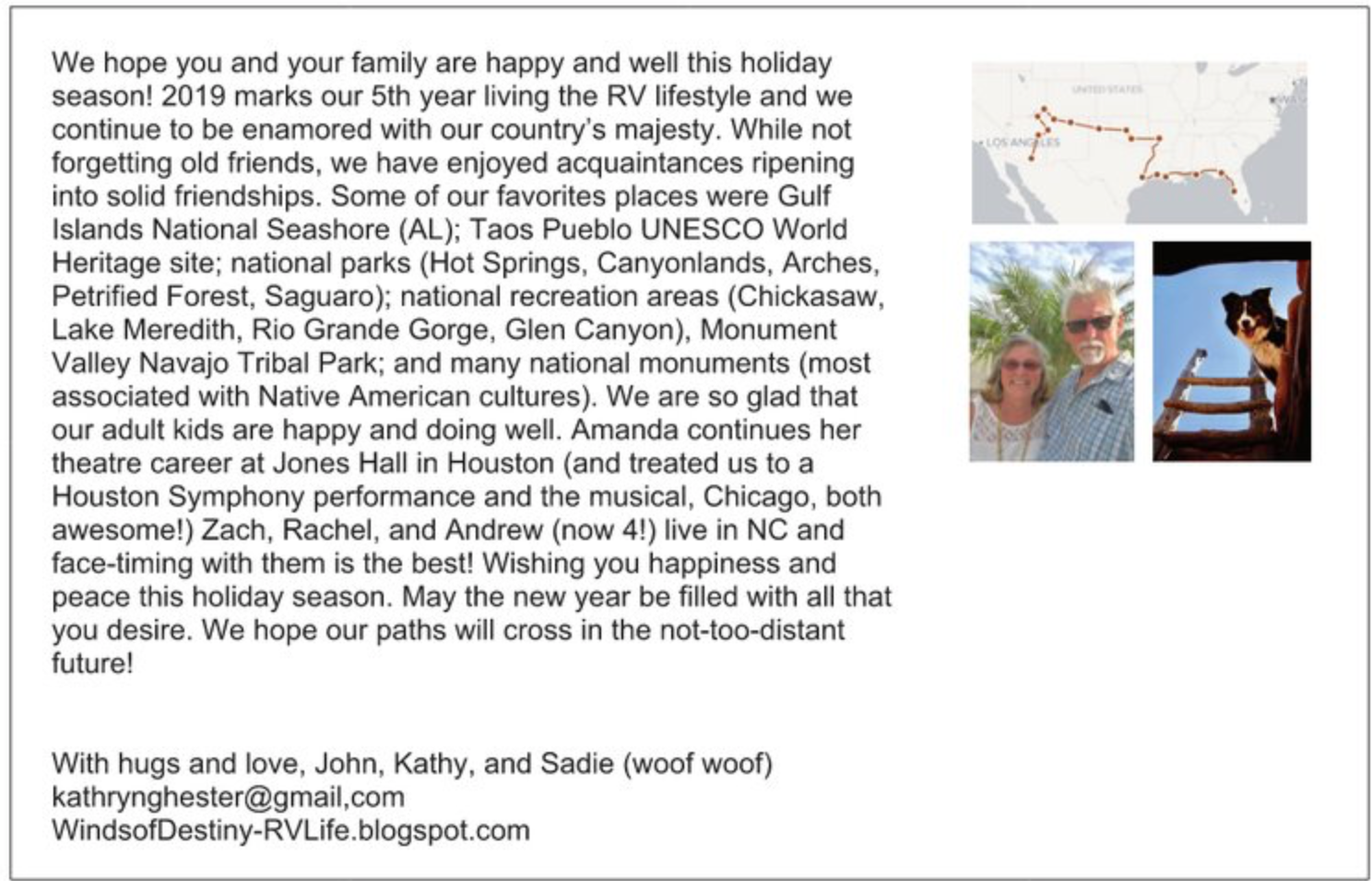
And write a summary on the back


Happy New Year!


Christmas in Tucson, 12/20/2019

Our friends, Liz and Mike, made reservations for us to take a tour of Christmas lights in Tucson. These families go all out to create a festive experience!  It was chilly (not like at home in PA, though) and we rode in open-air trucks with benches. Here are few of my favorites. 


Our RV is decorated for Christmas, too! We FaceTime with the kids on Christmas morning to open gifts (always the best part of the day) and then prepare our Christmas feast (well, make that a dinner for two).  


Happy holidays to all of our family and friends, far and wide!

A Visit to the Superstition Mountain Lost Dutchman Museum, 12/06/2019

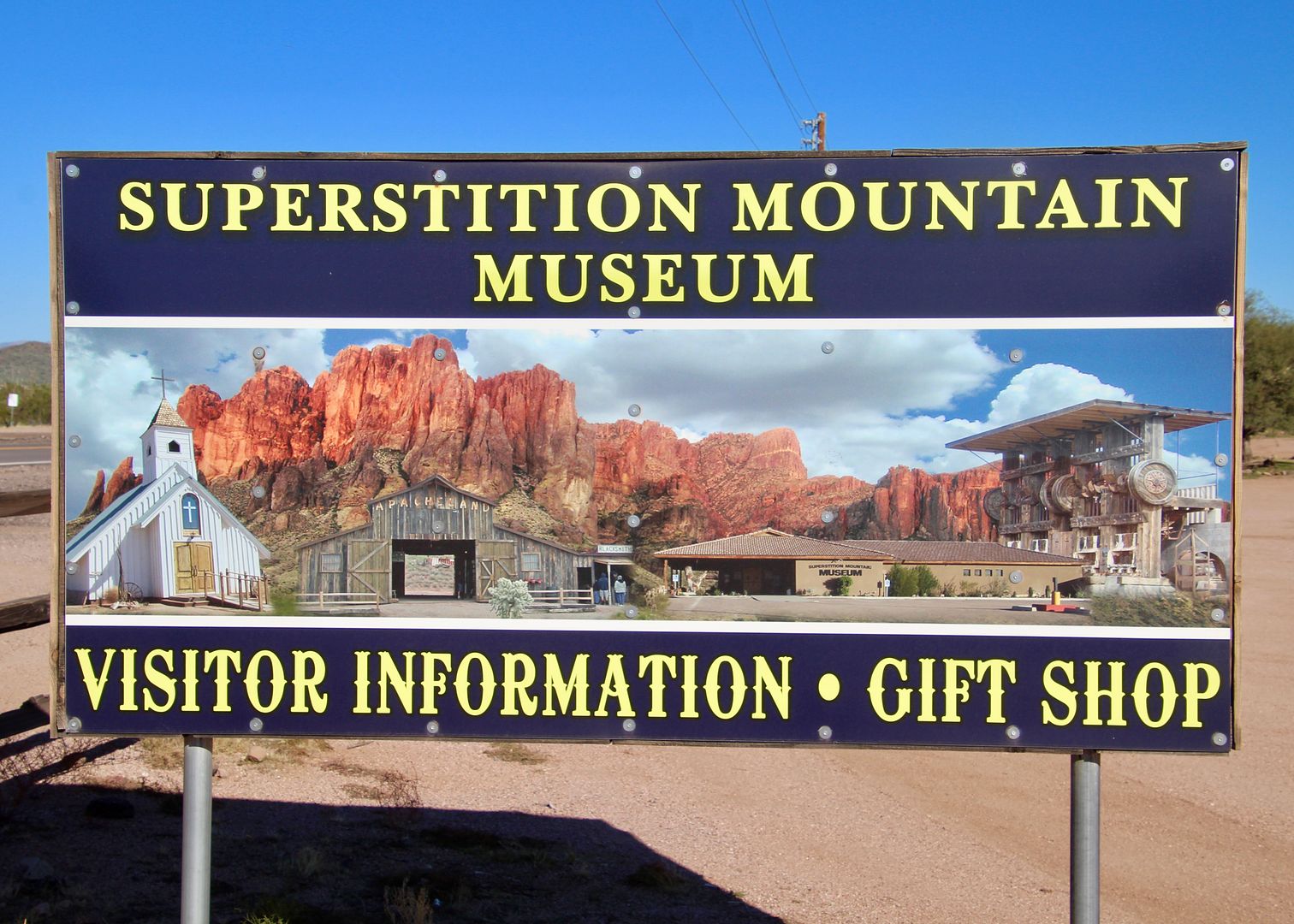
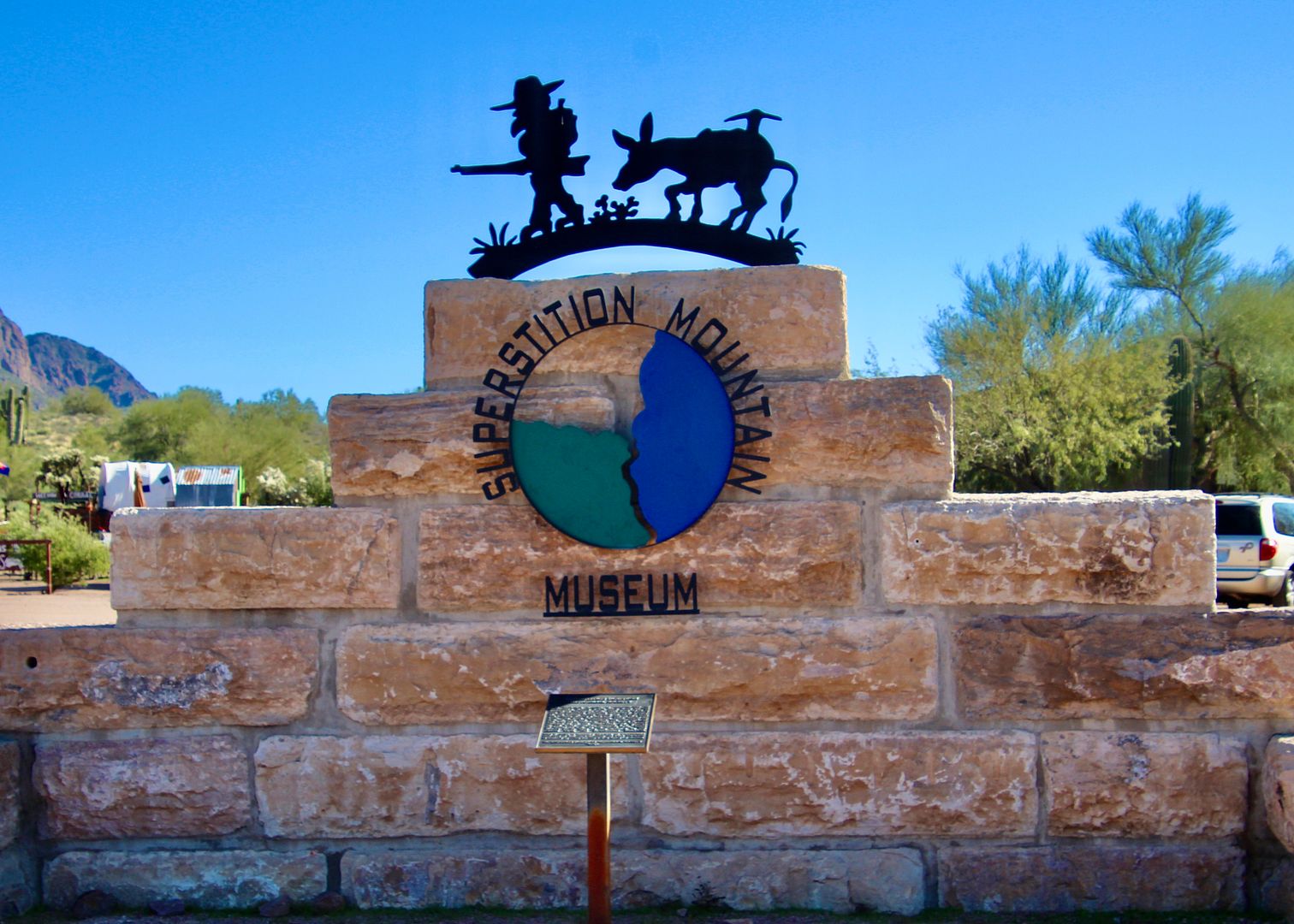
The Lost Dutchman’s Gold Mine is one of the many legends of the Old West. To learn more about it (because we love this type of stuff!), we drove (120 mi) from Tucson to the Superstition Mountain Museum located on the Apache Trail (east of Phoenix).


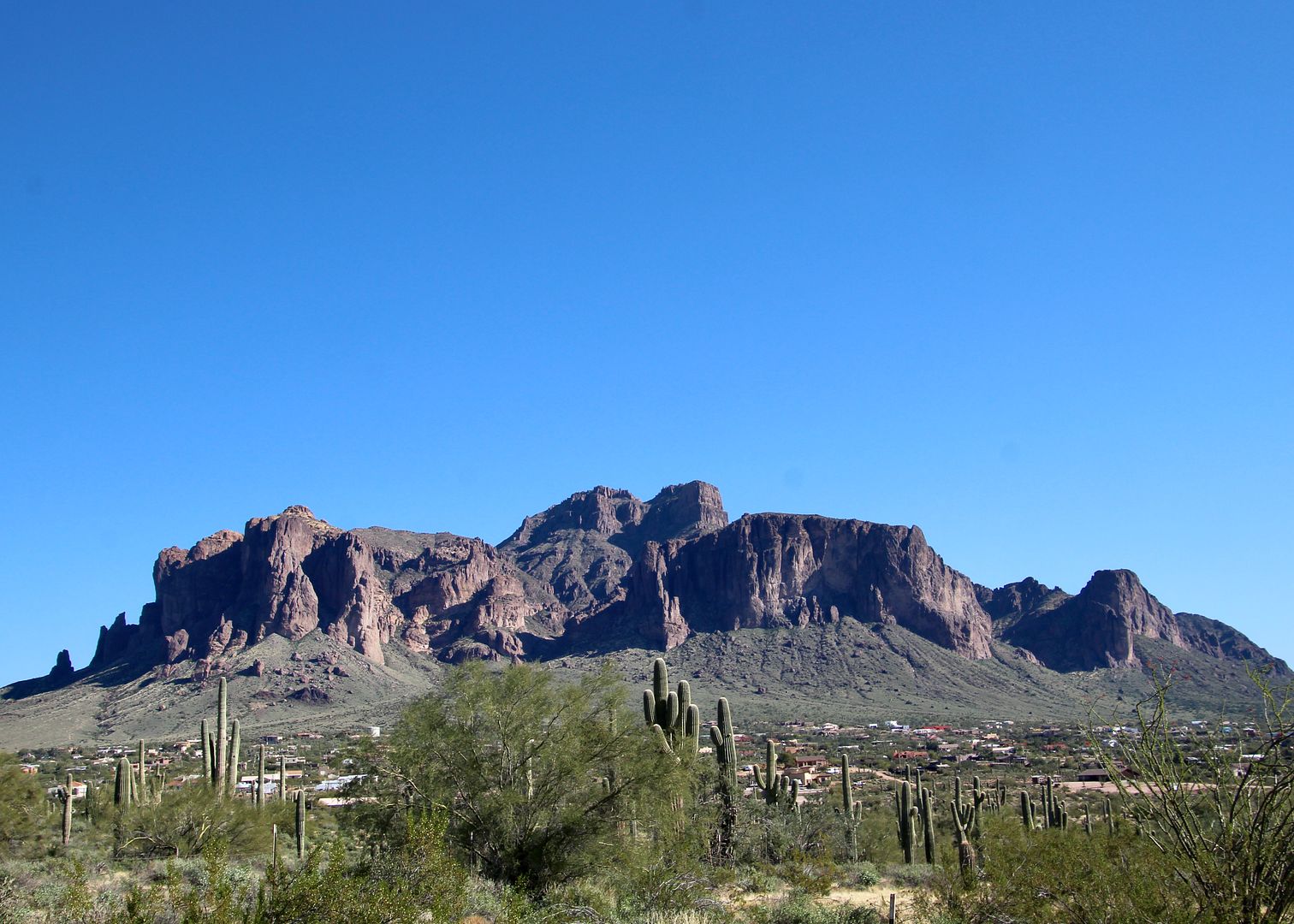
Formed 30 million years ago, the Superstition Mountain was designated as a Wilderness Area in Tonto National Forest in 1939. It was expanded in 1984 and is now approximately 160,200 acres. 


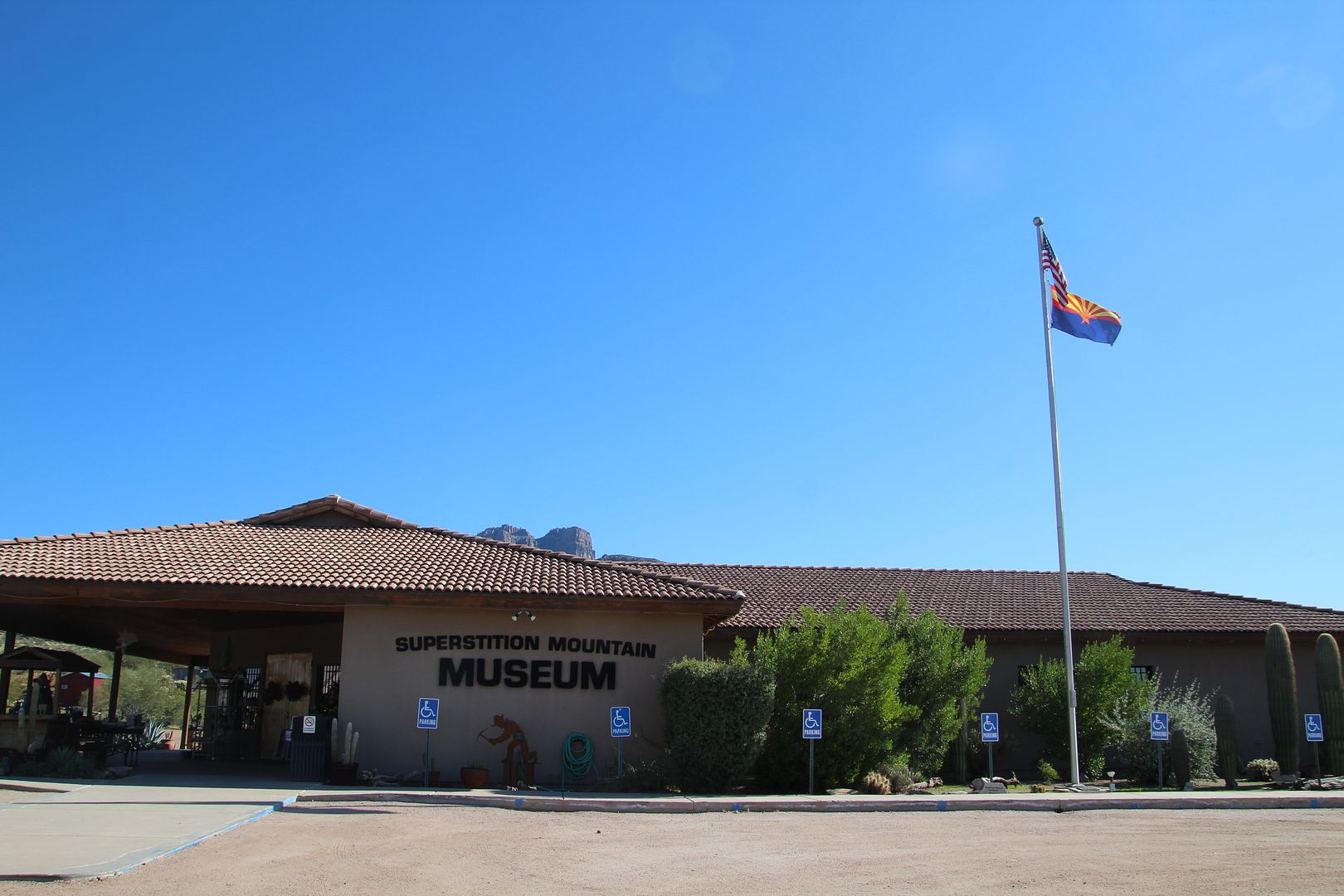
The museum covers 15 acres and has multiple buildings. We began our visit at the main museum. 


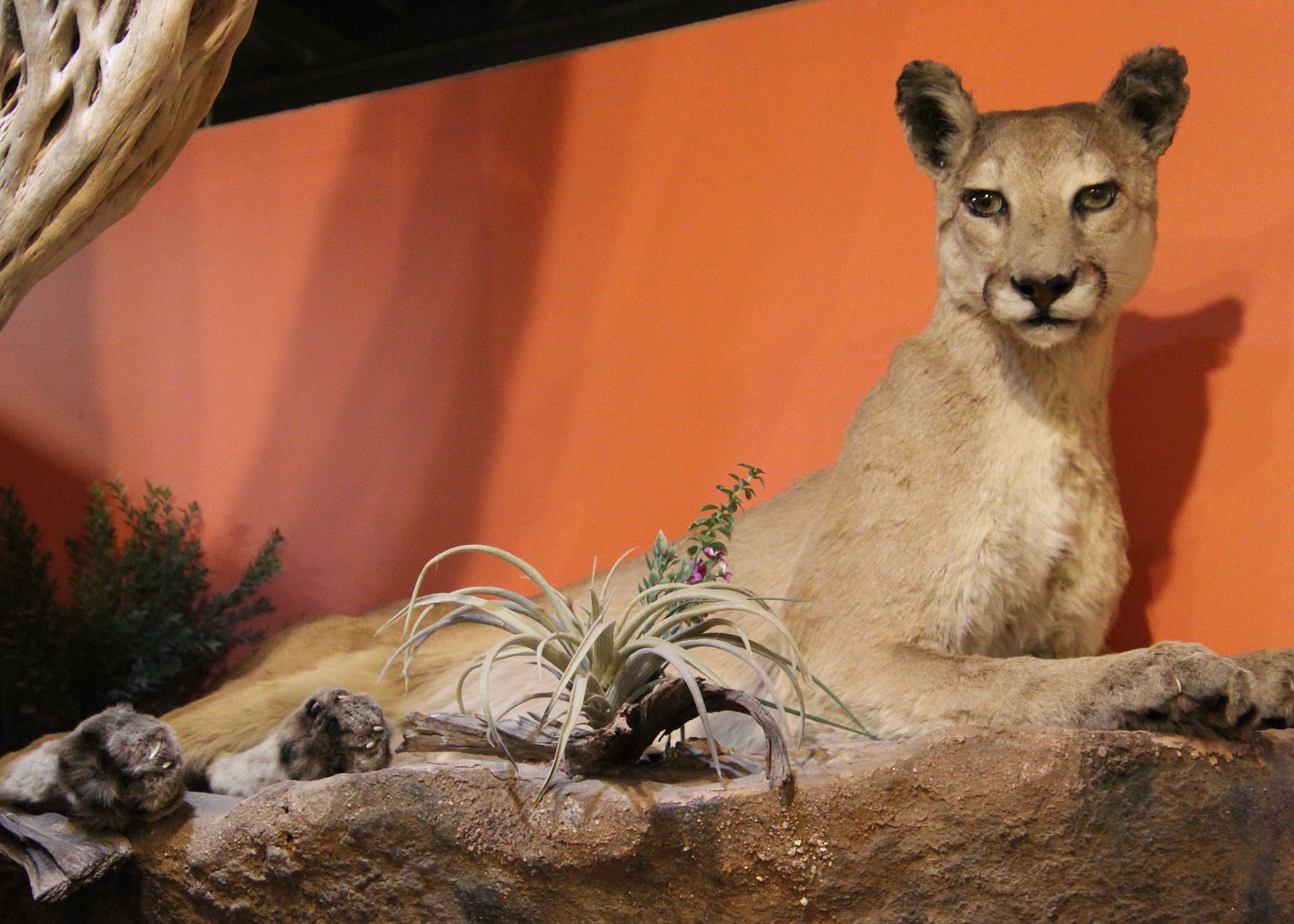
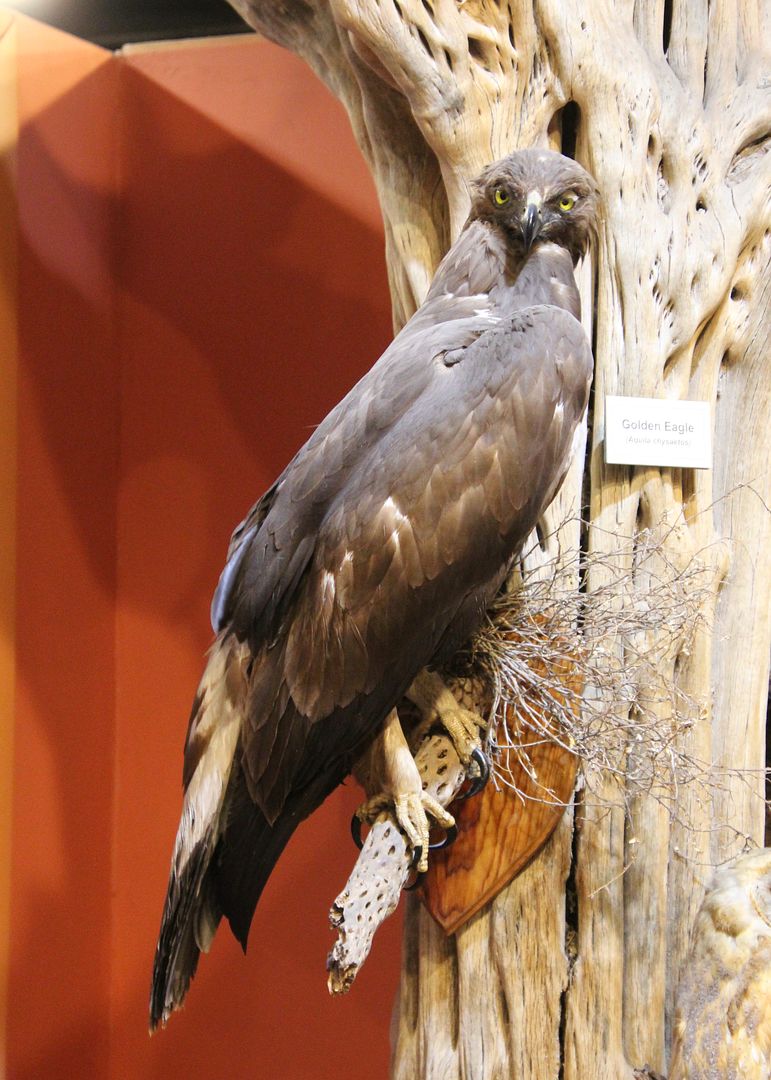
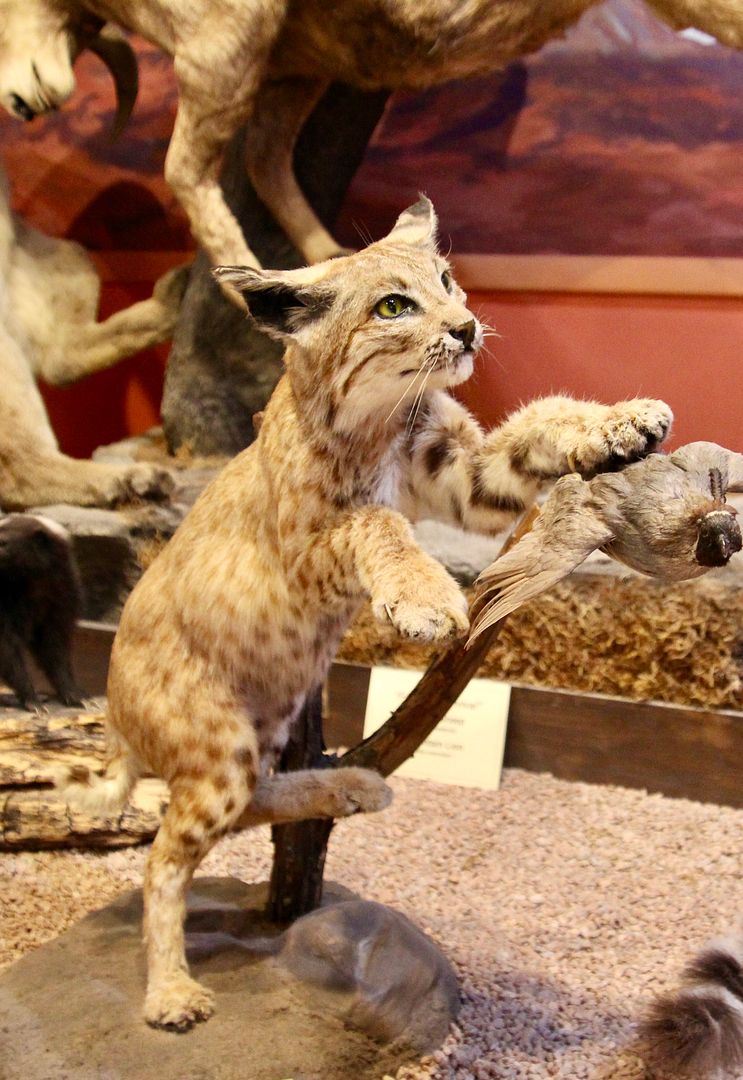
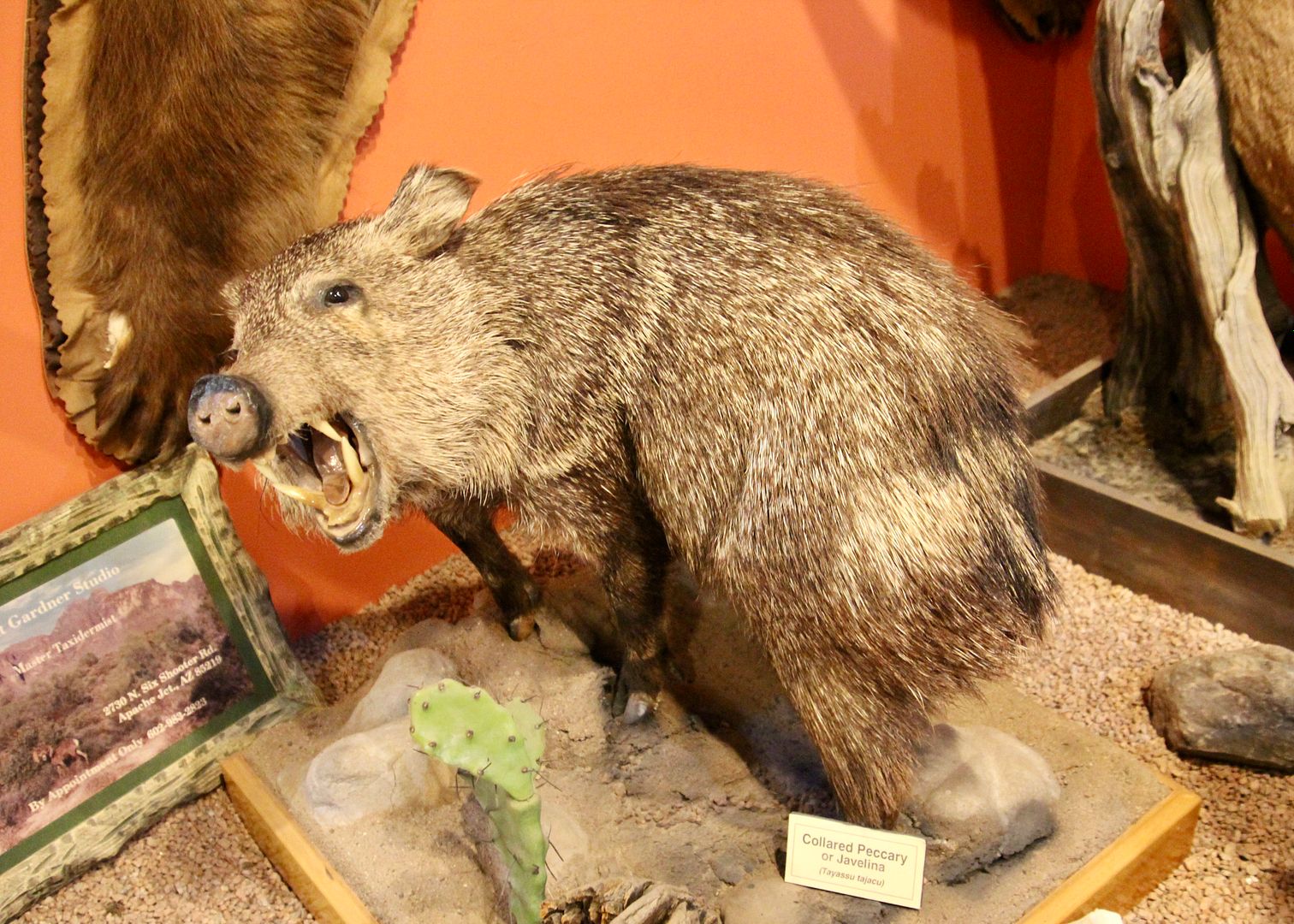
The first exhibit featured wildlife of the wilderness area.  Below some of the exhibits: mountain lion, golden eagle, bobcat, and collared peccary (javalina). 


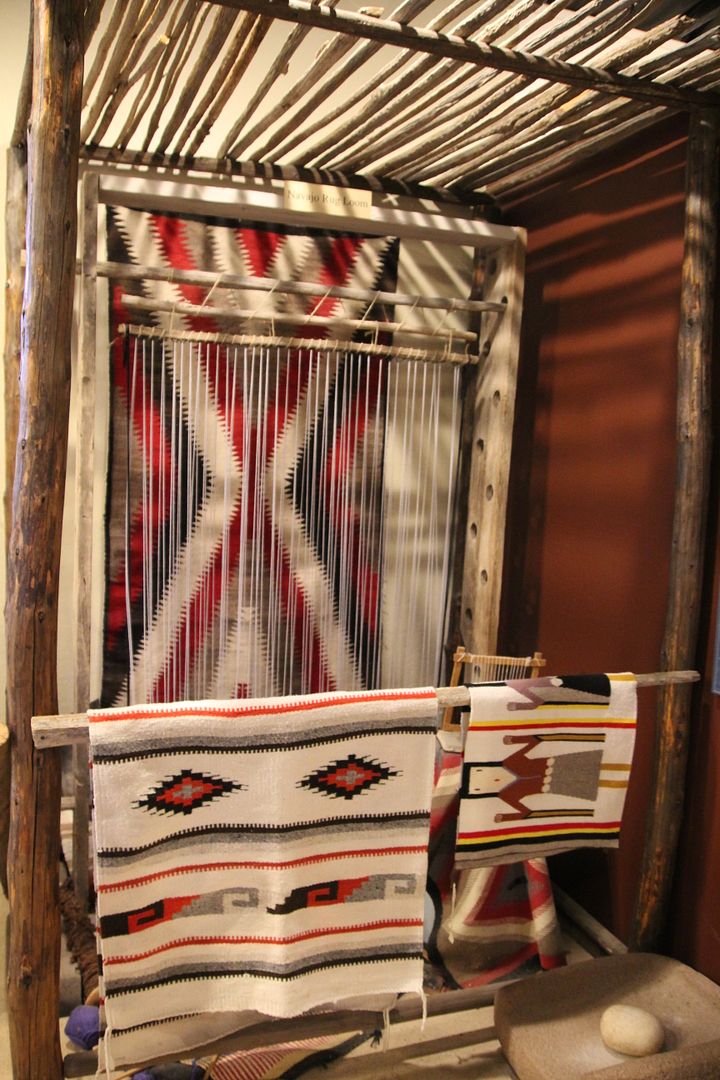
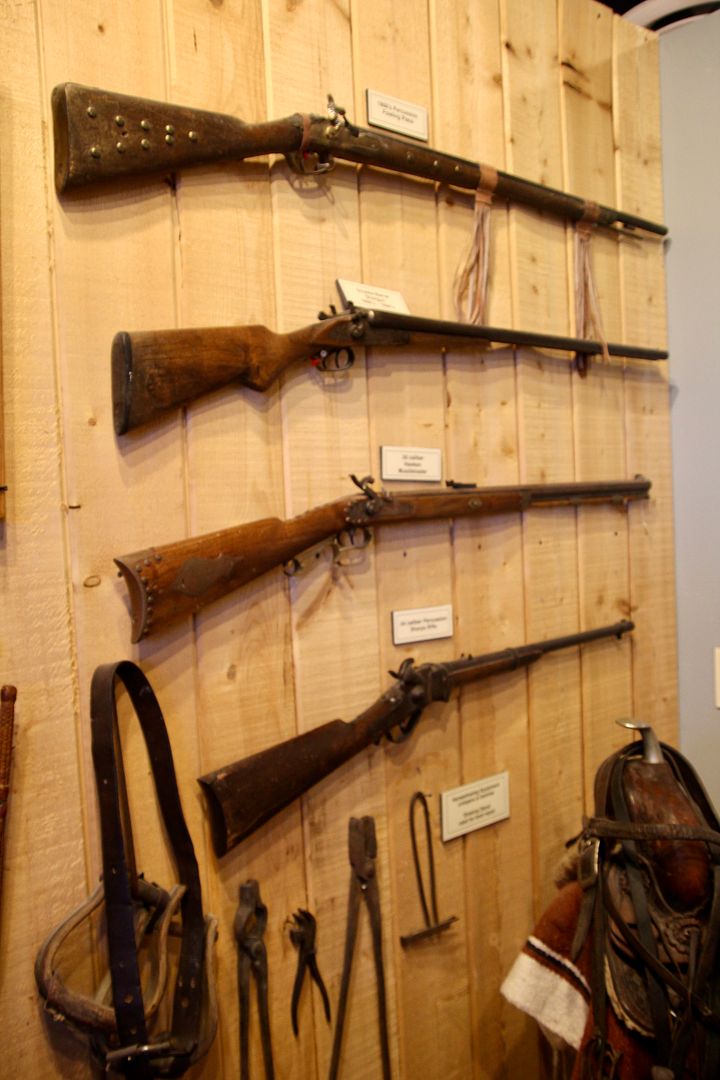
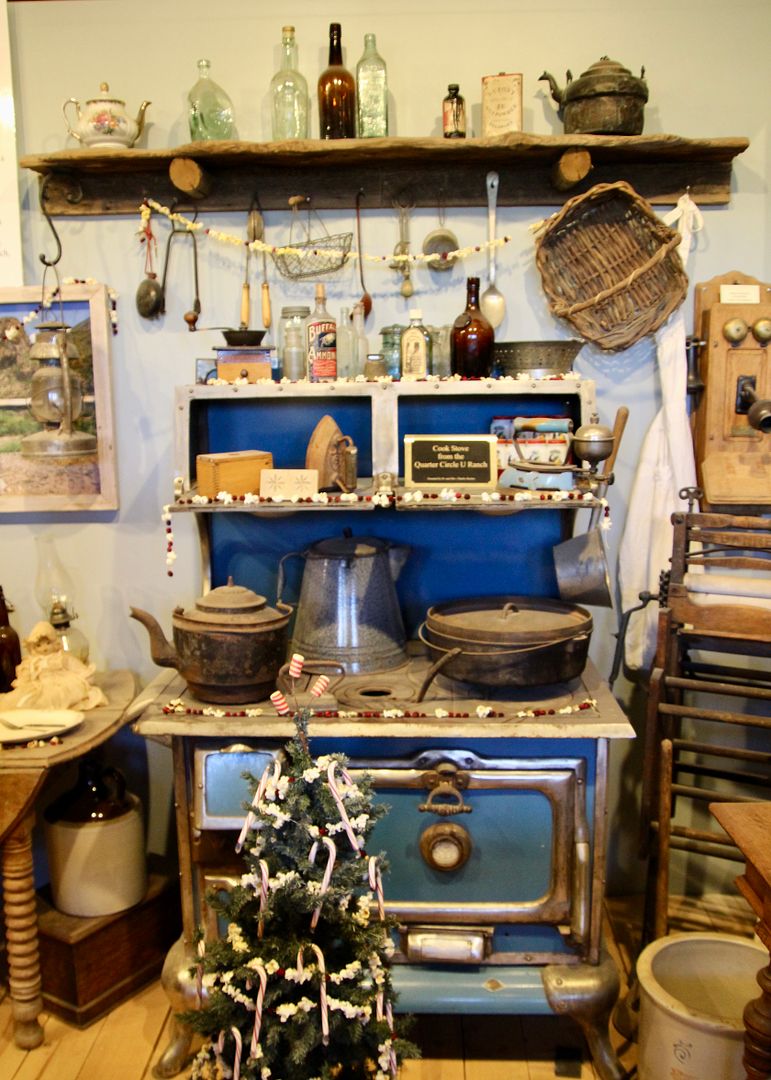
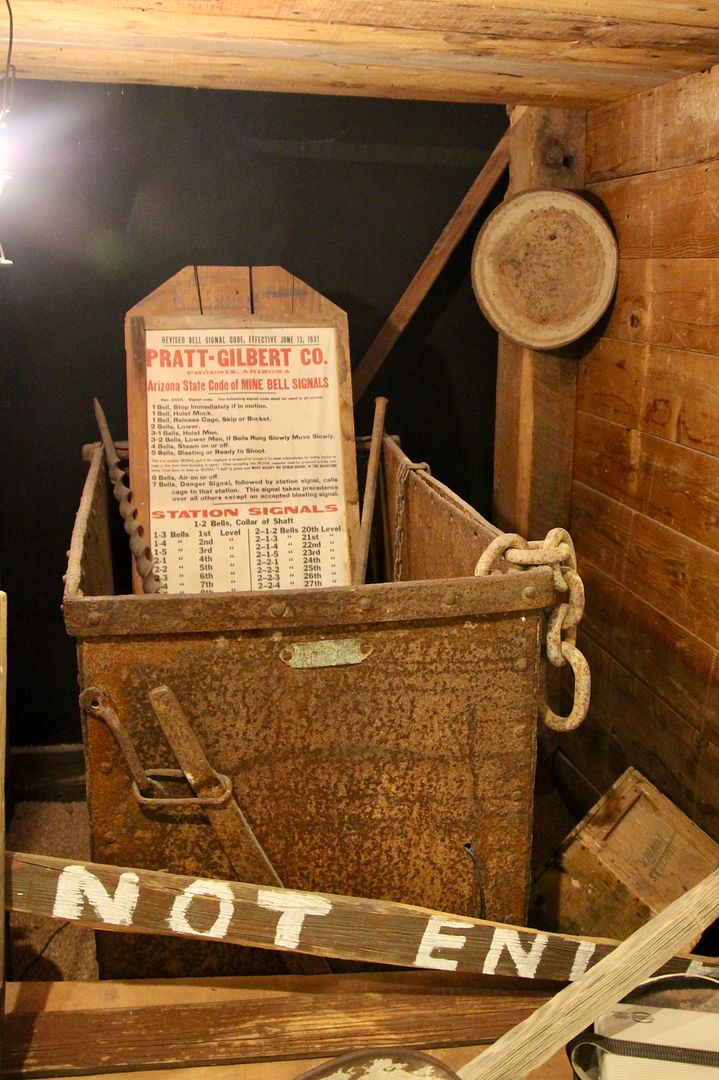
Exhibits included an Apache loom (and rugs), ranch house rifles, a ranch kitchen, and mine bell signals, and other period items. 


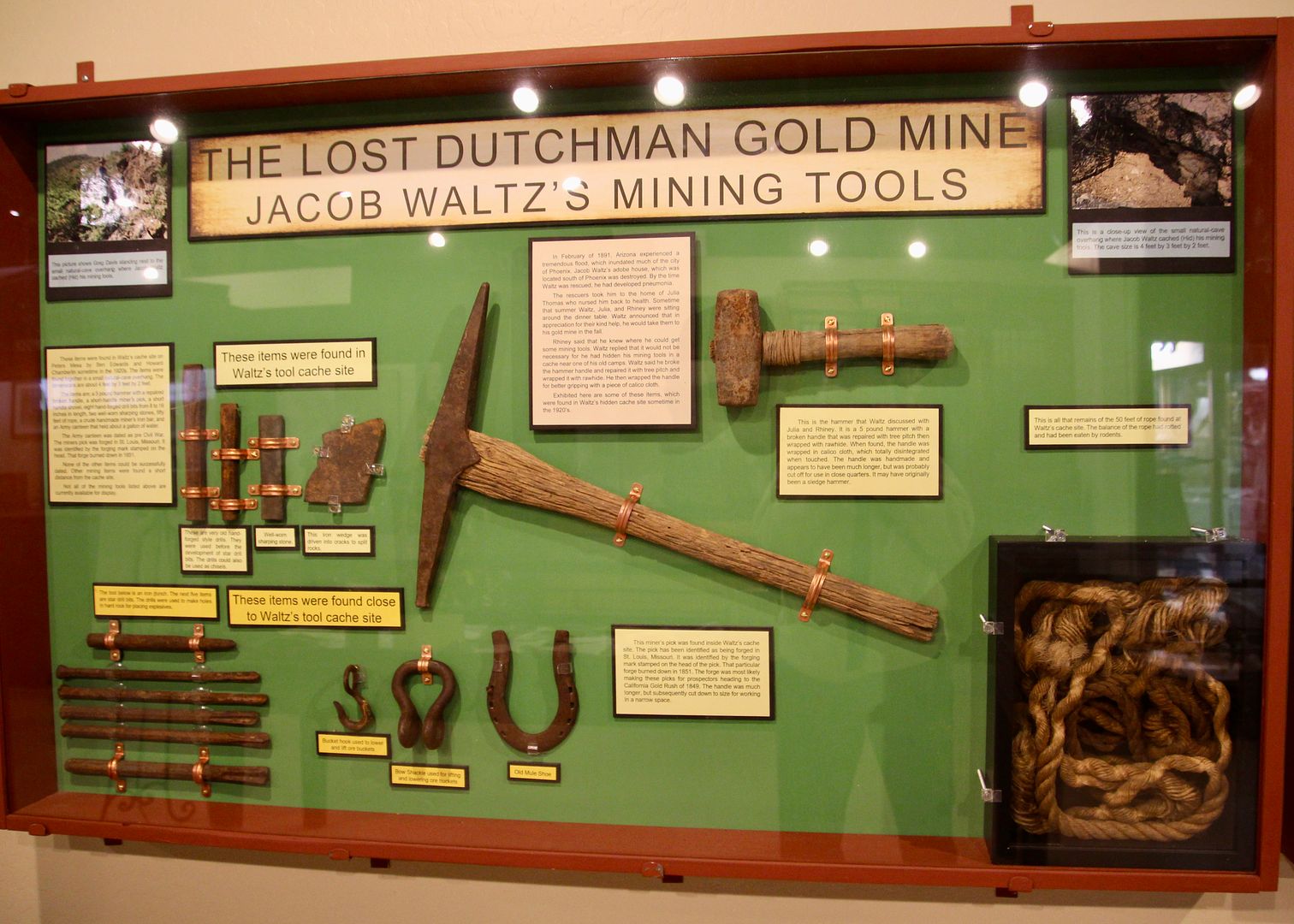
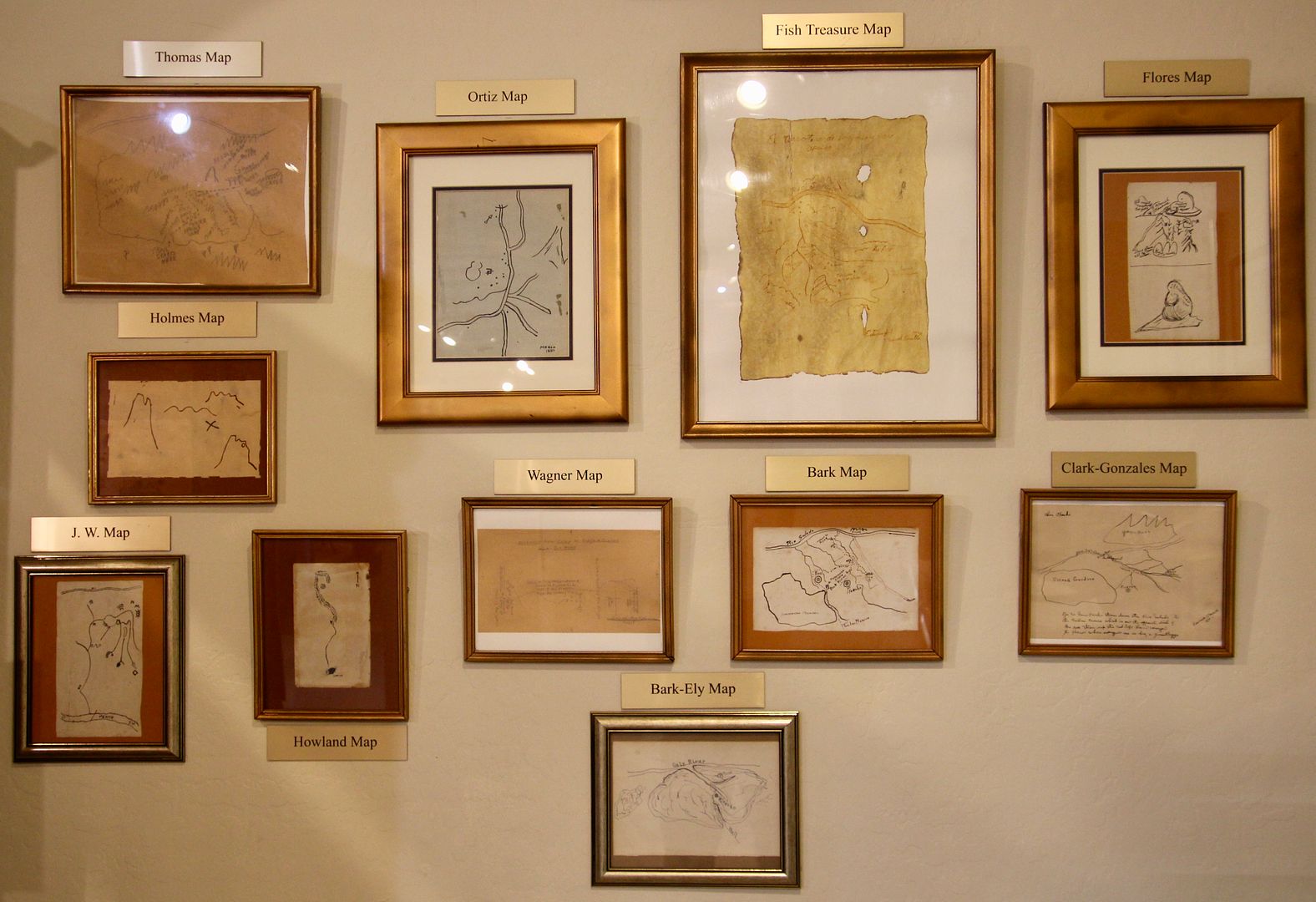
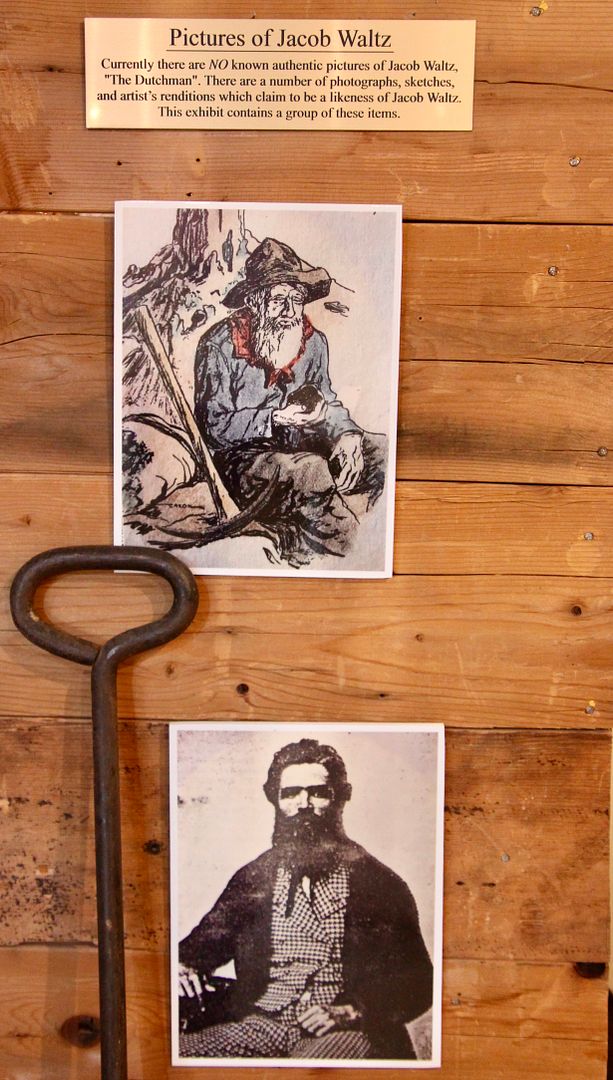
The original "Dutchman" was Jack Waltz (although he was actually German). The tools he used are on display. And numerous maps (framed) show various locations of the “lost mine,” More than 100 people have claimed to find the mine, but none have been verified. Many believe caches of gold are still hidden near here. 


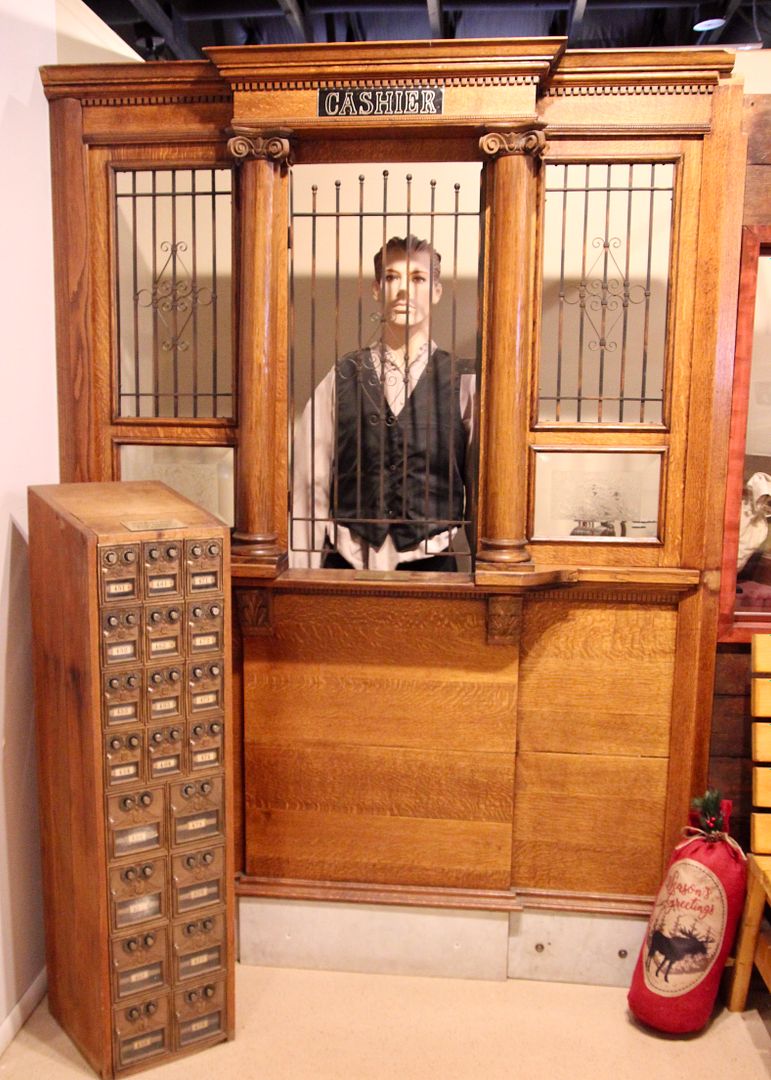
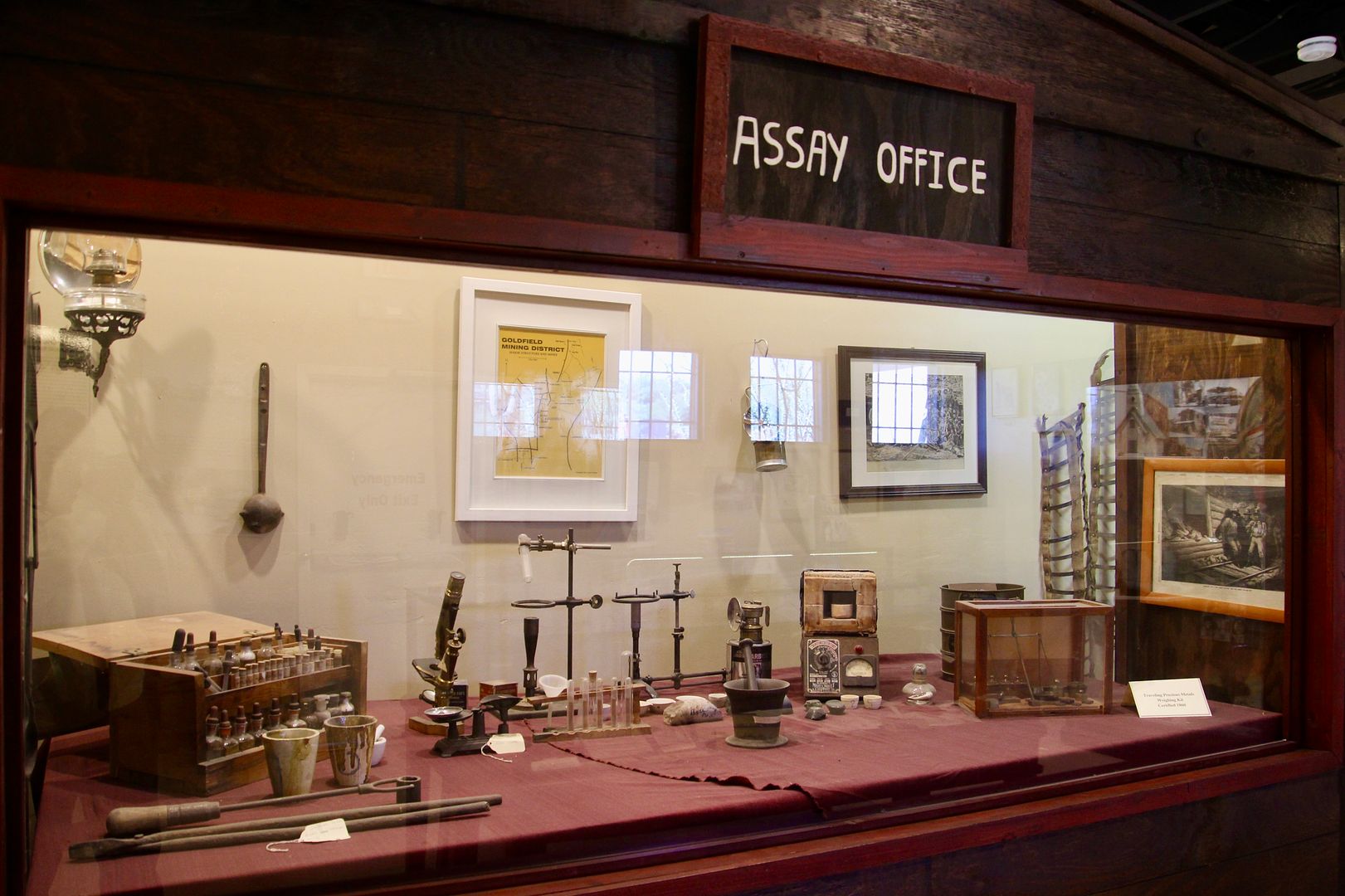
No known authentic photographs of Waltz exist, although some claim to be. Artists created renditions of him as well.  Also shown is equipment used at an assay office (where the purity of precious metals was tested) and a cashier at a Wells Fargo location.  


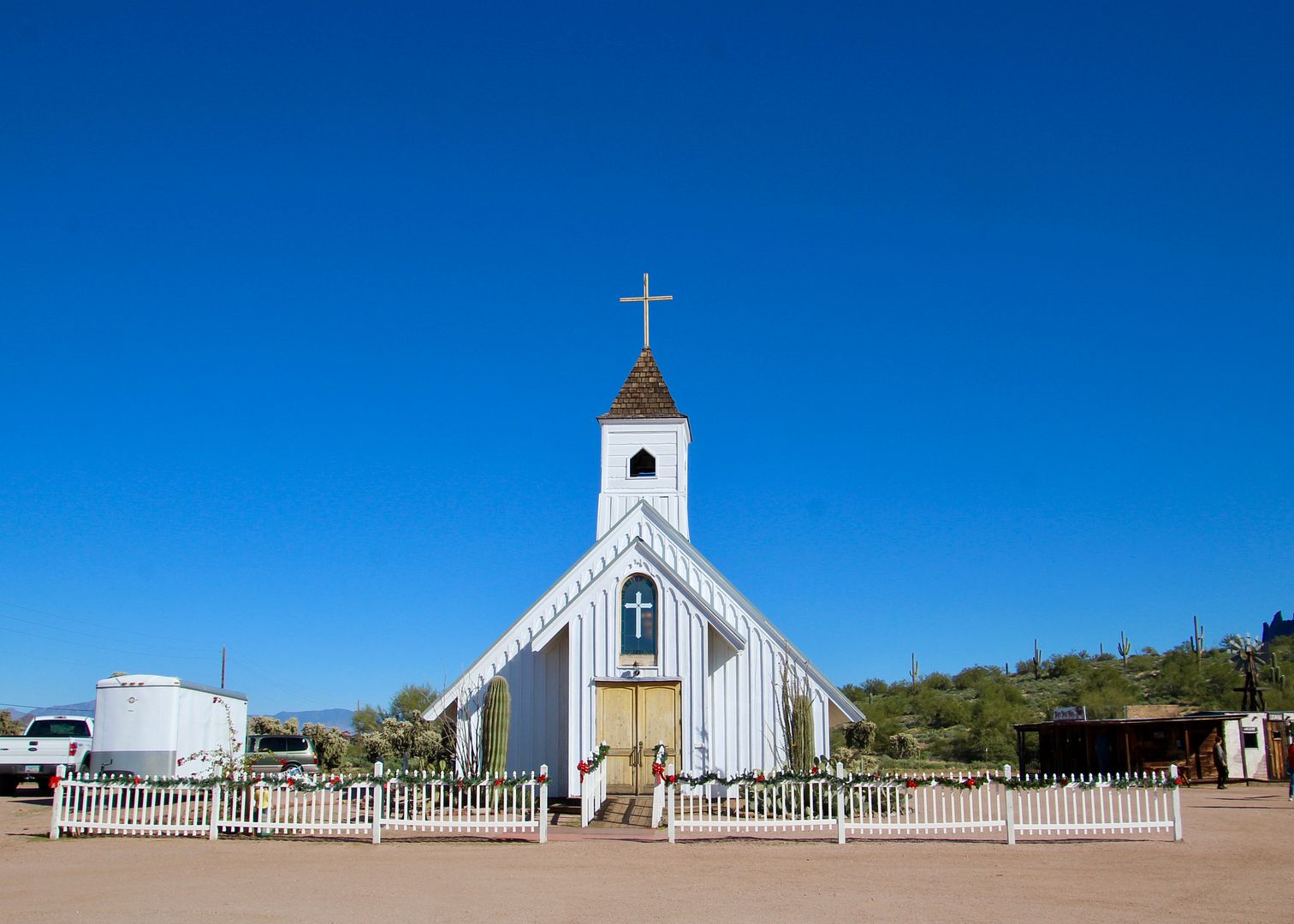
On the grounds of the museum, is Apacheland. Built in 1959 in Gold Canyon, it was intended to be the “Western Movie Capital of the World.”  Numerous movies were filmed at Apacheland, as well as television productions (Death Valley Days, Have Gun, Will Travel, Wagon Train and more). However, it was destroyed by fire in 2004. The Elvis Memorial Chapel (from the movie Charro!), the Gallows, and the Audie Murphy Apacheland Barn are all that remain. They were relocated to the Superstition Mountain Museum grounds. Today, the chapel can still be reserved for weddings, vow renewals, etc.  


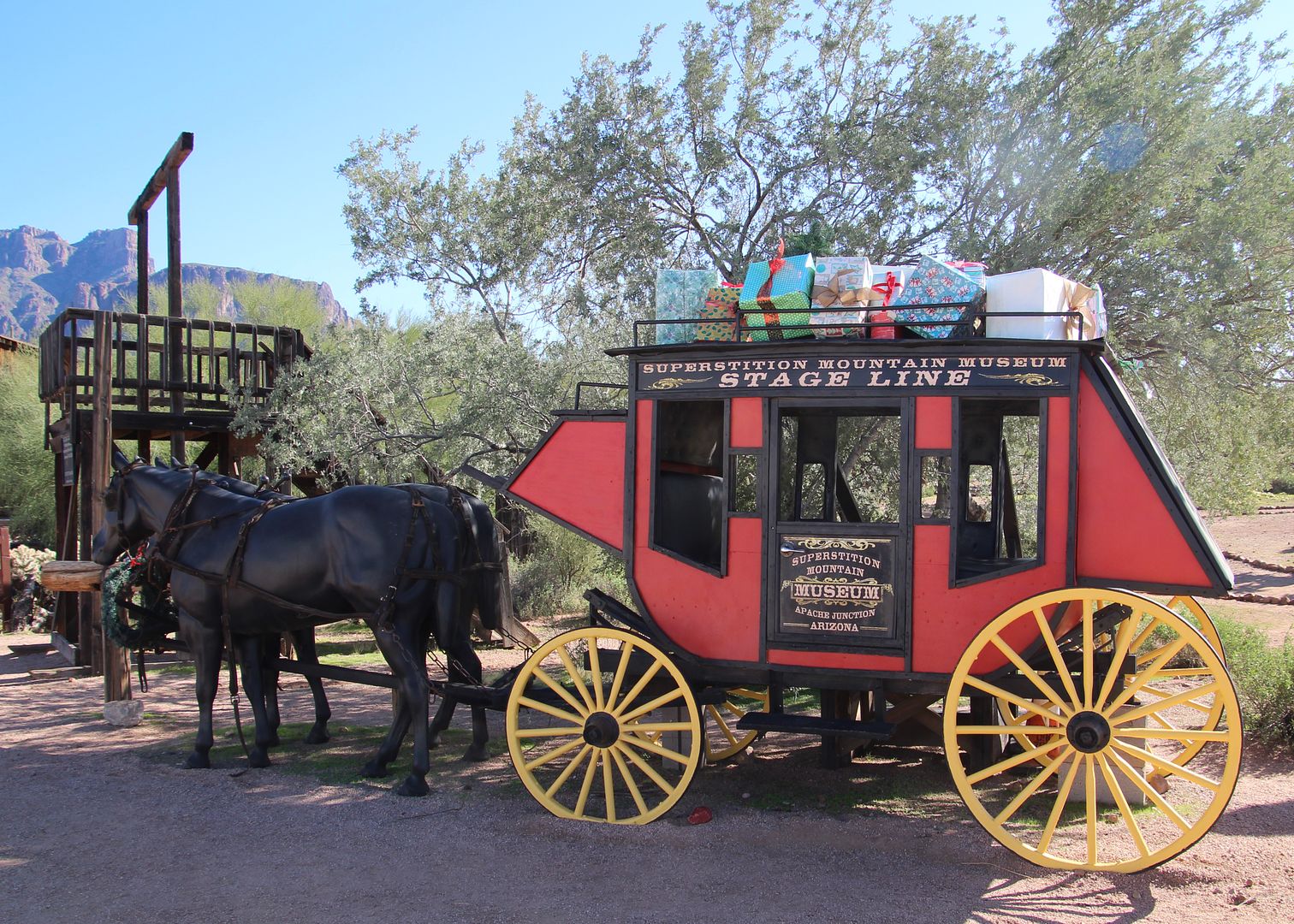
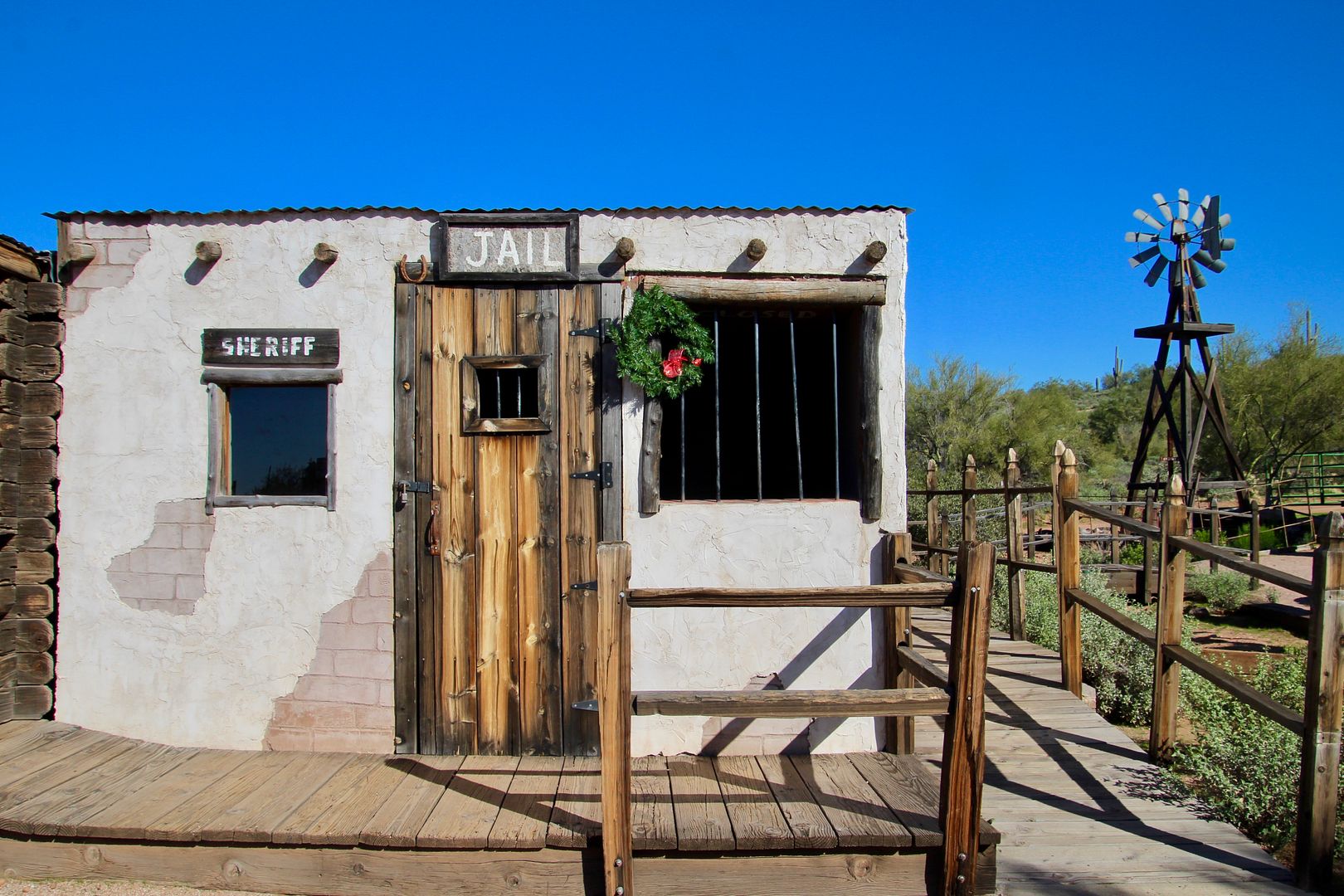
More outdoor displays included this stagecoach and gallows. The jail was also used in my productions. 


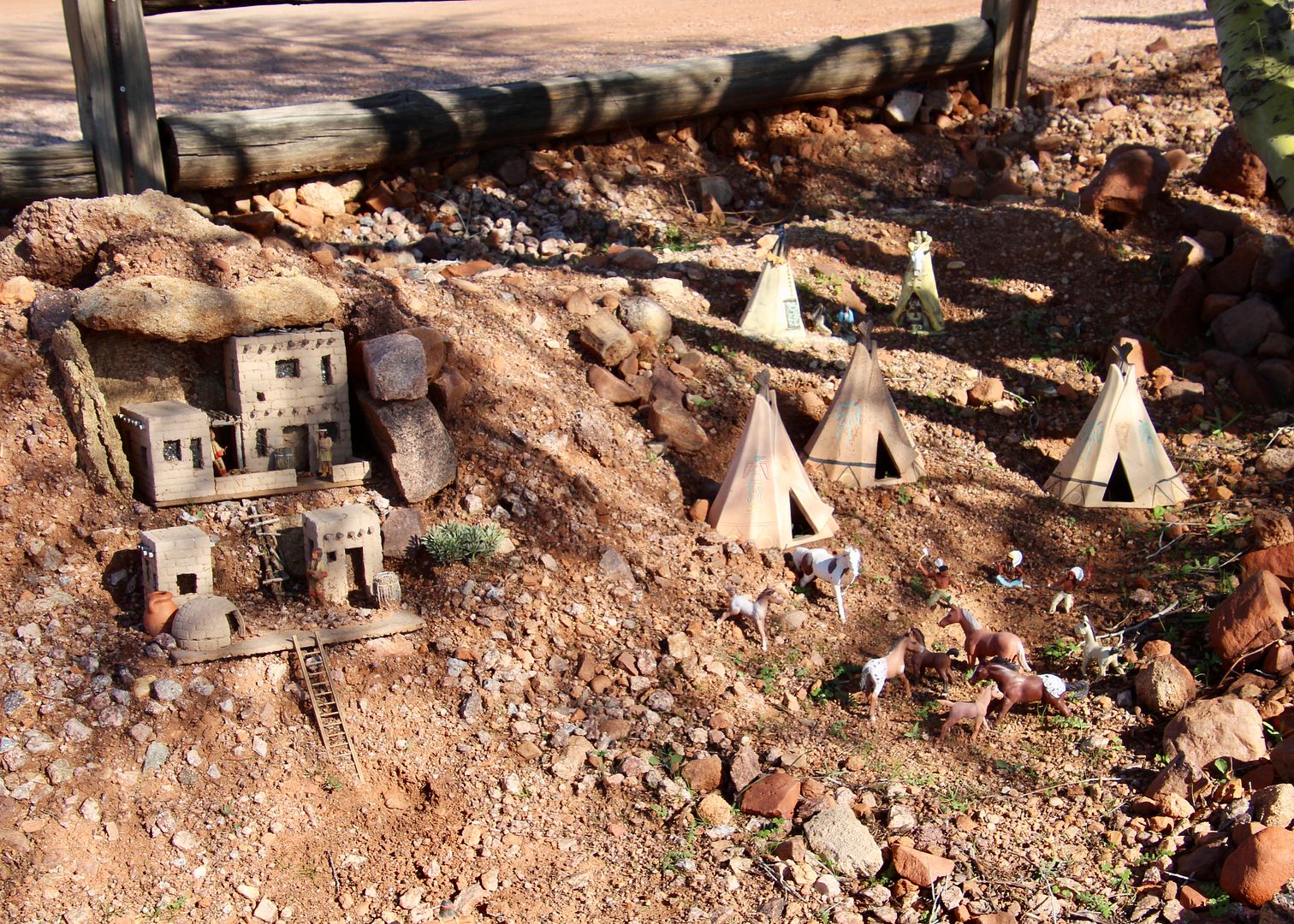
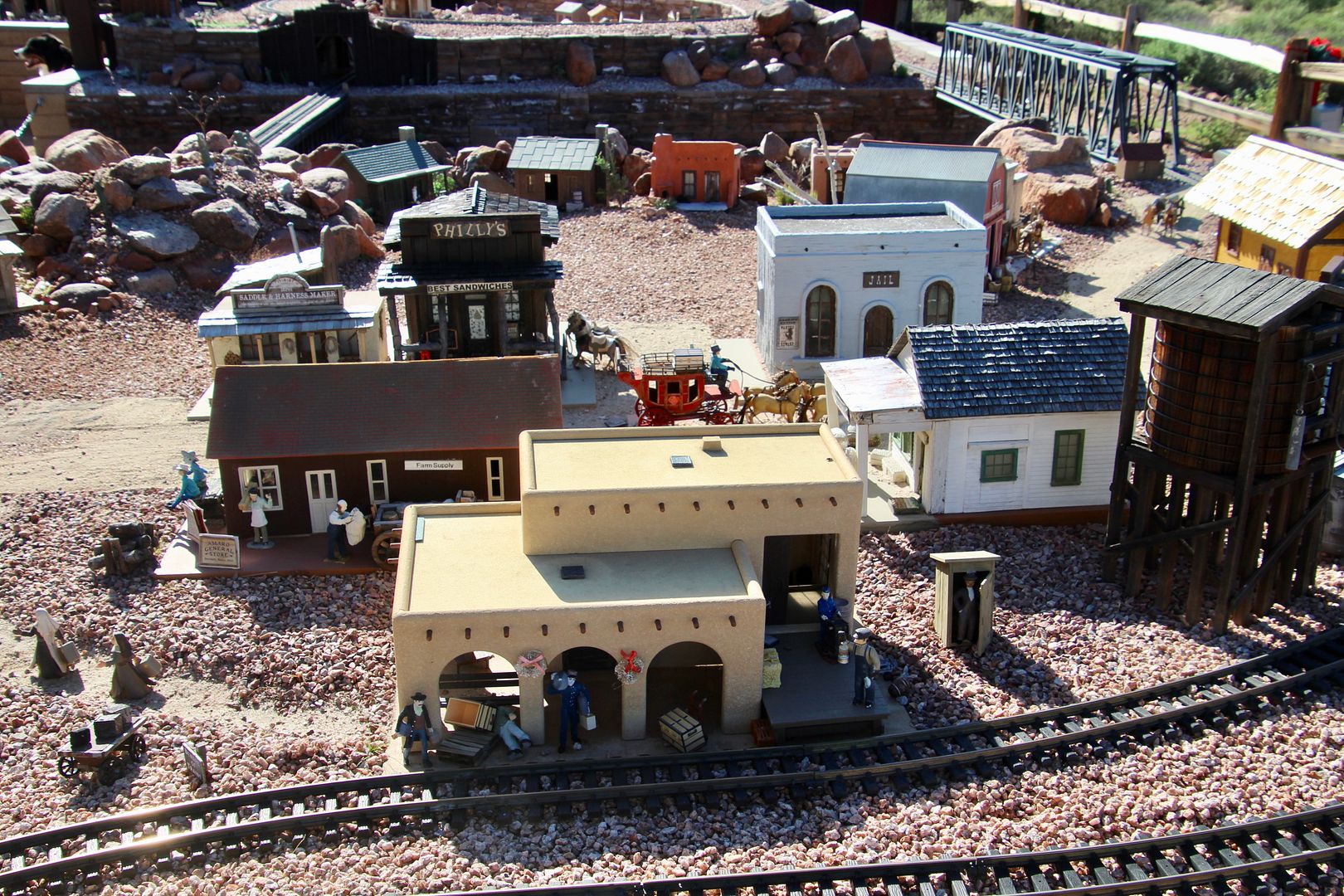
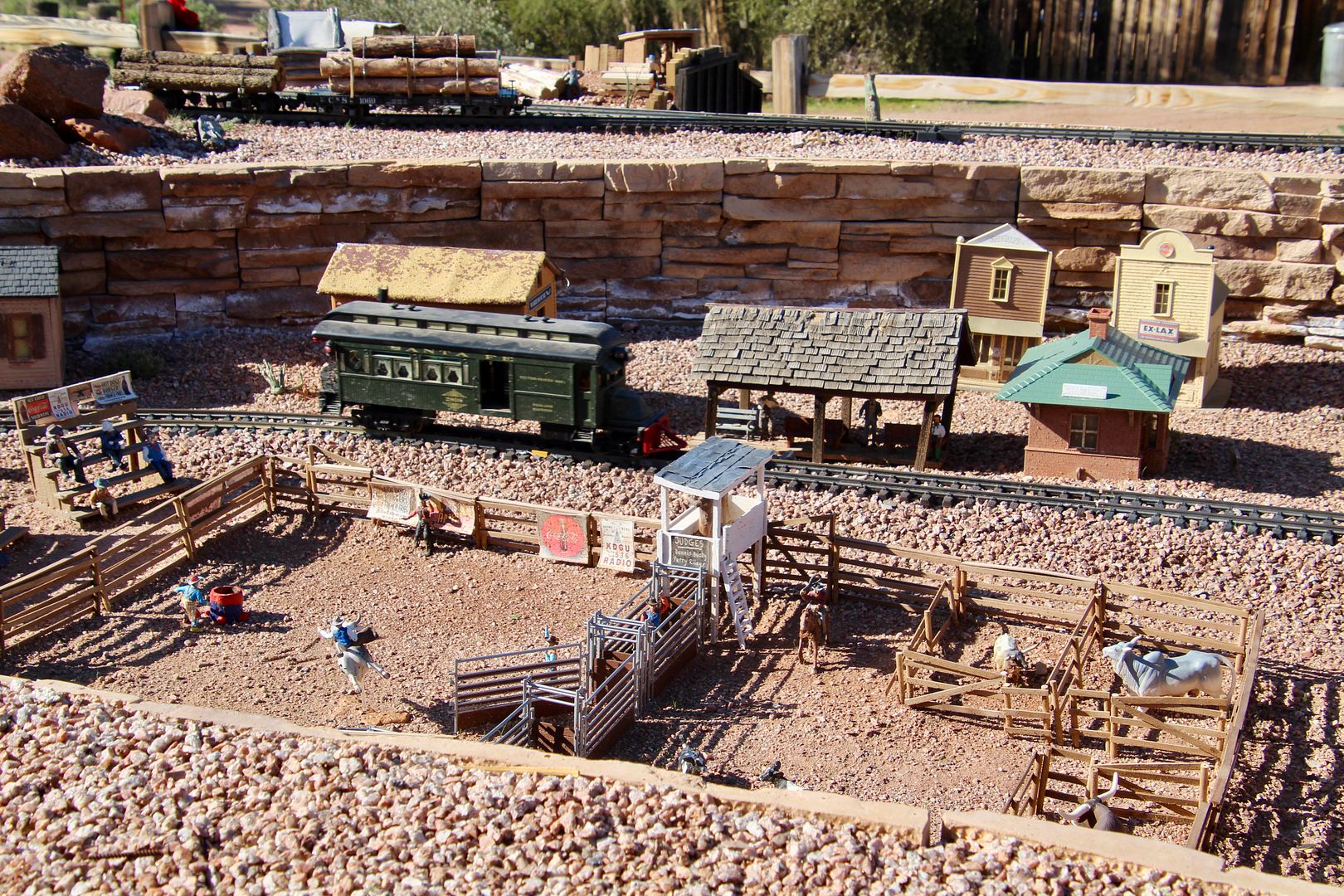
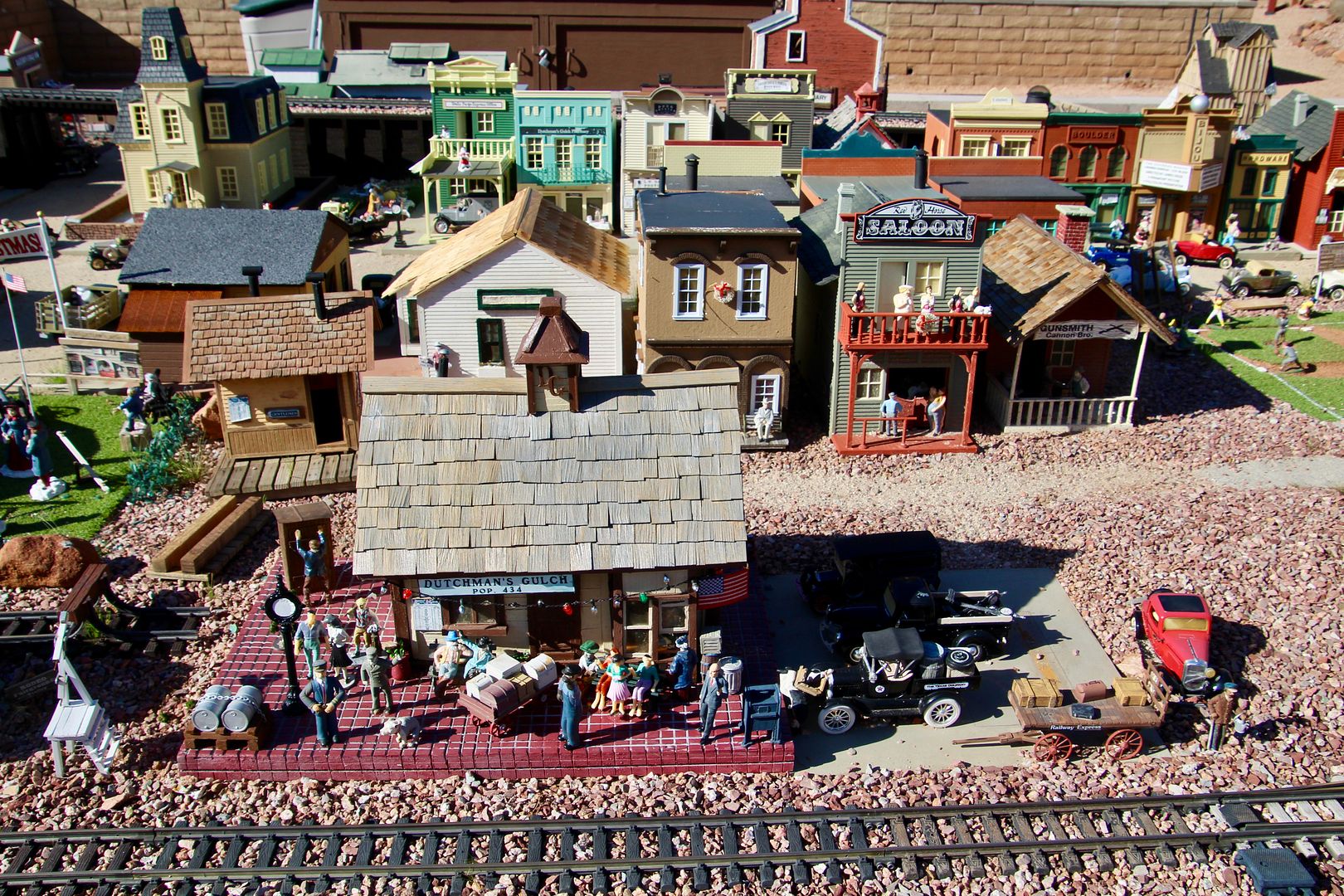
A huge garden-scale model train exhibit, Dutchman’s Gulch, is a seasonal display (does not operate in the summer). The exhibit illustrates the key role railroads played in the history of AZ from 1875 to 1930.  With 1500’ of 45-mm gauge track, several steam engines pull 40+ cars. The history is portrayed in miniature beginning with Native Americans; then Spanish missions; followed by prospectors, explorers, and settlers. Ranches, towns, and mines were established along the railroad.


The detail of the exhibit was incredible!  We had a neighbor in PA (Archie) who had an amazing garden-scale model train, too. Every year he added to it. Everyone loved it when he ran the trains every Sunday (weather permitting). And he definitely would have enjoyed seeing this one!


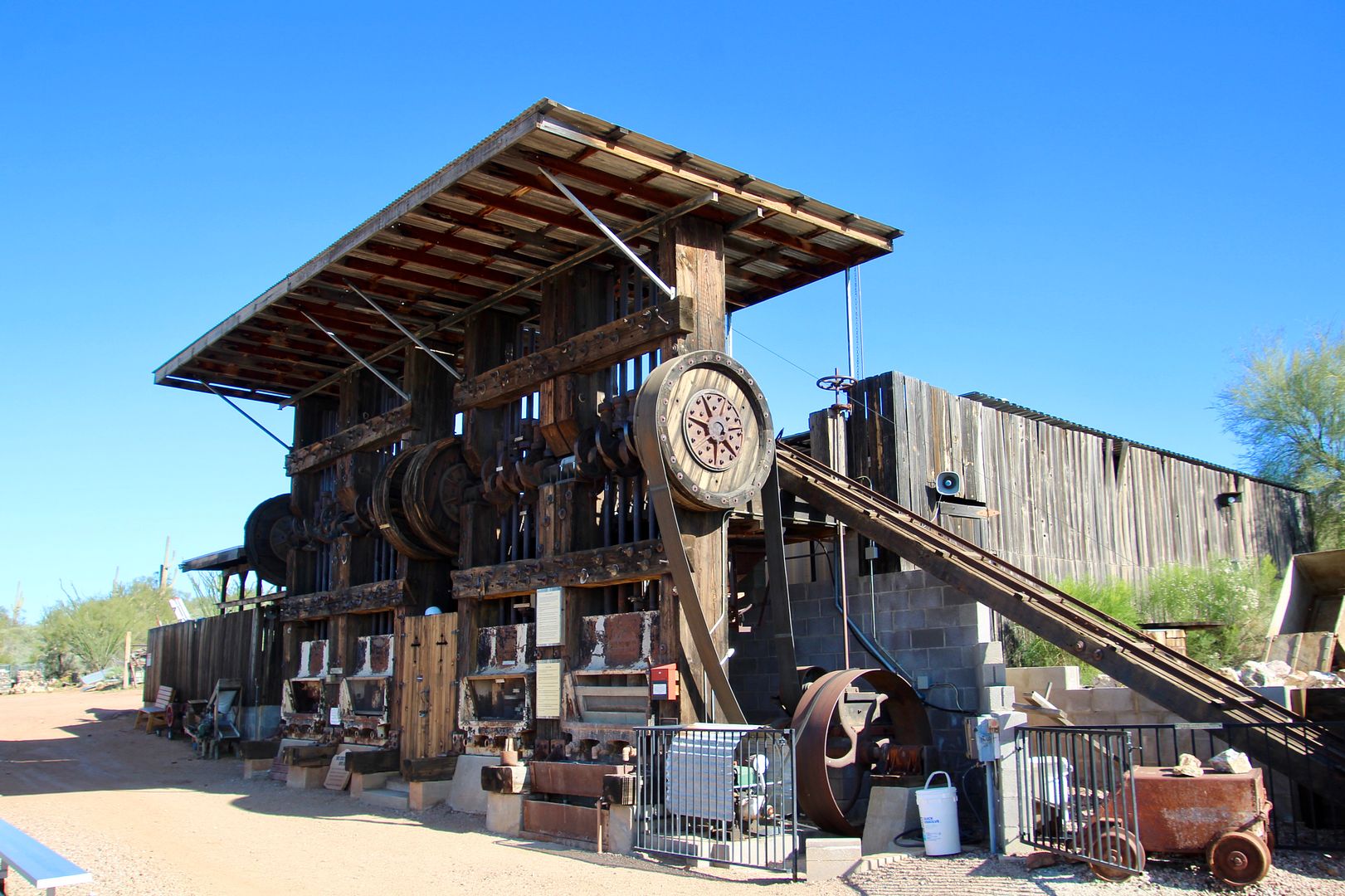
What is a 20-Stamp Ore Mill?  A large mechanical device (this one weighs 70 tons) used to crush ore than contains precious metals (gold, silver, copper) by pulverizing rock into fine sand. The first ore stamp mill was built in the North Carolina in 1829. It was a critical component to the mining process. 


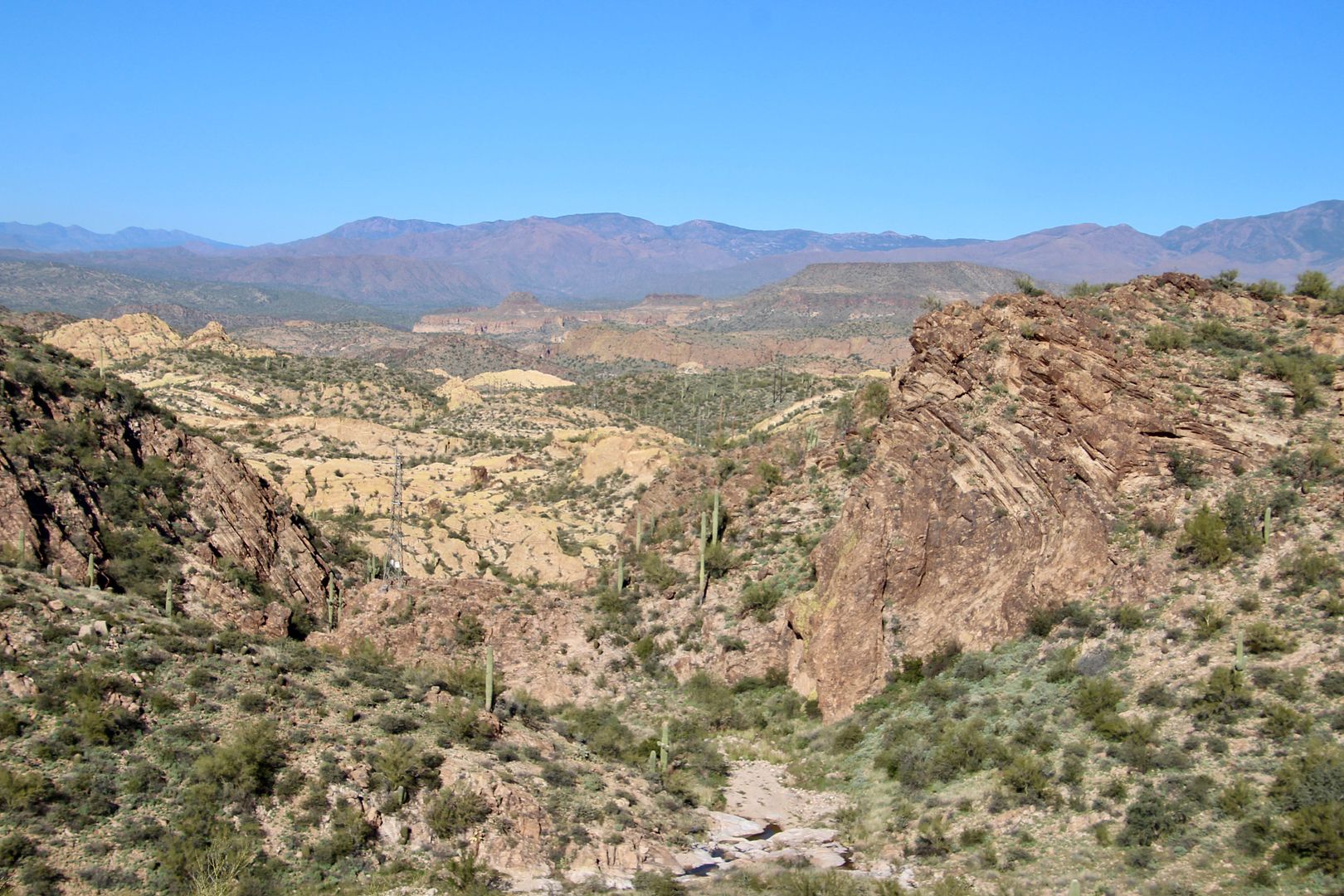
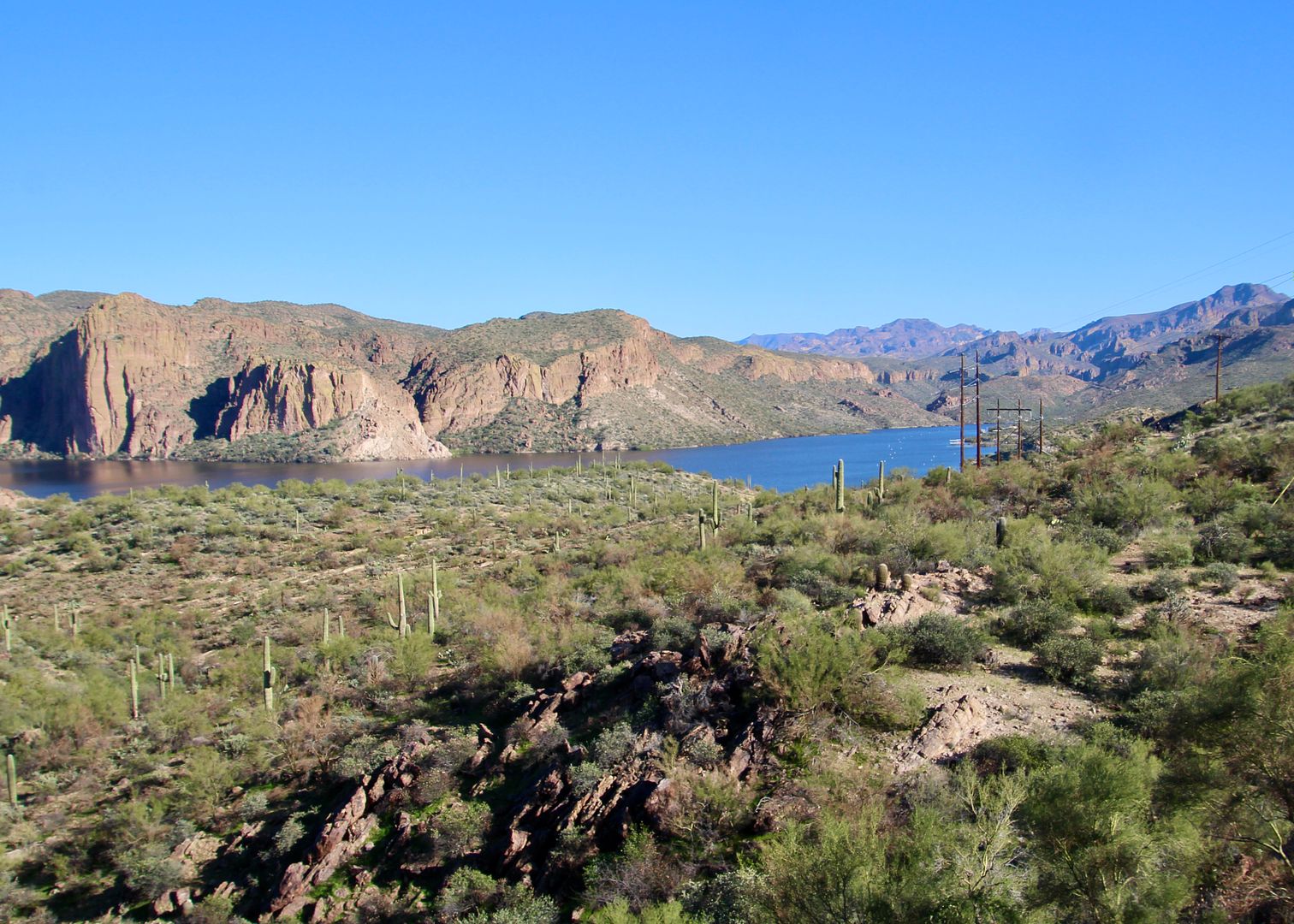
There is a lot more to see at the museum, but we were anxious to see the sights along Apache Trail to Lake Roosevelt. We made a couple of stops en route to Canyon Lake to enjoy the lovely views of the Sonoran Desert and mountains.


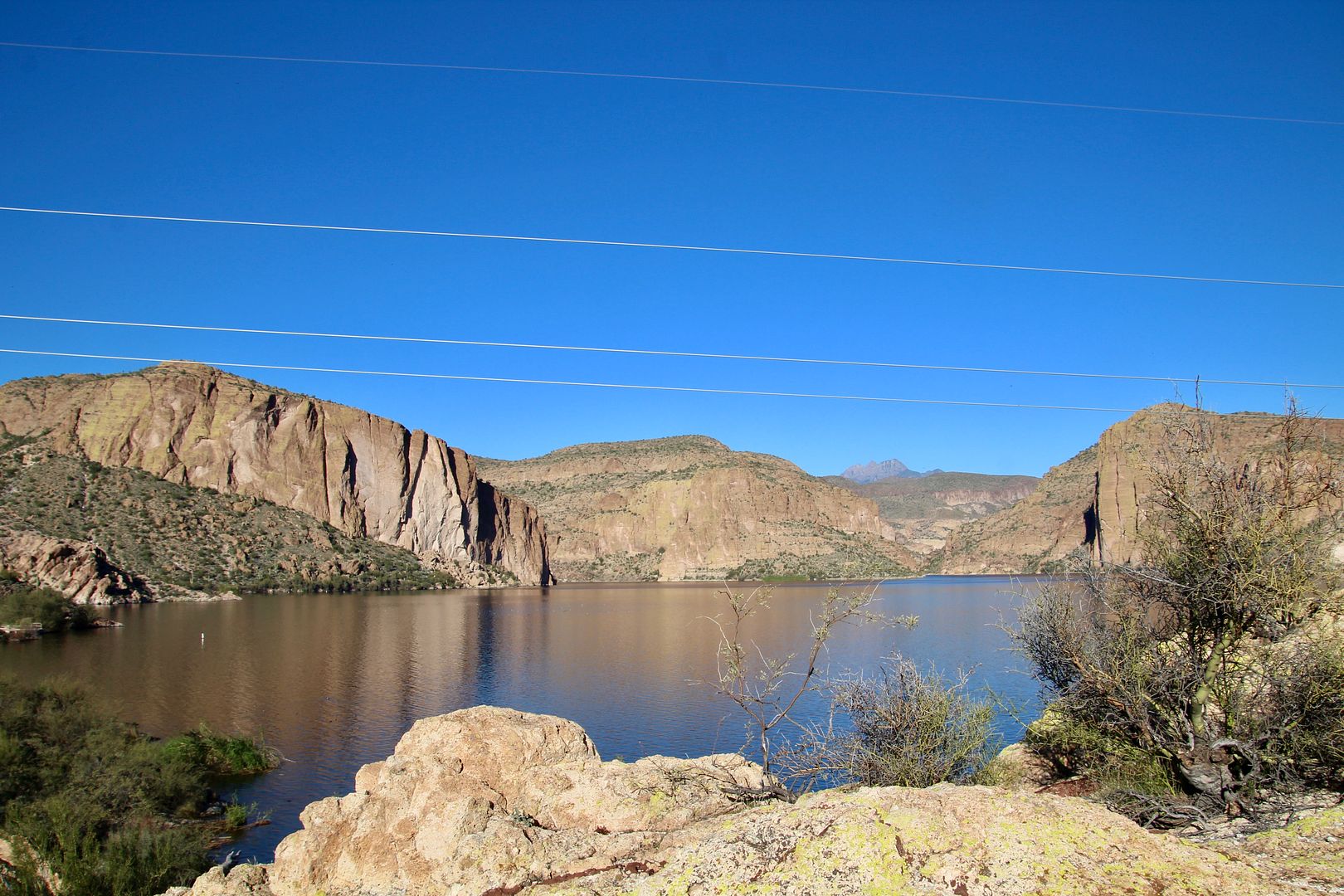
Canyon Lake (in the Tonto National Forest) was formed when the Mormon Flat Dam was completed in 1925. The water is collected from the Salt River watershed.  


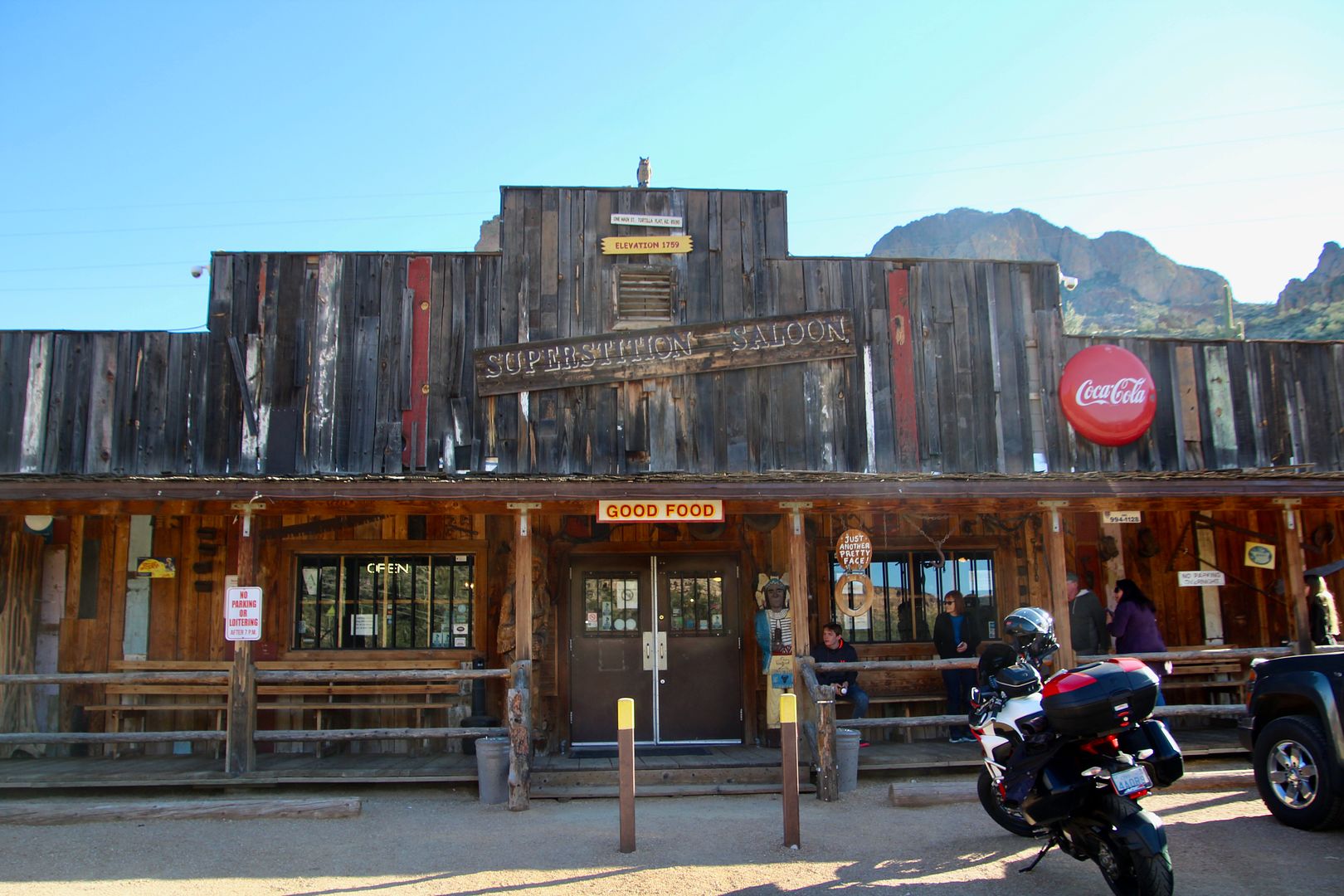
Continuing east we came to Tortilla Flat.  It was a stop on the Yavapai Trail between Tonto Basin and the Salt River Valley prior to 1906. When Roosevelt Dam was built, it became an important stop for supplies and water. 


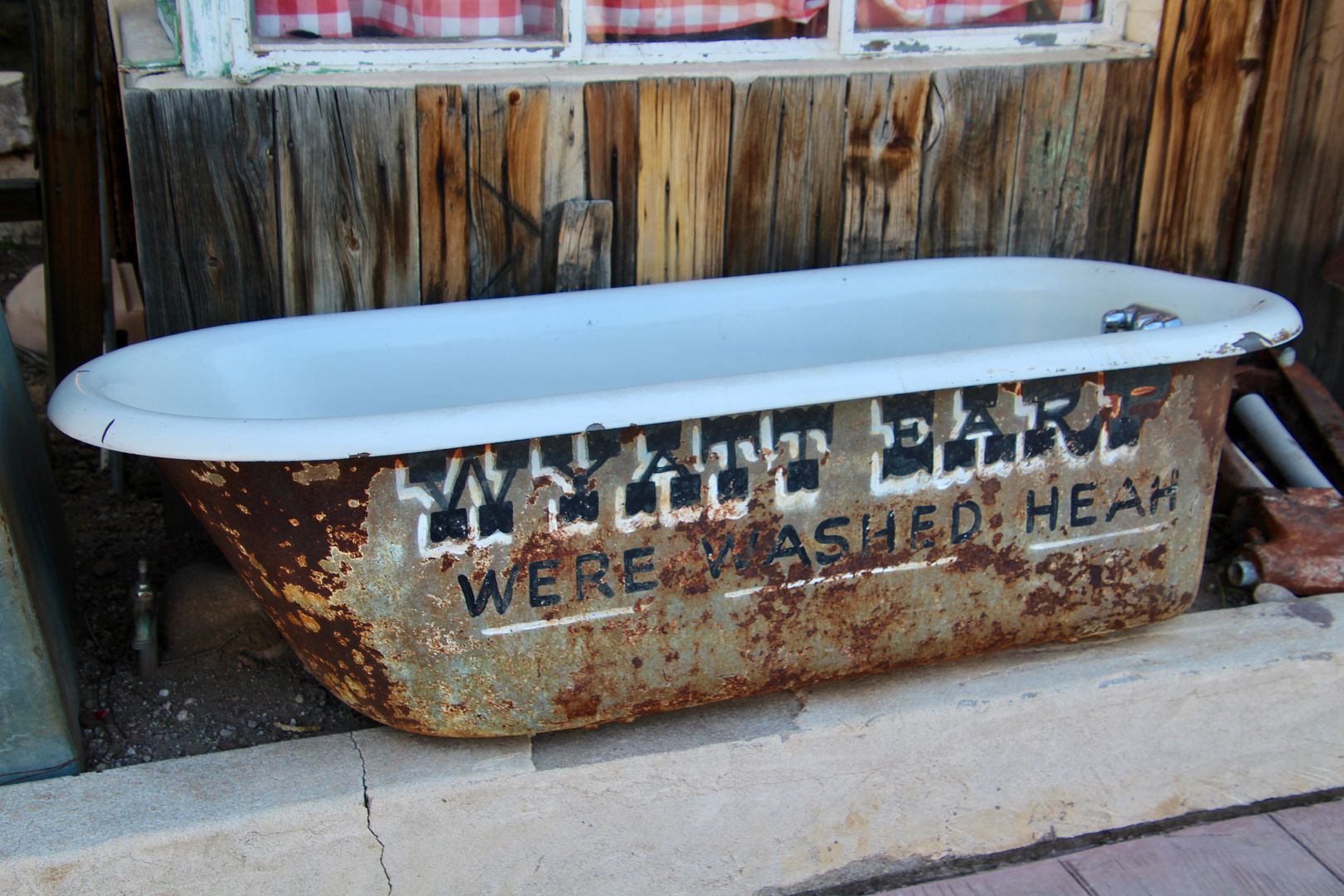
Legend has it that the old Dutchman ate here. And that Wyatt Earp took a bath in this tub!


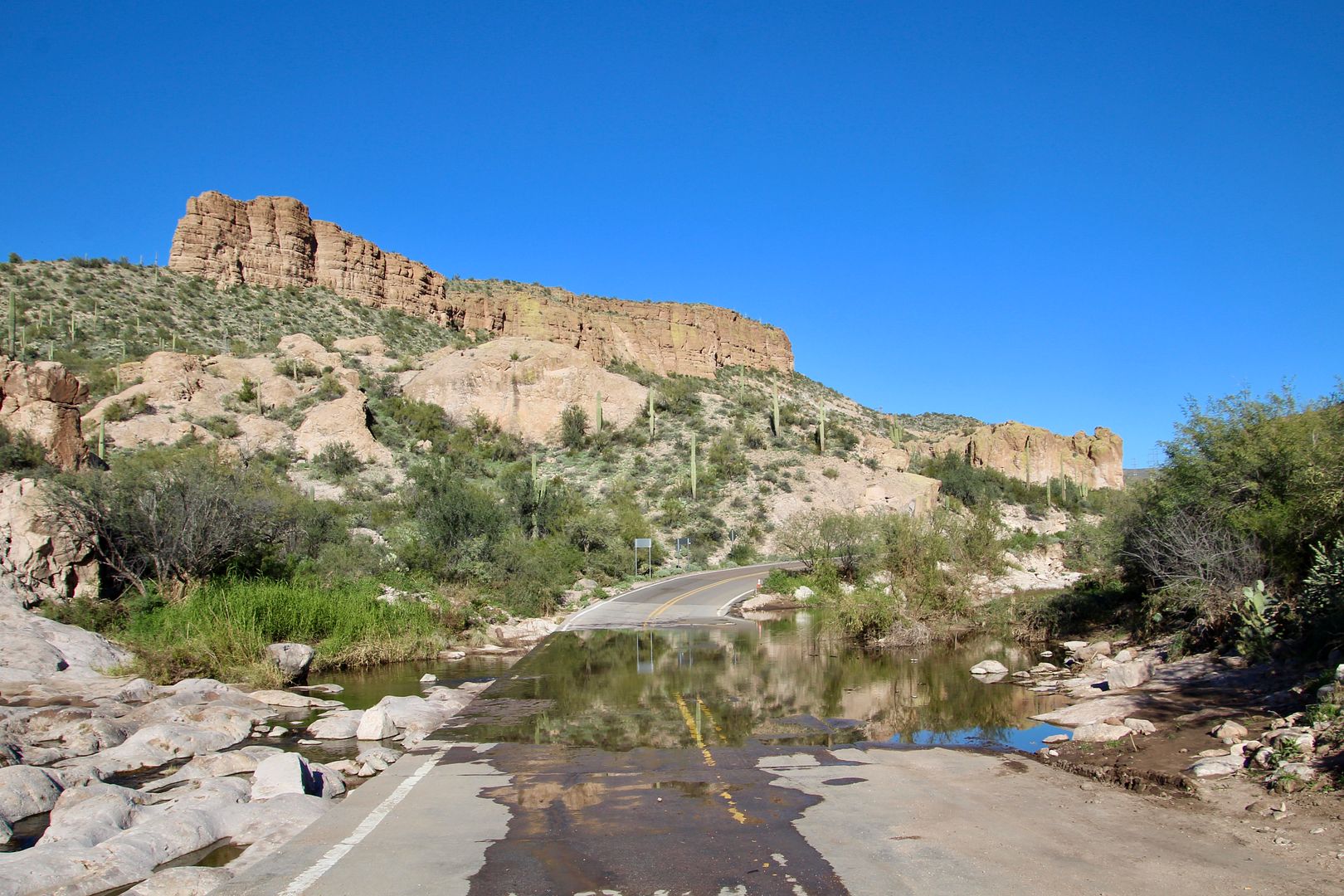
We continued on towards Apache Lake, ever though some folks in Tortilla Flat had advised against it. When we came upon this flooded area, we realized that our Mini Countryman may not have the clearance to get through it. 


And this is not a good place to get stuck! So, having thoroughly enjoyed our day, we turned around and headed back to Tucson. 


Admission to the Superstition Mountain Lost Dutchman Museum was $4/seniors ($5/adults).  For additional information about the museum, go to www.superstitionmoutainmuseum.org. For more information about Tortilla Flats, go to www.tortillaflataz.com.