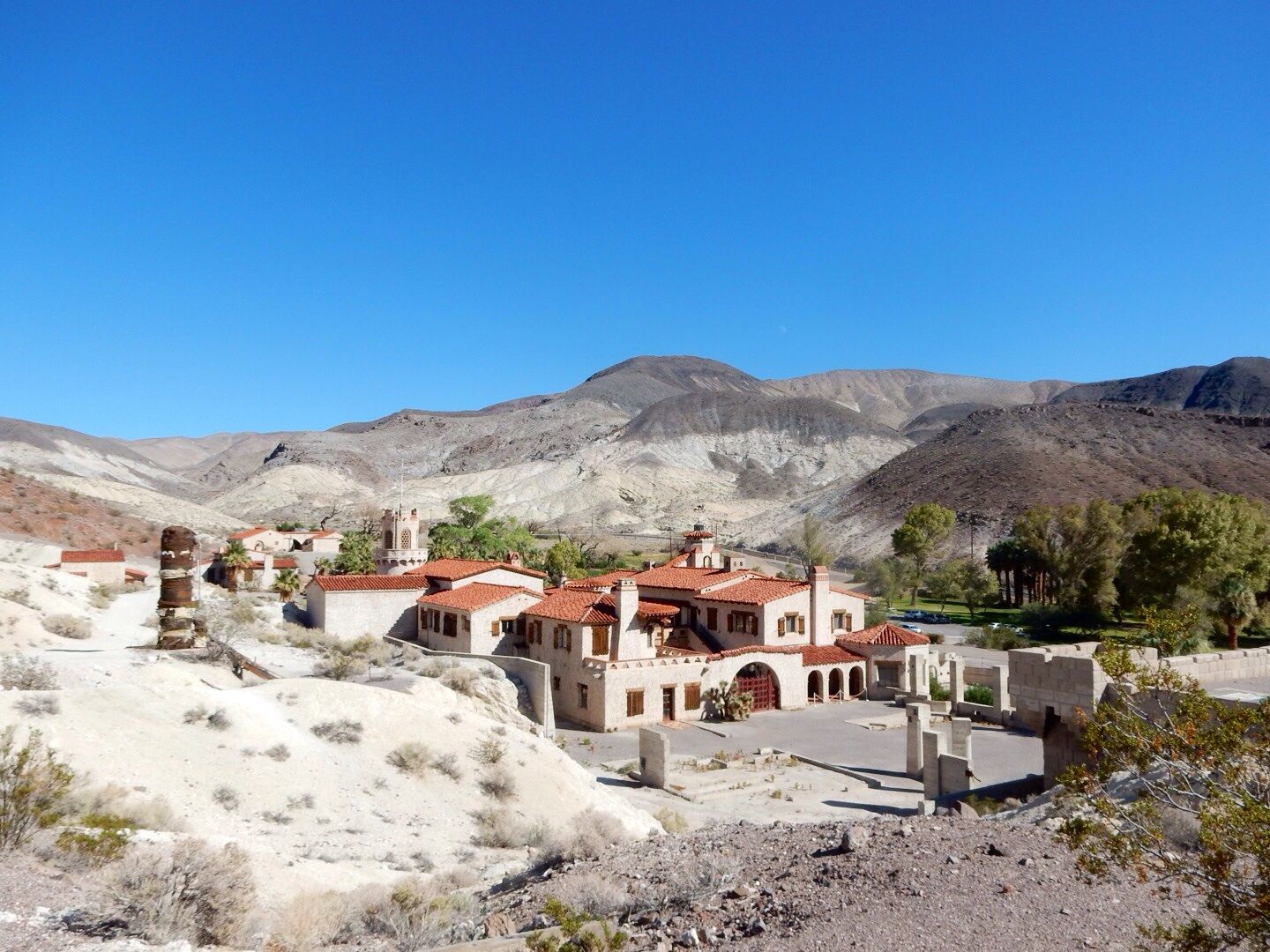
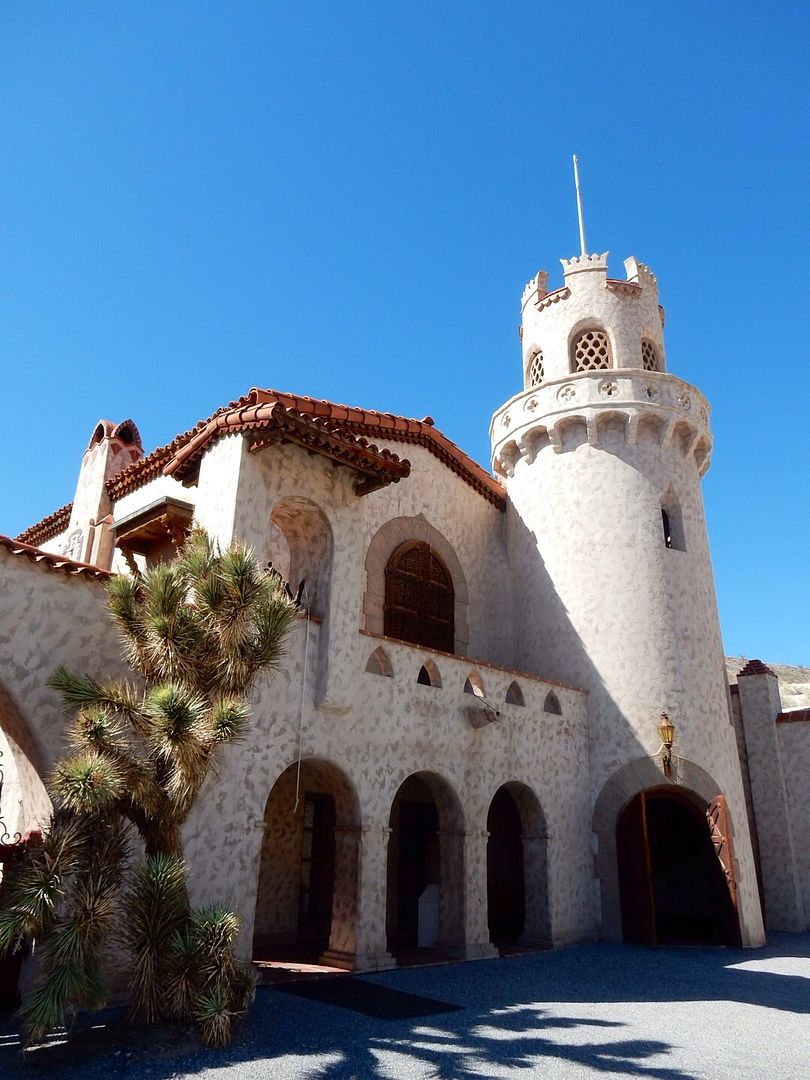
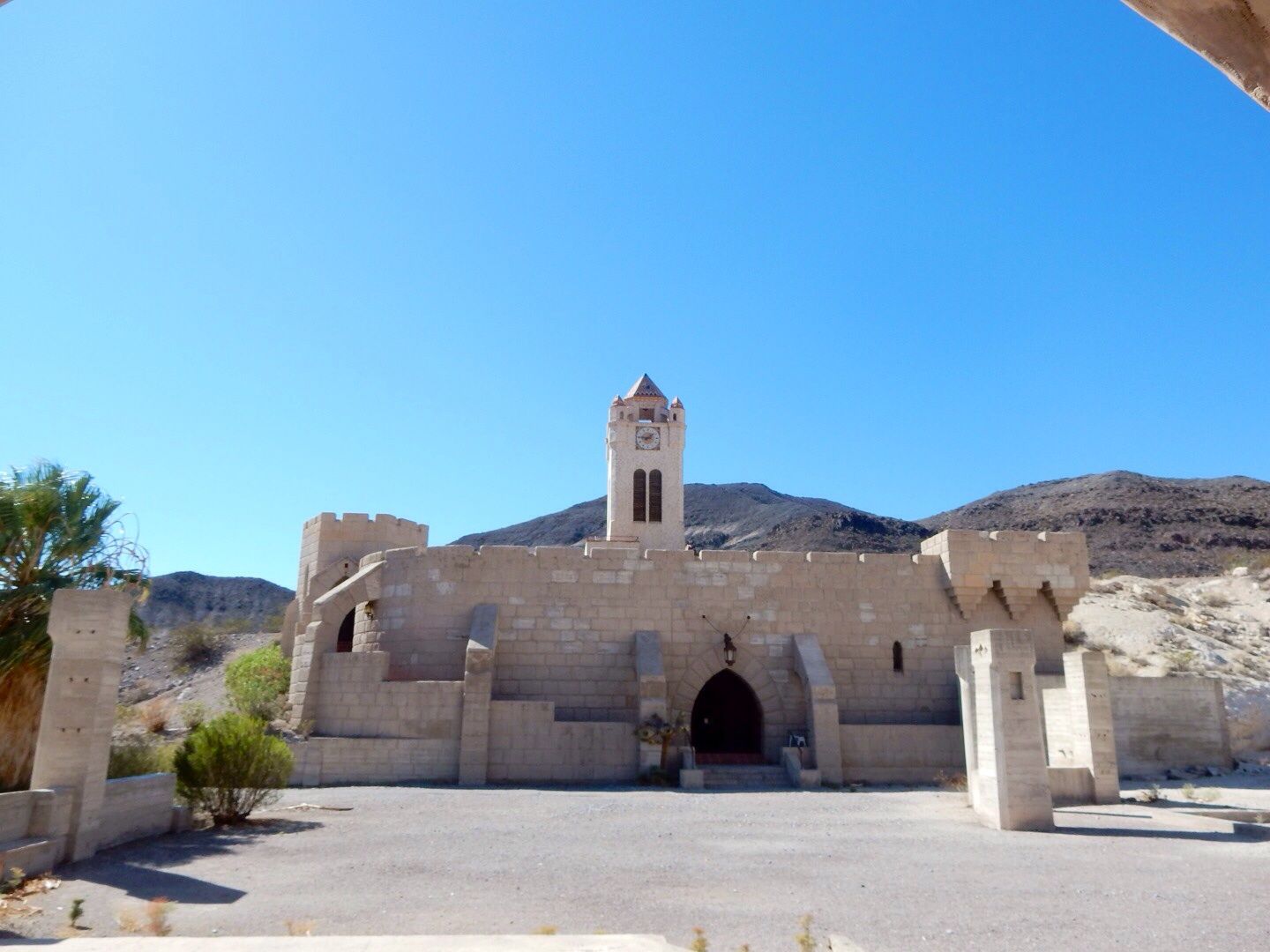
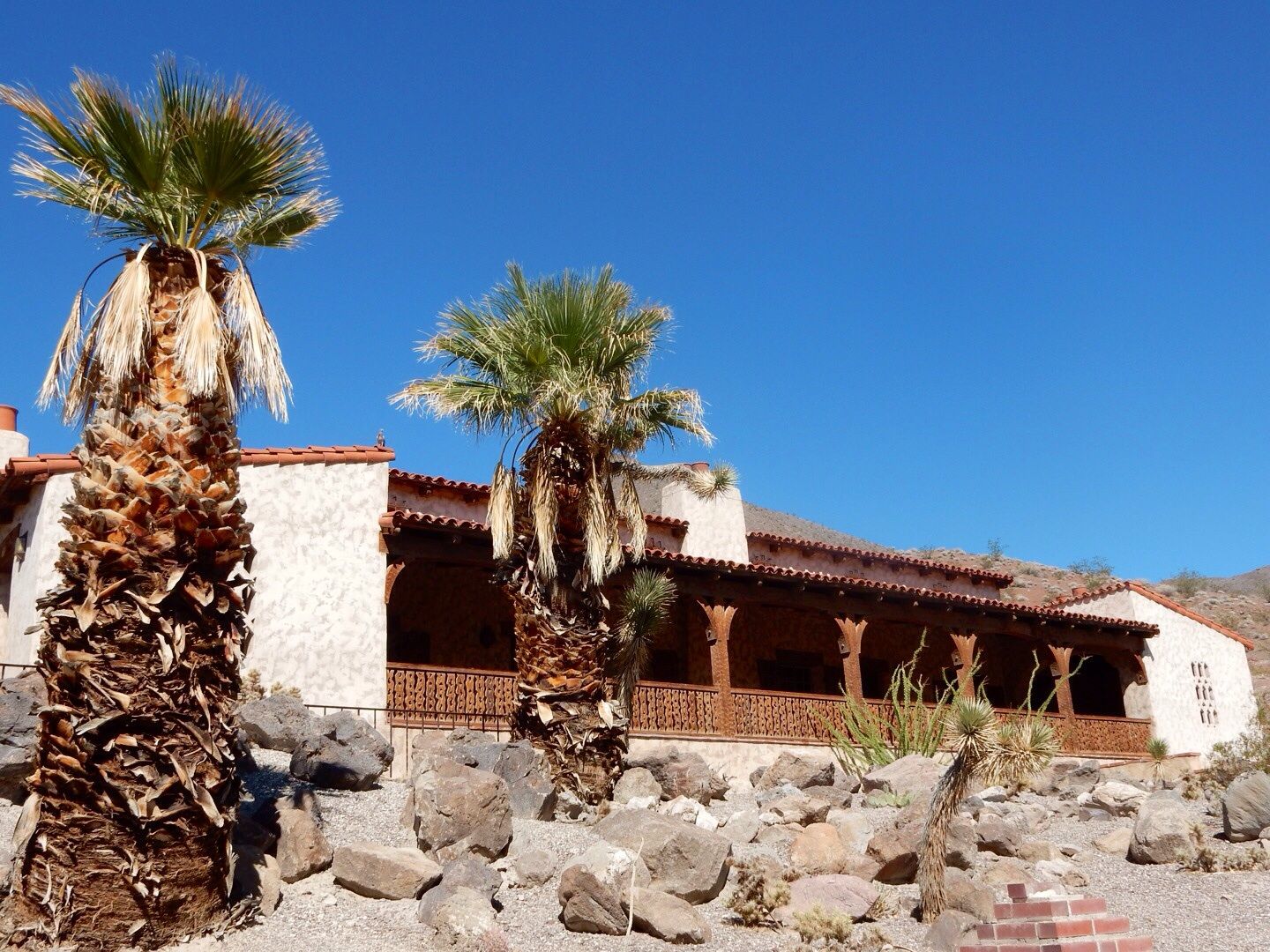
Scotty's Castle is located at an oasis in the very harsh climate of the northeastern area of Death Valley National Park. Once the most popular destination in the Park, it was the grand vacation home built by Albert and Bessie Johnson, Chicago millionaires, in the 1920s.
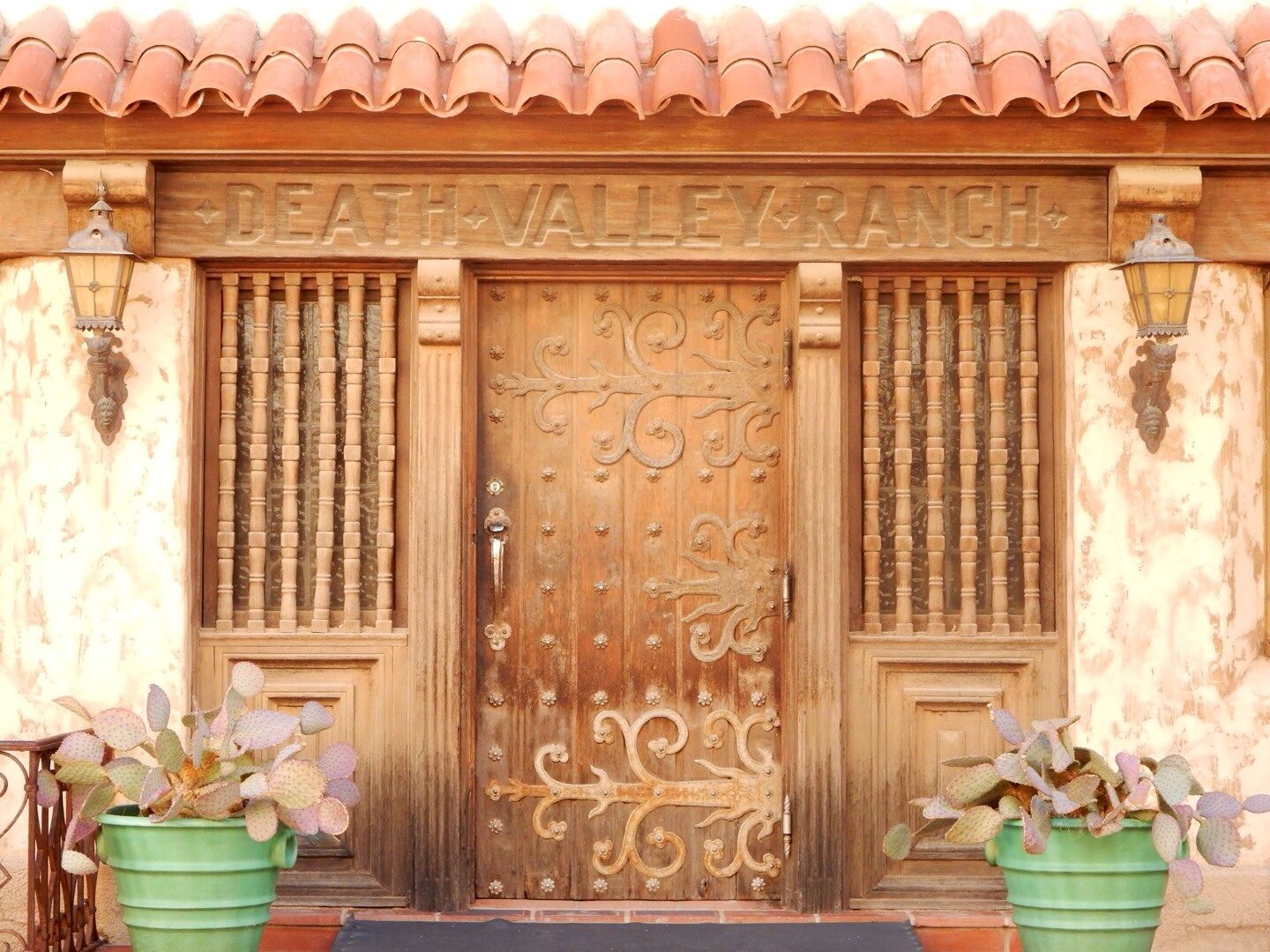
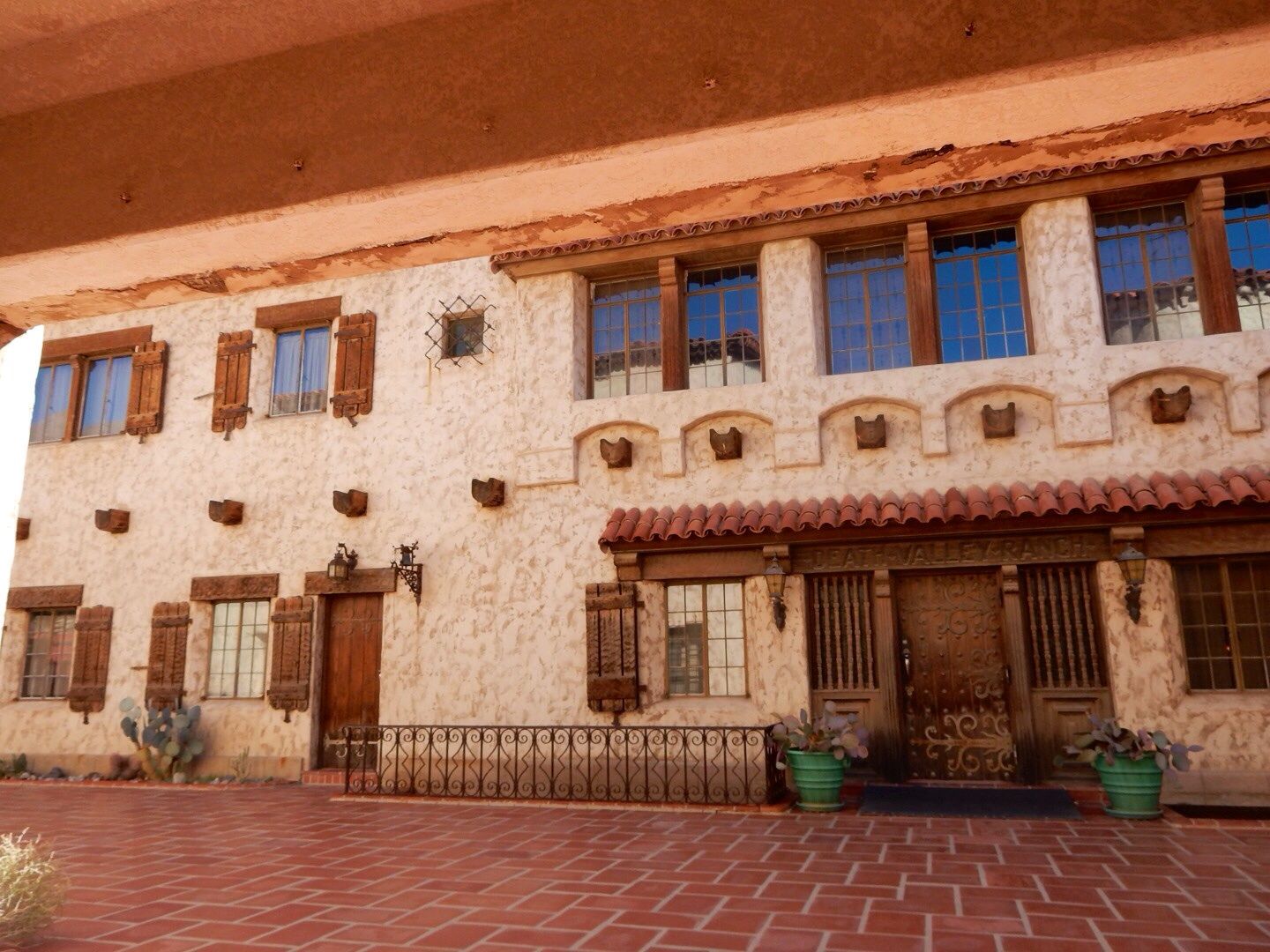
They named their home Death Valley Ranch. Construction started in 1922 and the residence and other buildings in the complex were completed in 1933.
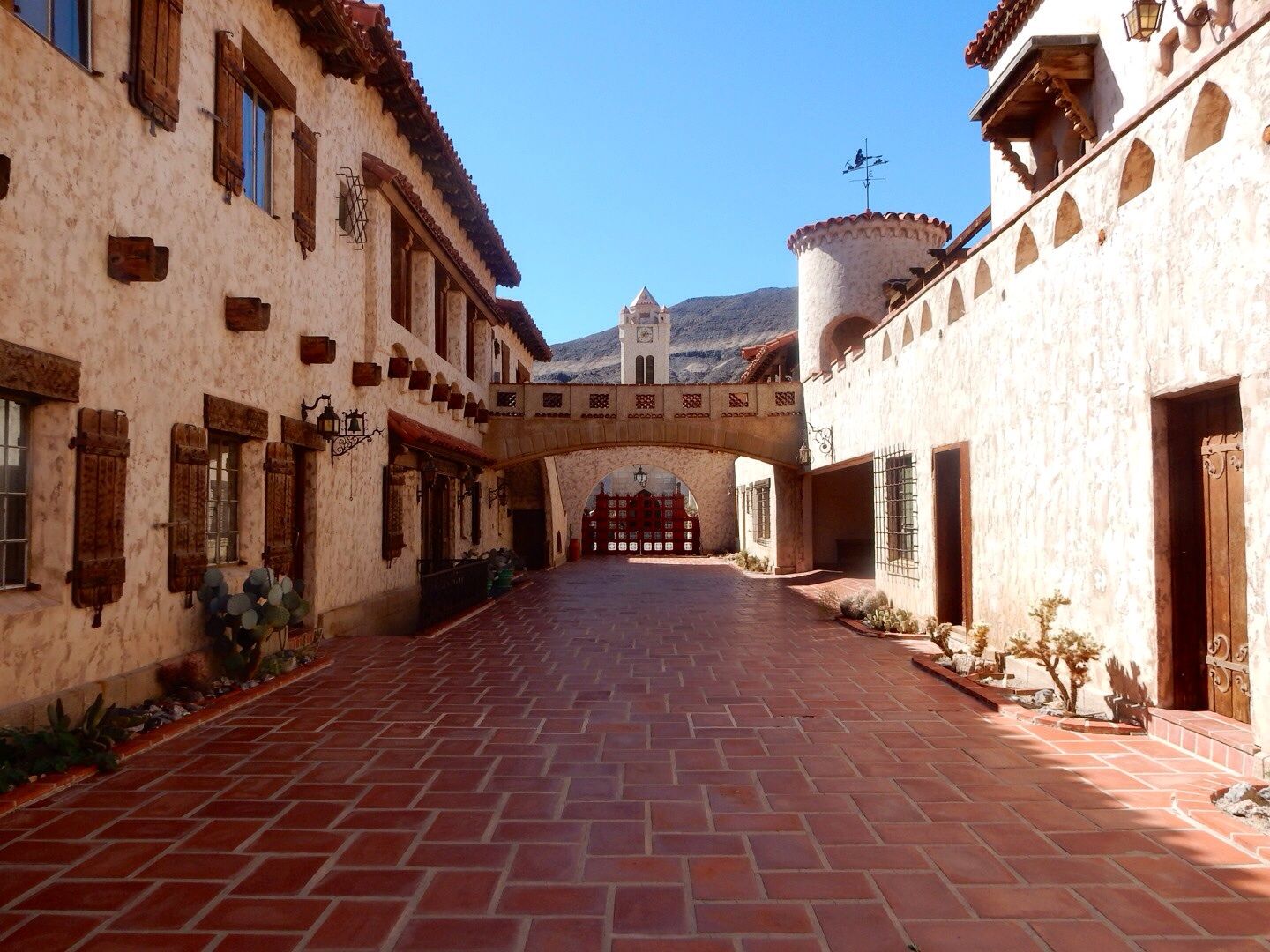
The residence was on the left and the annex with guest bedrooms, etc., on right in this photo.
But the story behind Scotty's Castle involves Walter Scott, known as Death Valley Scotty. He was a national celebrity during the first half of the 1900s. At a young age he was a performing cowboy in Buffalo Bill's Wild West Show. He was very charismatic and known for telling tall tales about the Wild West and how he made his fortune.
Scotty's most well known story was about the gold mine that he had discovered in Death Valley. He travelled to cities in the east to find investors for his mine, promising rich returns on their investments. And this is how he came to know Chicago businessman, Albert Johnson.
Albert wanted a tour of the Death Valley gold mine and Scotty made arrangements for the trip. Scotty orchestrated a staged gunfight to frighten Al away from his visit to the fictitious mine. The plan backfired and instead of being angry at Scotty for the con, Albert and Scotty became life-long friends.
Both Albert and his wife, Bessie, came to love the beautiful tranquility of Death Valley and the environment improved Albert's health issues. In 1922 they started building their vacation home.
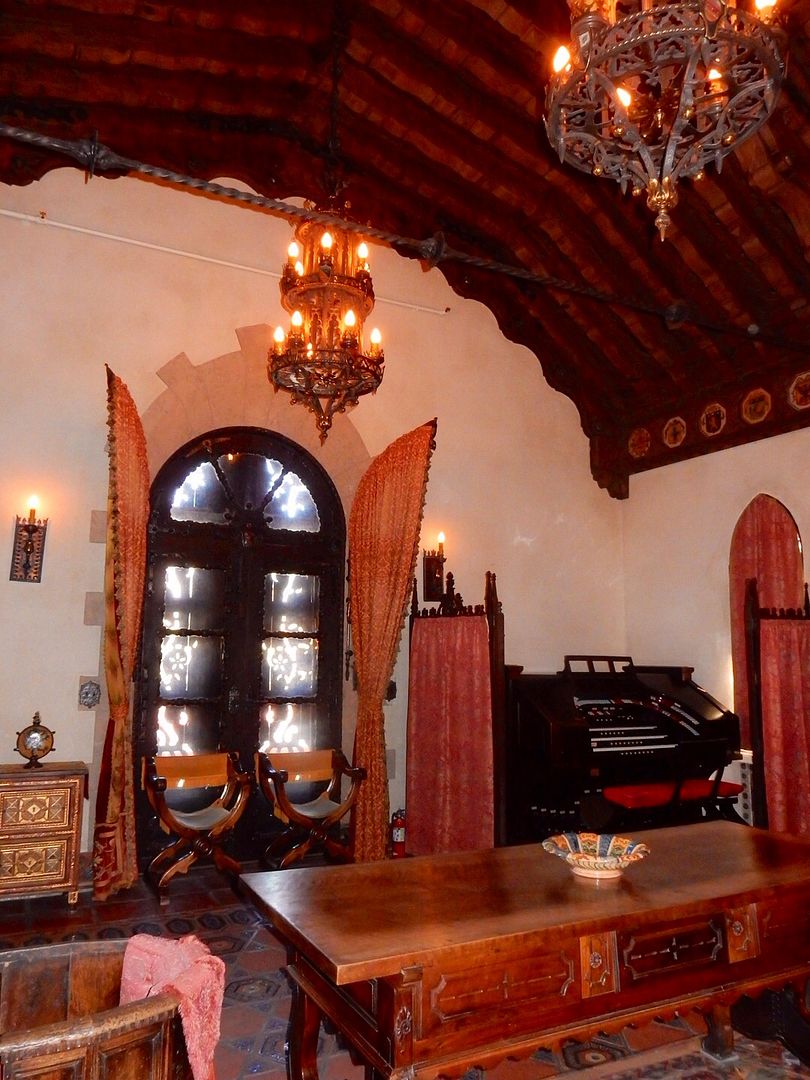
All furnishings (furniture, carpets, drapes, light fixtures, etc.) and clothing are authentic. It is a walk back in time to the 1930s when you walk into the residence.
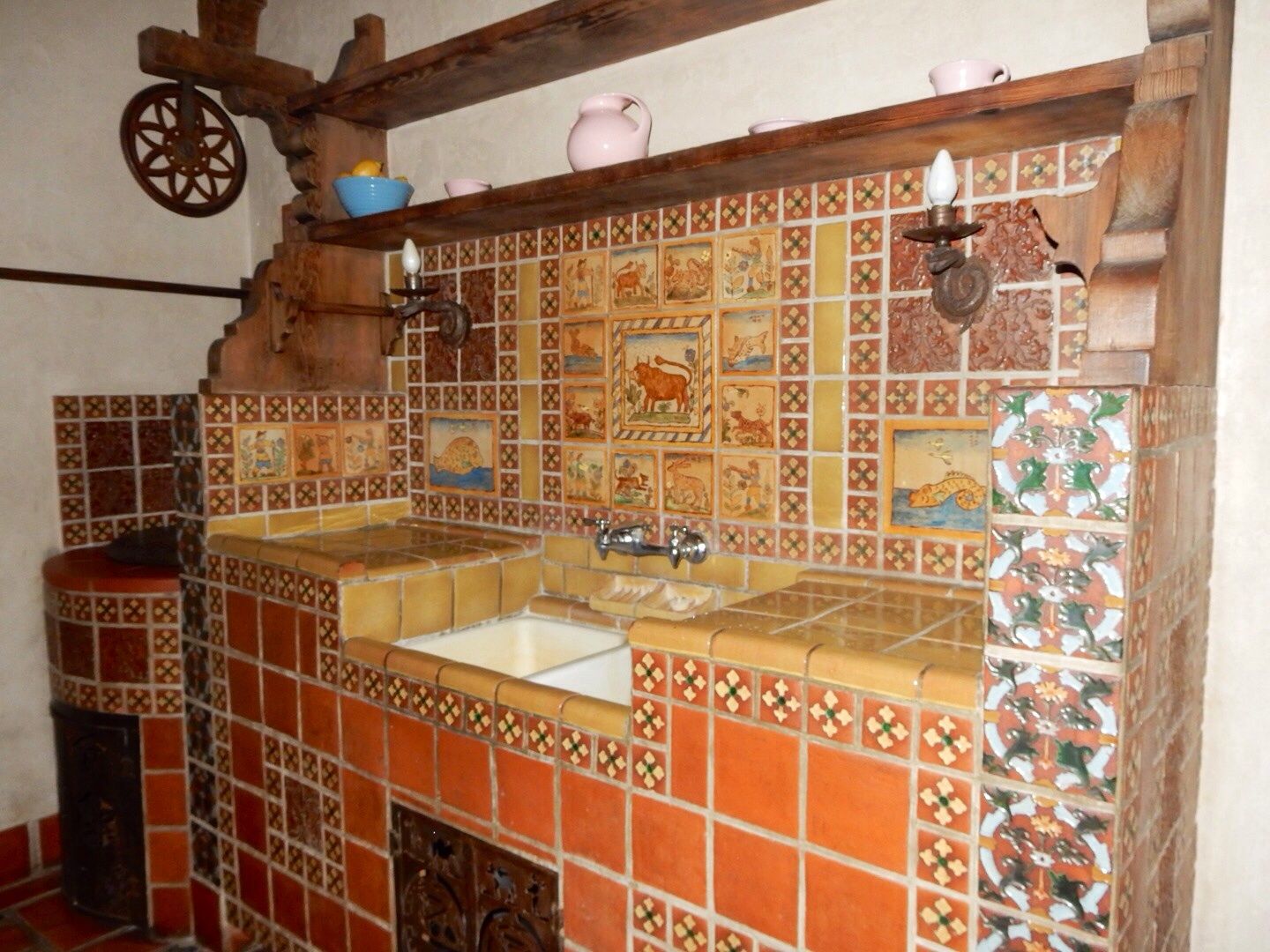
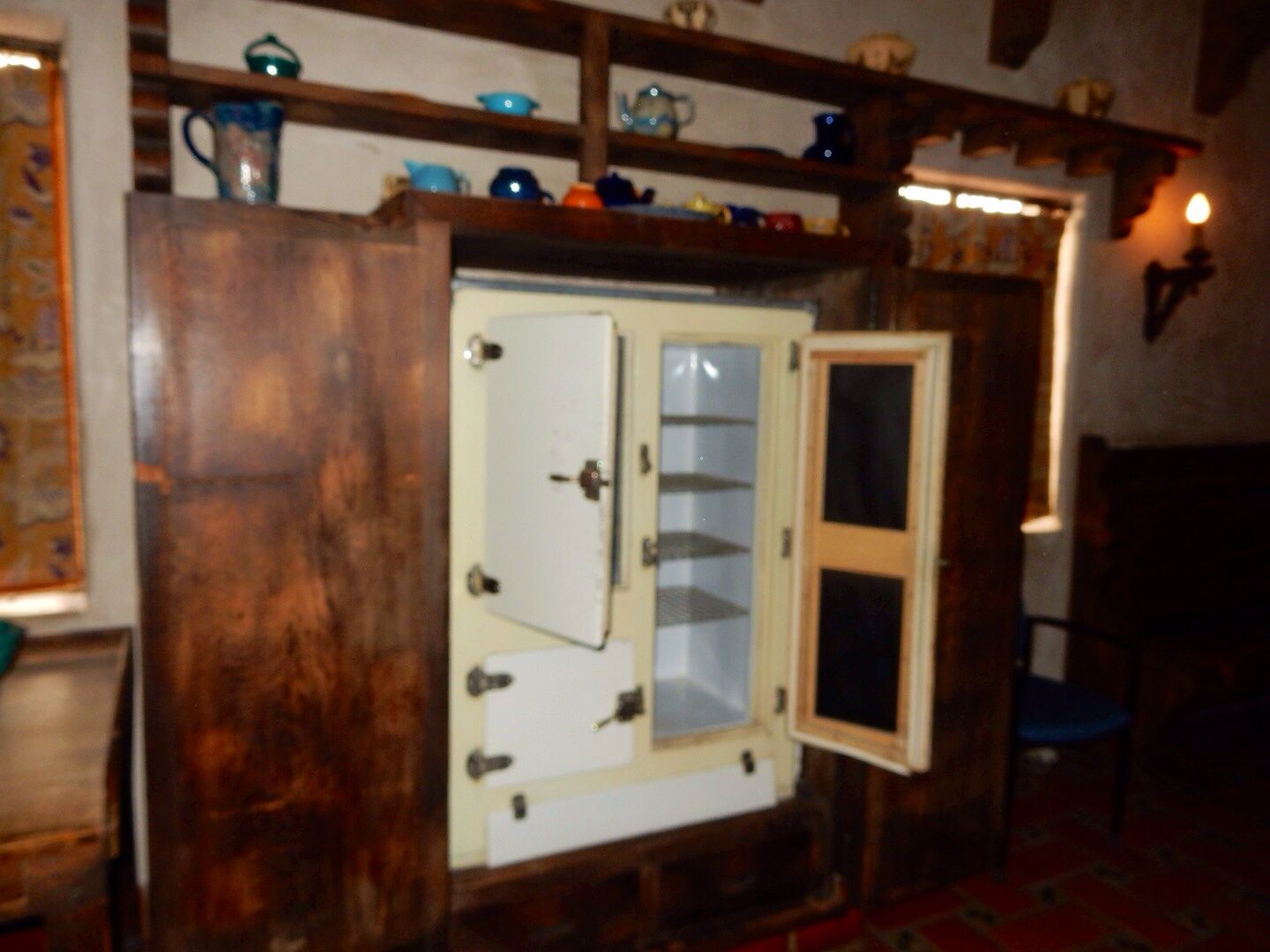
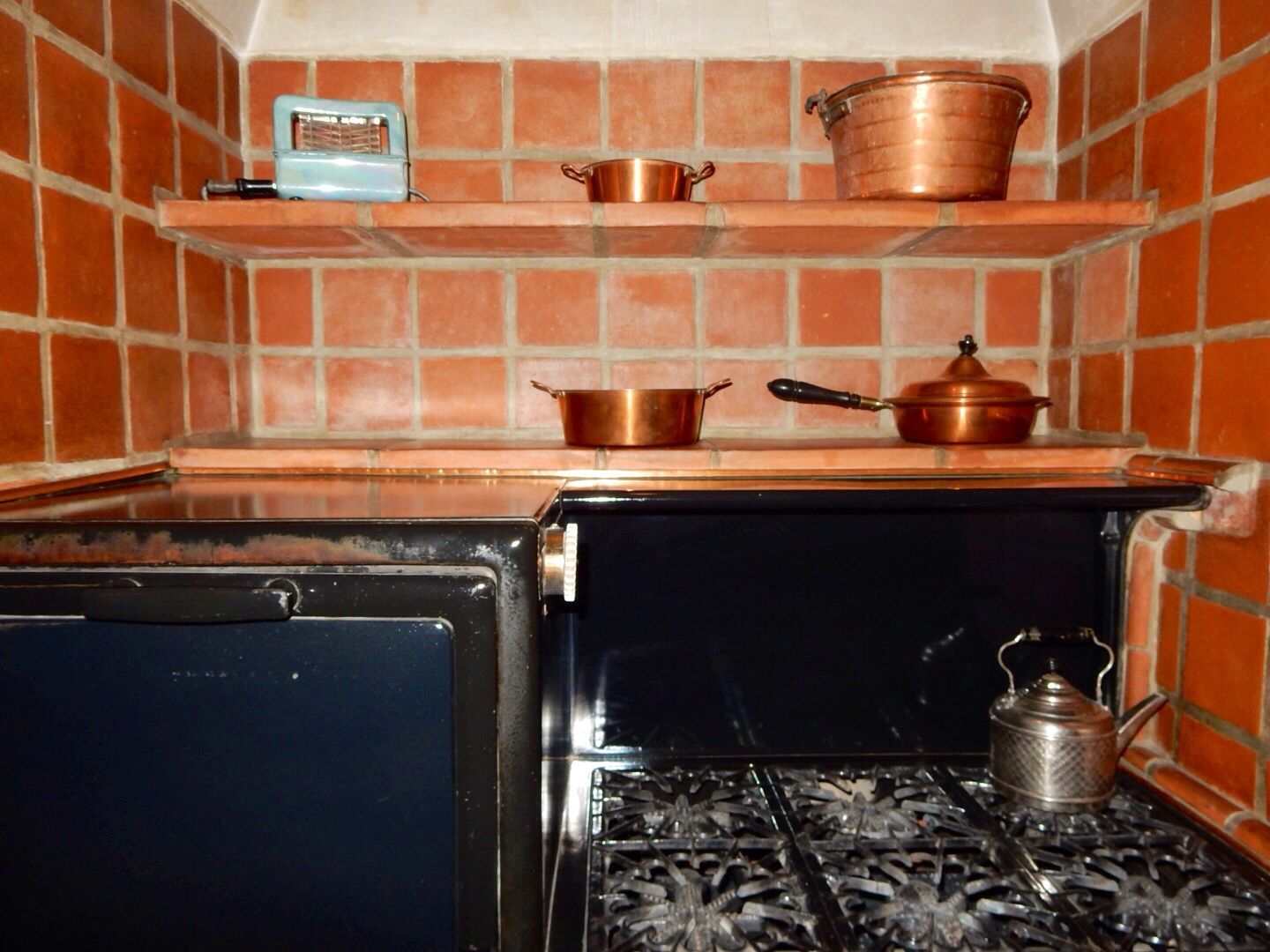
The castle was built to accommodate modern conveniences of the time including running water, electricity, and refrigeration by exploiting the natural spring at the location (Grapevine Canyon). Here are some photos of the very modern (at the time) kitchen.
Refrigerator!
Gas stove (check out the green toaster in top left of photo).
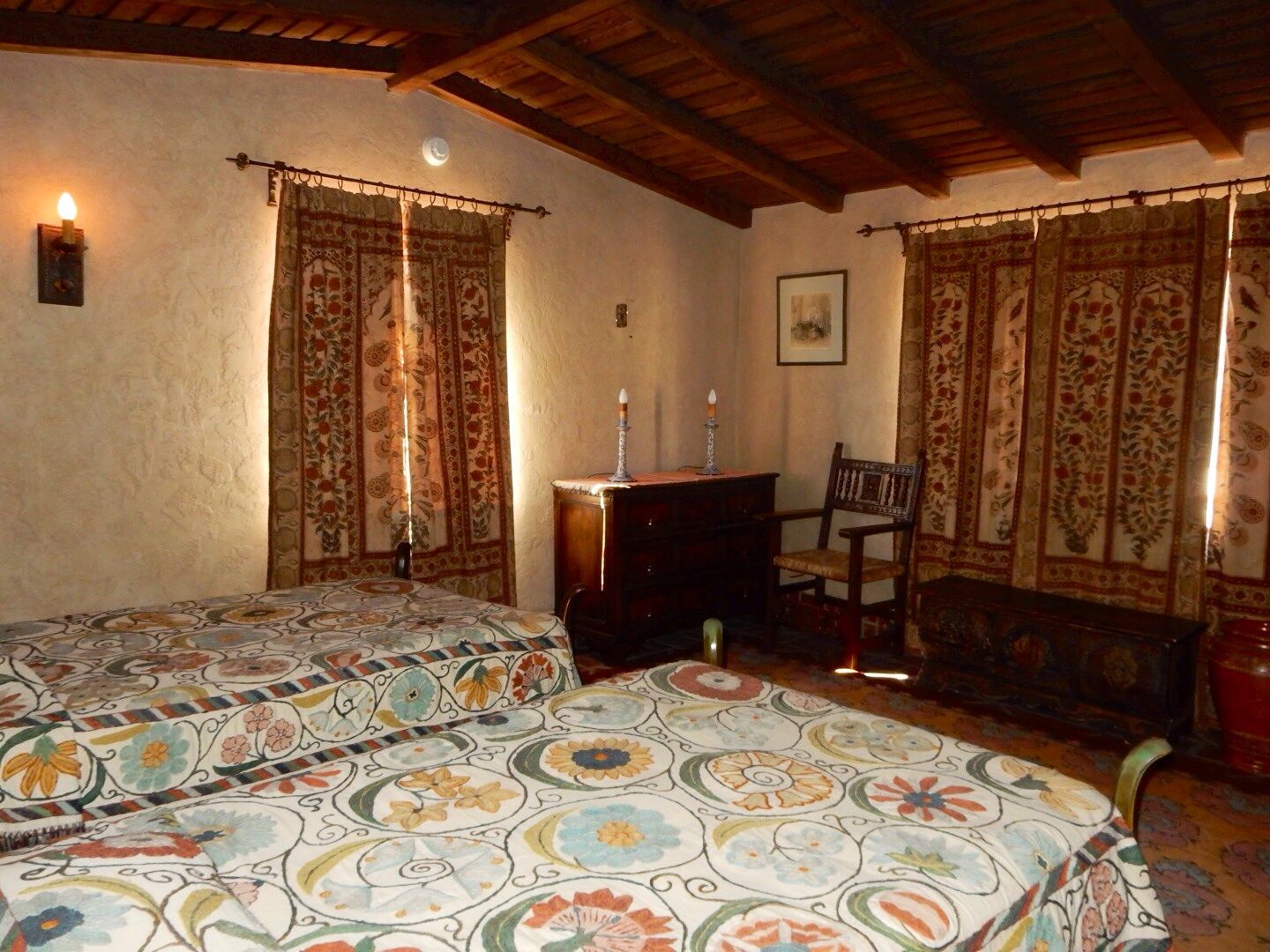
Even when financial issues arose during the Great Depression, tourism to Death Valley continued to grow. The Johnsons had no interest in entertaining guests and left those duties to Scotty, who loved the role...always the cowboy with tall tales. Eventually, guests could pay to stay at the castle and additional accommodations were also built. Here's a photo of one of the guest rooms.
Due to Scotty's widespread fame, this became a very popular destination and many famous individuals visited including presidents and celebrities. Even though the Johnsons knew that the mine was a fraud, Al continued to provide Scotty with a monthly stipend. In return for the money Al gave to Scotty over many years, Al said that Scotty gave him laughs in return.
Scotty became the host of the castle as the Johnsons preferred their privacy. While Scotty had a bedroom at the castle, he never slept there.
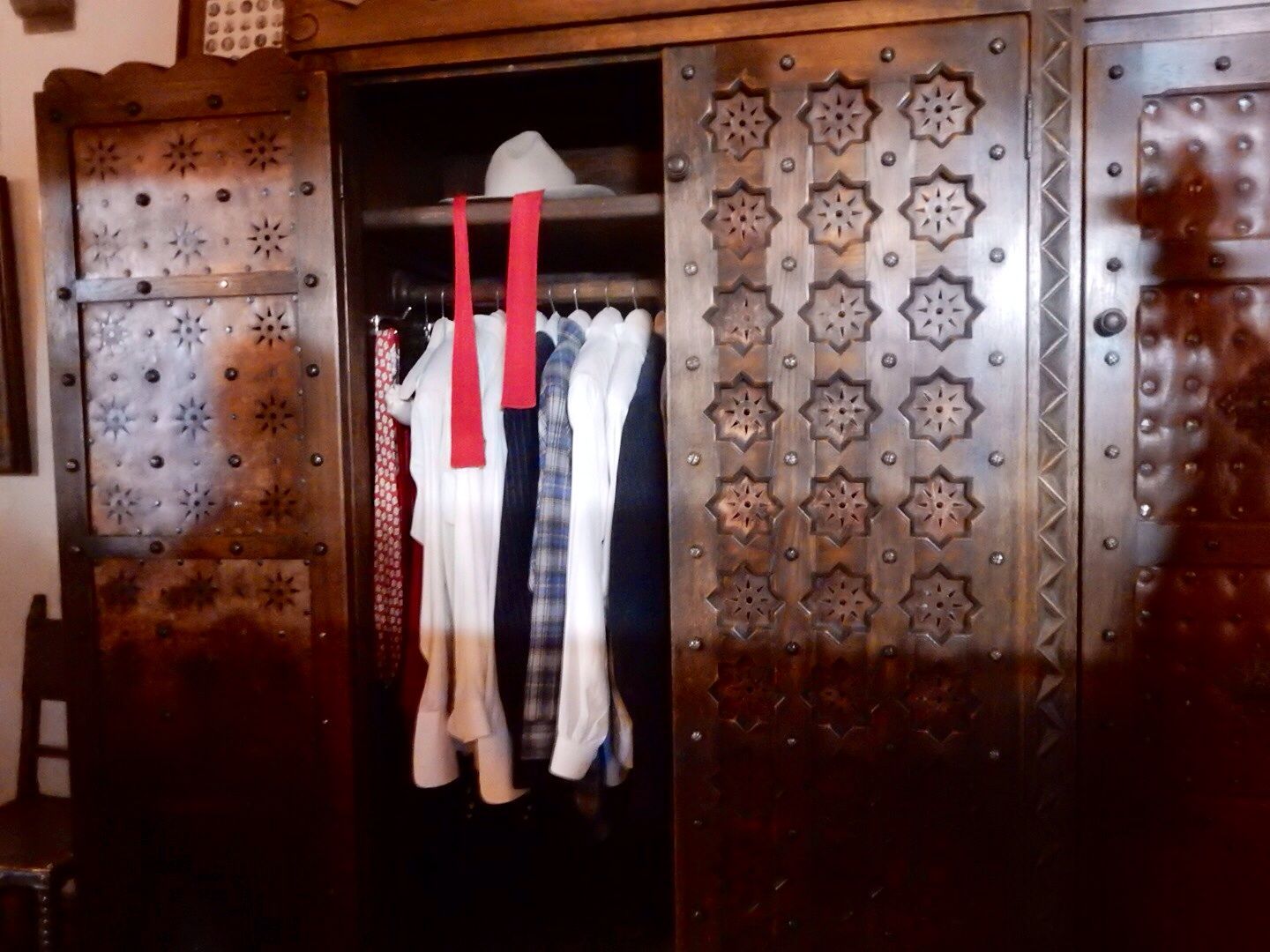
Scotty's clothes hanging in the wardrobe in his bedroom.
Rifles outside of the entrance to Scotty's bedroom.
Unbeknownst to the visitors of the castle, Scotty preferred instead his humble dwelling several miles away that he drove to every night in his Dodge.
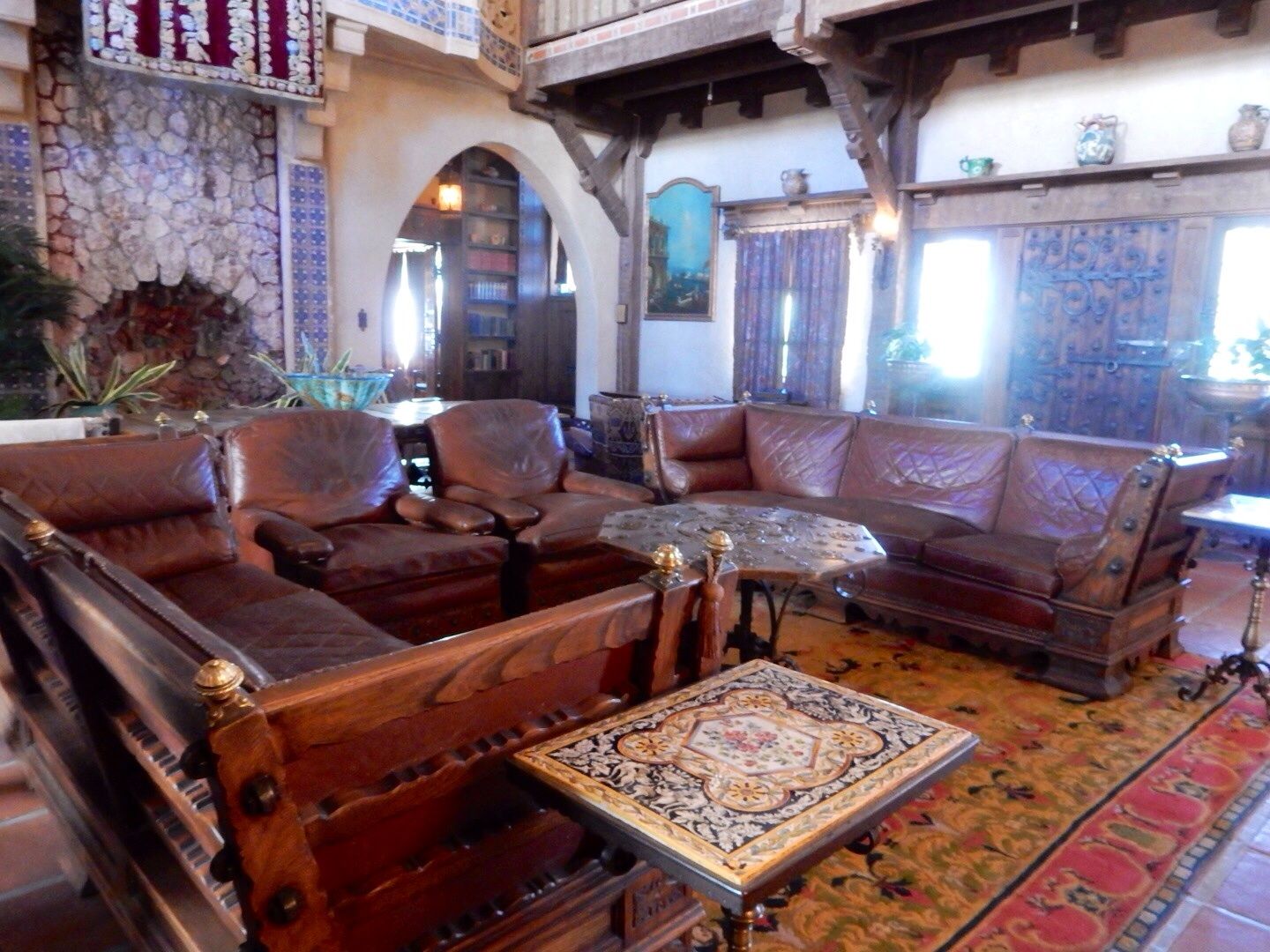
Scotty would regale the Johnsons and eventually visitors to the Castle with his exaggerated stories of the west in the beautiful sitting room.
The stone structure in the background of the photo below is a water fountain ... pipes at the top would allow water to flow down the rocks thereby cooling the room during hot weather.
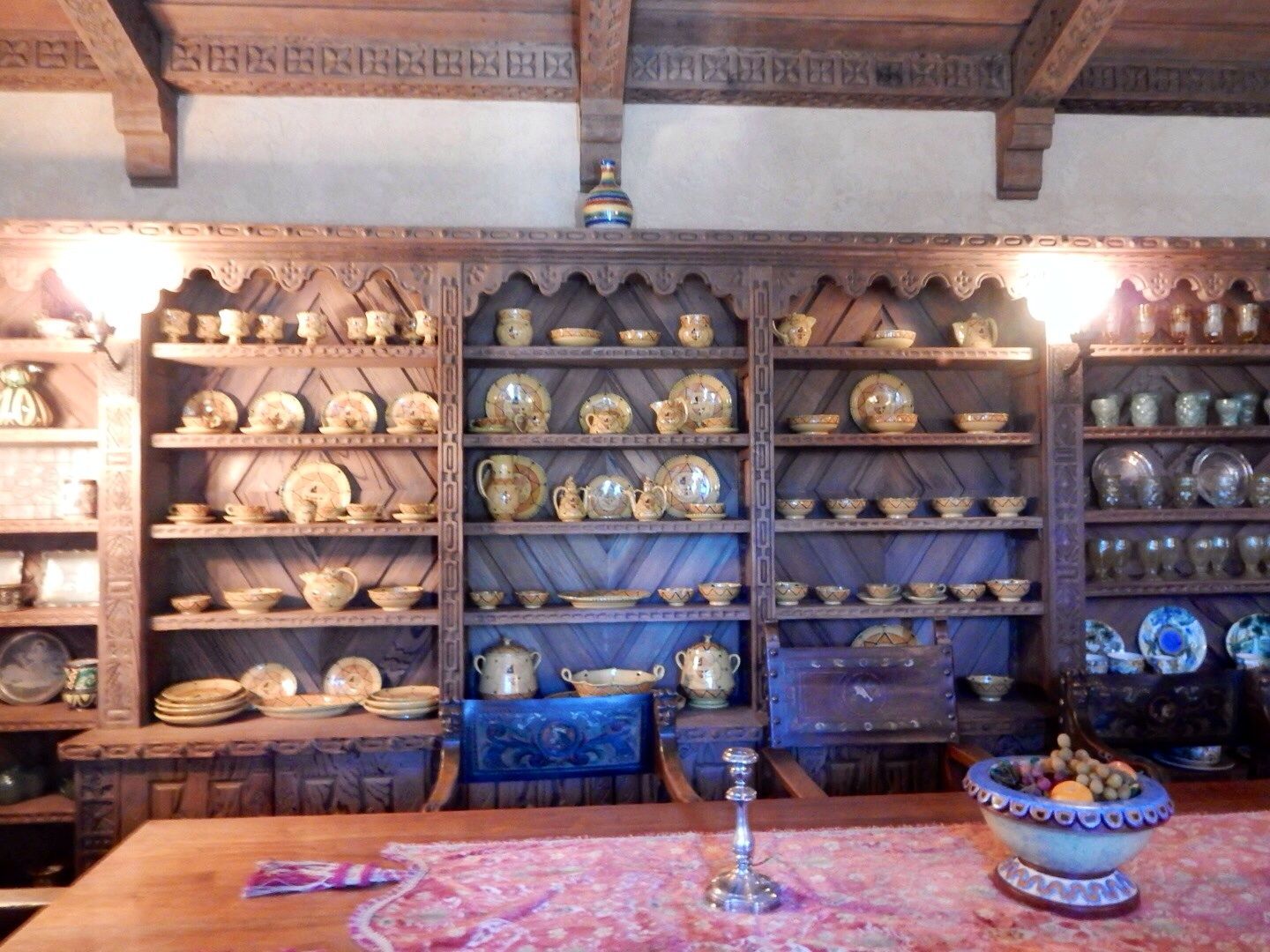
Guests enjoyed dinner in the dining room where Scotty was, of course, the entertainment. Note the beautiful Italian dishes.
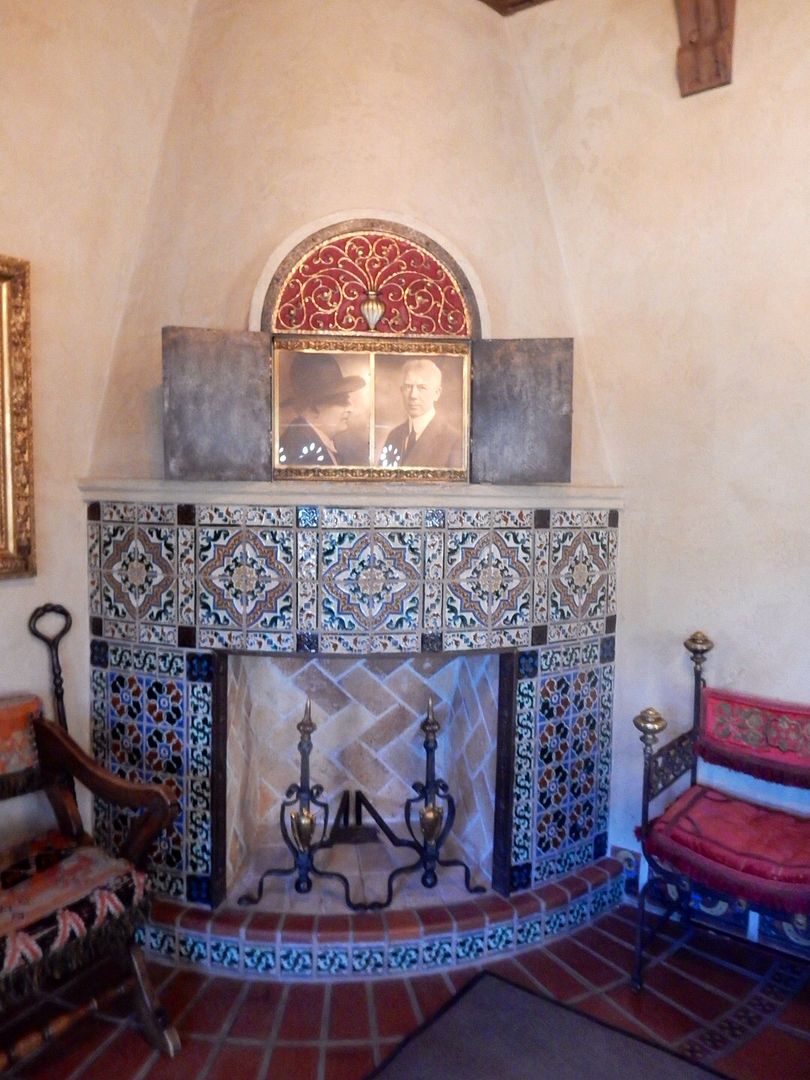
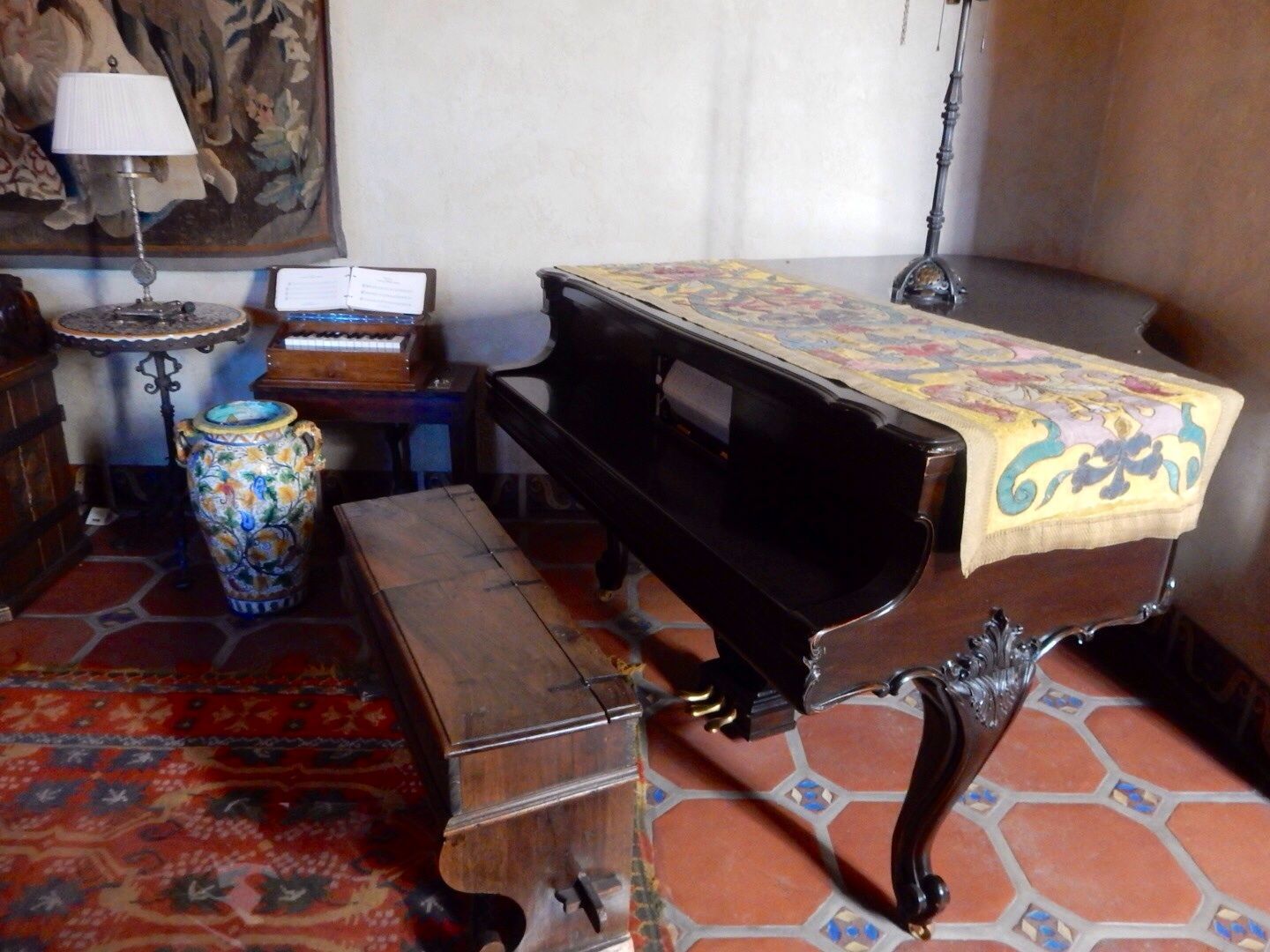
First floor music room. Photos of Scotty and Al Johnson above the fireplace.
Player piano in the music room. Neither Scotty nor the Johnsons could play any musical instruments, but there were two music rooms and were a primary source of entertainment (in addition to Scotty, of course).
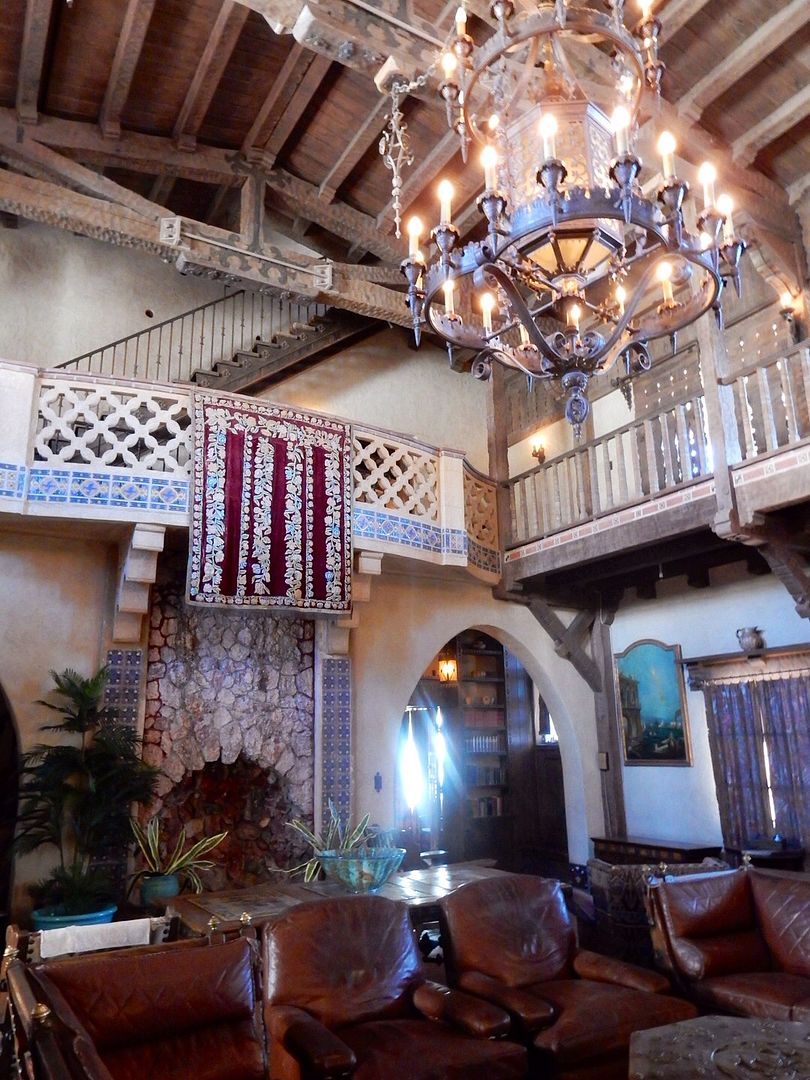
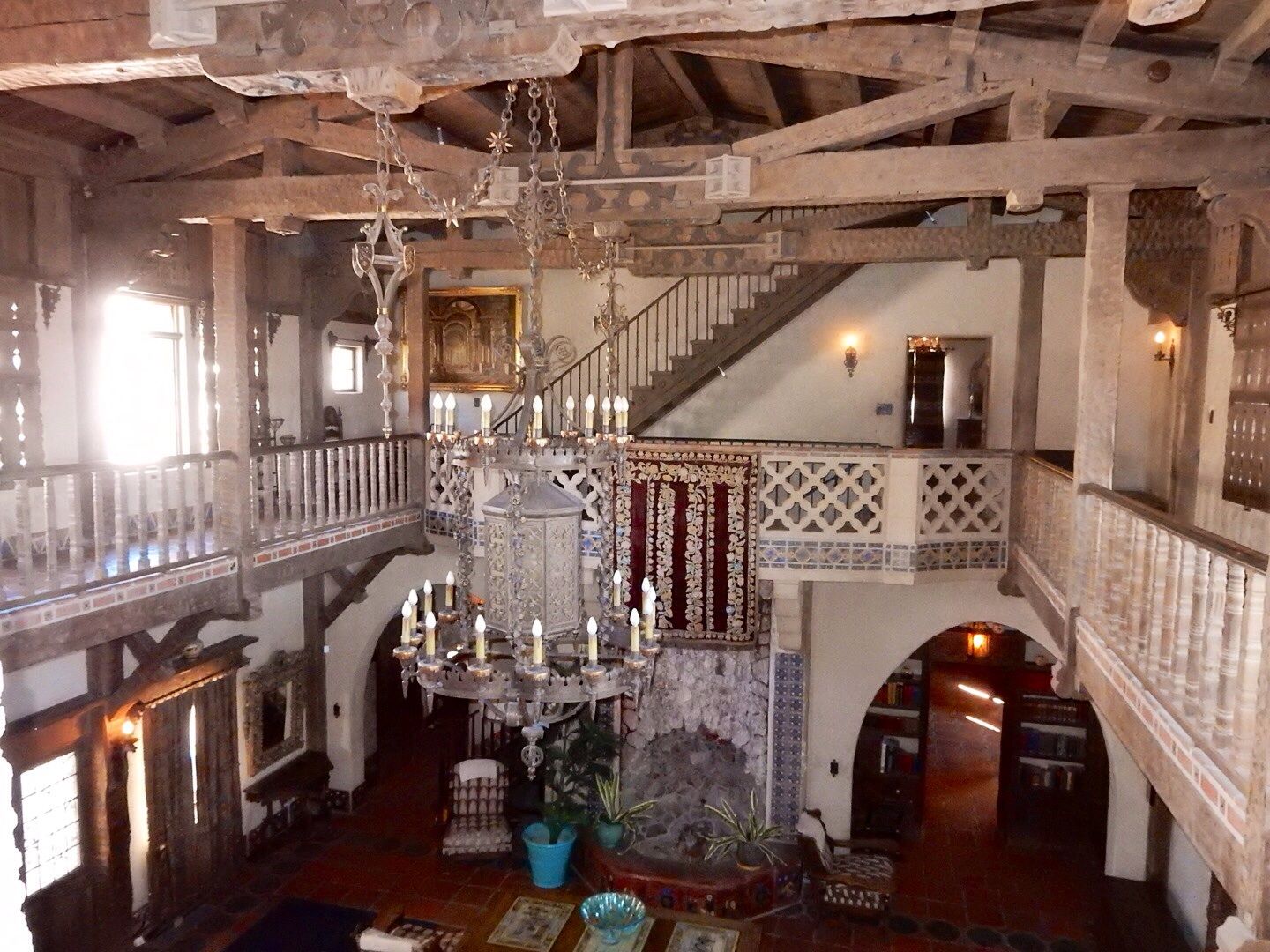
View of the main room from the second floor where there were two bedroom suites - one for the Johnsons and the other for guests.
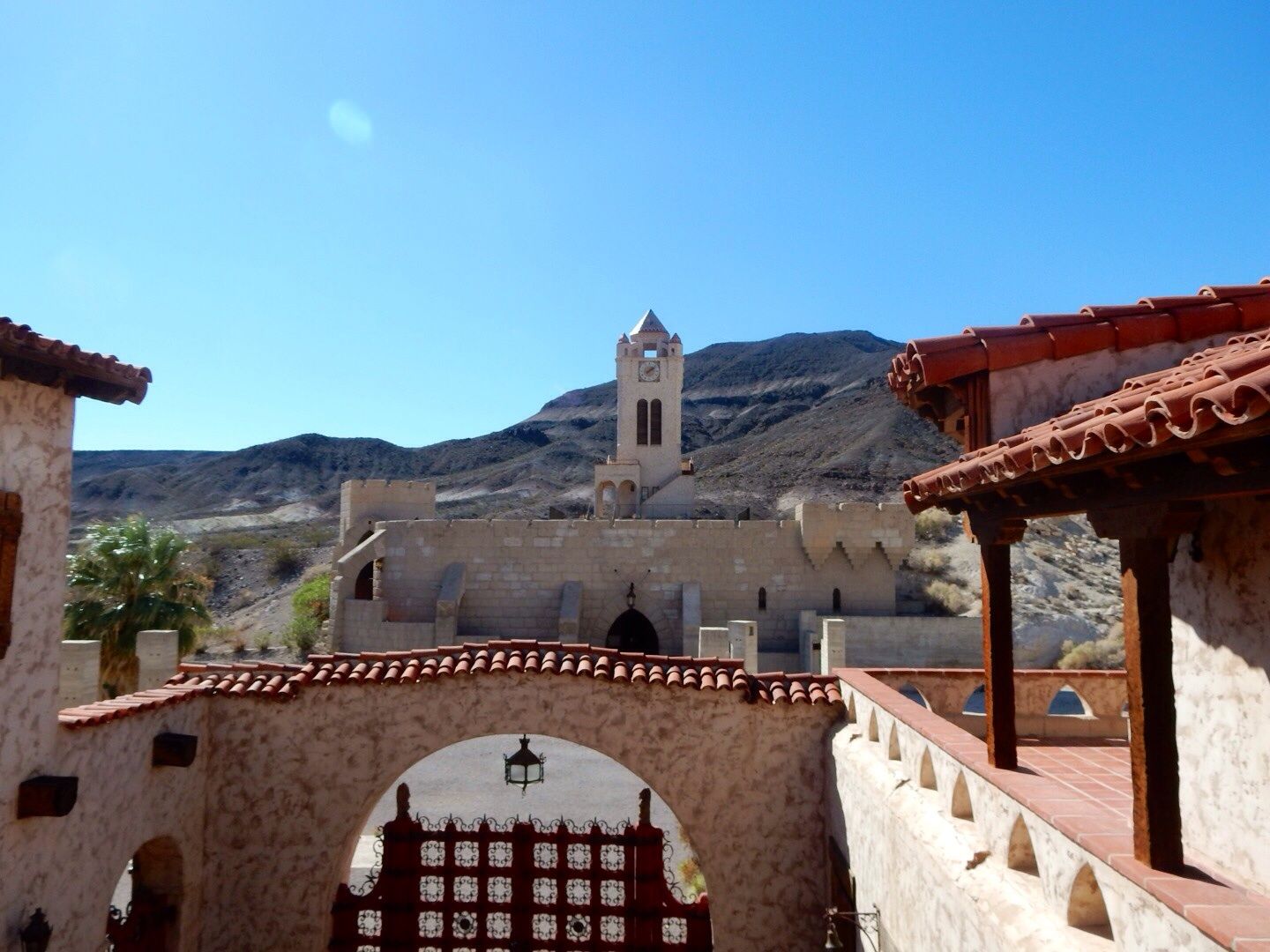
A bridge at this level connected the residence to the annex building. Here's the view from the bridge.
The chime tower was constructed in 1928-1930 and had a 16-tone carillon. Nine tones and a roll player were subsequently added.
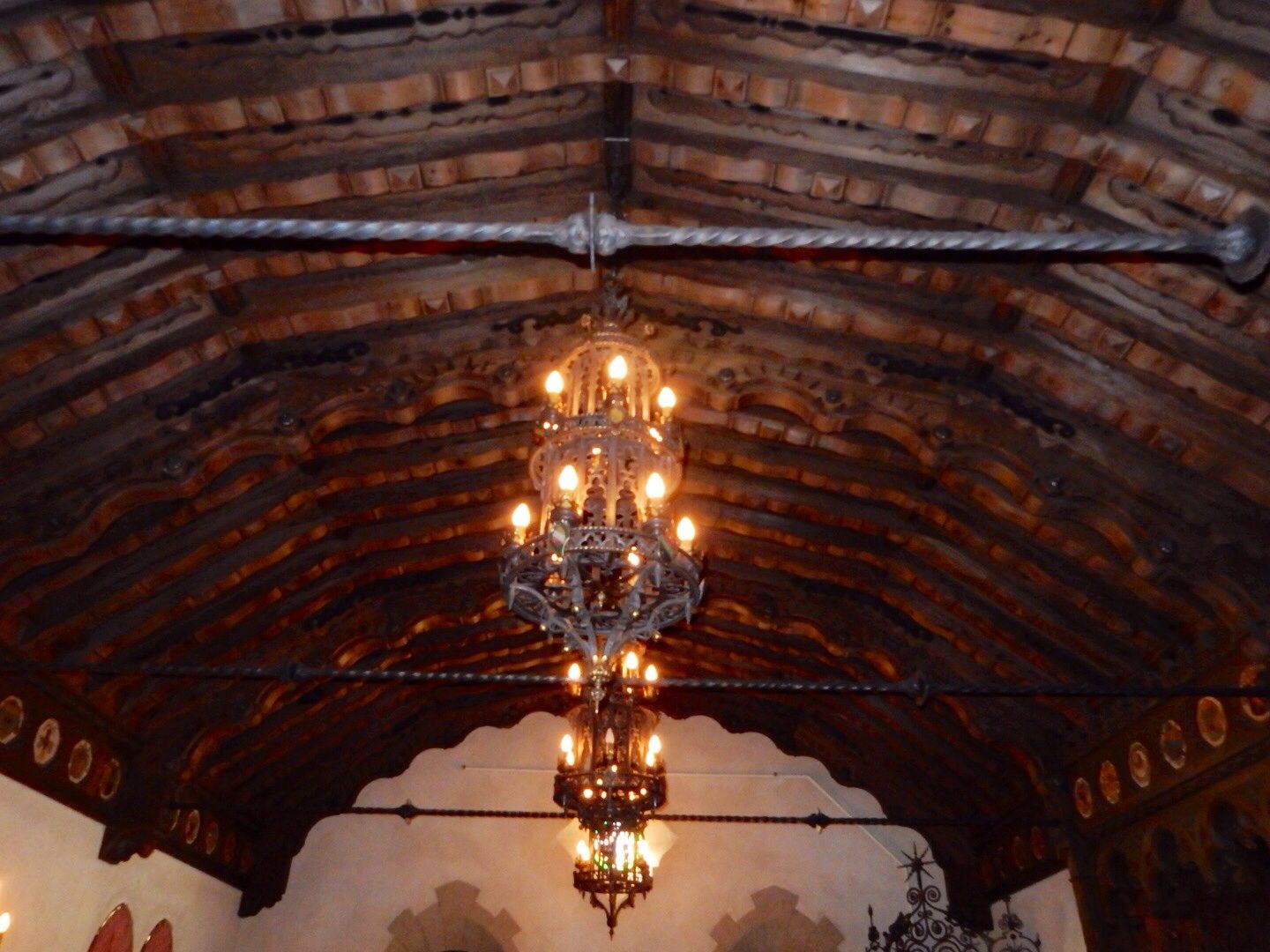
The annex building had a large and elaborate music room on the second floor. They had 400 rolls of music for the automated organ.
Elaborate carved ceiling.
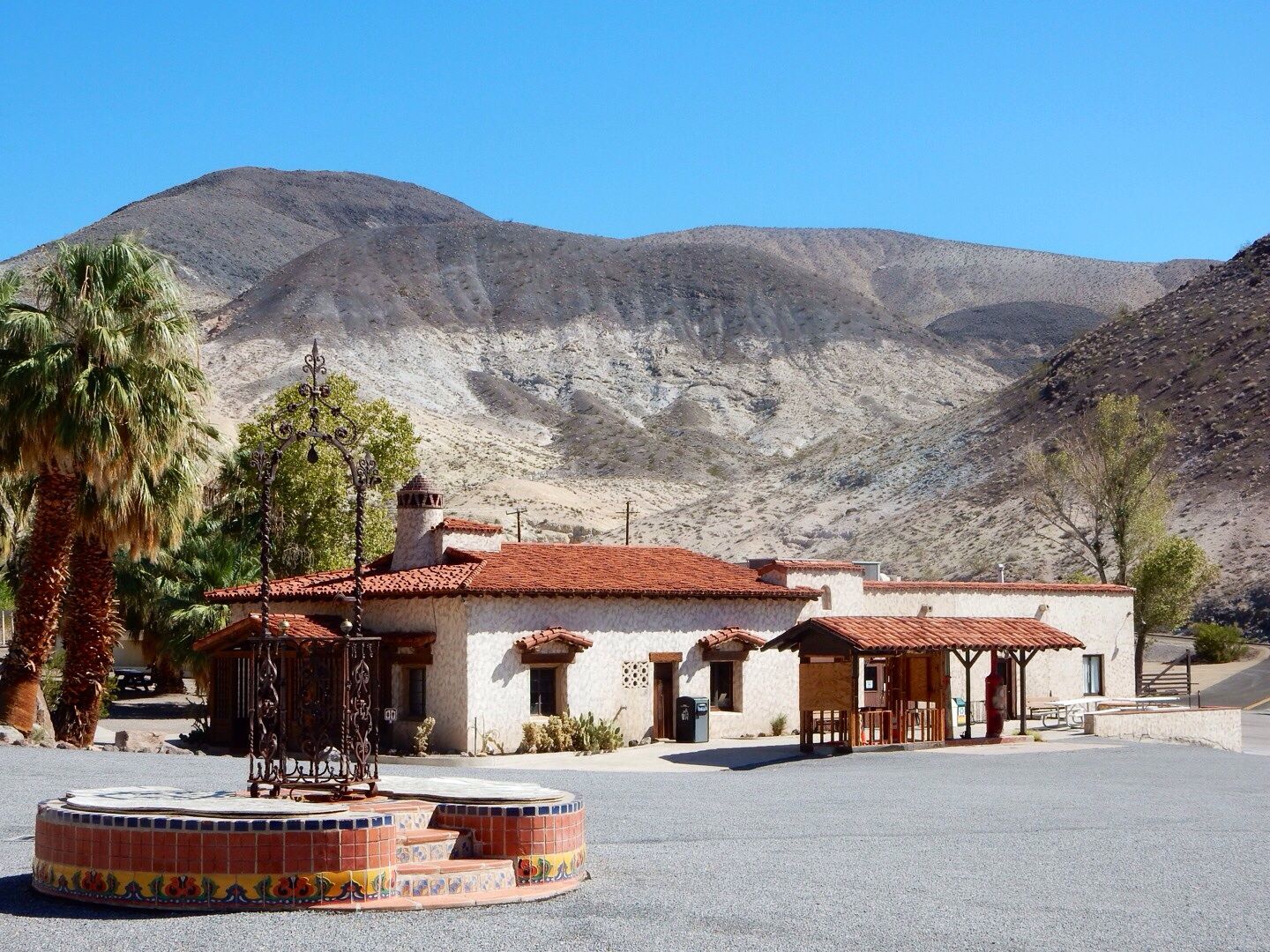
There were various other buildings constructed during the 1920s in the complex. Below is what is currently the visitor center. It was originally 2 apartments and a garage.
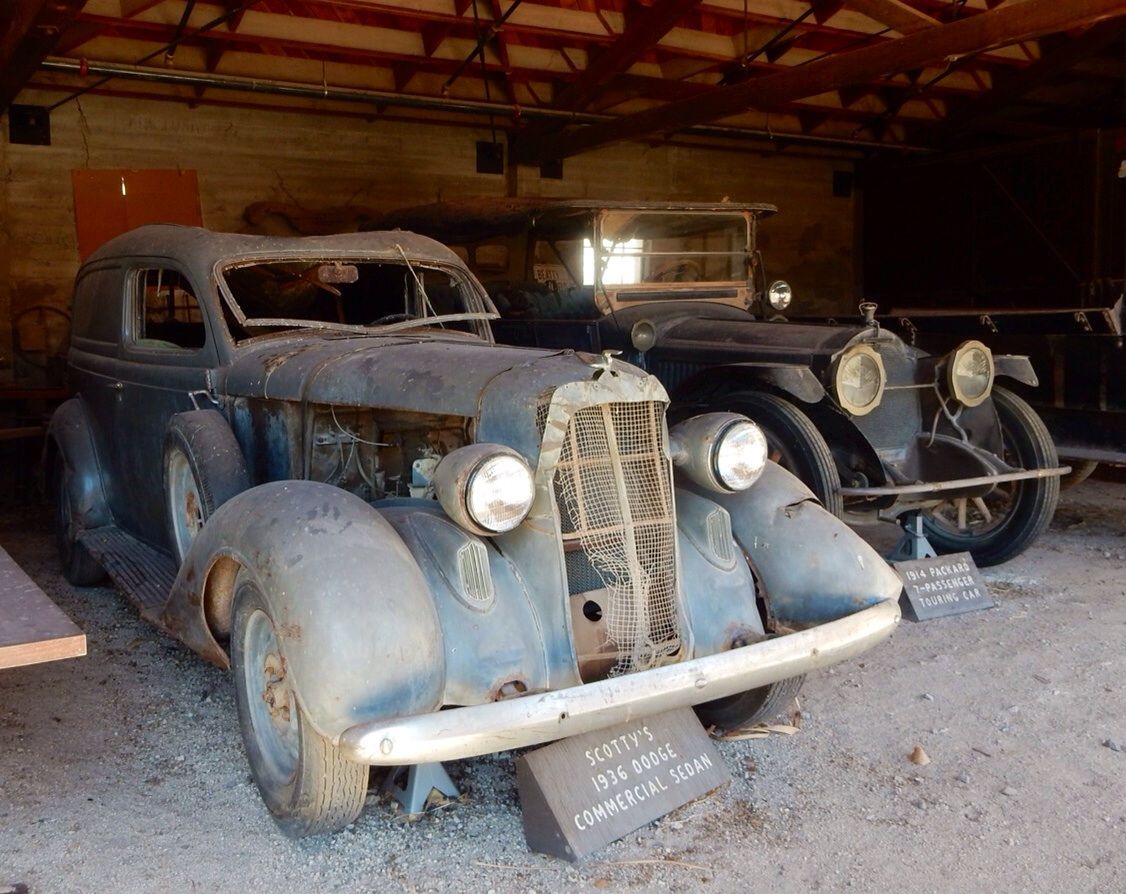
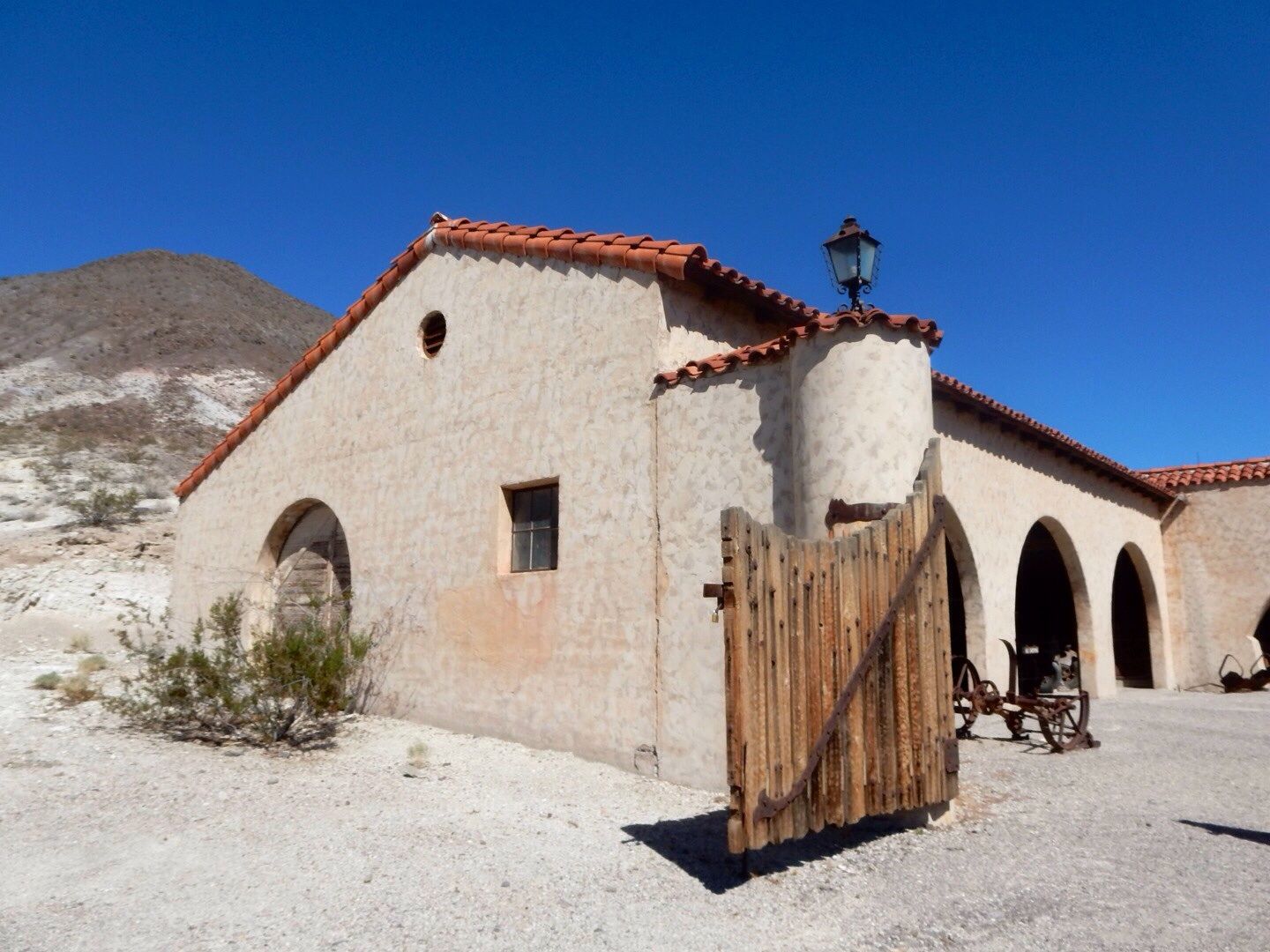
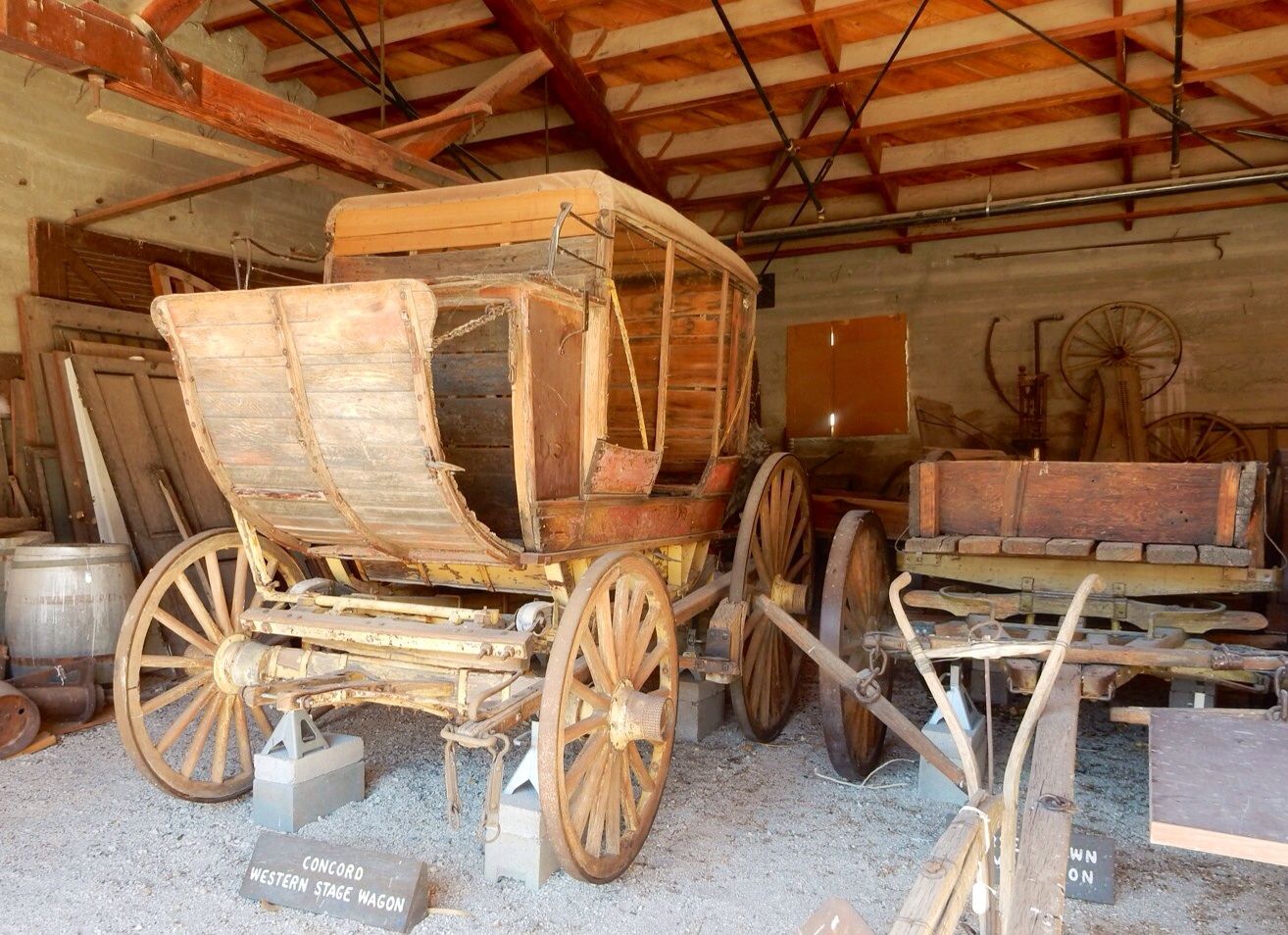
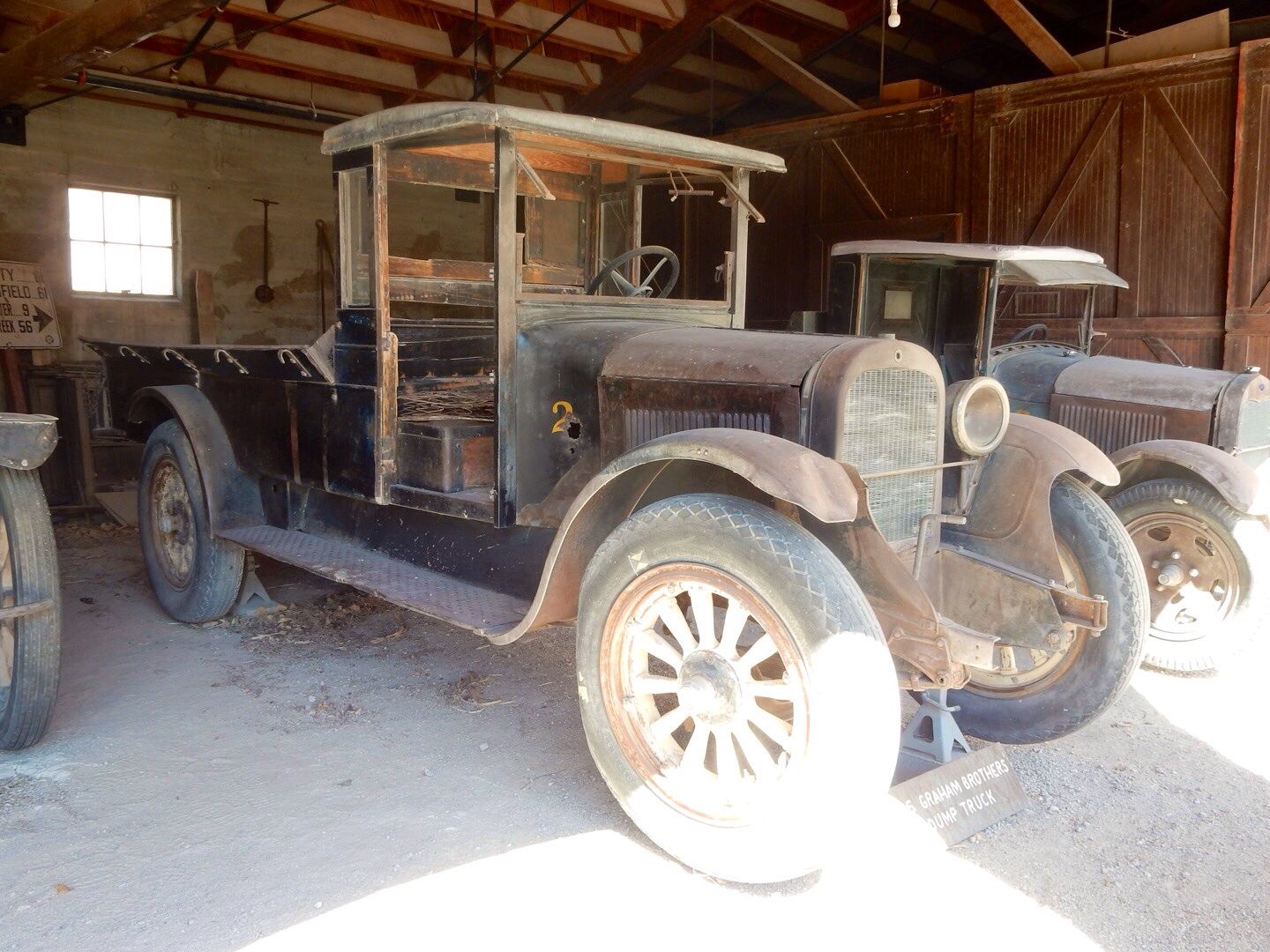
The stables housed animals and feed. Today it is used to display historic cars, wagons, and other equipment.
Concord Stage Coach.
Dump trucks
The hacienda was built to house Johnsons guests. It had two apartments and a shared kitchen and was completed in 1930.
Scotty's grave is located on hill behind the castle.
The only way to see the interior of Scotty's Castle is by a guided tour. The cost is $15/adult or half-price if you have a senior pass in addition to the cost of admission to Death Valley National Park ($20/vehicle for a 7-day pass or free with senior pass). There is a self-guided tour (pick up info at the Visitor Center) for which there is no cost.
The tour is very interesting and lasts about an hour. Tours can be reserved in advance by calling 877-444-6777 or at the following website:
www.recreation.gov. Or, tours are first-come, first served, the day of the tour although during the busy season you will likely need to wait an hour or two. There is also an underground tour (same cost, same reservation information) that provides a look at the basement and tunnels under the castle. You can learn about the technology used to make this vacation home nearly self-sufficient. That tour is about an hour as well.
Website:
www.nps.gov/deva