Tuesday, September 23, 2014

Ash Meadows National Wildlife Refuge - 9/22/14

This is the largest remaining oasis in the Mojave Desert with at least 26 plant and animal species found nowhere else on the planet! Ash Meadows is located approximately 25 miles northwest of Pahrump, NV. All roads in the Refuge are unpaved, so plan to take your time exploring the area.


Boardwalks provide easy access to three of the key sites of interest here while assuring the protection of the fragile environment. The boardwalks are located at the Point of Rocks area; Crystal Spring; and the historic stone cabin of infamous gunslinger, Jack Longstreet, and Longstreet Creek.

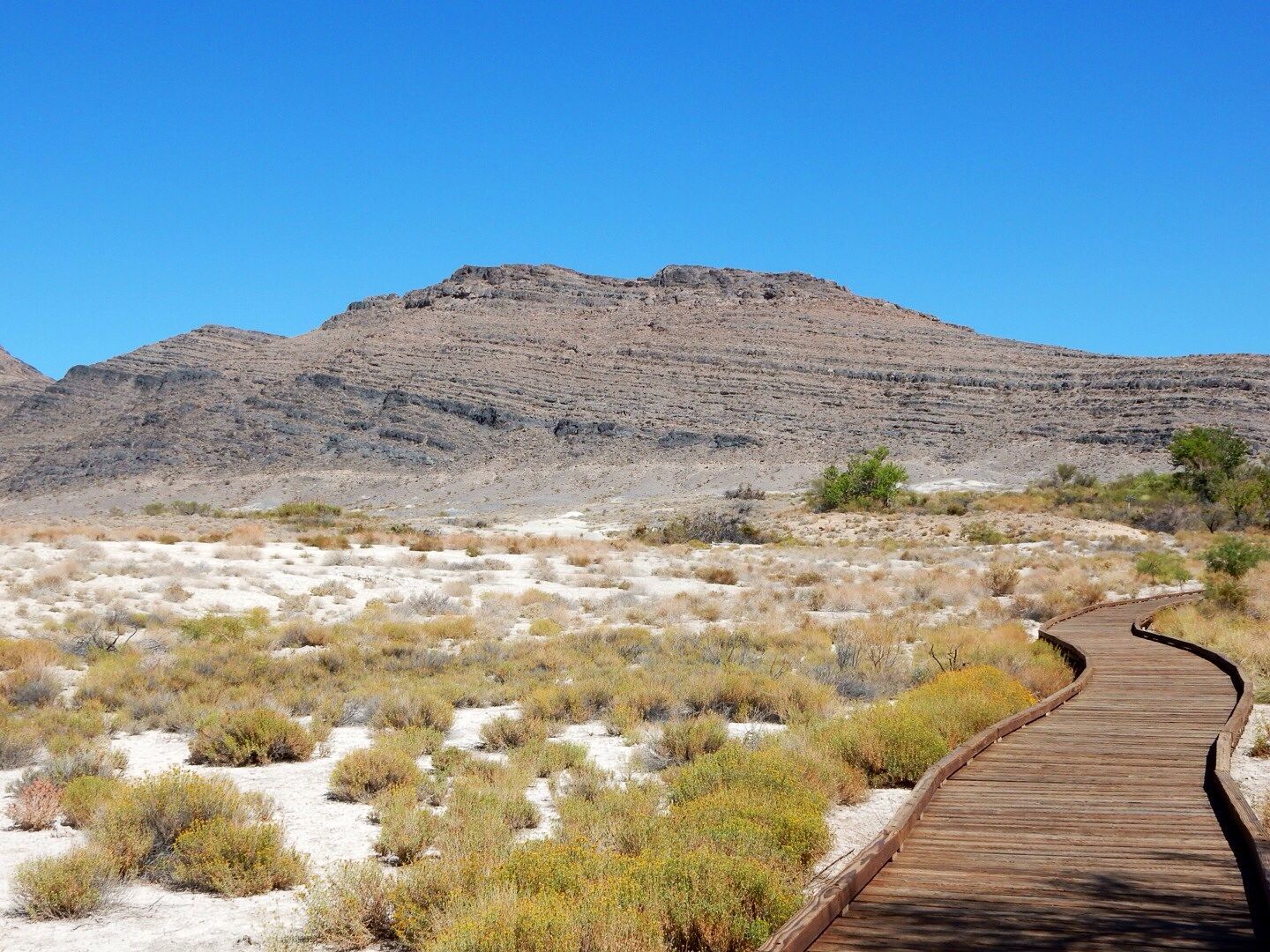
Point of Rocks Boardwalk: Entering from the southern entrance, we turned right onto Point of Rocks road to the parking area where the Boardwalk to King's Pool can be found.

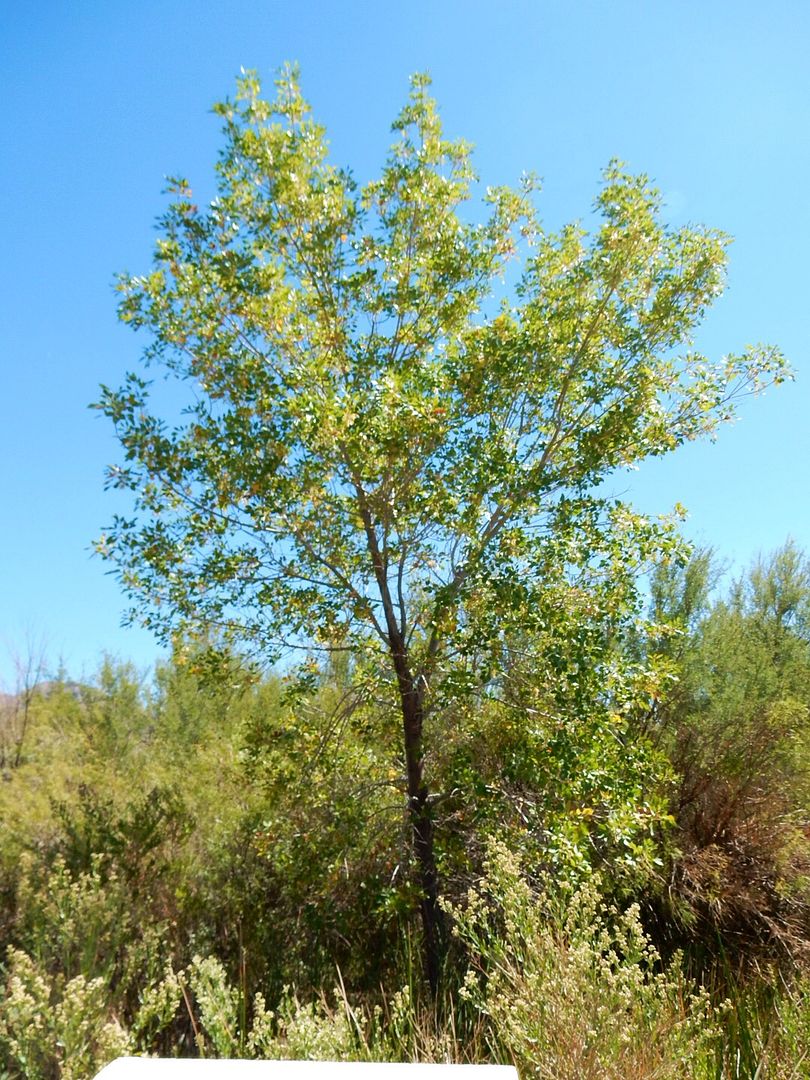
Ash Meadows was named for the Leatherleaf Ash tree. In the 1890s these groves of them were abundant. By 1980, only a few remained. Today, the trees are making a comeback. Here's a photo of the leatherleaf ash.
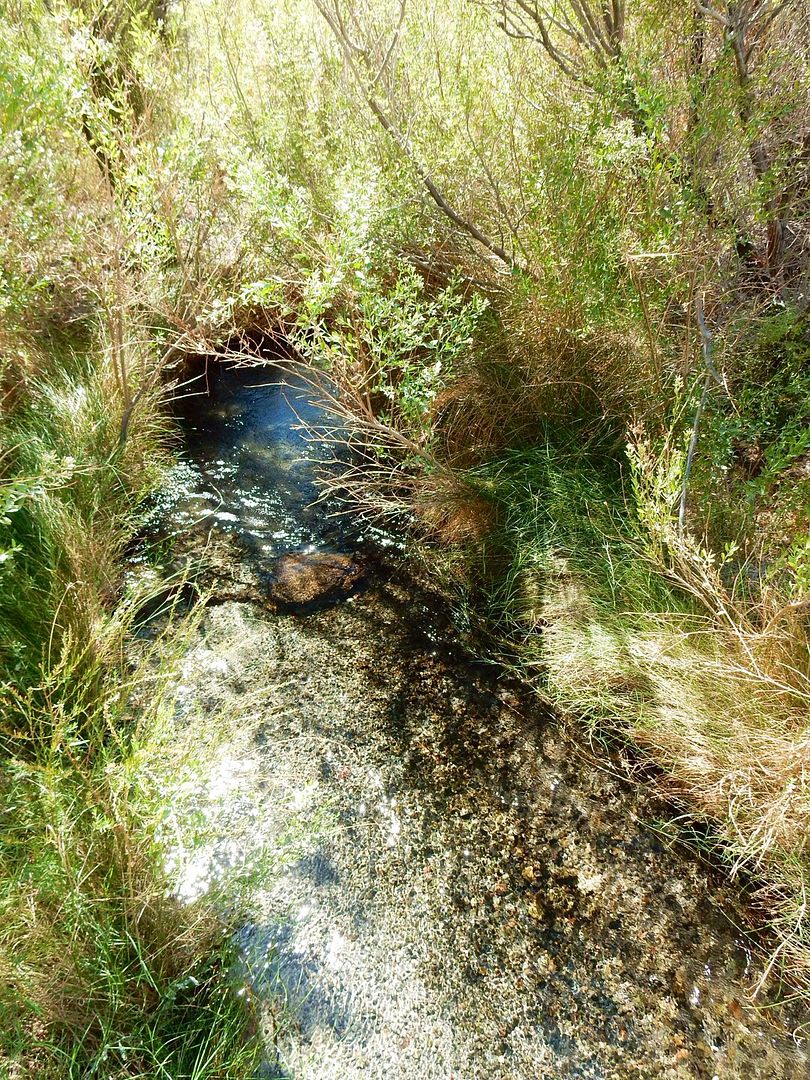
There are four desert fish, called living fossils, who have adapted over thousands of years while many others became extinct. They are the Devils Hole pupfish, the Warm Springs pupfish, Ash Meadows Amargosa pupfish, and the Ash Meadows speckled dace. They can be found in springs and pools throughout Ash Meadow.

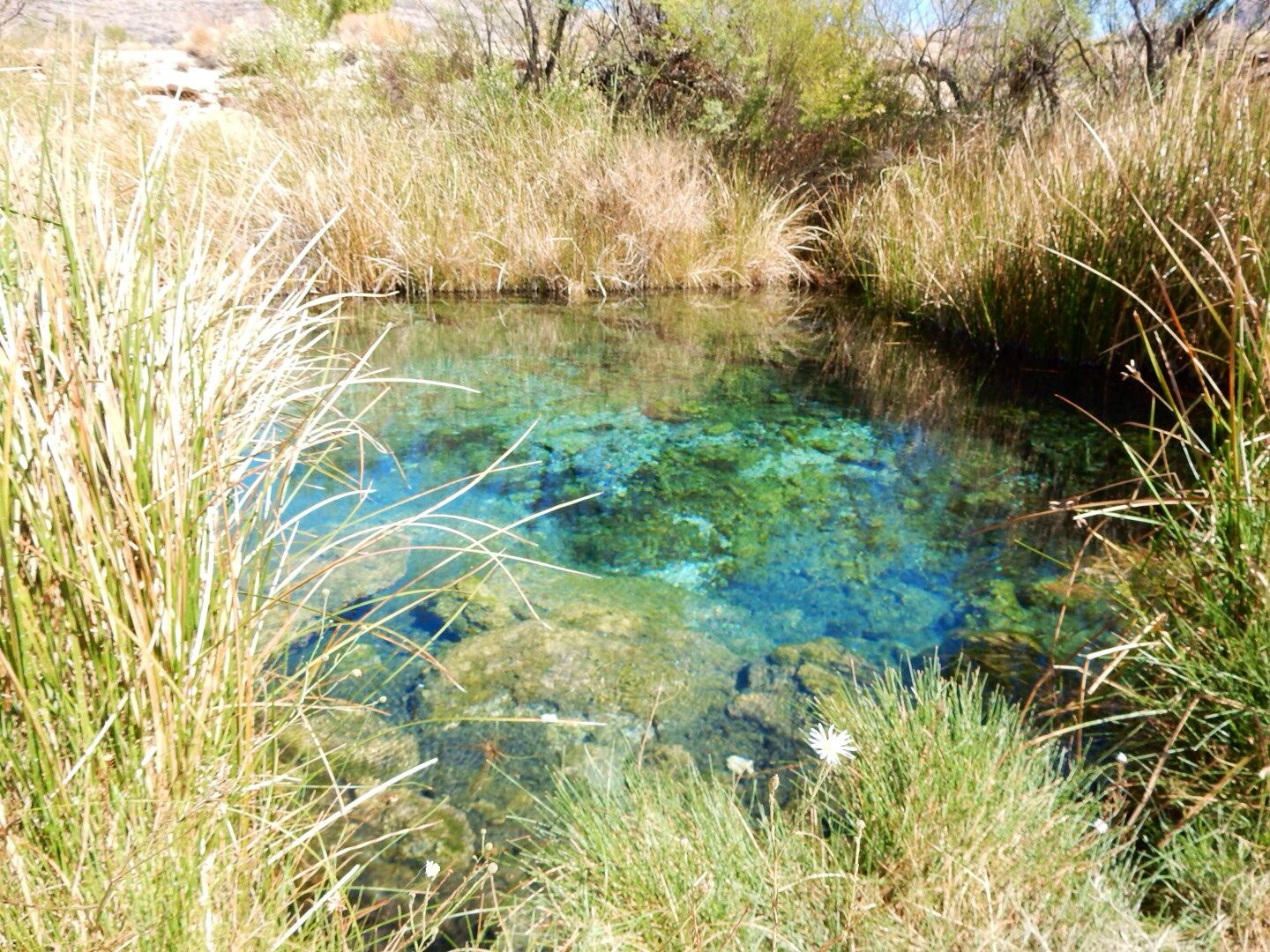
King's Pool.

This area is a bird watcher's paradise as approximately 270 species can be seen in the area. The streams that suddenly appear in the desert attract them. Unfortunately, I did not capture any bird photos, but we saw plenty of them.

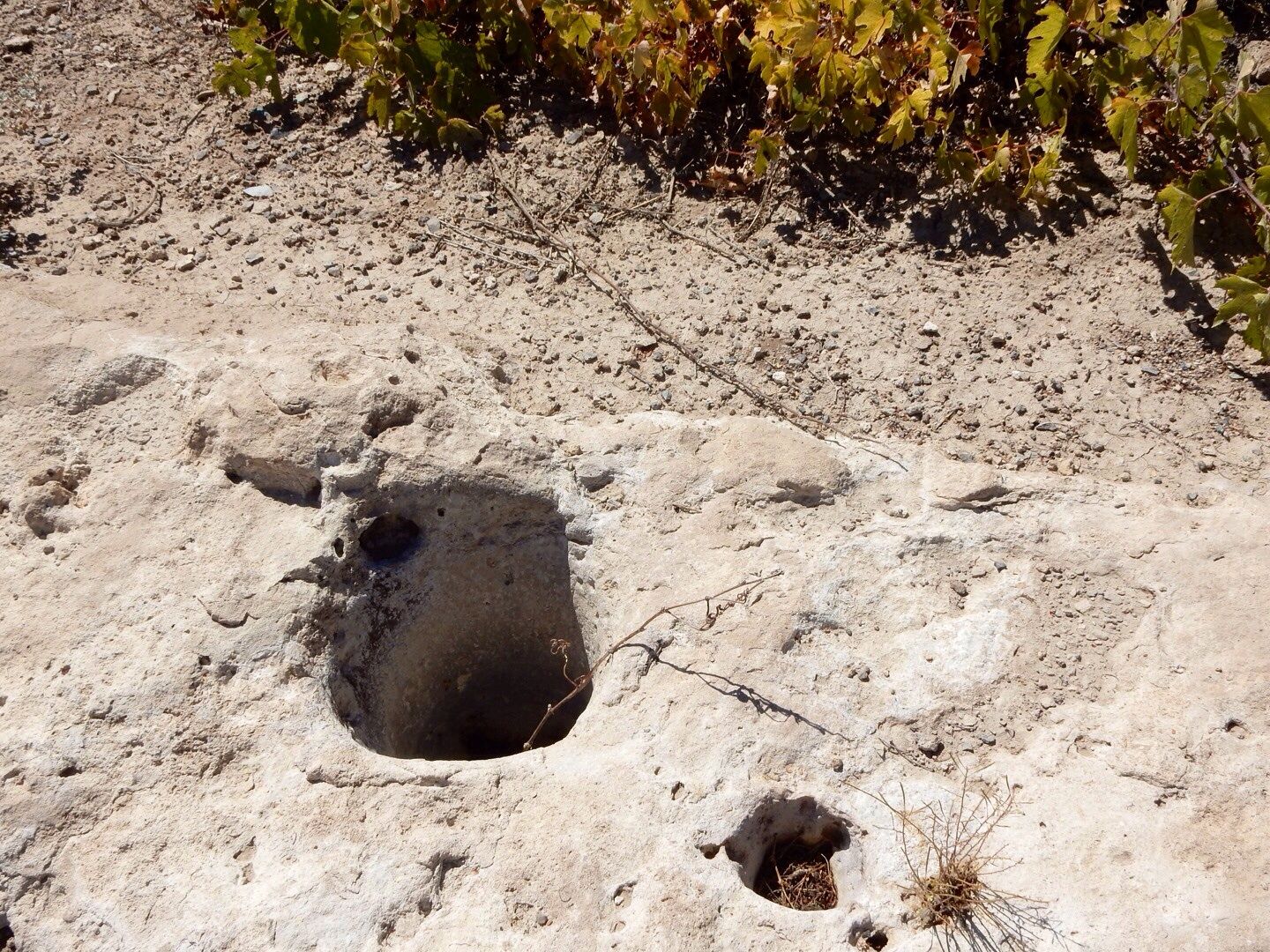
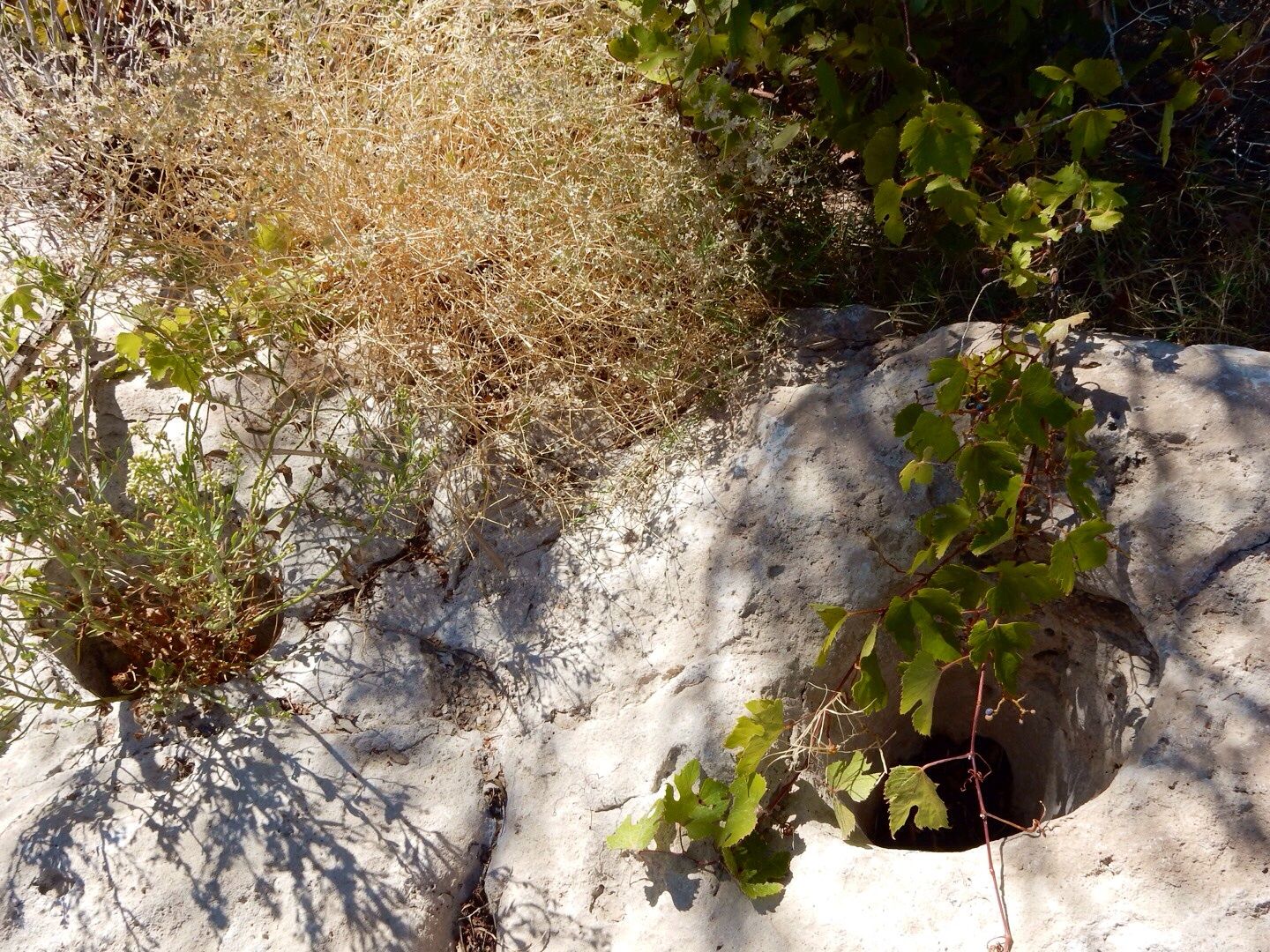
Native Americans (Southern Paiute and Timbisha Shoshone) lived in Ash Meadows for thousands of years near the spring pools and meadows. They cultivated corn, beans, squash, sunflowers and groves of mesquite irrigated by the spring water. Hunting mountain sheep and gathering pine nuts required them to travel to the mountains where they met with other groups. These hole in the limestone are where they ground mesquite beans into flour.

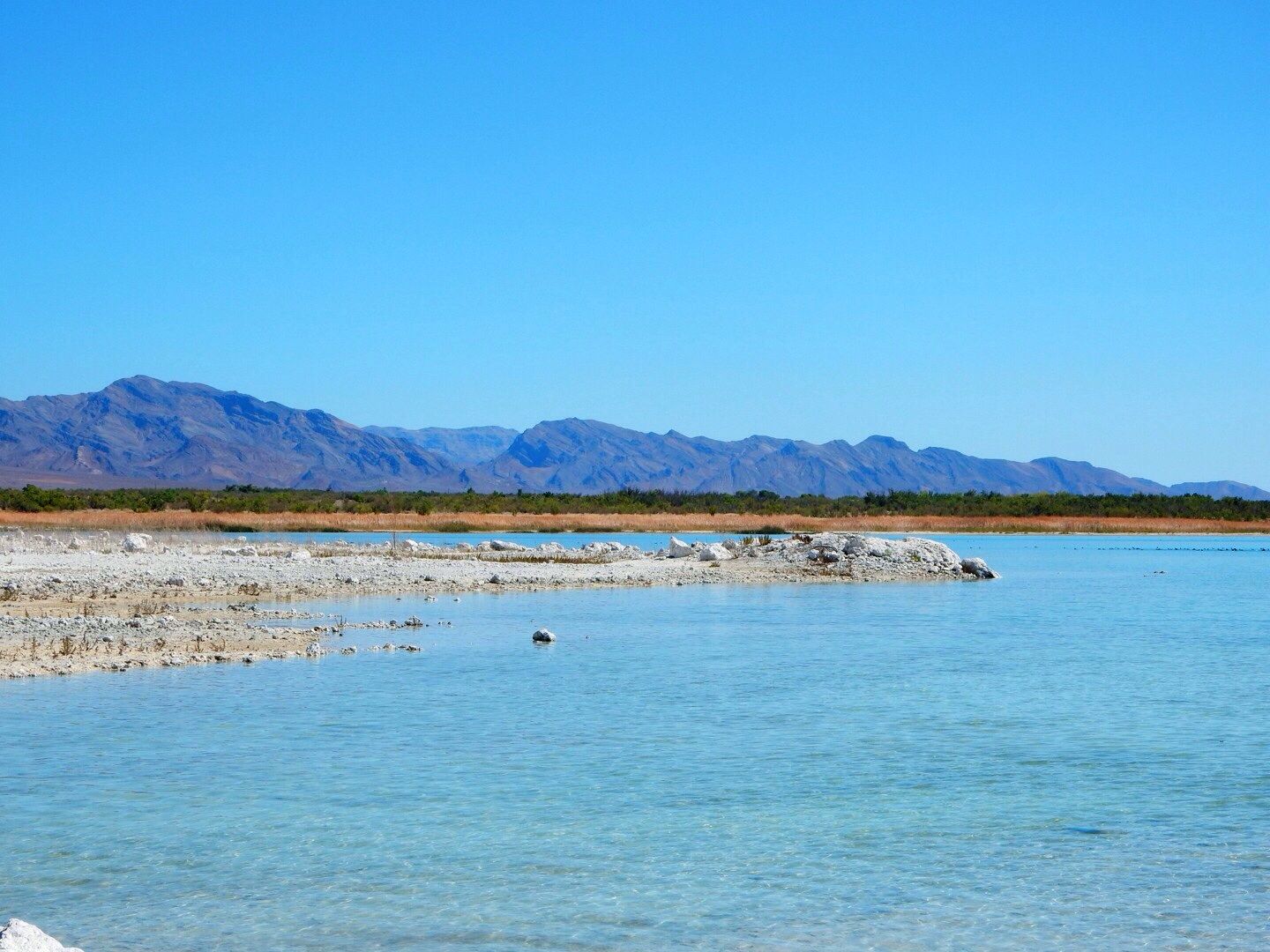
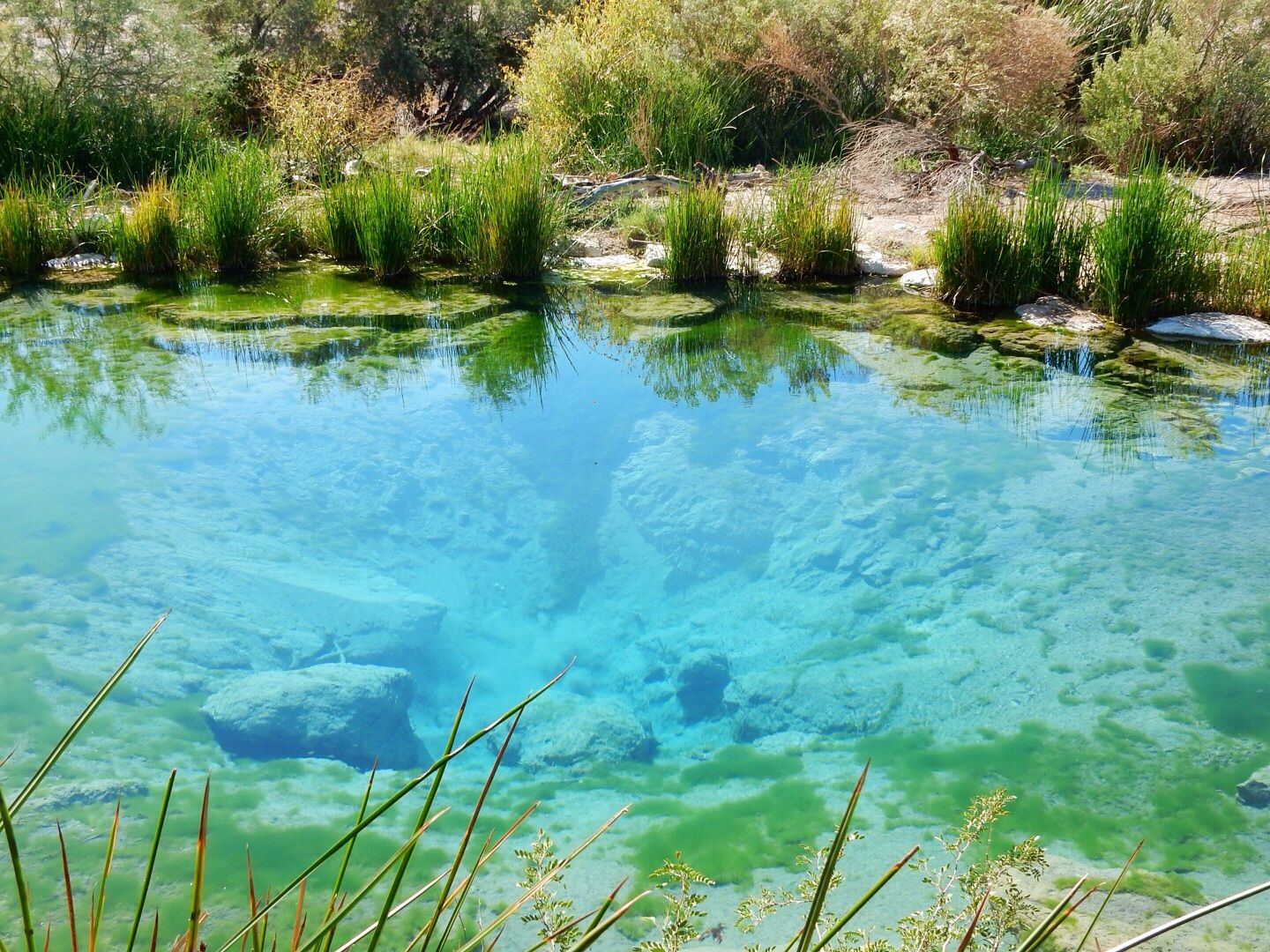
Crystal Reservoir: Our next stop was the strikingly blue reservoir formed with waters from Crystal Spring.
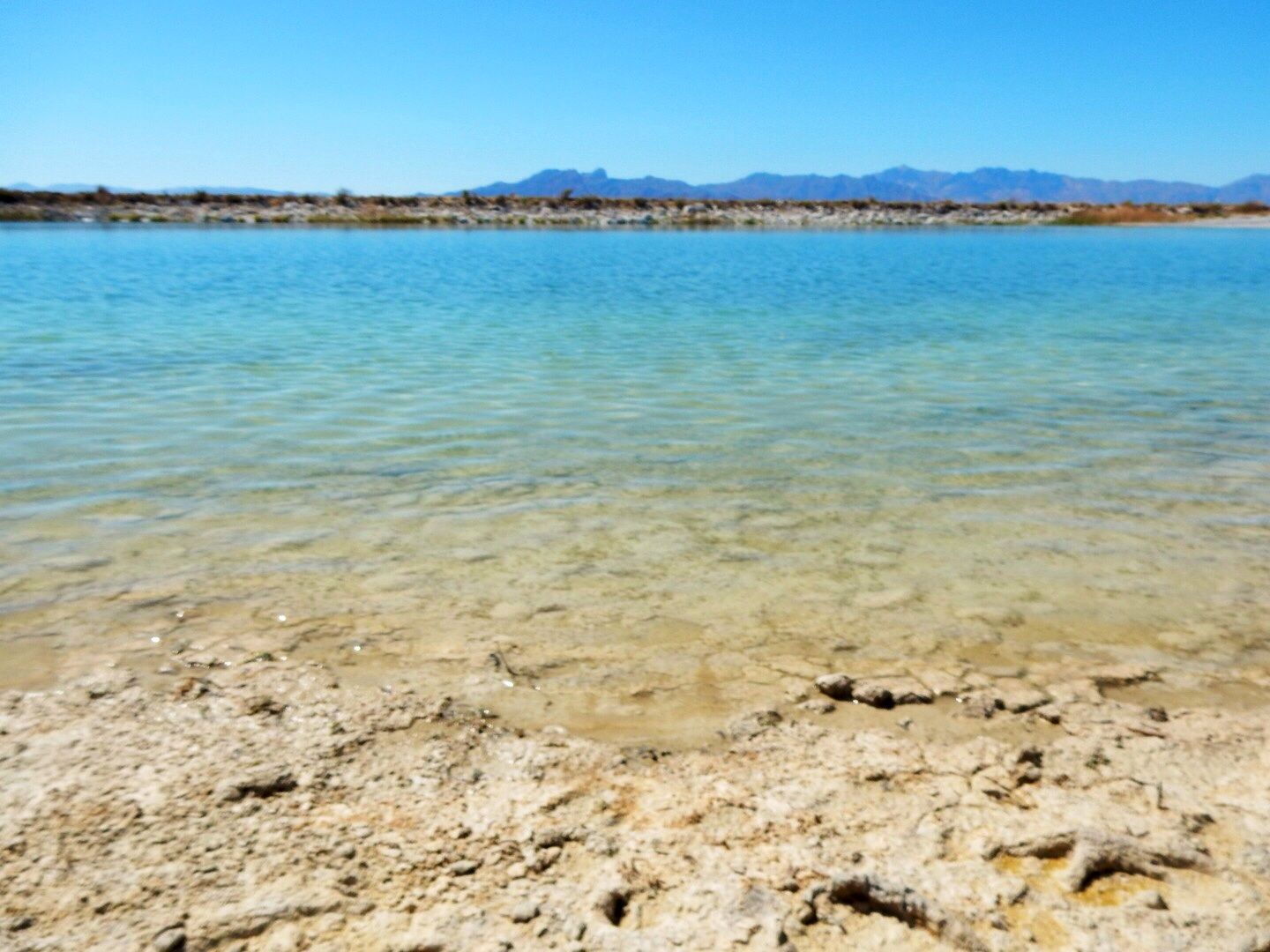

Sadie loved running in and out of it! Check out her backpack; today she carried her own water, treats, and poop bags.
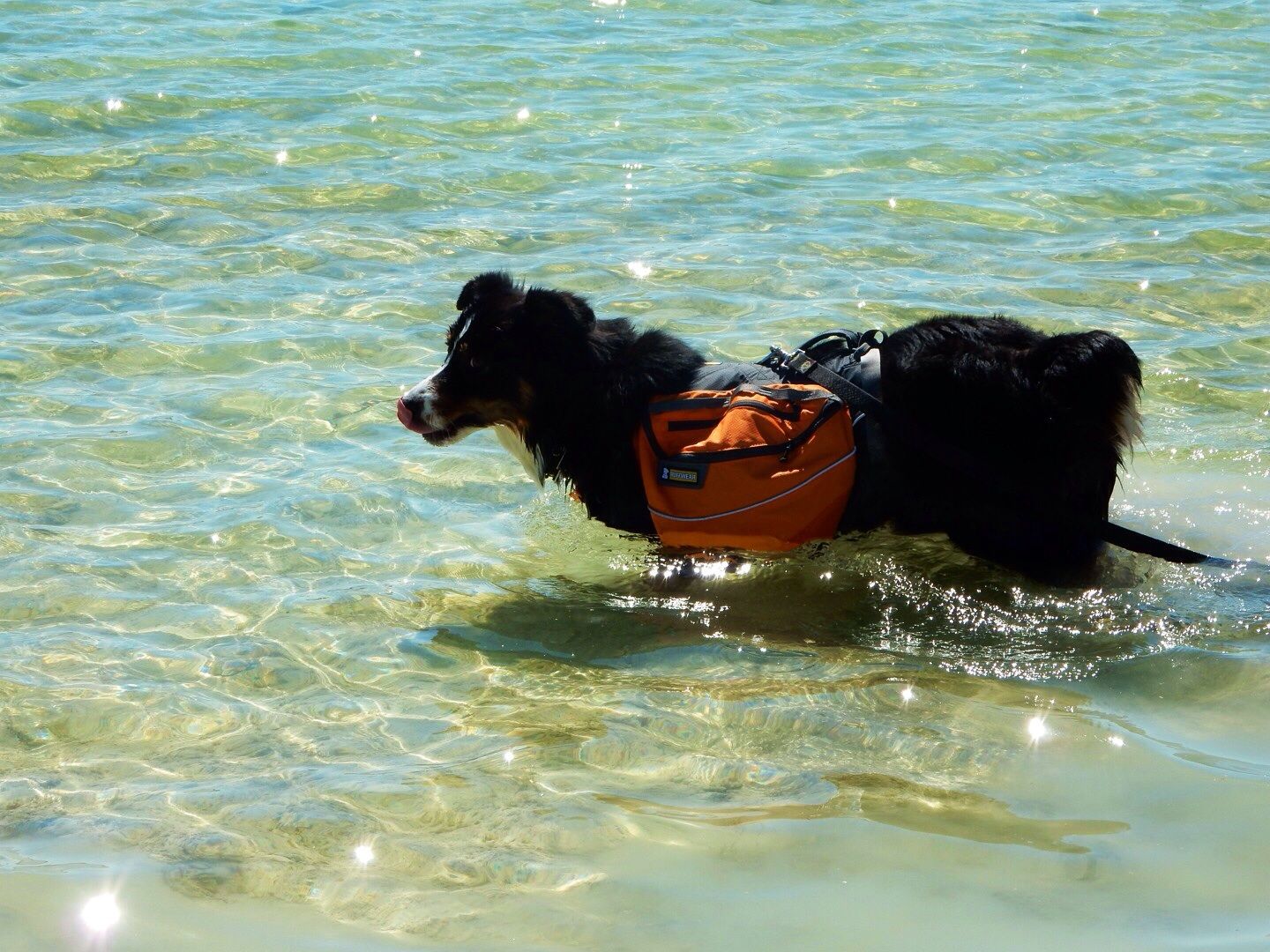
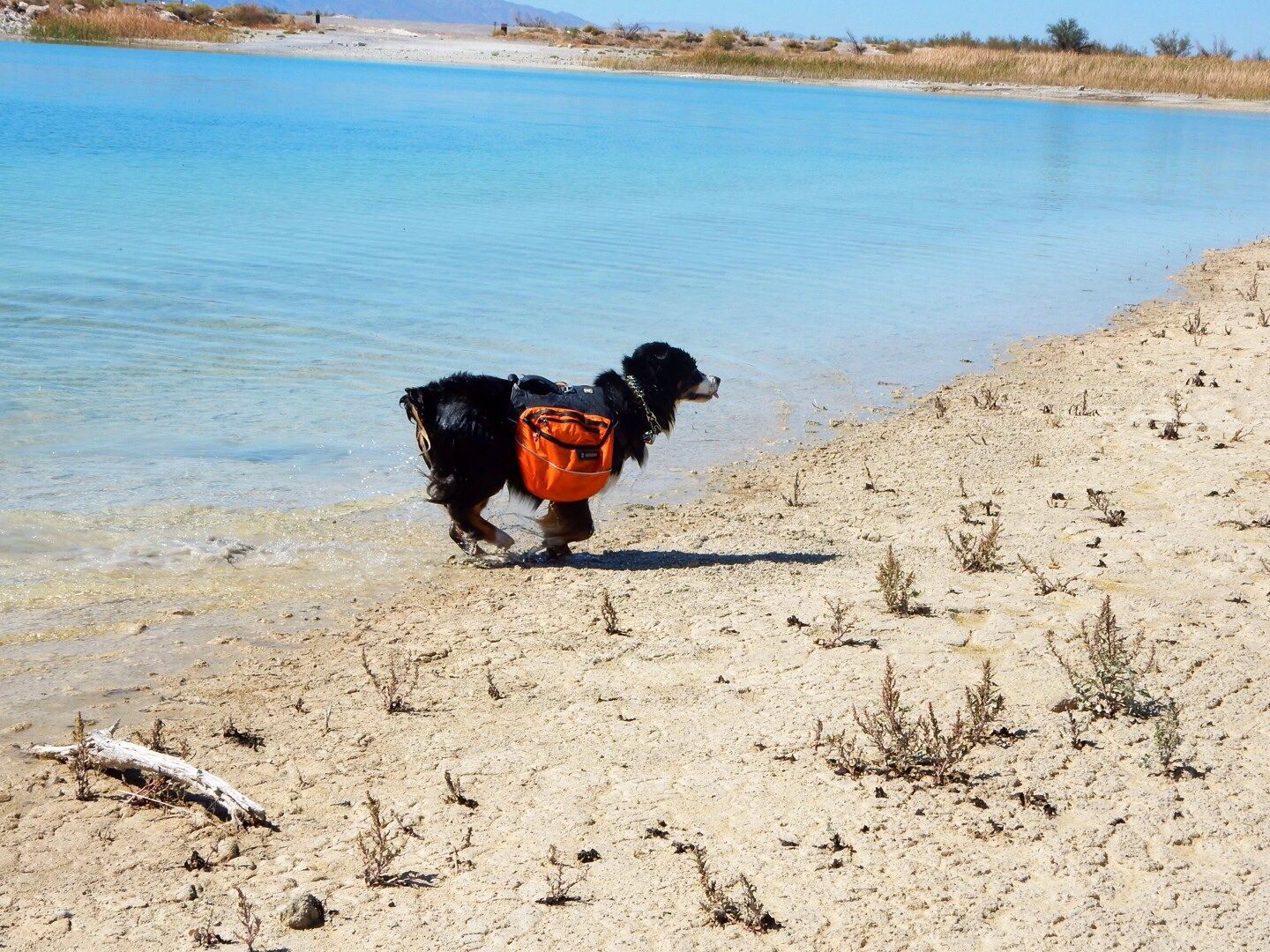

Can you see the waterfowl in this photo? They were beautiful!
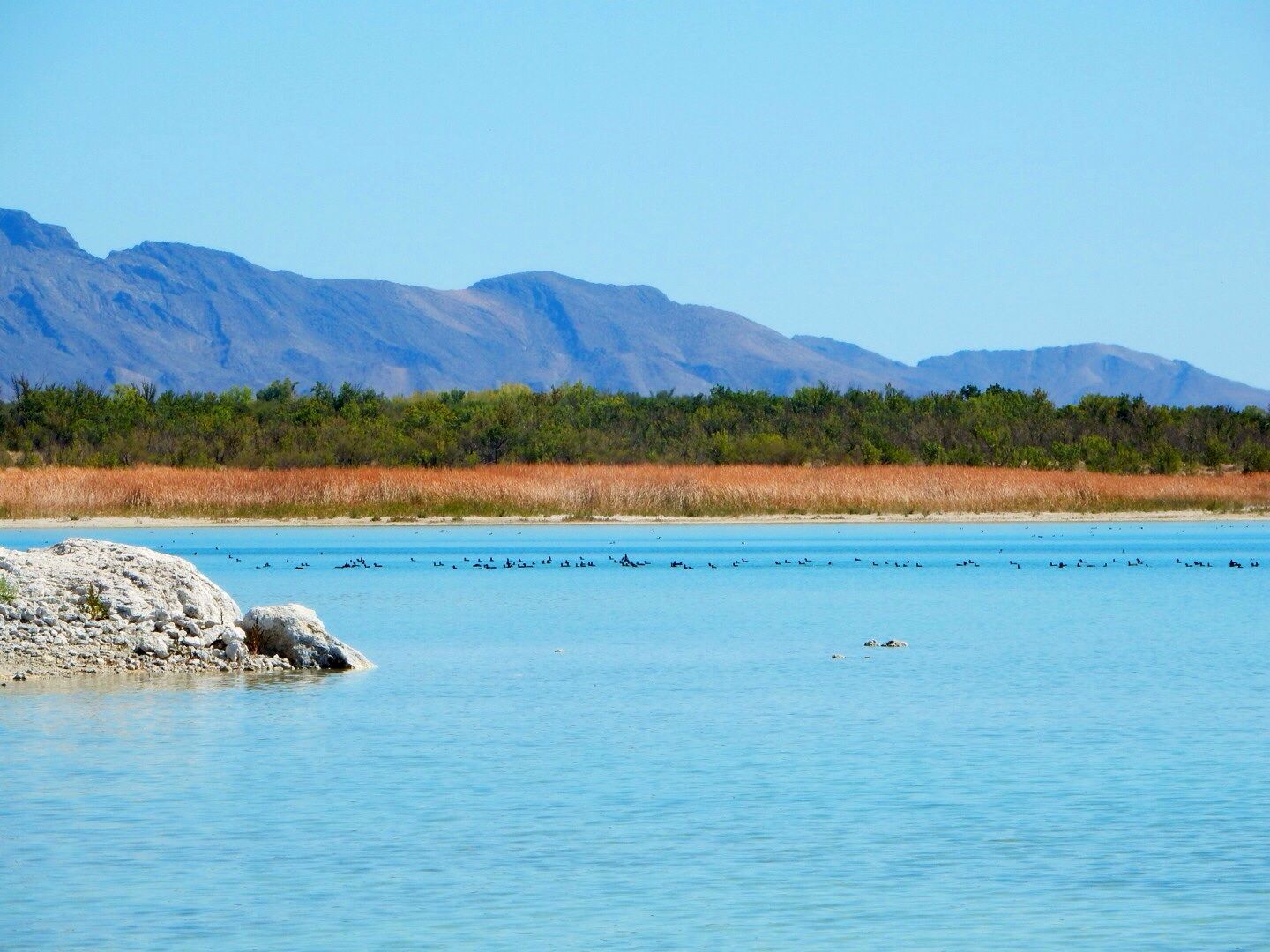

It is shocking to come across this body of water in this desert terrain.
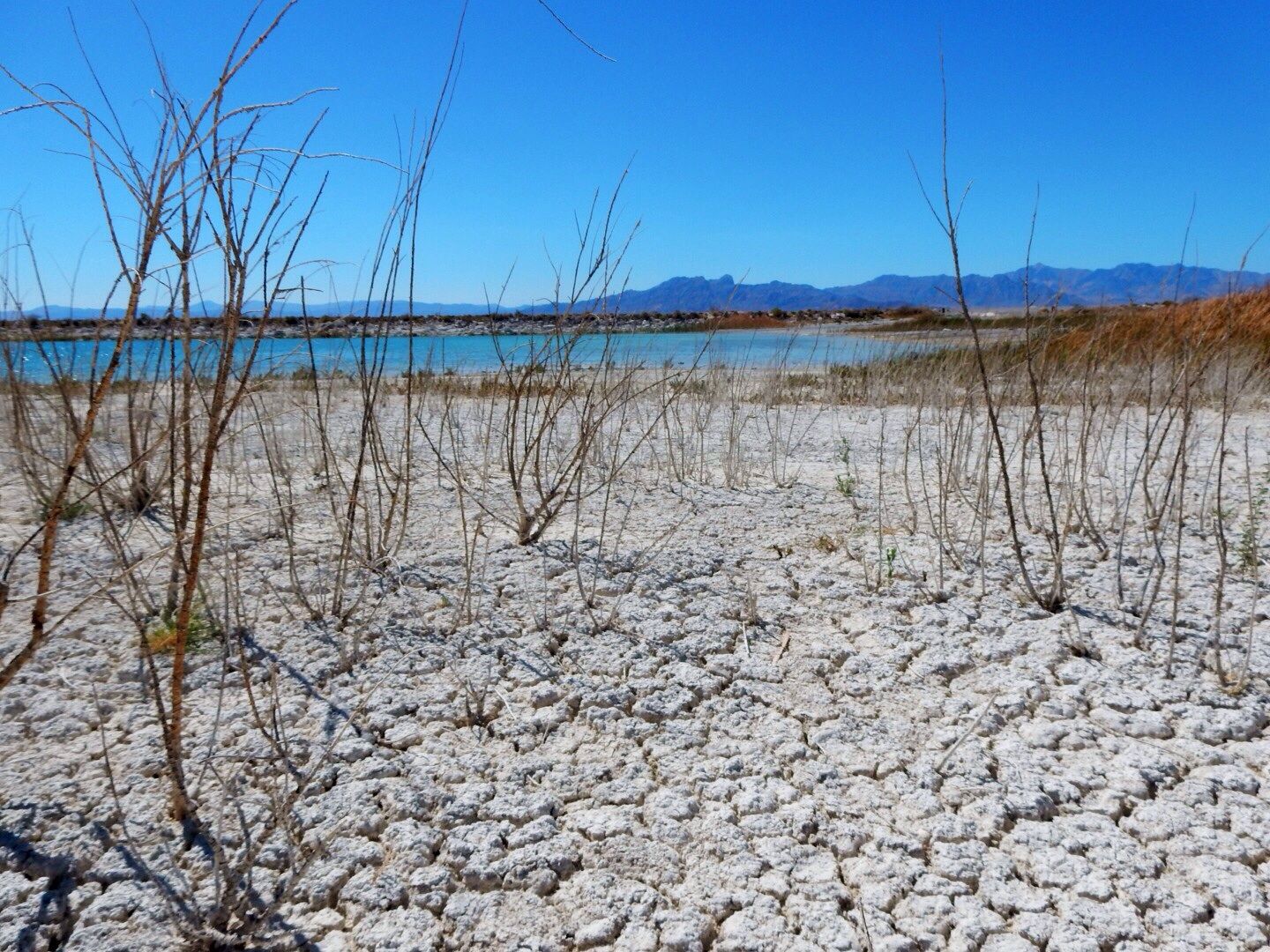

Visitor Center: A new center is under construction, but we stopped at the temporary one where there are maps, information, gift items. etc. The Crystal Spring Boardwalk begins at this location as well.
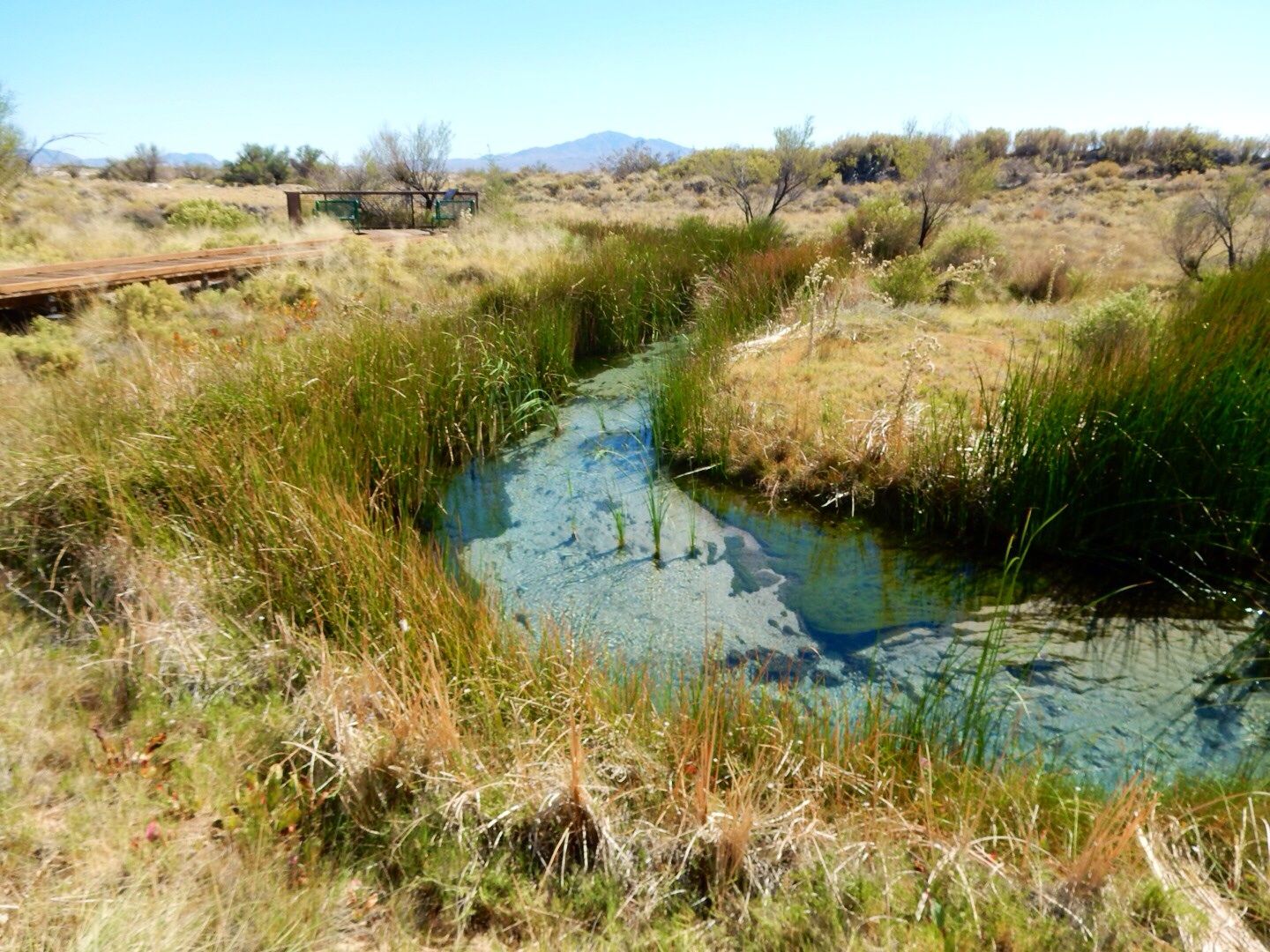

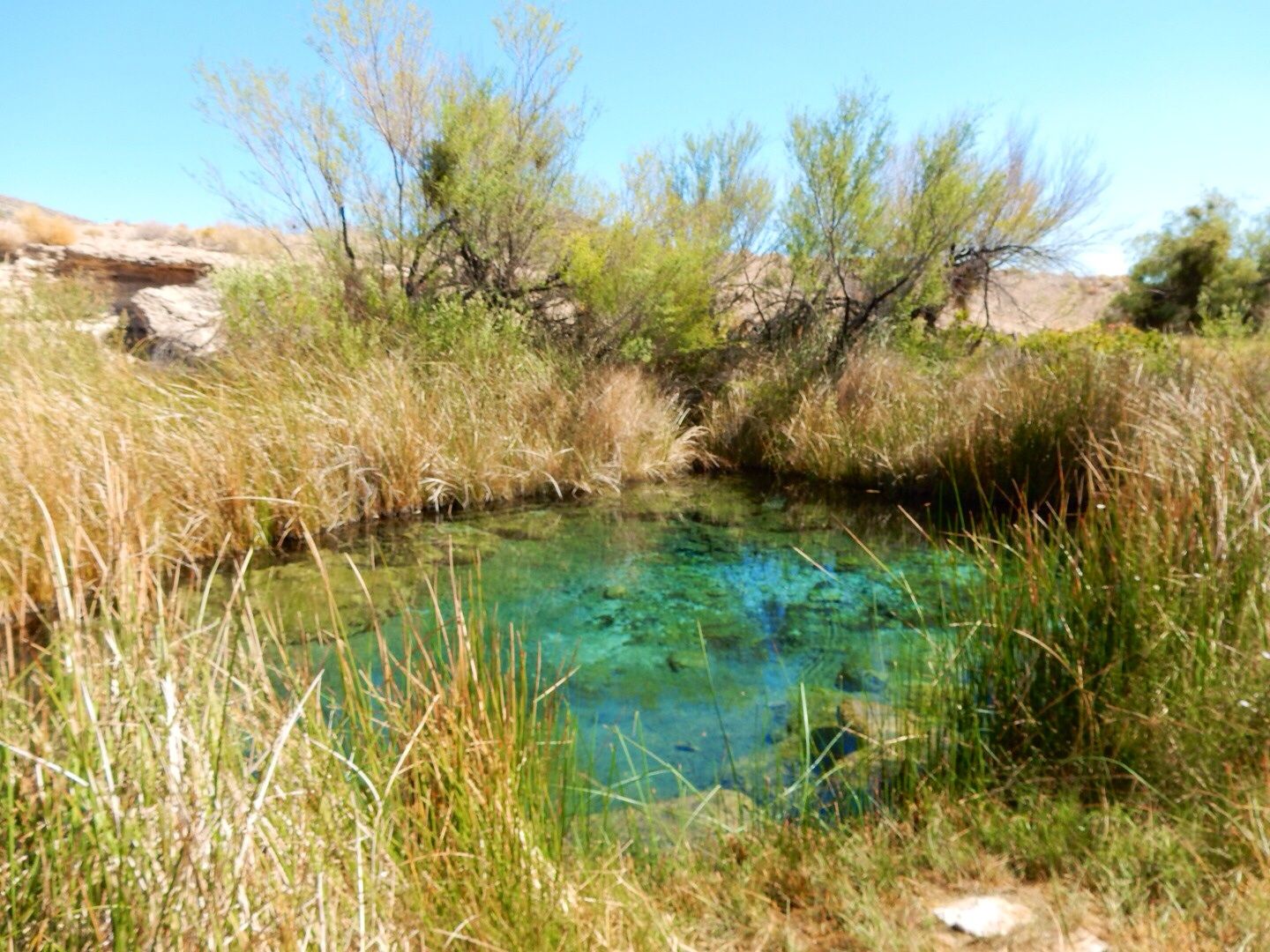
Every minute 2,800 gallons of fresh water flows into this spring from the limestone aquifer here. The water travels for thousands of years (yes, thousands!) before arriving at Ash Meadows. The water is a constant 87 degrees.
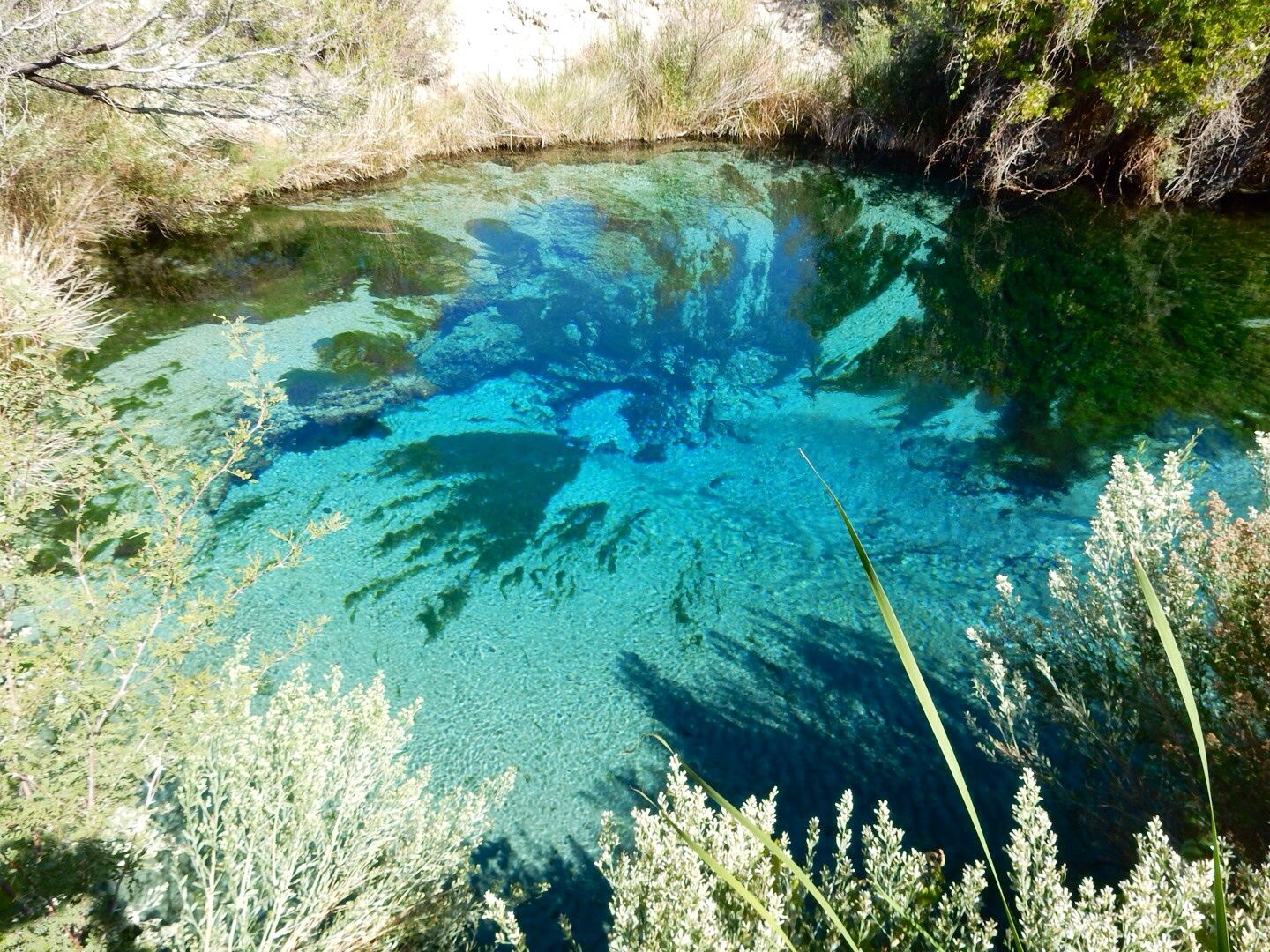
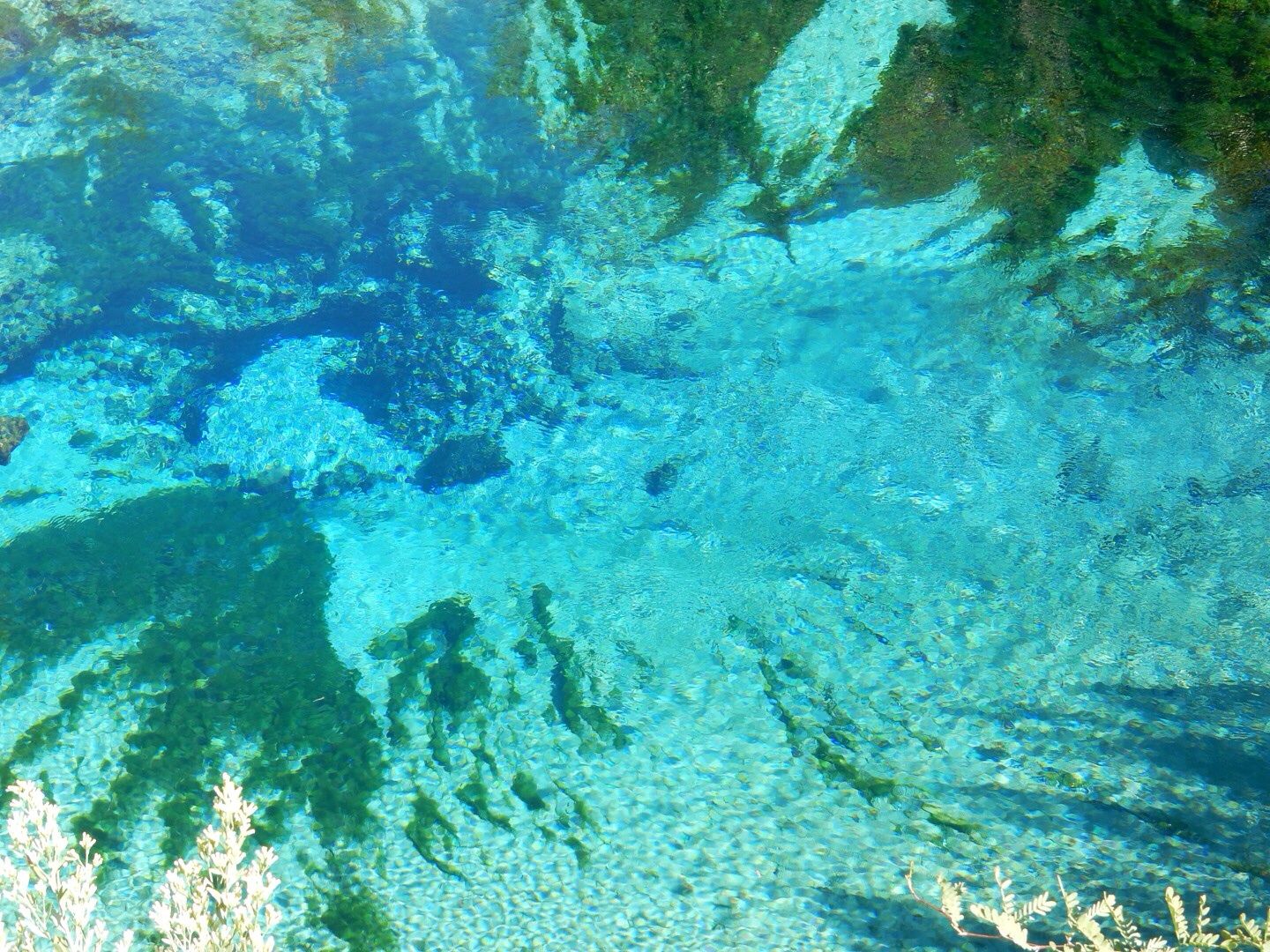
The hole at the center of the this photo is about 15' below the surface and is where the water is flowing into the spring.
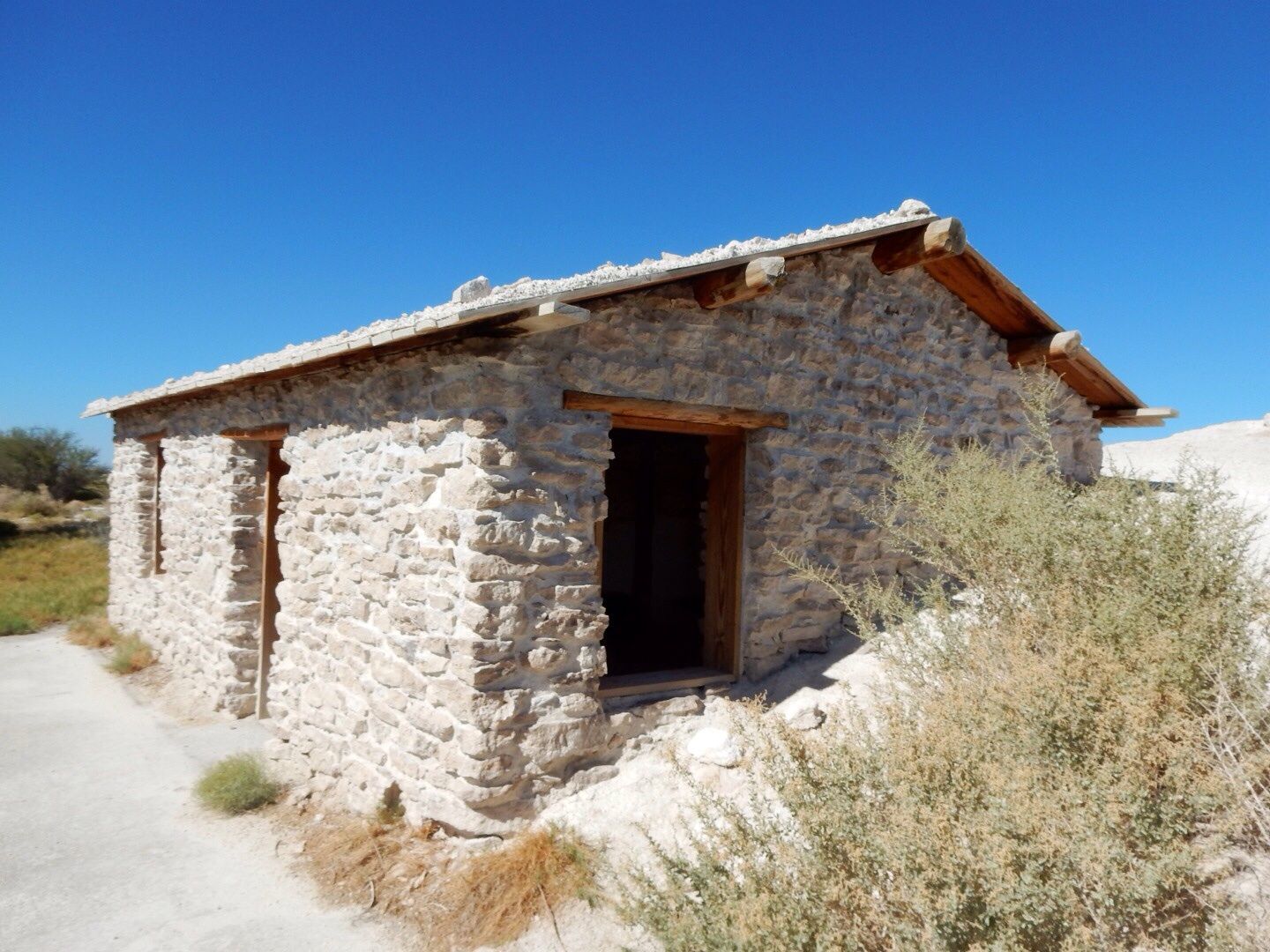
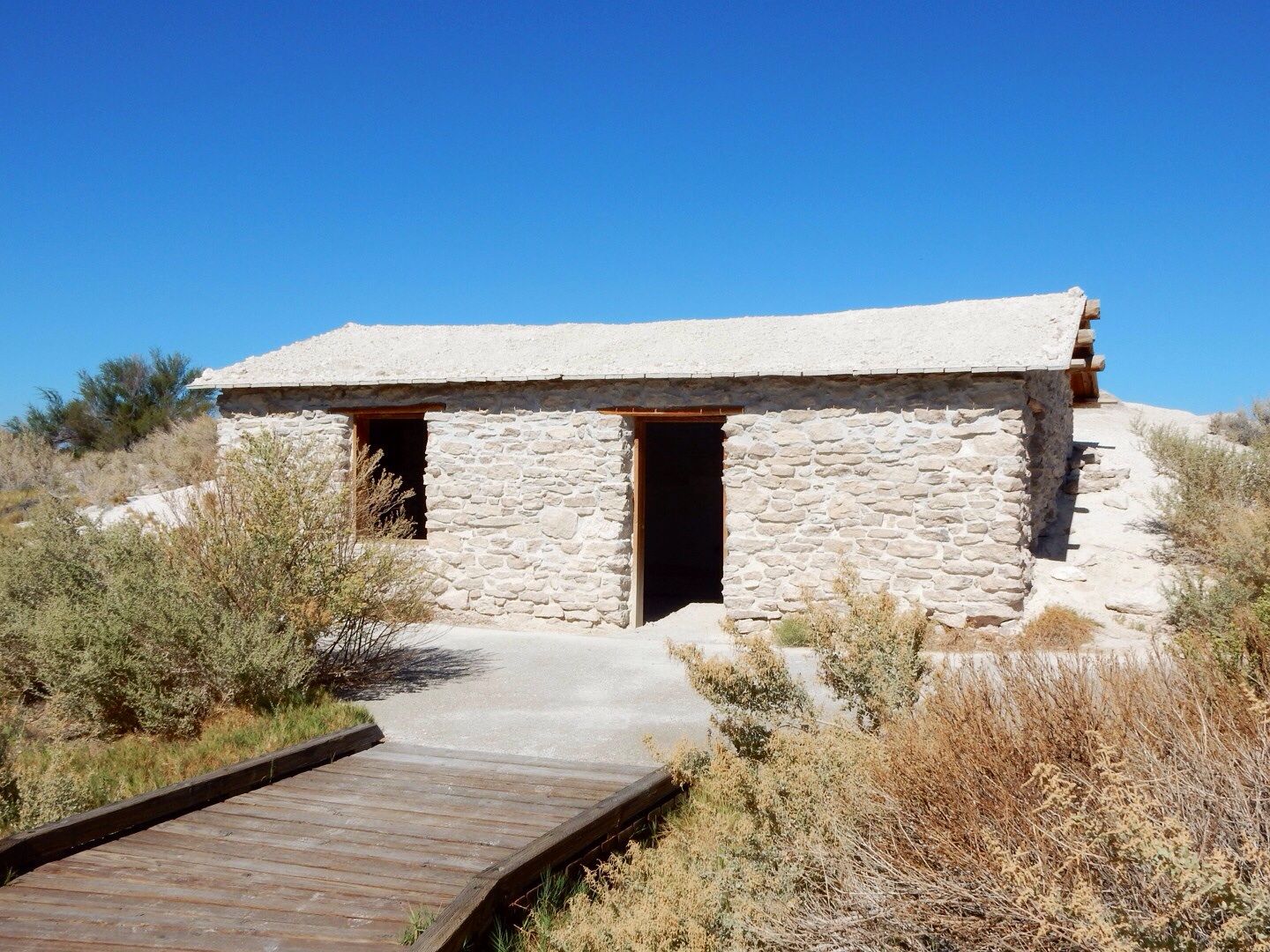
Longstreet Cabin and Spring:  This was our final stop of the day at Ash Meadows. This is the location of the third boardwalk.
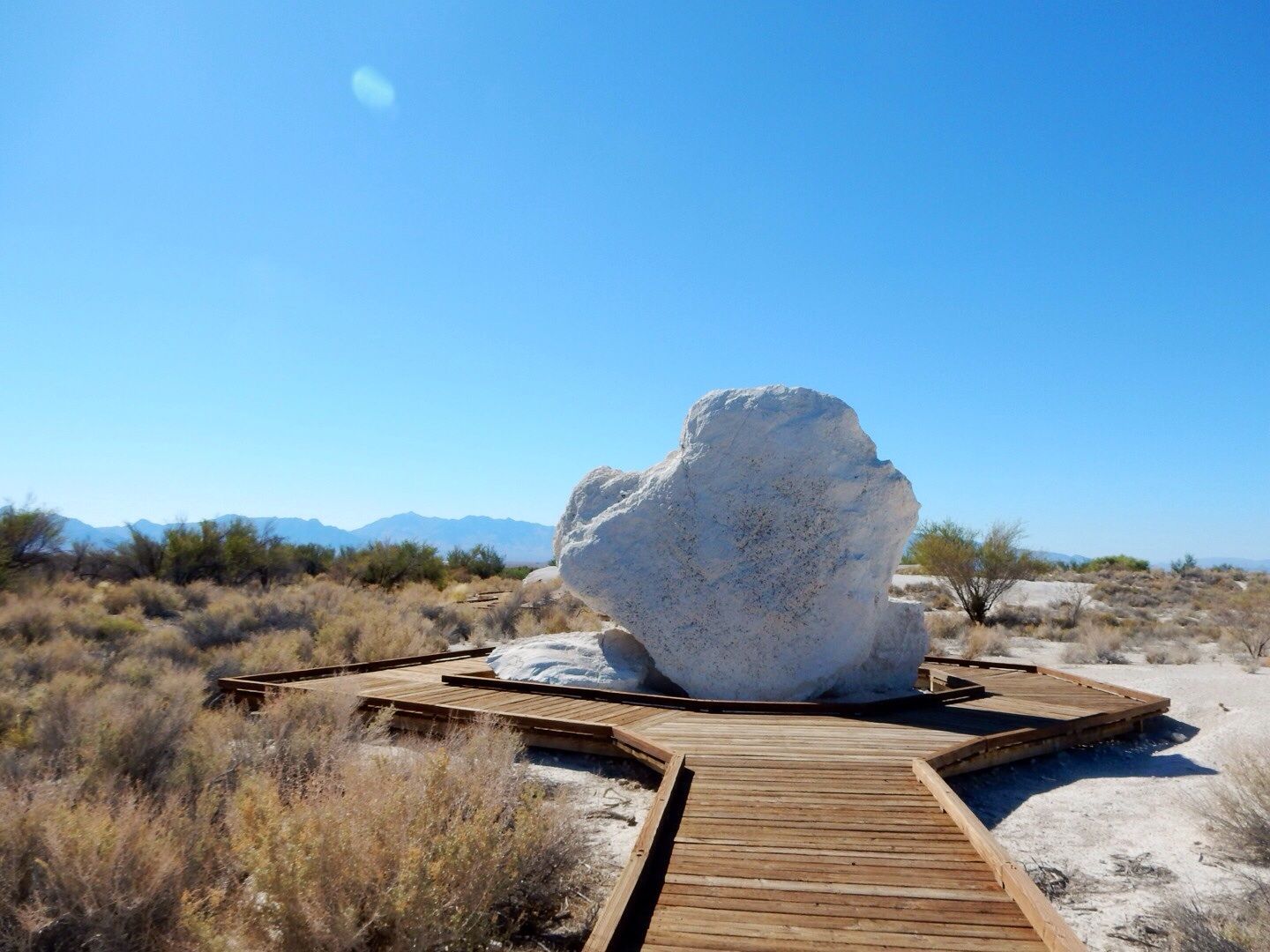

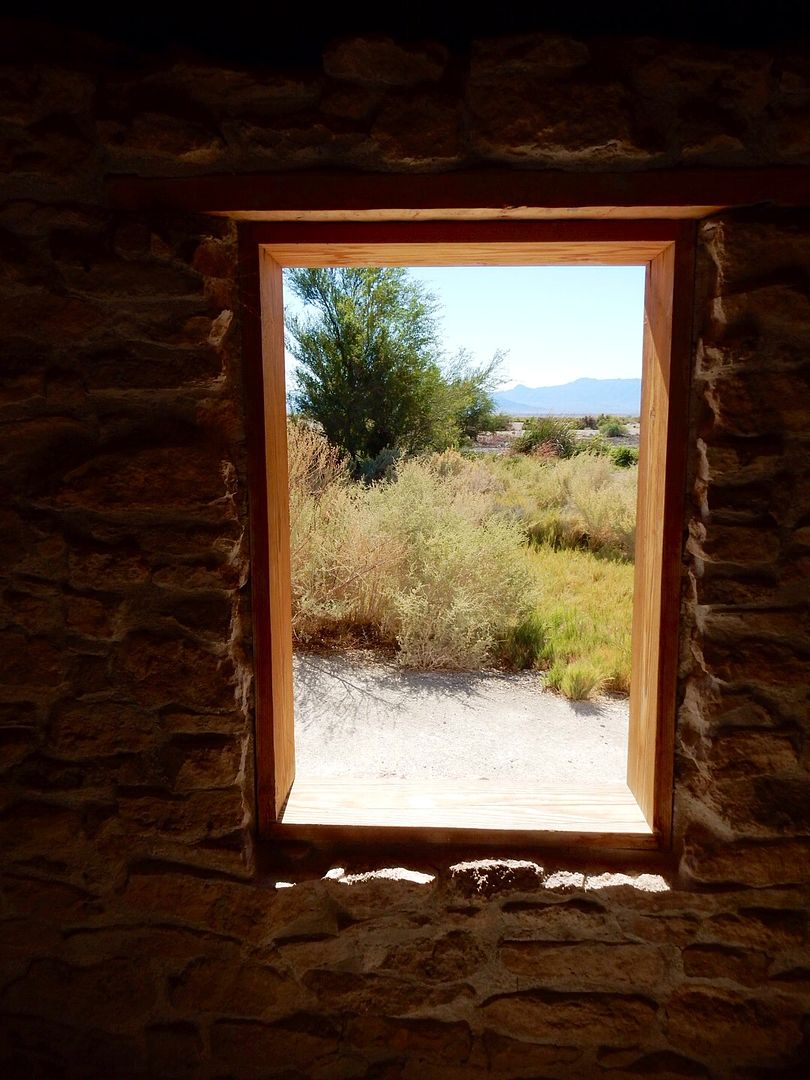
It leads to the stone cabin where infamous prospector, gunman, and horse breeder Jack Longstreet lived from 1894-1899. The cabin is built in a fossil spring mound (formed when slow-flowing springs trap wind-blown sediments in the surrounding mud and plants).
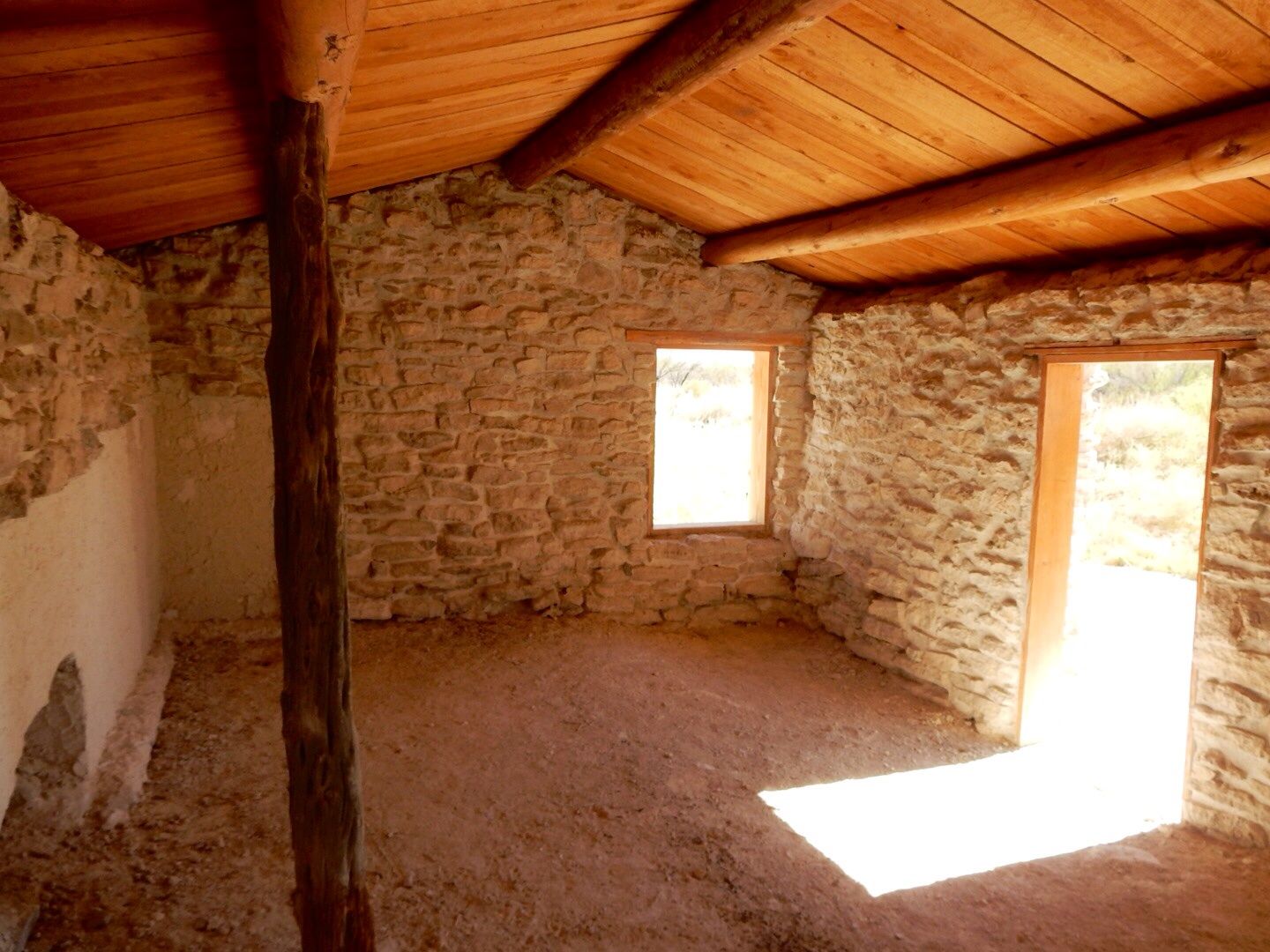
Interior of cabin.


Longstreet Spring is located a very short distance from the stone cabin and waterfowl could be found in abundance in the past.
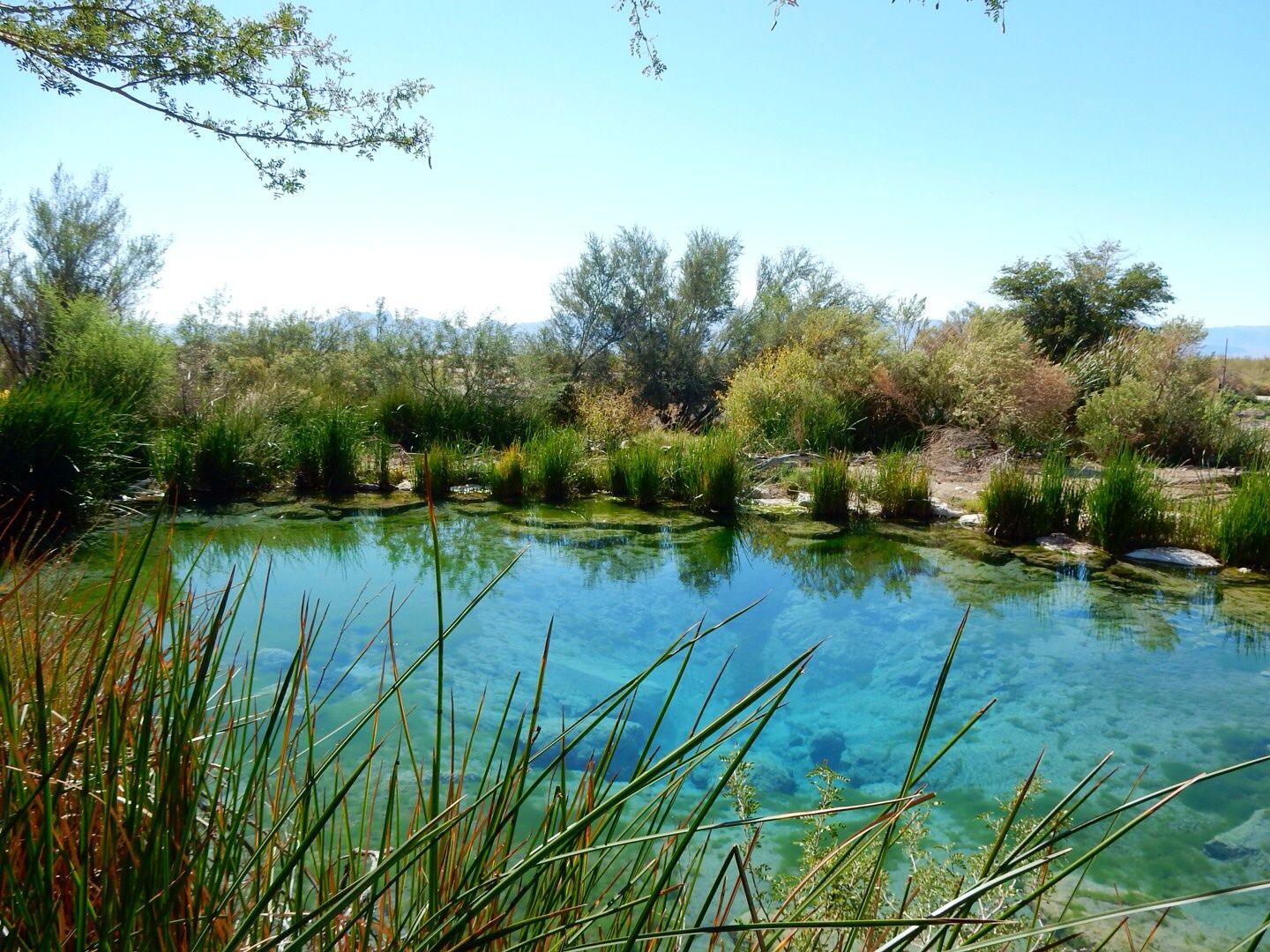
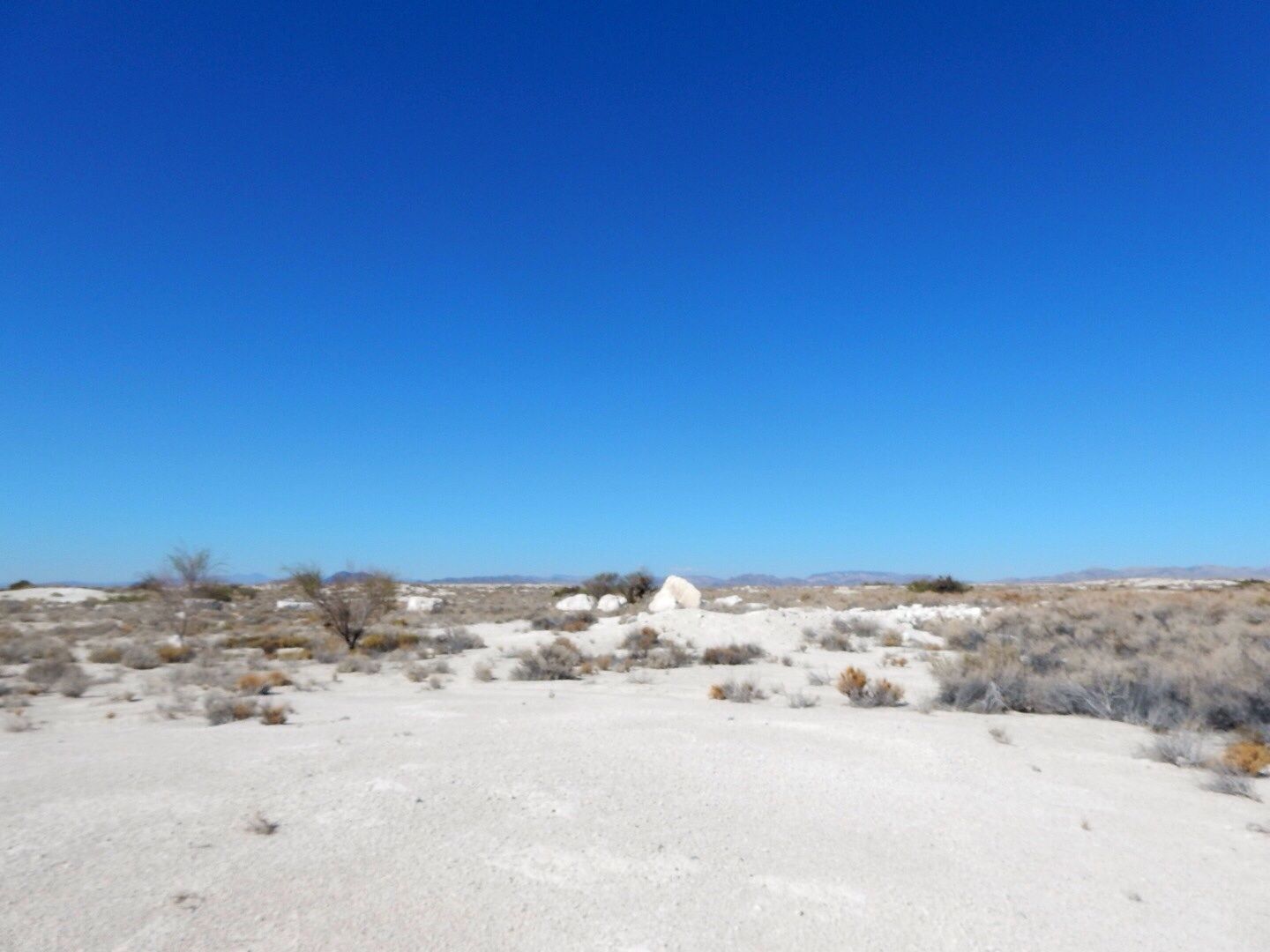
The desert here is covered with white sand looking very different from the areas south of this location.
We loved this place! The springs here seem so out-of-place in the middle of this arid land. We found the Refuge to be desolate yet very beautiful. I highly recommend a visit to this Wildlife Refuge if you are in the area. It is not too far from the eastern side of Death Valley National Park.

Admission to this National Wildlife Refuge is free. All roads are unpaved and there are no services in the refuge (no food, fuel, camping, etc.)  Bottled water is available at the Visitor Center.

Website:  www.fws.gov/refuge/ash_meadows


Sunday, September 21, 2014

Pahrump Valley Historical Museum - 9/21/14

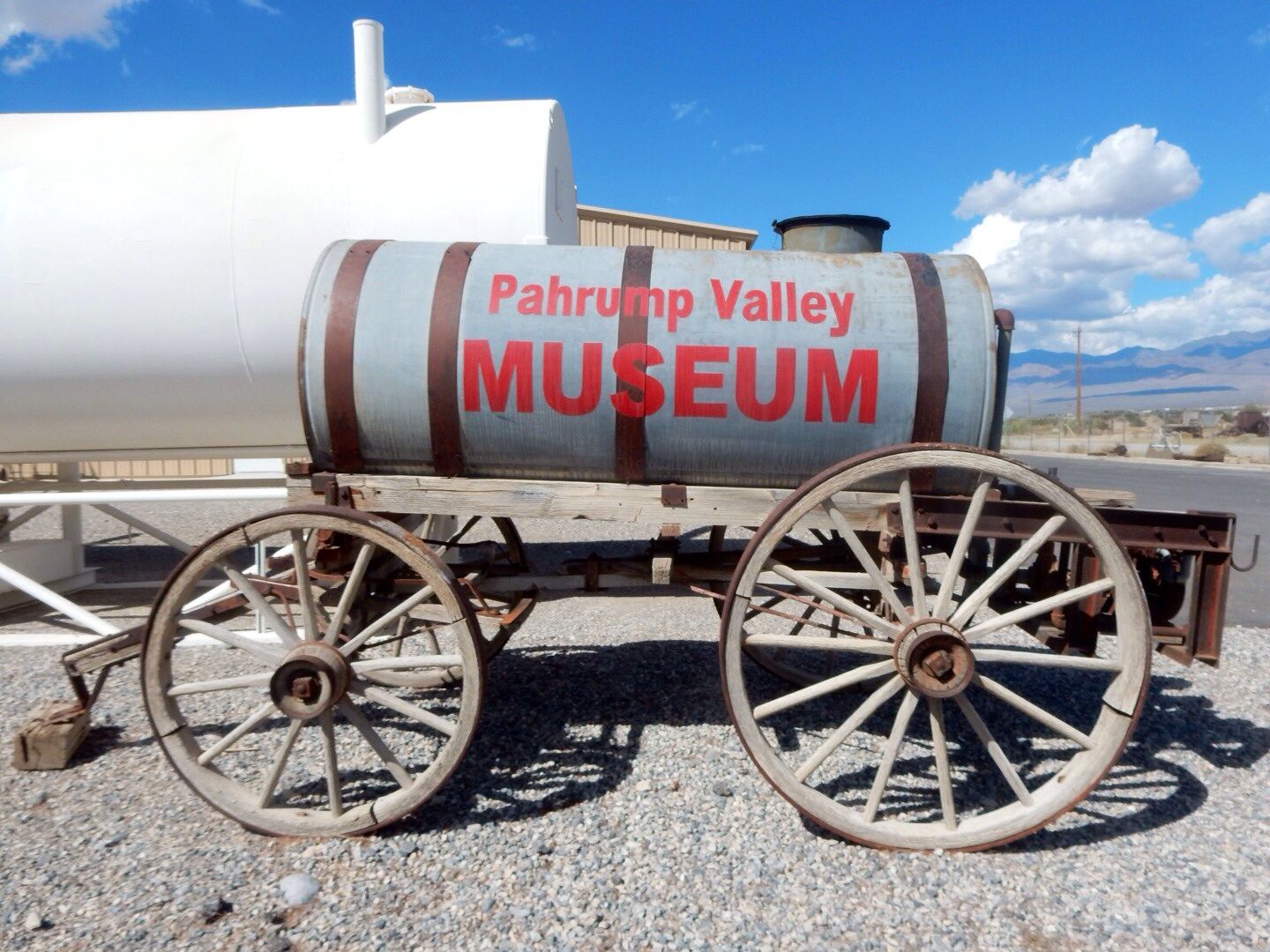
Today we visited the Pahrump Valley Museum in this town of 36,000 people. The Pahrump Valley Historical Society was founded in 1991 and are responsible for the impressive exhibits and artifacts at this small museum. The exhibits are housed in a 5,000 square foot building with plans for additional 4,500 square feet.

Additionally, there are several restored (and some not yet restored) buildings that can be seen behind the museum building. The future plans are to create a "Pahrump Main Street Display" on the grounds.

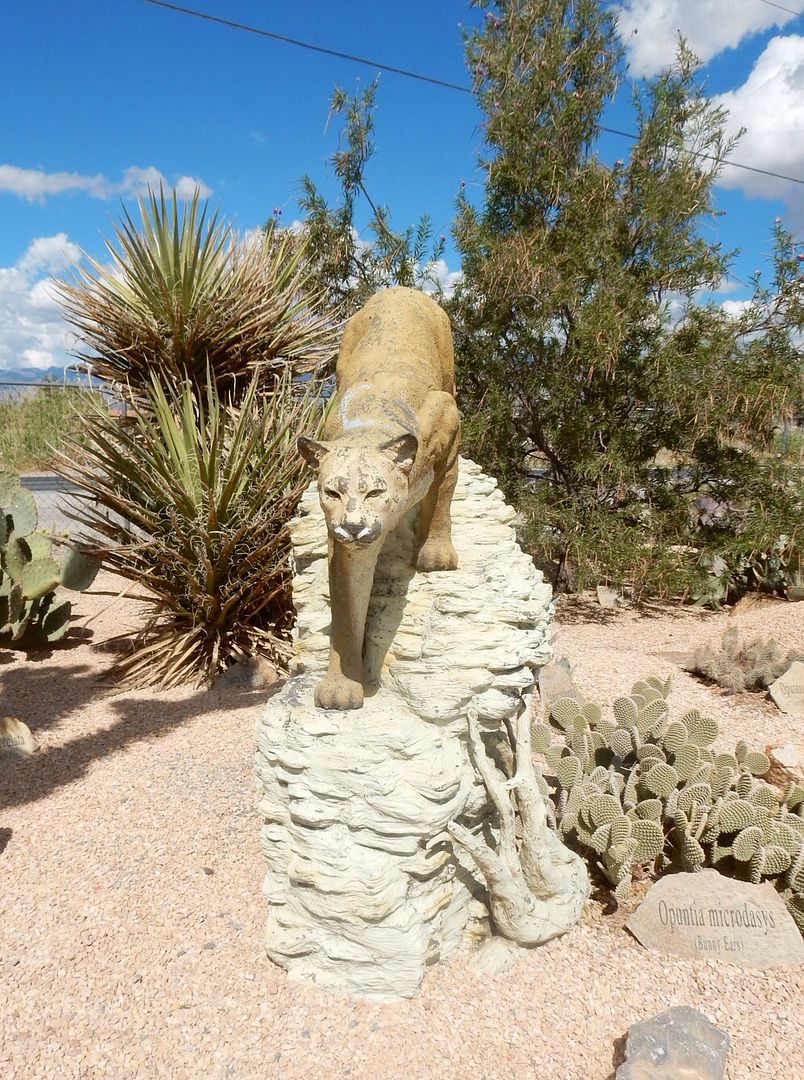
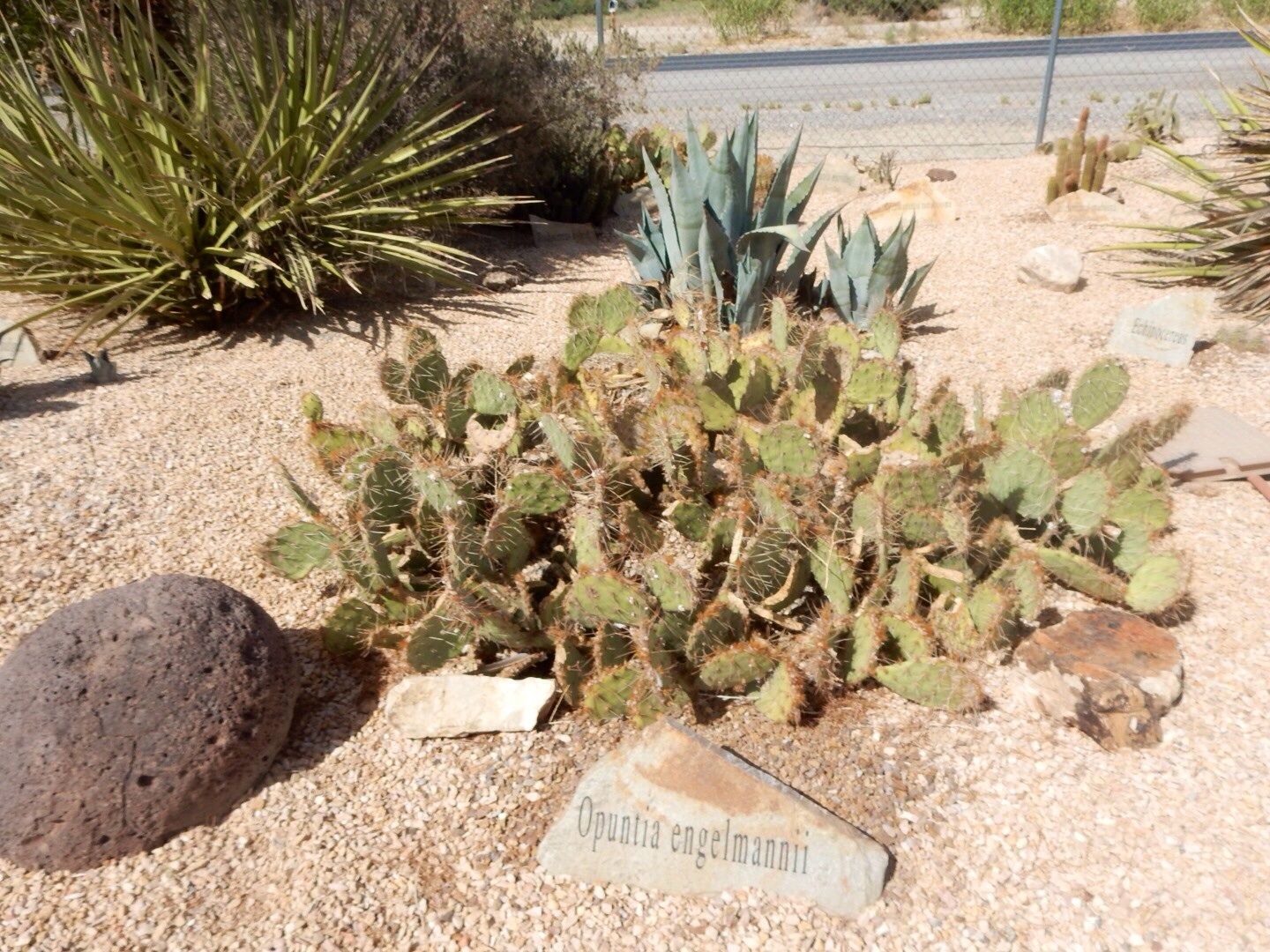
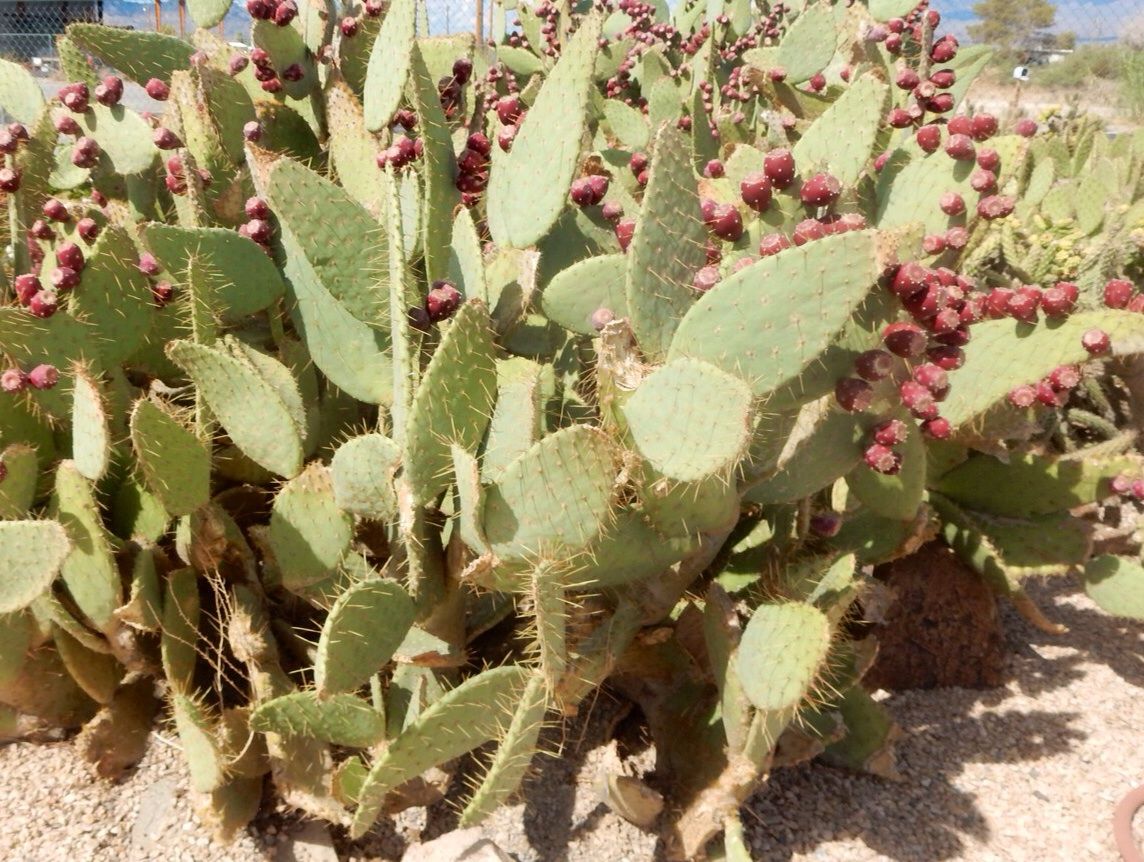
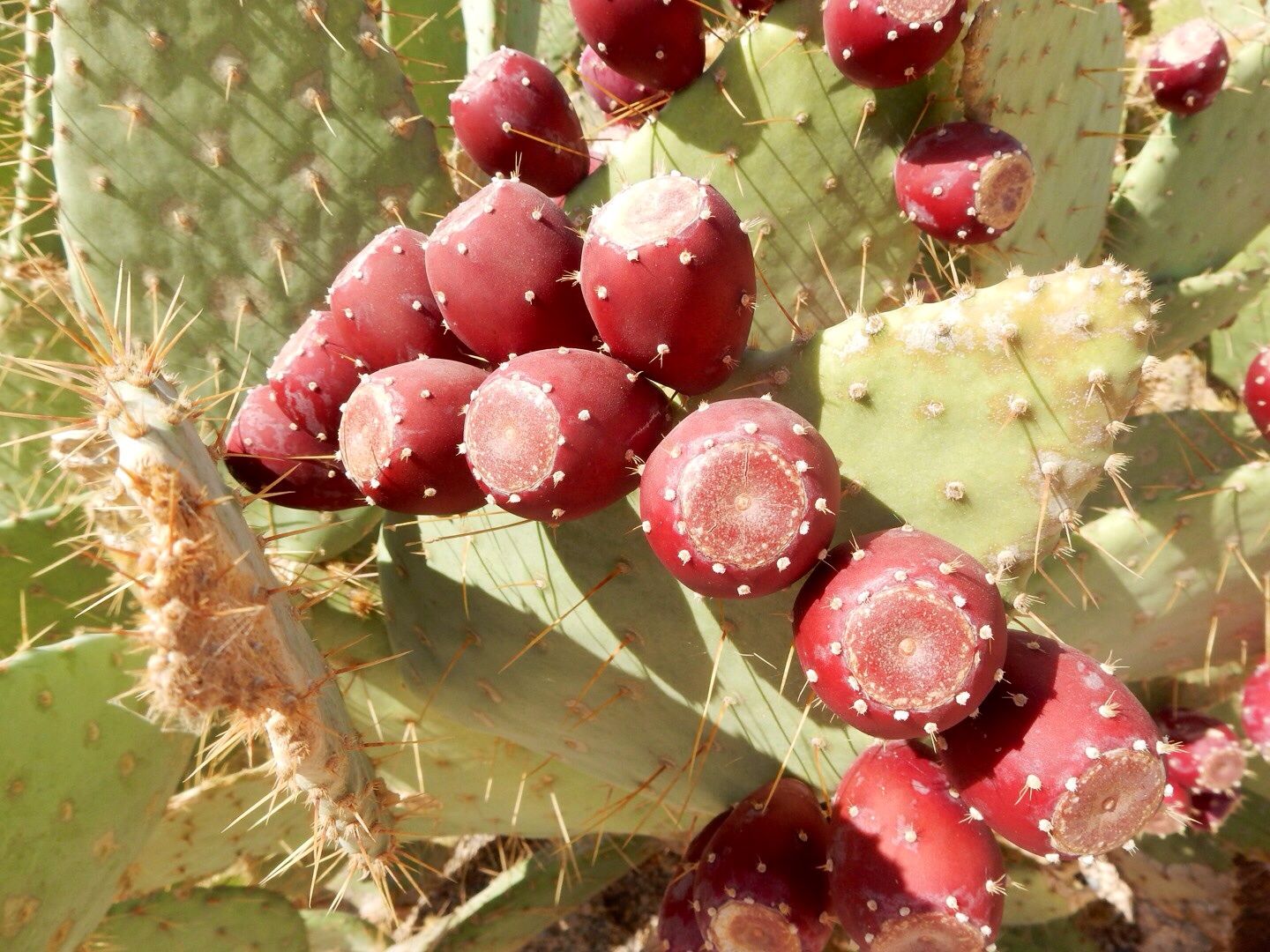
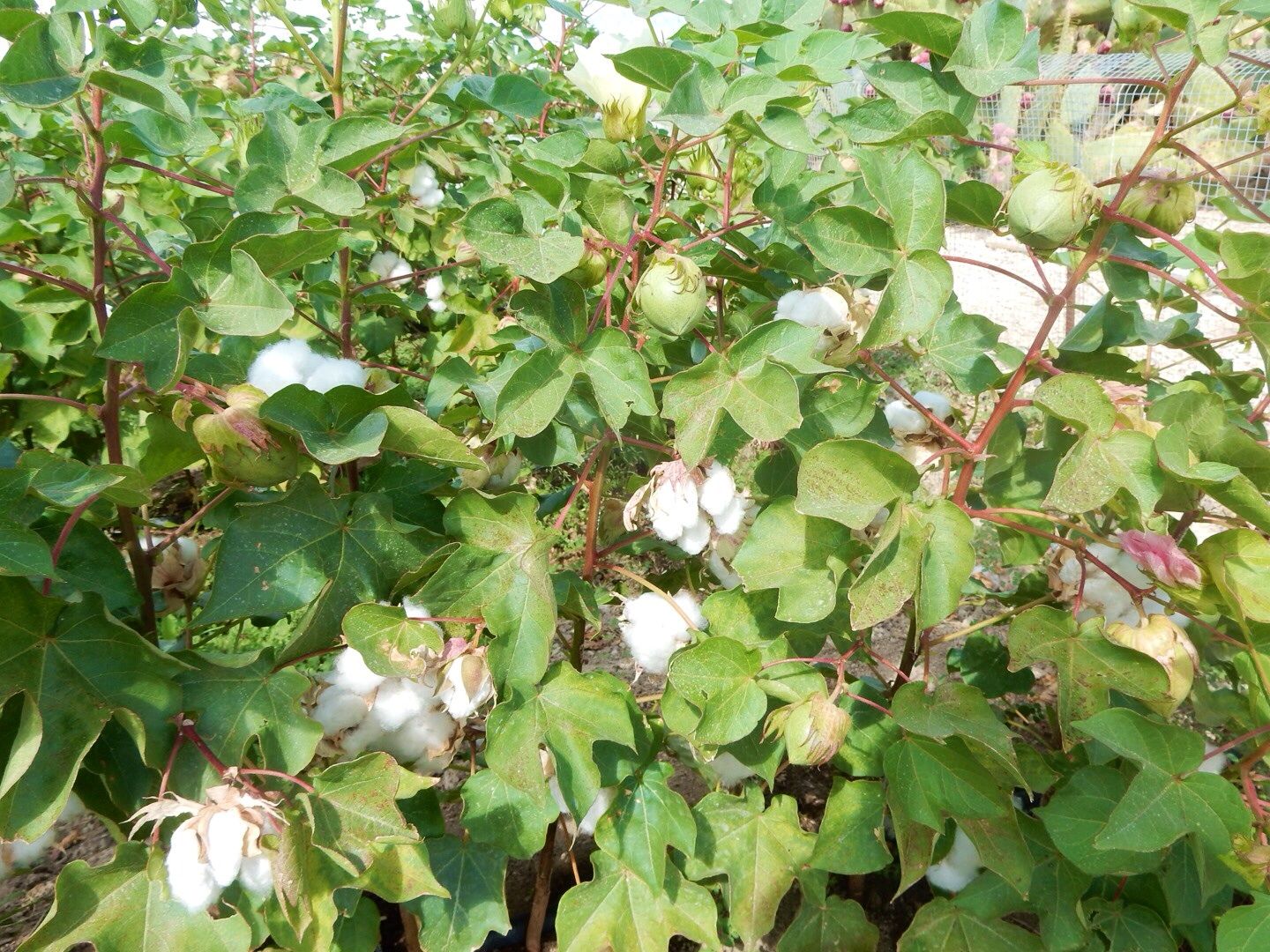
The third display on the museum grounds is the lovely cactus garden. There is also a small cotton patch next to the cactus garden.

Exhibits: There is an interesting array of displays including location historical and political items, pioneer family lifestyle pieces, Native American artifacts, farming and mining equipment, cowboy lifestyle pieces, as well as a large collection of Abraham Lincoln memorabilia.


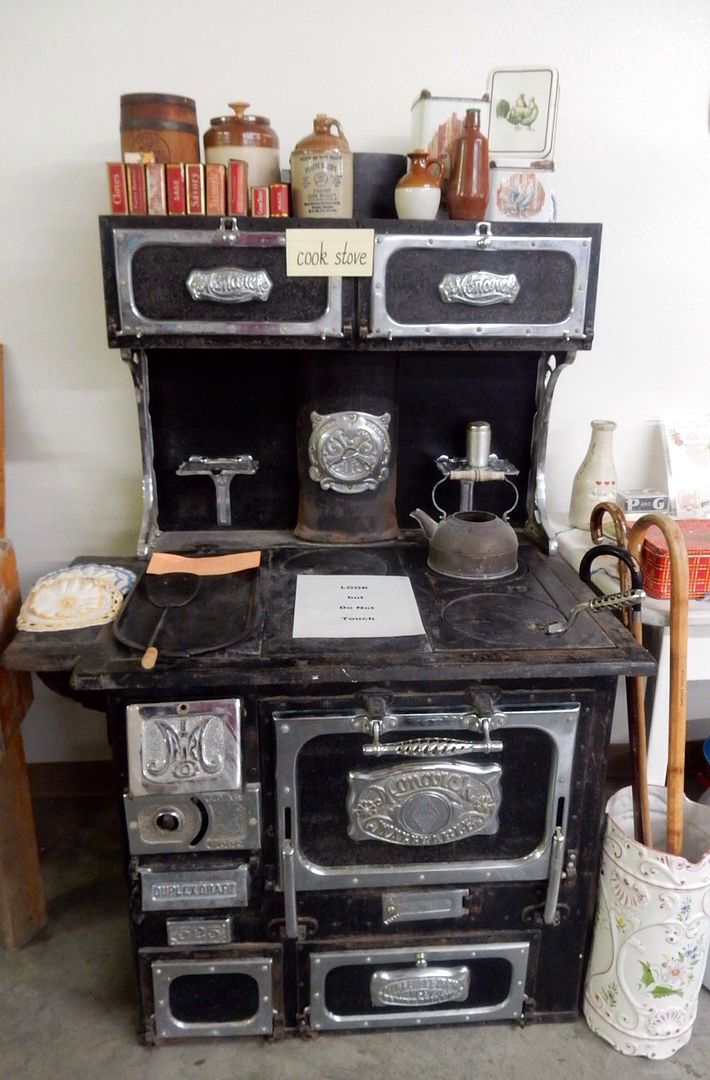
Pioneer family kitchen items.


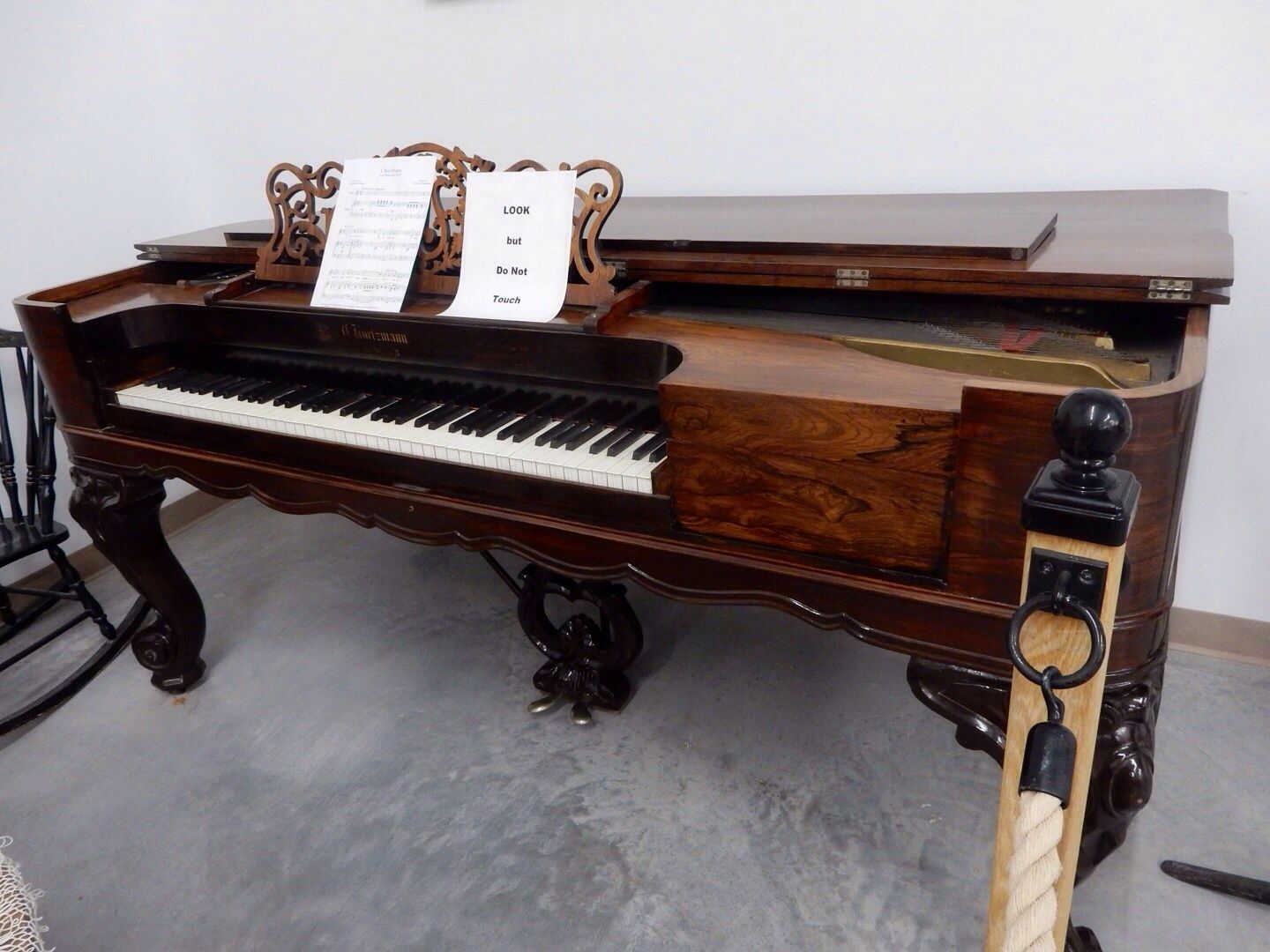
Kurtzmann Square Grand Piano (valued at $25,000 to $45,000). The Kurtzmann Company began manufacturing very high quality pianos in 1848.


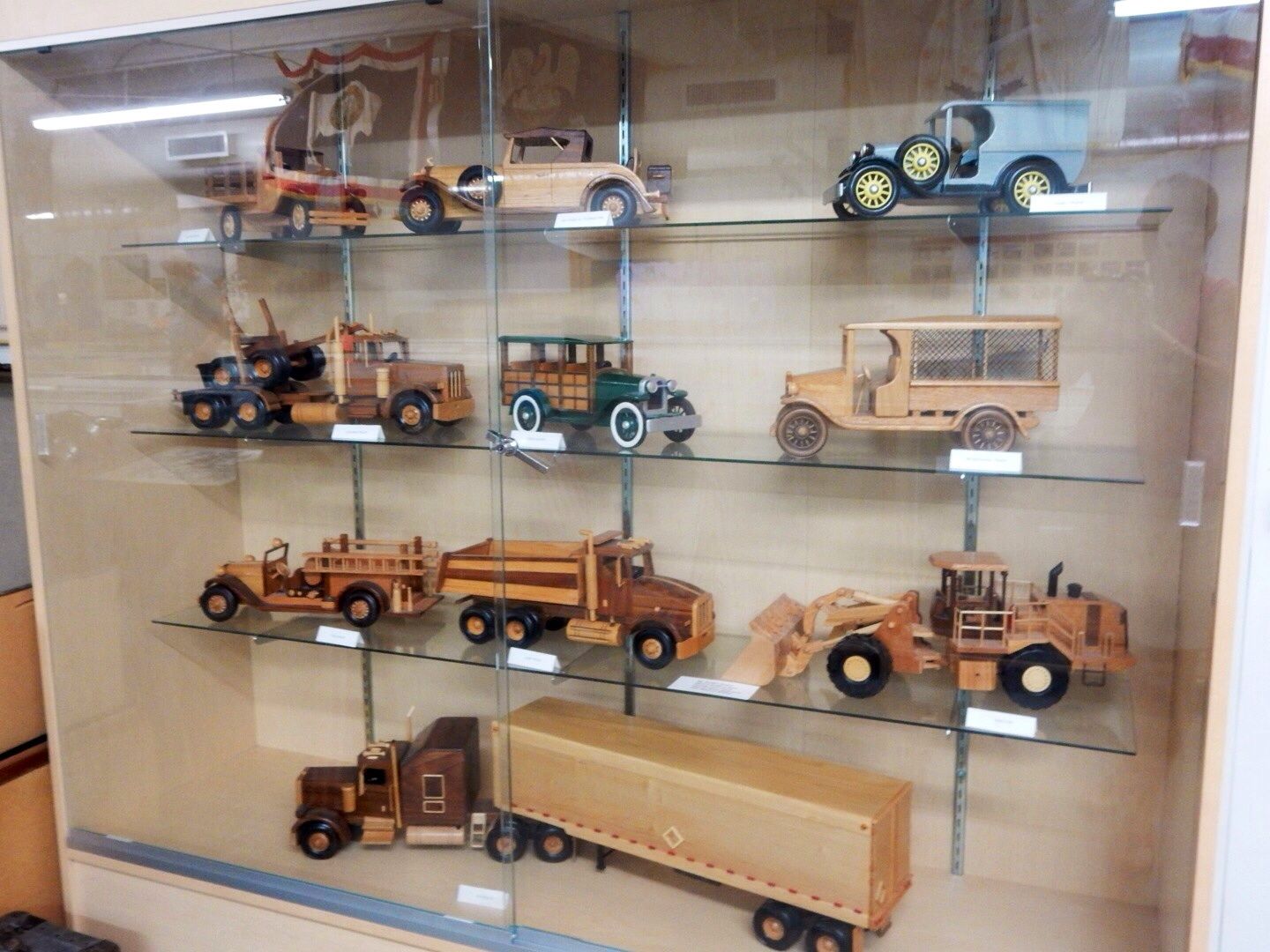
Hand carved wooden toys.

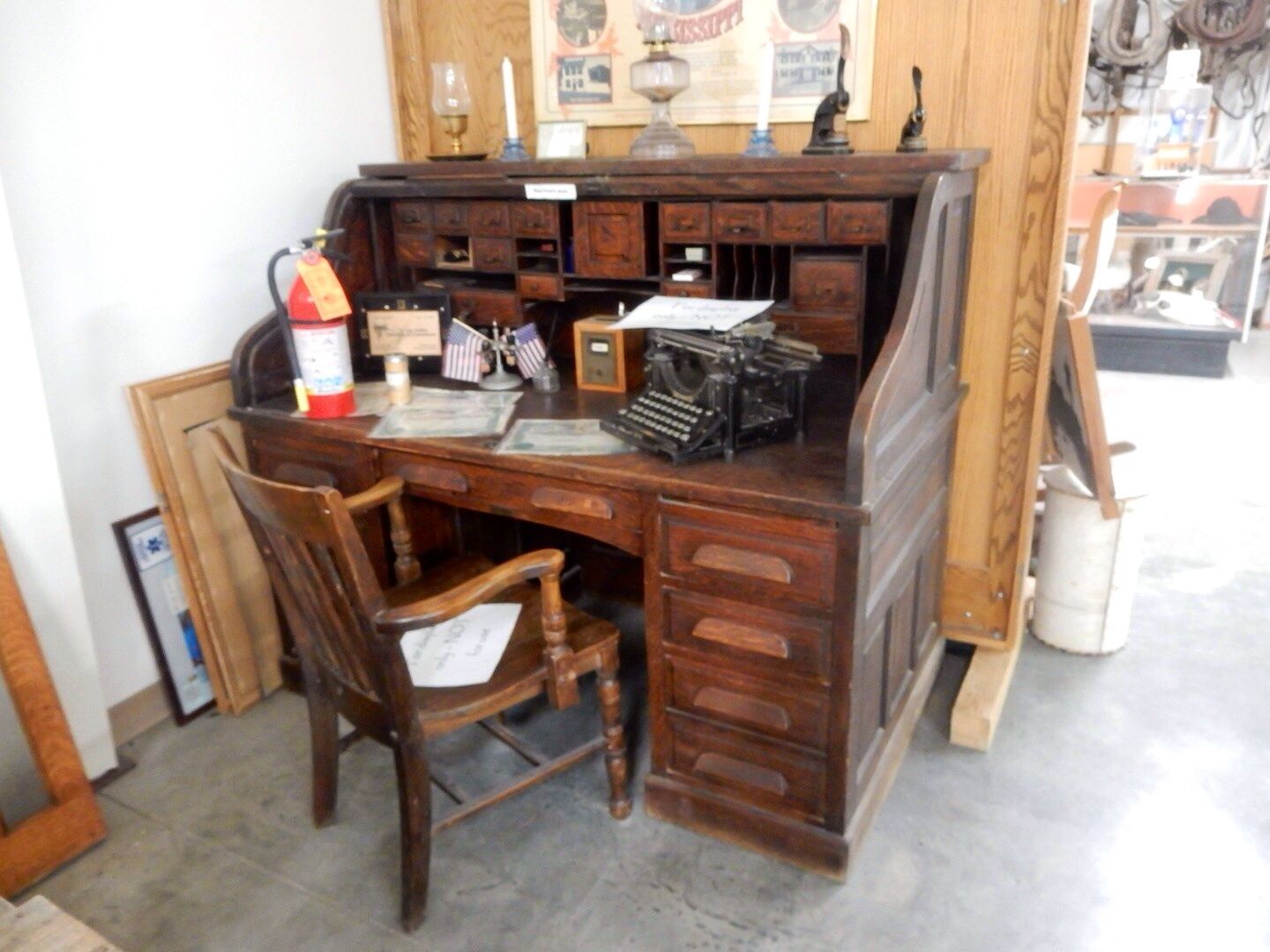
Business artifacts.
Cotton ginning items.

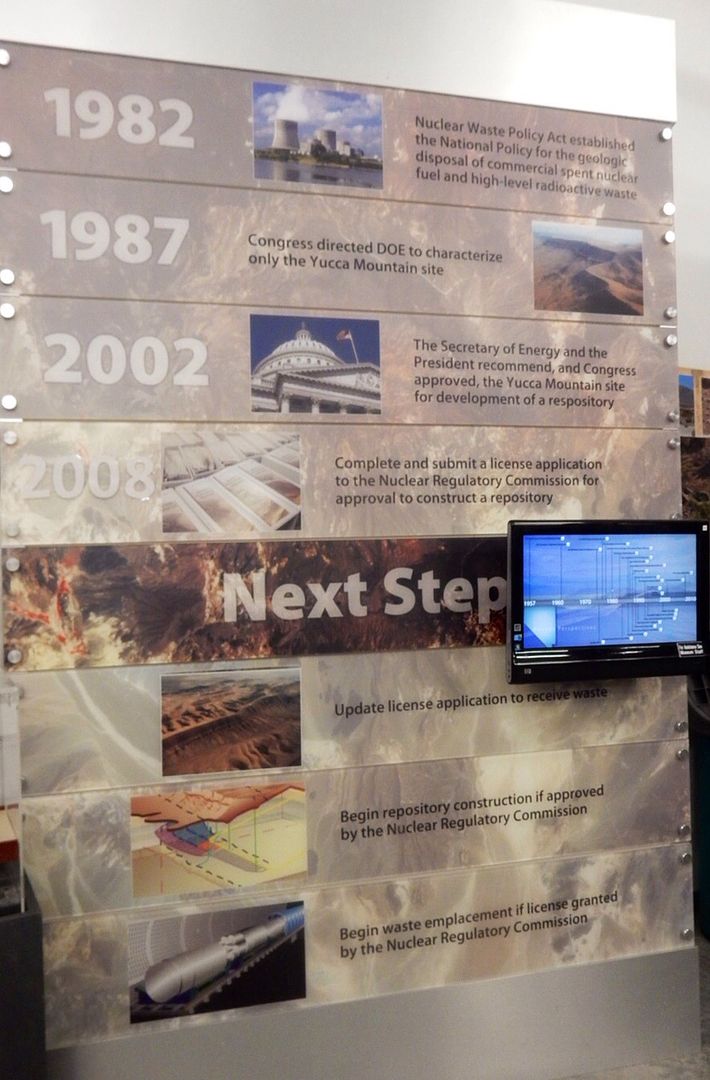
Yucca Mountain Nuclear Waste Repository Exhibit: Yucca Mountain (about 60 miles north of Pahrump) was designated by the Nuclear Waste Policy Act of 1987 as a deep geological repository. It was to be a storage facility for spent nuclear reactor fuel and other high level radioactive waste. This was highly contested by environmentalists but approved by Congress in 2002.


After 30 years of testing and construction of the site, in 2011, development of the site was terminated. It was stated that the closure was for political, not technical or safety reasons. This leaves the U.S. without any long-term storage site. Currently, radioactive waste is stored at nuclear facilities around the country.

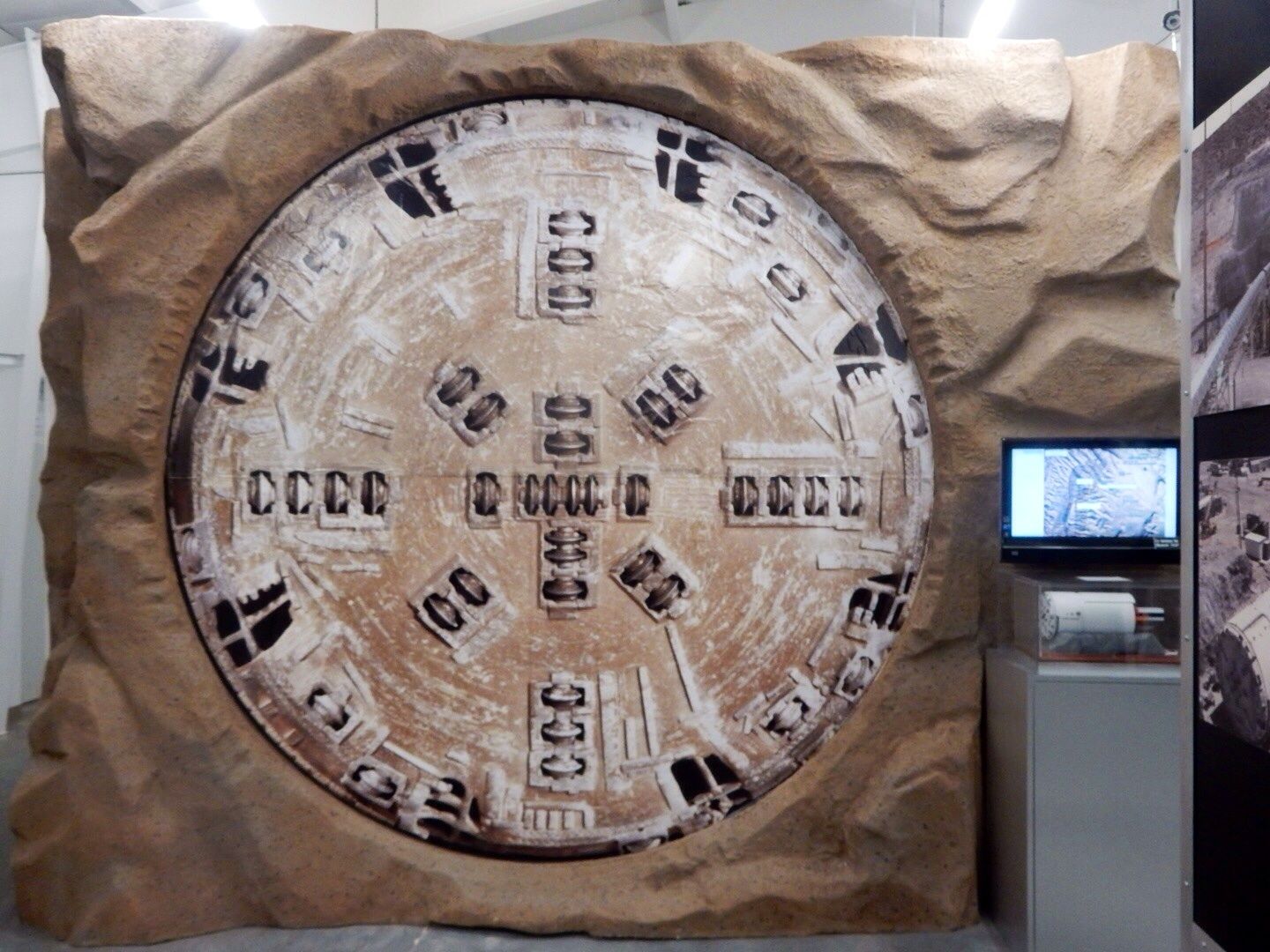
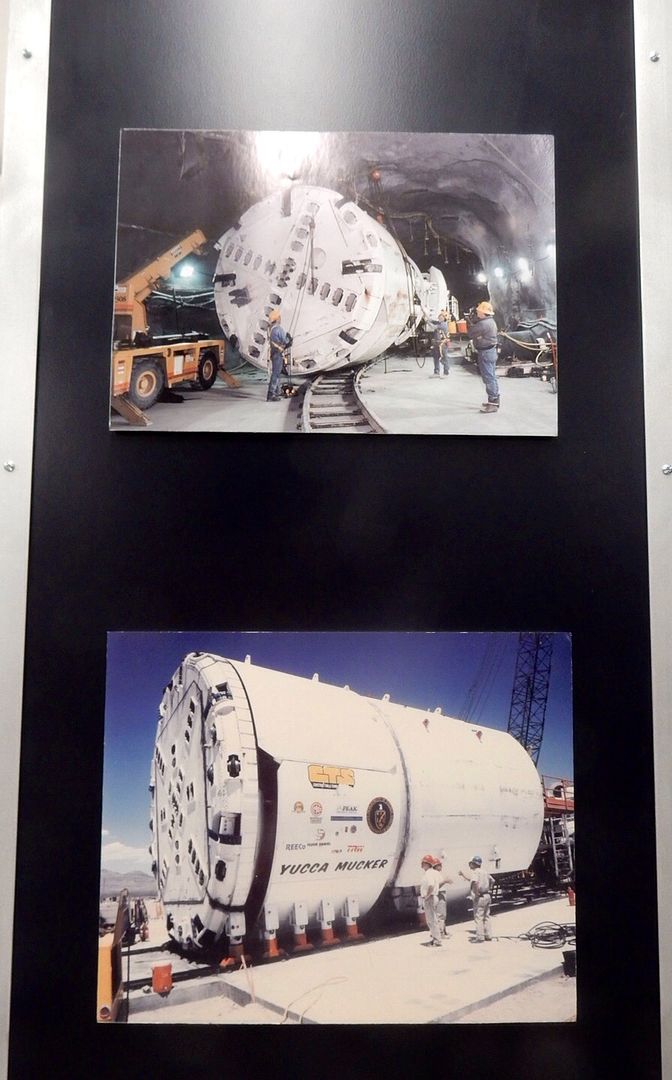
This is an extensive display with various interactive, multi-media exhibits. Drill used to build the tunnel where extensive safety testing occurred for decades.


Historic Buildings:  Pick up a self-guided tour in the museum before heading out back to see the restored buildings.

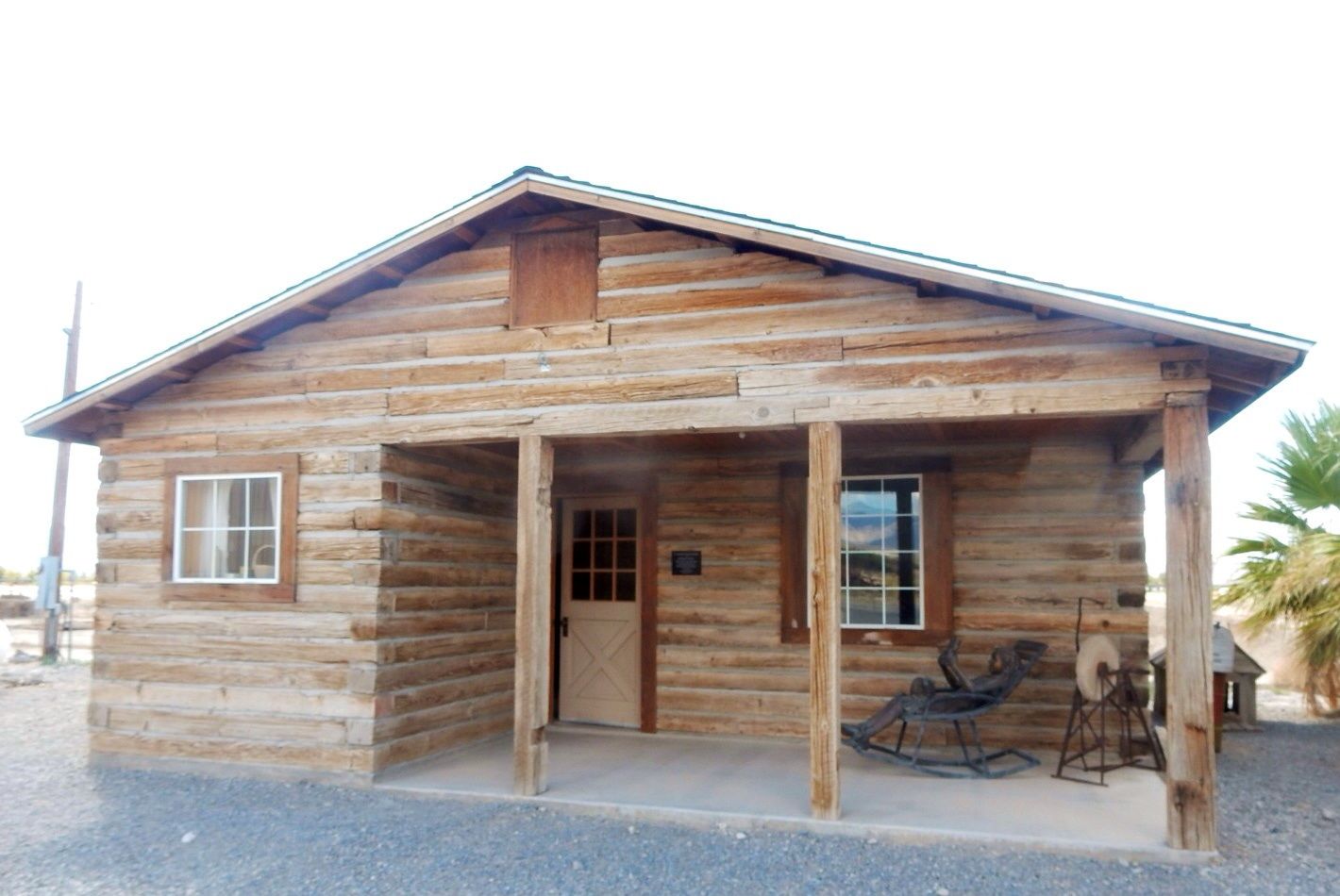
Raycraft Railroad Tie Cottage: The cottage was built in 1947 as a vacation cottage and is constructed of railroad ties from the Tonopah & Tidewater Railroad.

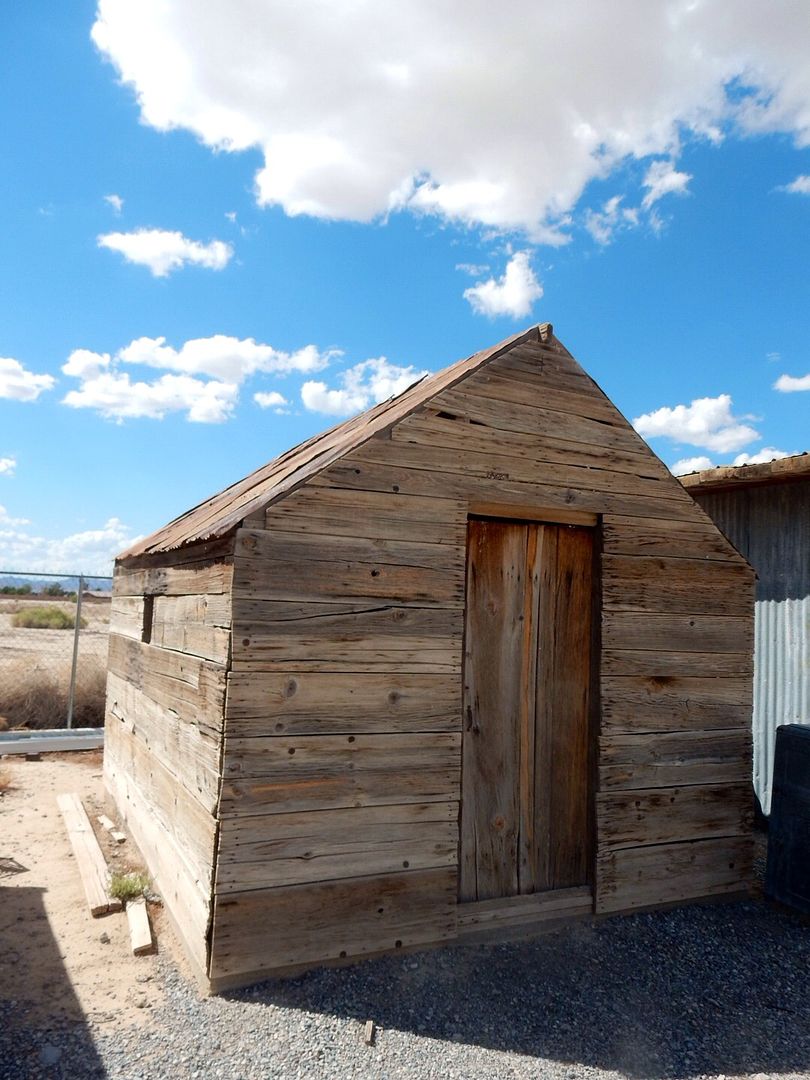
Miners Cabin: Built by miners as quick housing, these shacks were easy to build and inexpensive to leave behind when the mine petered out.


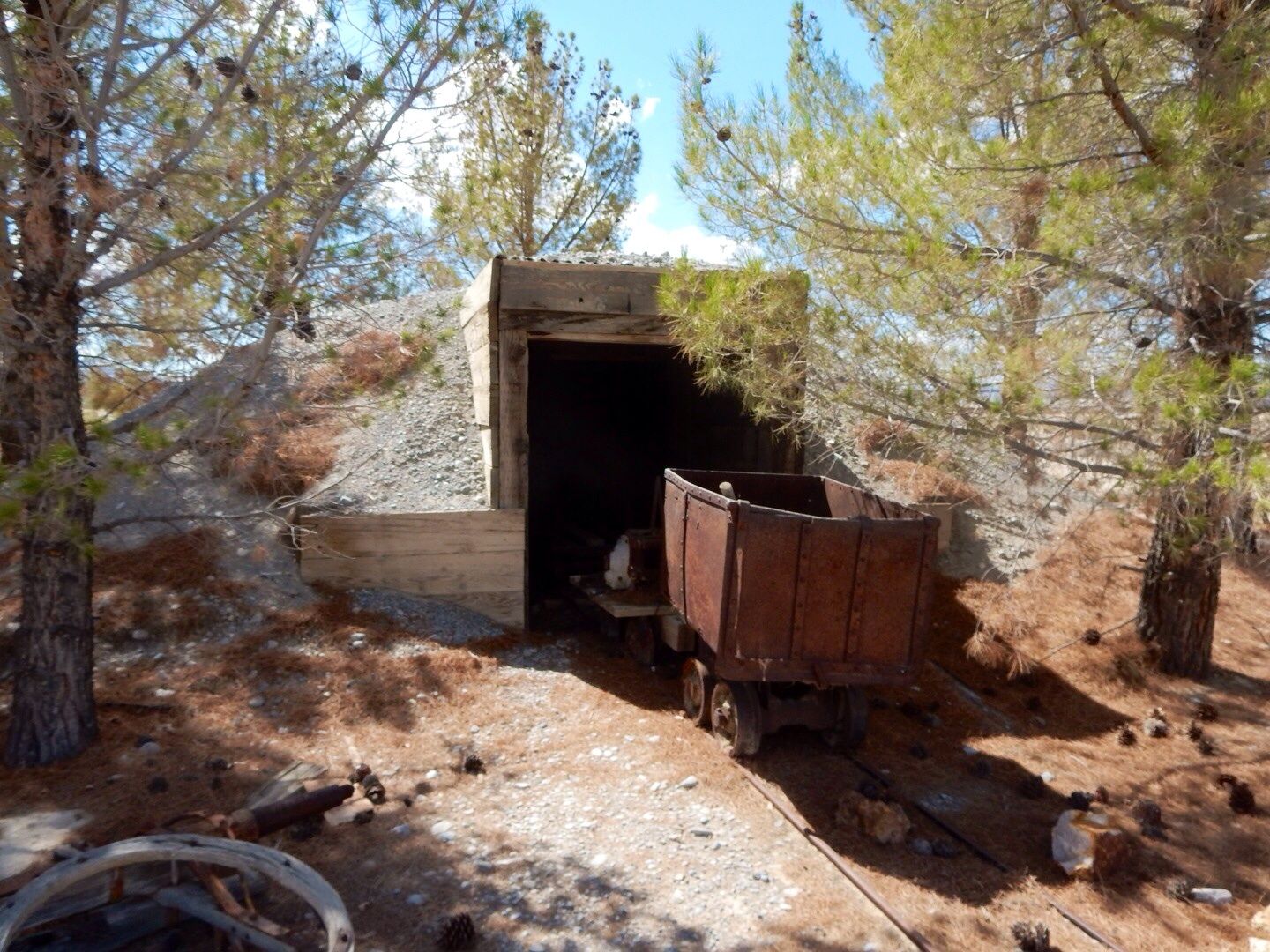
Mine Tunnel: This is a replica of the many mines built in the surrounding area.


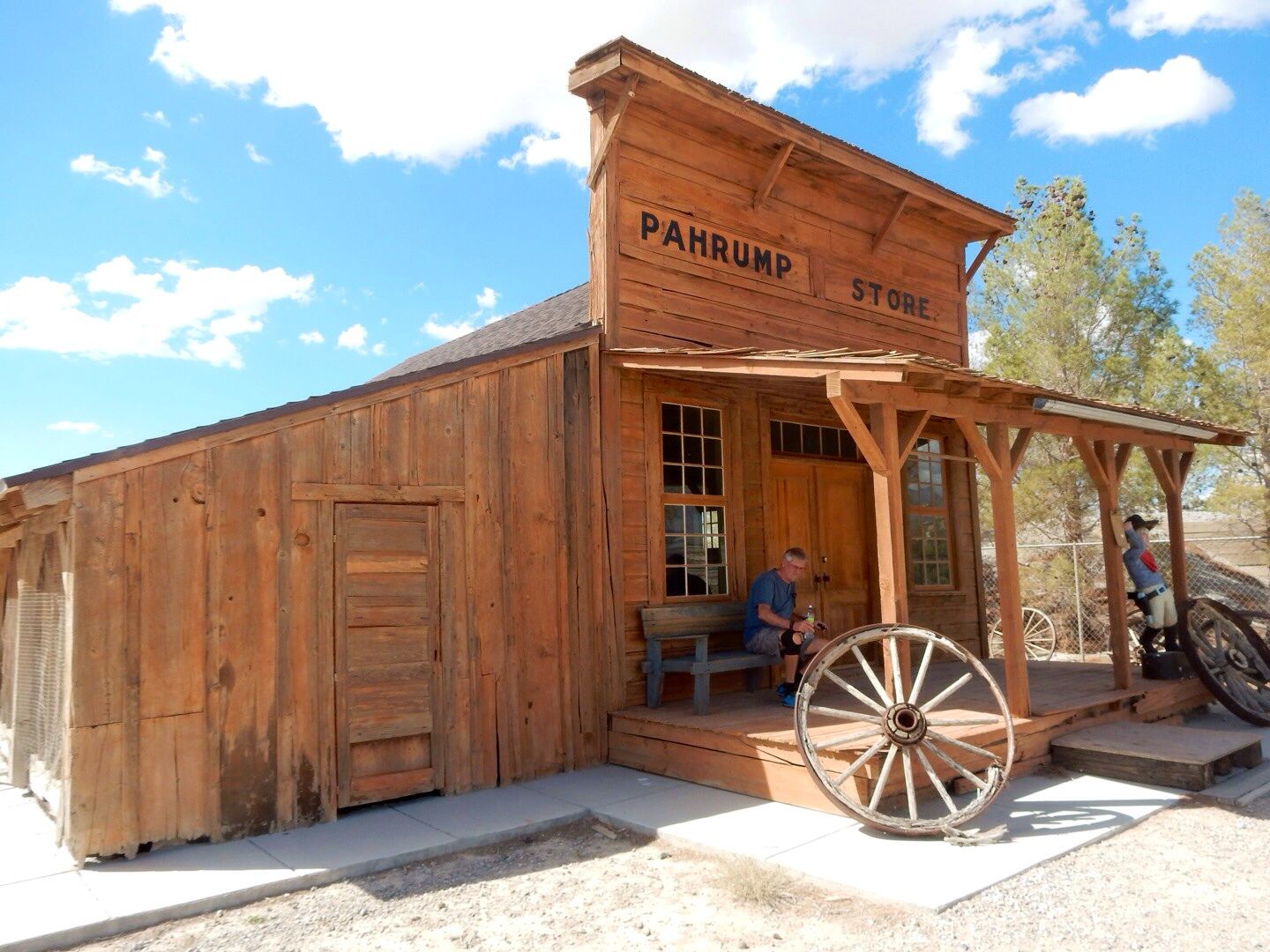
The Pahrump Store: This building was build circa 1904. In addition to serving as the general store, it was also the local post office and barber shop.


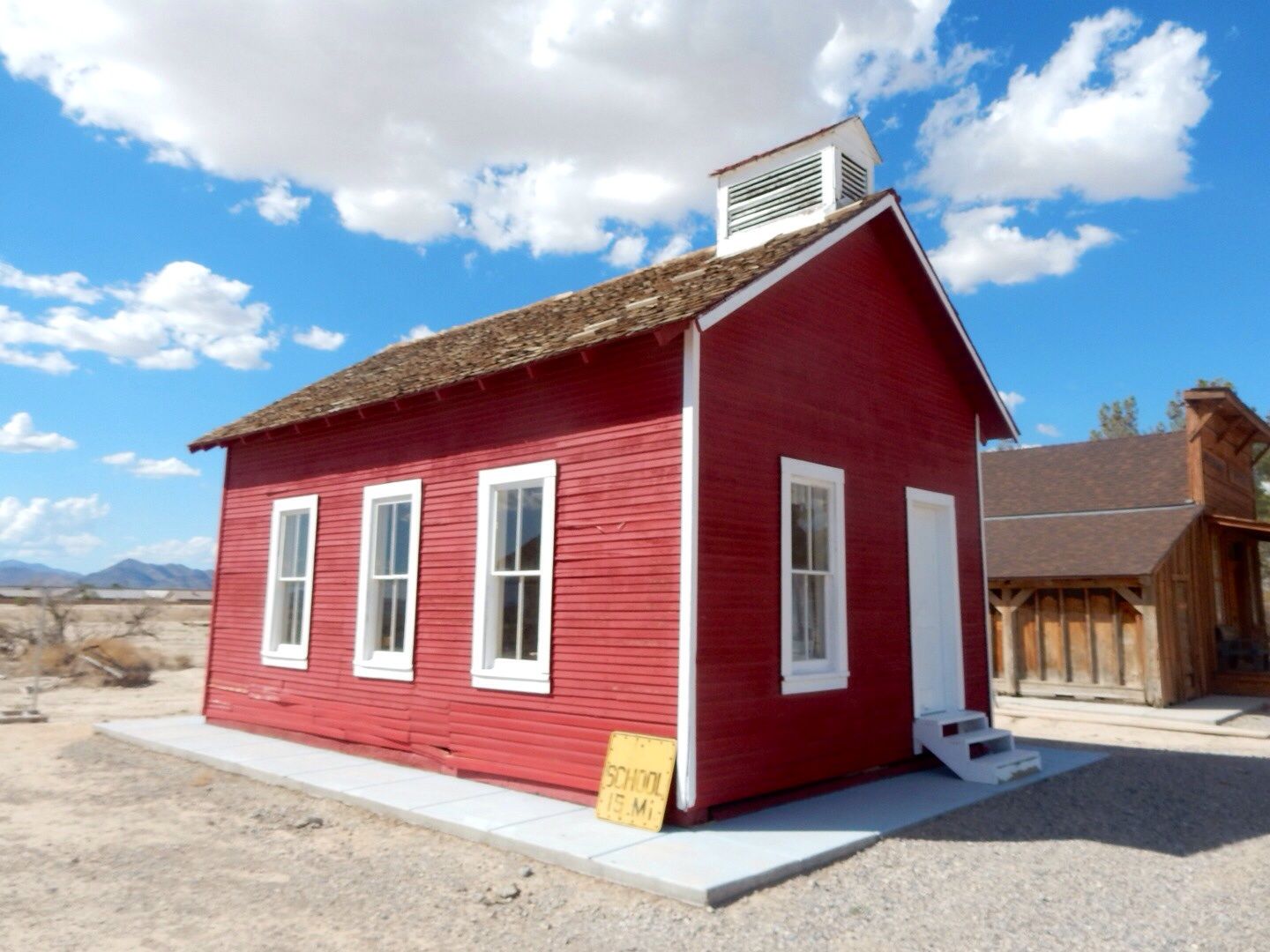
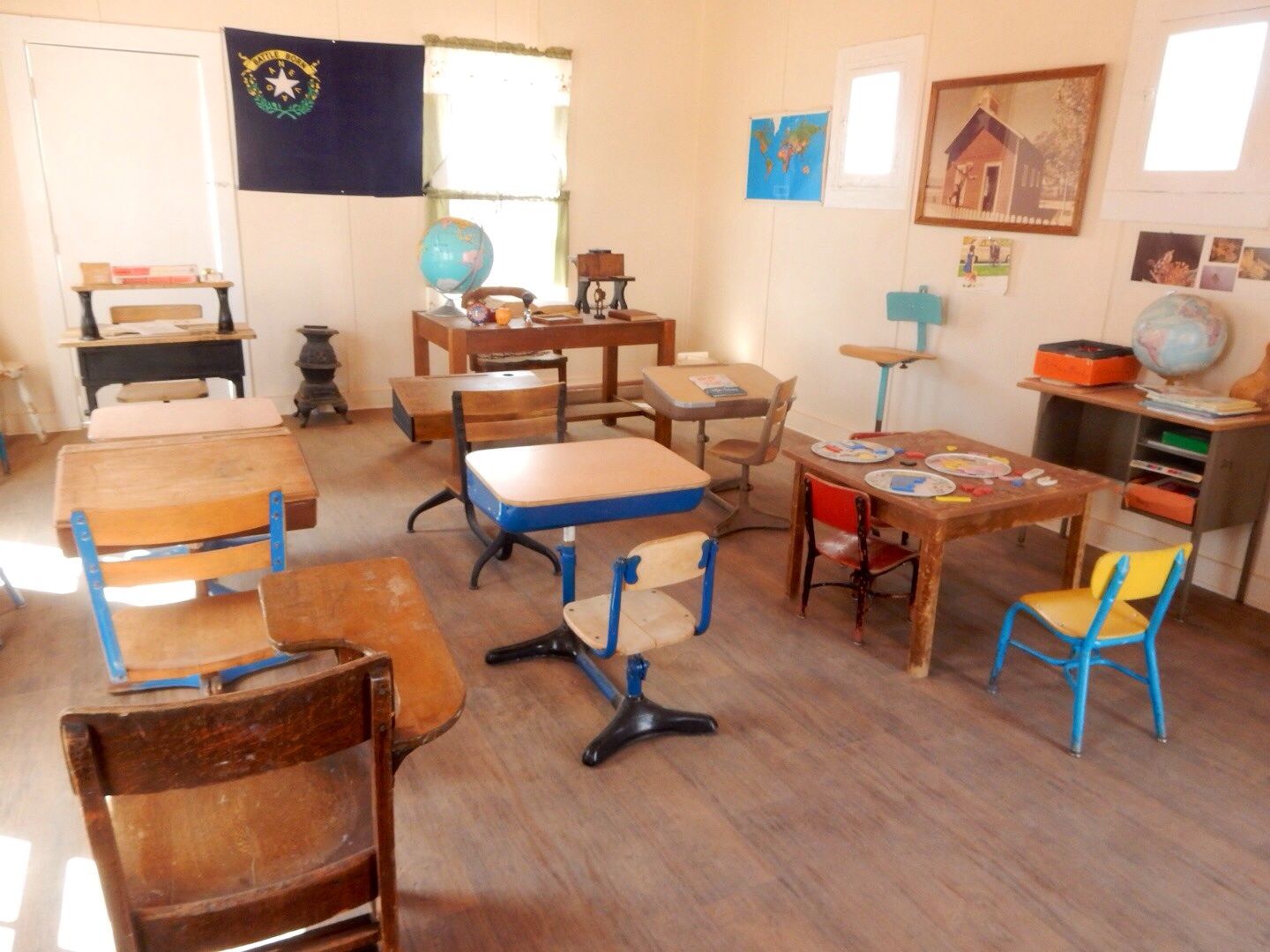
The Little Red School House: The school house was in use until 1945 and was moved to the museum in 2005.


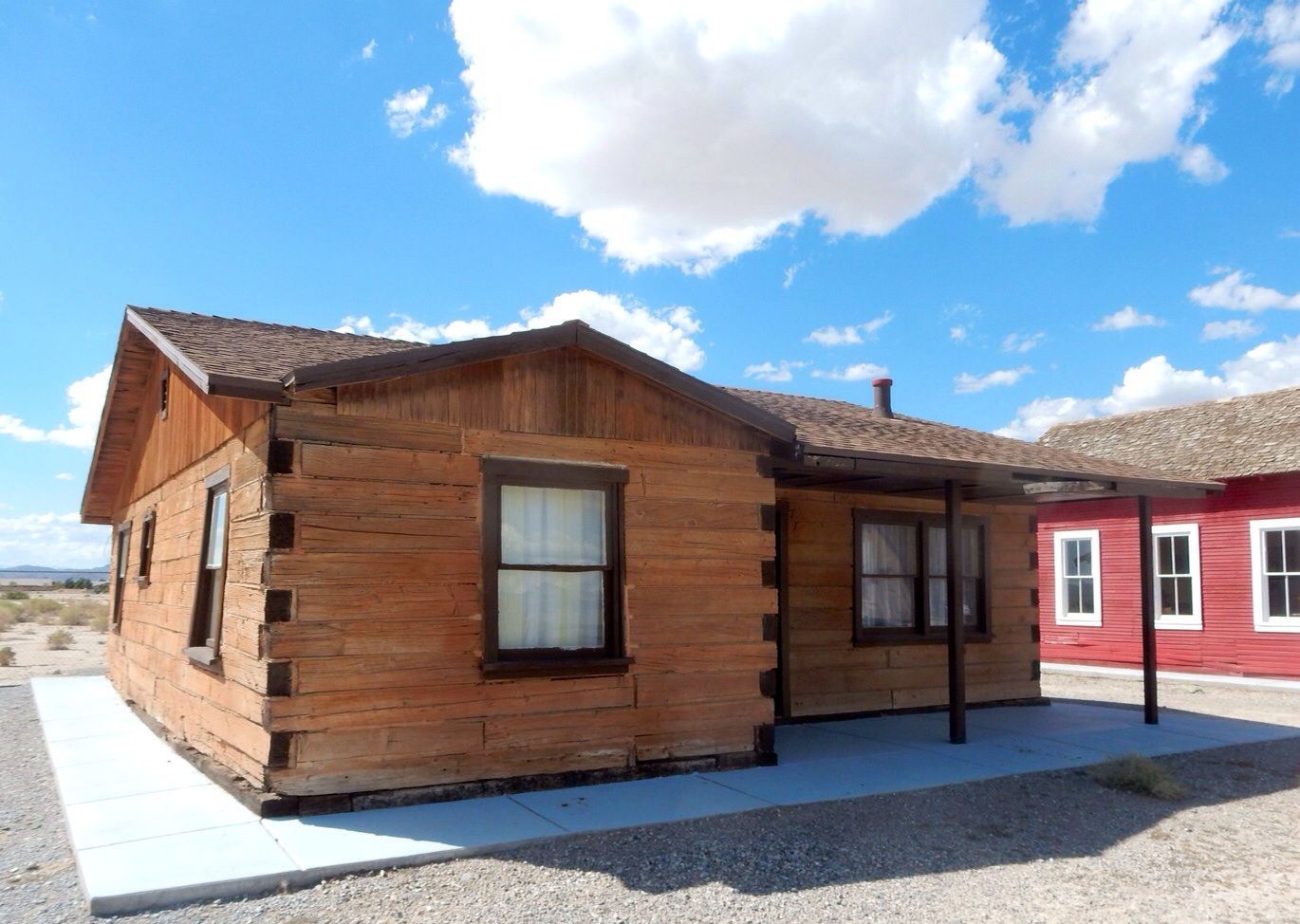
The Bowman House is the largest known house built of railroad ties. The 2-bedroom home was the foreman's quarters where the Bowmans raised their 5 children.


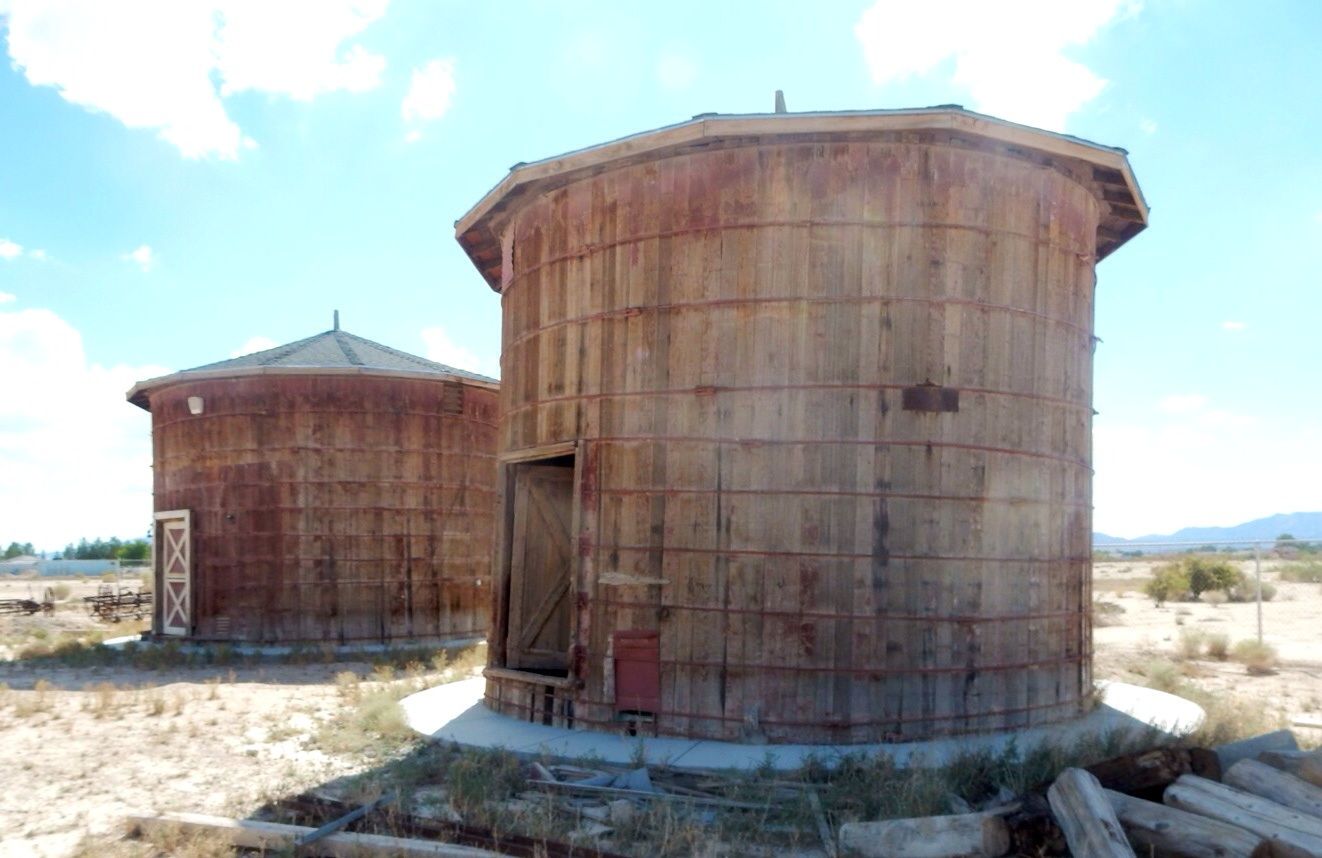
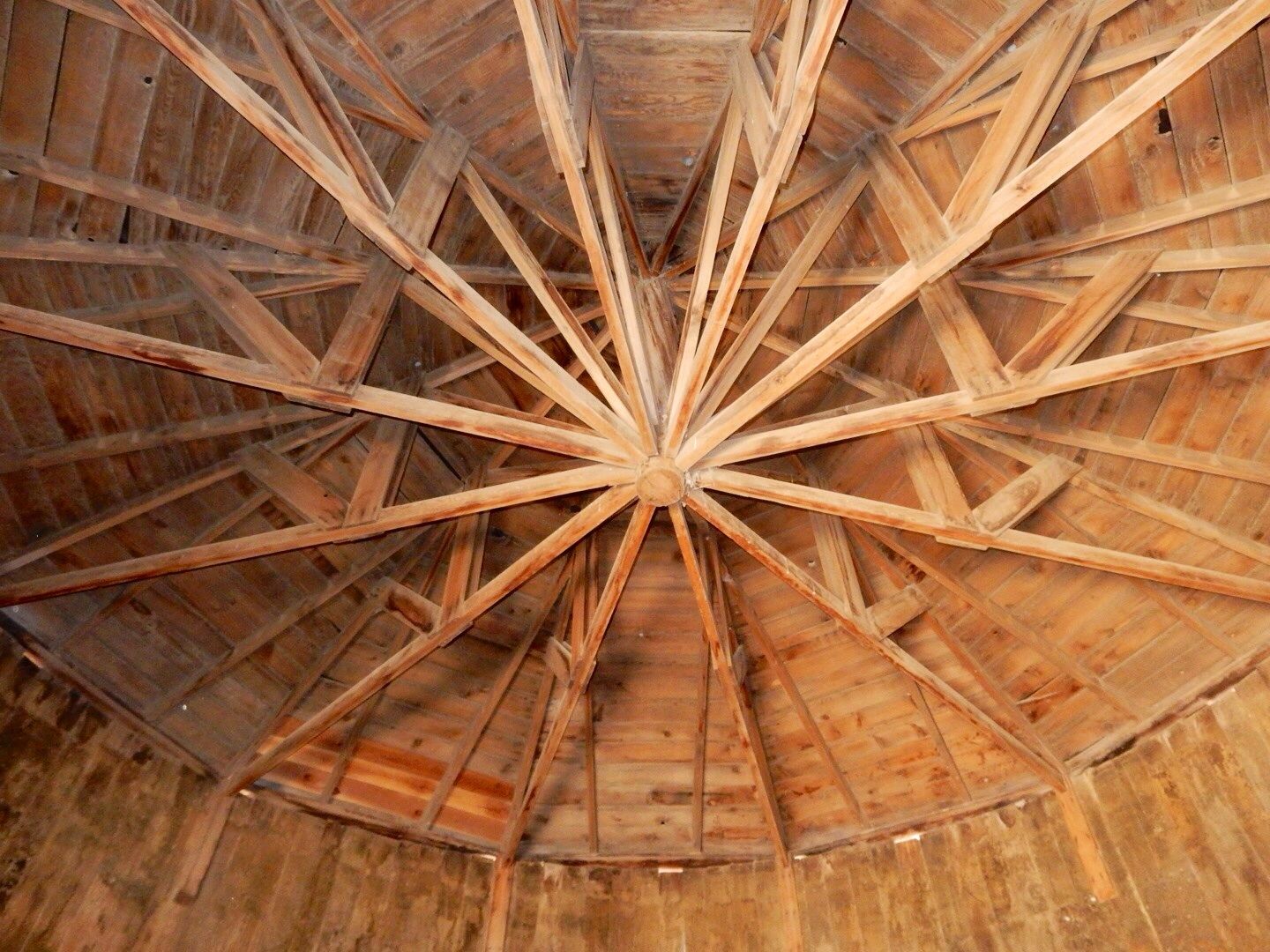
Grain Silos: Made of redwood, these were located on the Pahrump Ranch and were used for multiple purposes.

Cactus Garden. 


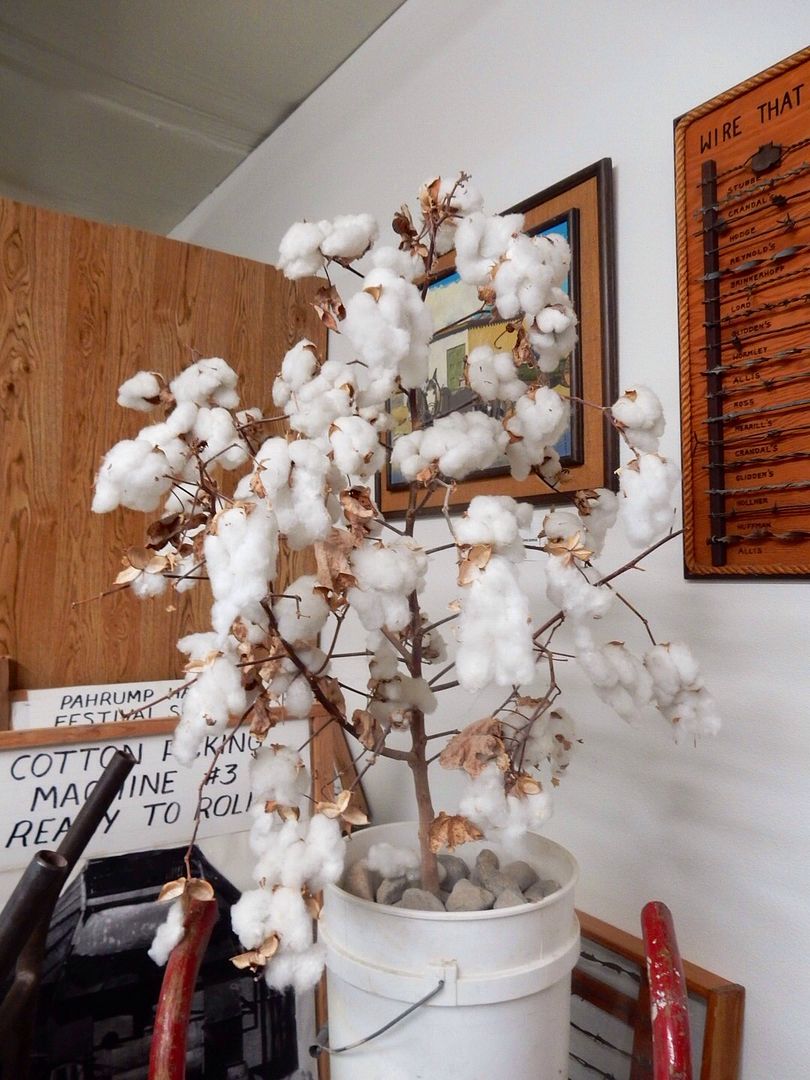
Cotton patch, once an important crop in the area.


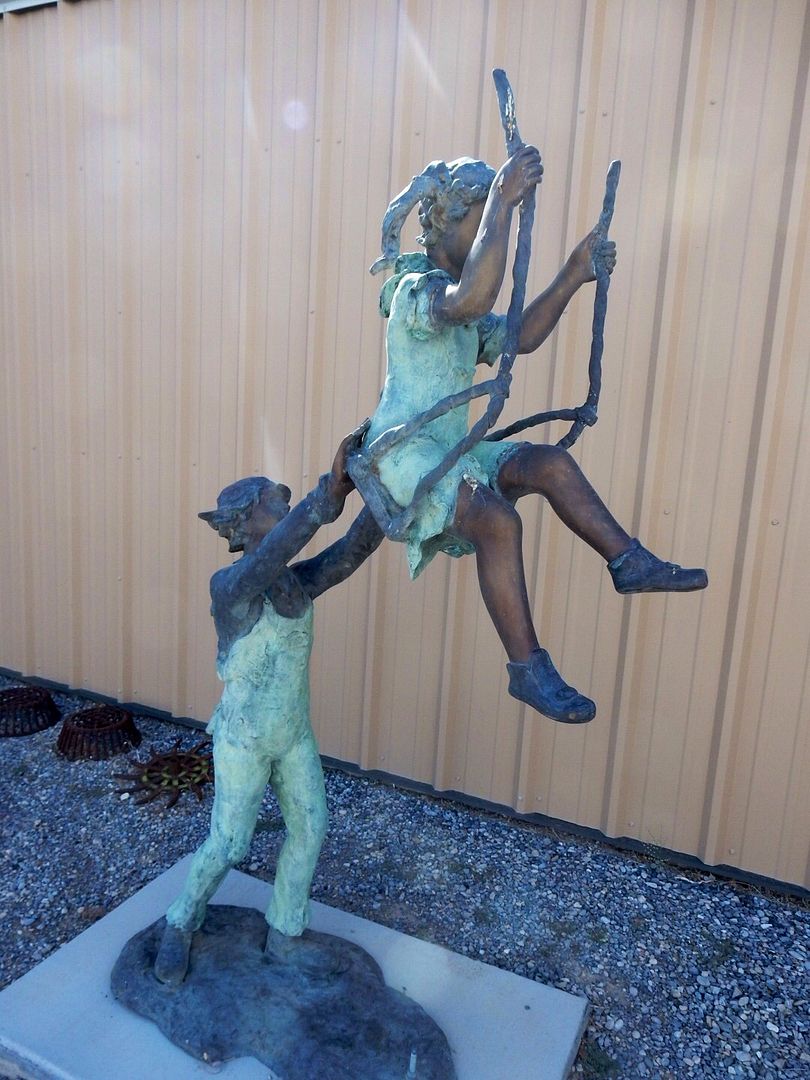
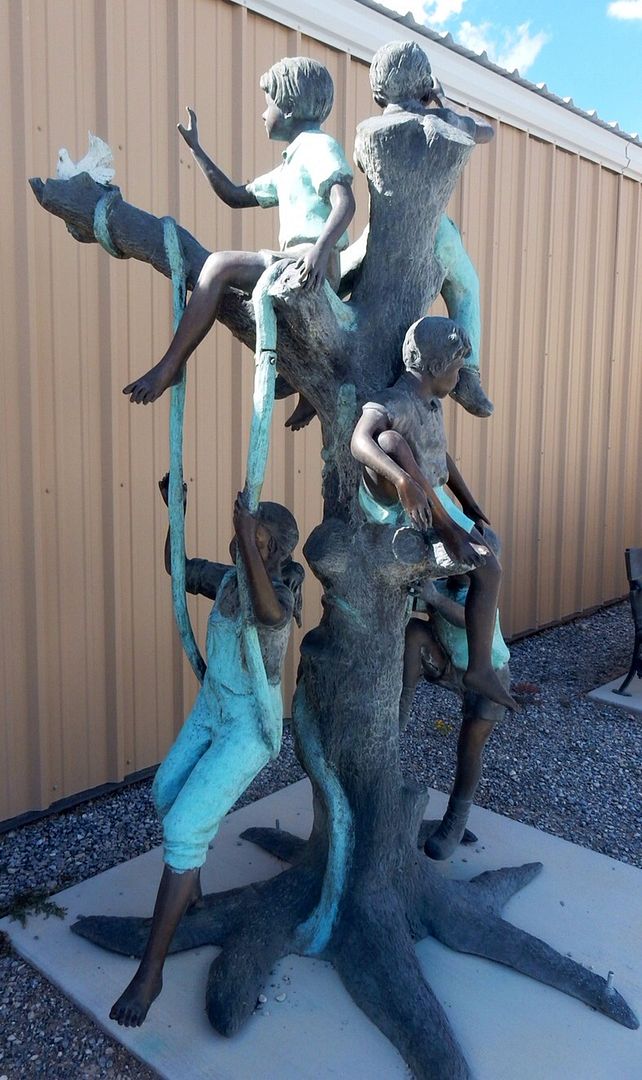
Bronze Sculptures:  Nine cast iron bronze sculptures imported from Italy were donated to the museum by the Harvest Fair Committee. Here are a few...


Admission to the Museum is free. We found this museum to be very interesting. I especially liked the self-guided tour of the restored buildings...a very enjoyable Sunday afternoon.

Website:  www.pahrumpvalleymuseum.org